Conversation with Wendi Yan
The 6ᵗʰ VH AWARD Grand Prix Recipient on media art
This article is part of Art & Market’s coverage beyond Southeast Asia. If you would like to work with us to reach audiences from the region, please email us at info@from-the-margins.org.
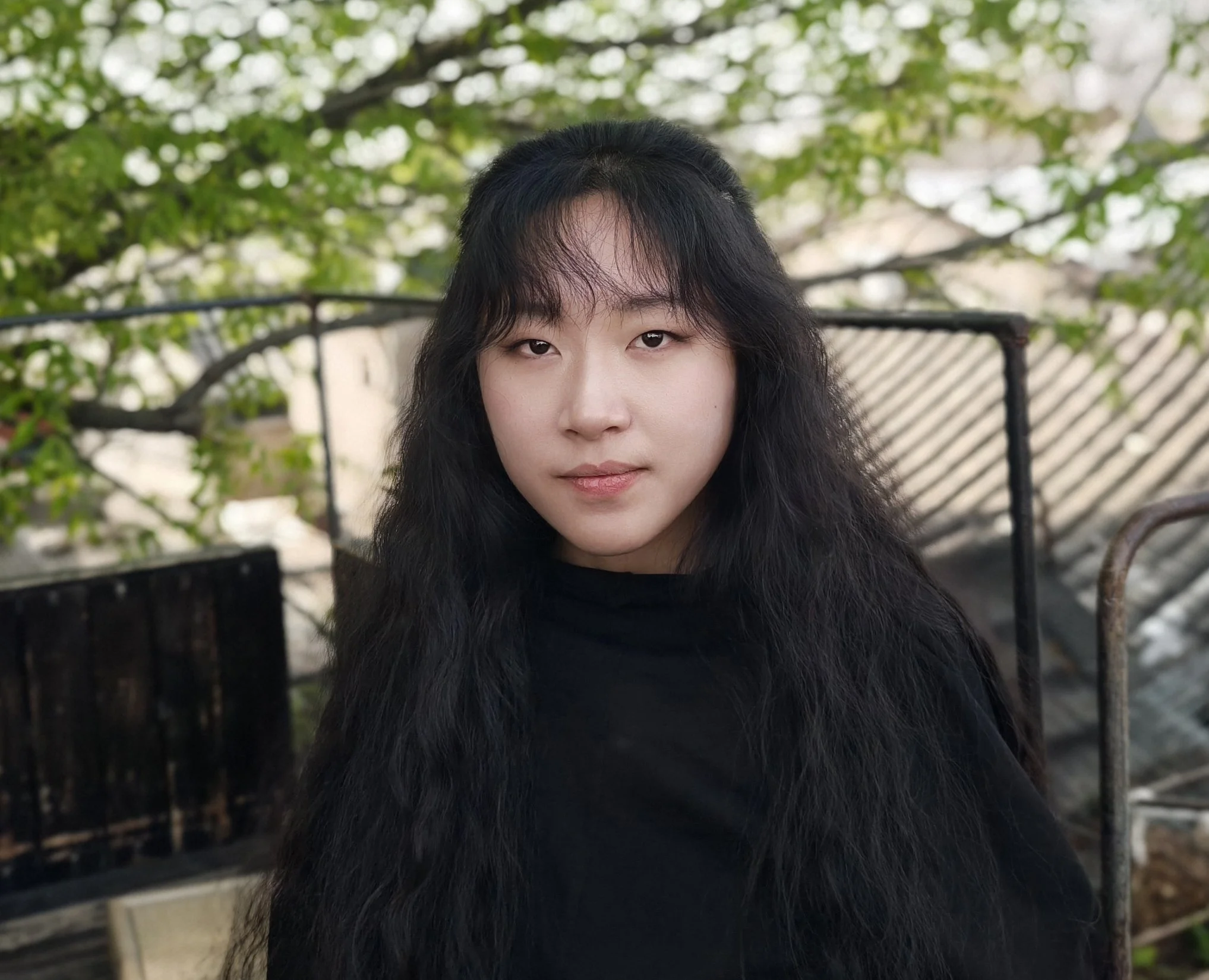
Wendi Yan.
Wendi Yan is the 6ᵗʰ VH AWARD Grand Prix recipient with her work Dream of Walnut Palaces (2025). Yan wore many hats to create the CGI film, from conducting the research to creating the script, from working on the animation to making 3D art and more. In this conversation, she reflects on the transformative process of realising this ambitious project, the VH AWARD as a dream opportunity for her practice, and the development of media art in the near future.
Congratulations on receiving the 6ᵗʰ VH AWARD Grand Prix. It was wonderful for the Singapore audience to see it on the big screen at Singapore Art Week 2026. What motivated you to submit your work to be considered for the award?
There are not a lot of opportunities for especially emerging media artists, to get a substantial grant to make an ambitious work and to get exposure for that. When the open call was announced, I had little proper exhibition experience, but I had been planning an ambitious research-based film project which eventually became my VH AWARD film, so I was instantly excited to apply.
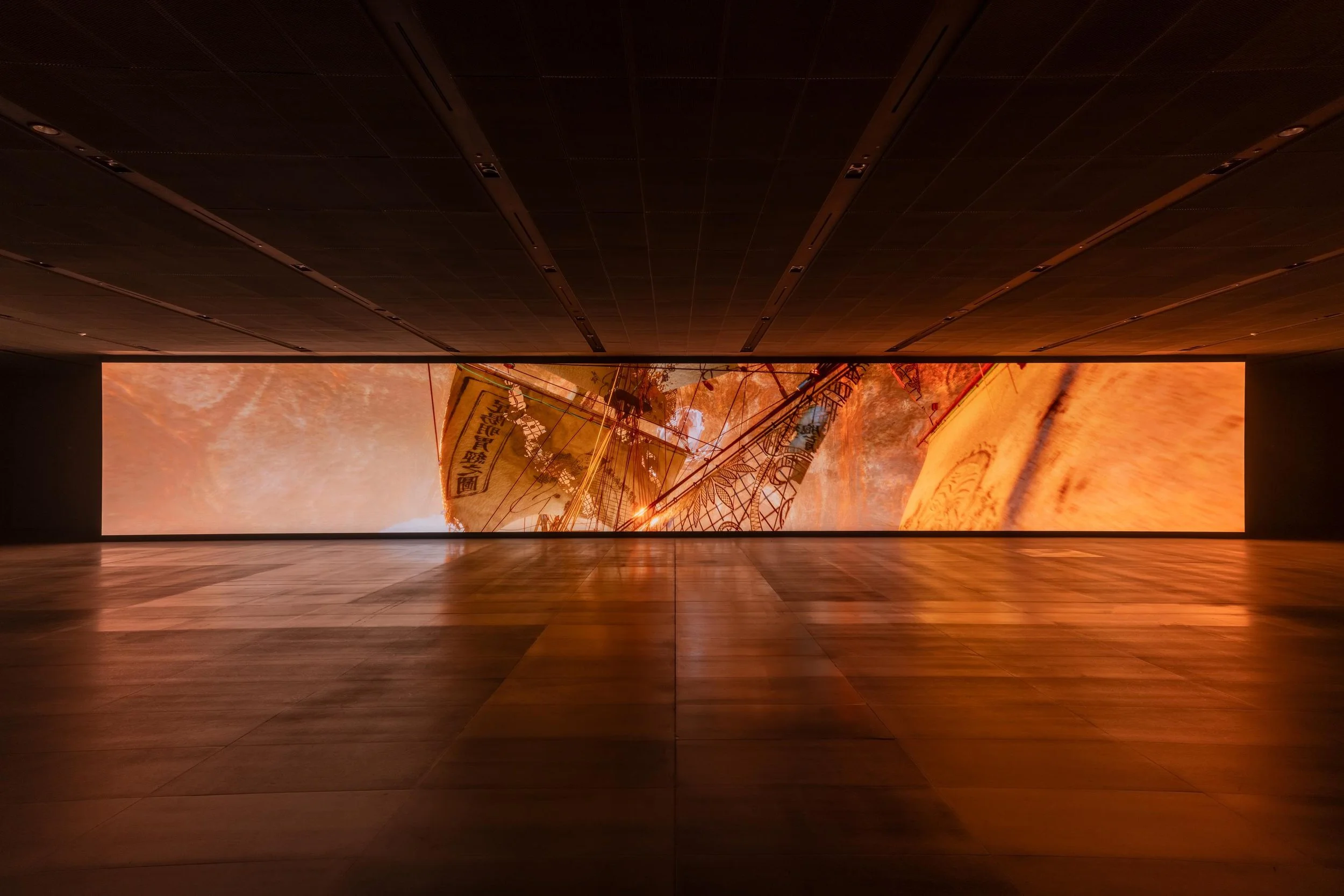
Wendi Yan, Dream of Walnut Palaces, 2025. Single-channel video. On view at Hyundai Motor Group Vision Hall, Yongin. Image courtesy of VH AWARD. Photo by sonongji.
Dream of Walnut Palaces (2025) is a revisionist account of history that reimagines knowledge exchange between China and Europe in the late 18th century, using AI to turn archival images into 3D models. How did the concept for the film come to be?
I had read A Global Enlightenment (2023) by the historian Alexander Statman, who shows from his extensive archival research how, at the height of the Enlightenment, some Parisian savants actively sought to combine and synthesise ancient Chinese wisdom with new European sciences. That book blew my mind away in showing me the “ghosts” of Enlightenment, a time that established the emerging norms and codes for modern science. This real but overlooked episode of history inspired me to imagine what it would look like “otherwise”, if such different knowledge systems practised by Qing China and late 18th century France were integrated.
I had also been obsessed with the seeming impossibility of capturing qi, which translates to mean energy or pneuma, with modern scientific instruments. Traditional Chinese Medicine (TCM) still stands largely outside of the biomedical system today, without falsifiability, yet many of us practise it as a reliable source of “alternative medicine.”
I wanted to imagine an alternate reality in which what eludes measurability today is a scientific pursuit, and our conception of energy easily and acceptably mediates between metaphysical and material planes. So I used game engine technology to merge and remix historical objects and actors I encountered in my research, and used fictional storytelling to find a new historical opening to ask questions about modernity, knowledge economy, and imaginations of the Other.
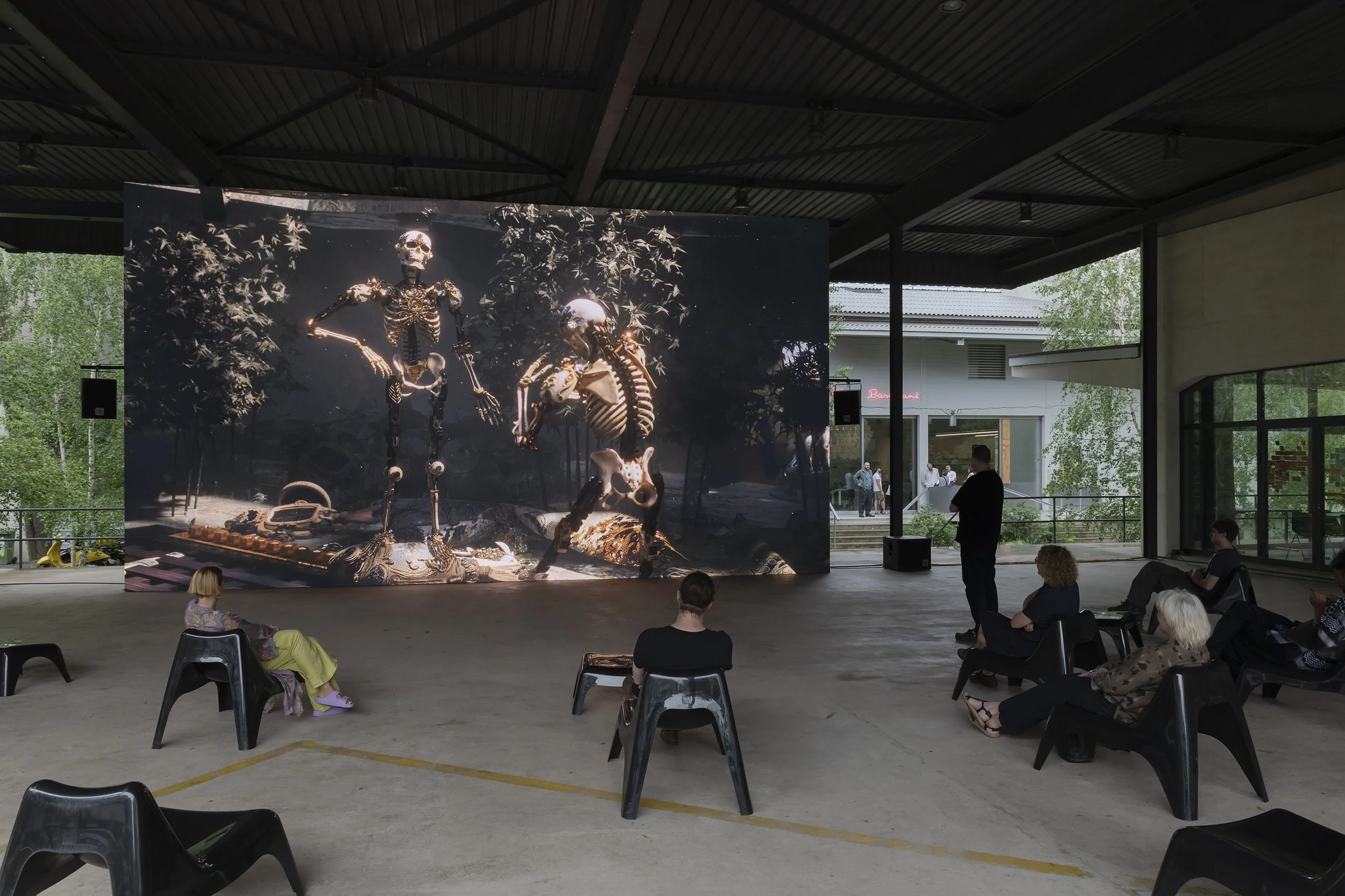
Wendi Yan, Dream of Walnut Palaces, 2025. Single-channel video. On view at HEK (House of Electronic Arts), Basel. Image courtesy of HEK. Photo by Franz Wamhof.
Beyond the recognition of your work with the award, how has the film been received by audiences? How have responses been validating and/or thought-provoking?
I have been pleasantly surprised and overwhelmed by how well this film has been received in both Asia and Europe. While it premiered at Basel, I was curious about how much people could understand the cross-cultural context at the core of the film, as the main character travels from Beijing to Paris. But I was relieved to realise that the shared deep respect for tradition and culture is more important than understanding specific historical references. And Europe and Asia share a mutual appreciation for the powerful distillation of historical time.
I also remember an audience member I met in Basel, who said he has a PhD in 18th century French literature about science, which made me nervous, but he was excited watching my film because he understood all of my references. At the same time, I loved seeing children engaging well with the exhibition spaces. I do not expect people to understand everything illustrated in the film, and hope that everyone takes something different from it. Overall, it has been validating for me, and I am deeply encouraged to keep making more films, games and artworks with the methodology I have been using. I had feared that my research interests were too academic, or specific, or that my film would not be able to draw out the core ideas in visually and narratively engaging ways, but I seem to have tested out one way of storytelling that balances them well.
What excites you about making films such as Dream of Walnut Palaces?
Before I learned about contemporary art in 9th grade, I had dreamed of making environment art for games and film productions. The desire to make 3D models and build impossible worlds from my imagination has been a deep-rooted one for me. The technical process of designing and sculpting virtual worlds with CGI software is embedded at the core of my art practice. So I loved spending the time with every step of the process of making Dream of Walnut Palaces. From writing the monologue, to sculpting and building out several fantastical landscapes in the game engine, and finally to animating, editing, color grading. Every step had space for me to infuse my research into something intentional.
I am excited to go through this process again and again, and bring forth more stories from my research on new topics from a different time. I love the challenge of distilling the messiness and complexity of history into a digestible work of media art that resurrects historical actors and concepts into new animated characters in a fantastical world, which really asks questions addressing urgent present conditions of living.
“I love the challenge of distilling the messiness and complexity of history into a digestible work of media art that resurrects historical actors and concepts into new animated characters in a fantastical world, which really asks questions addressing urgent present conditions of living.”
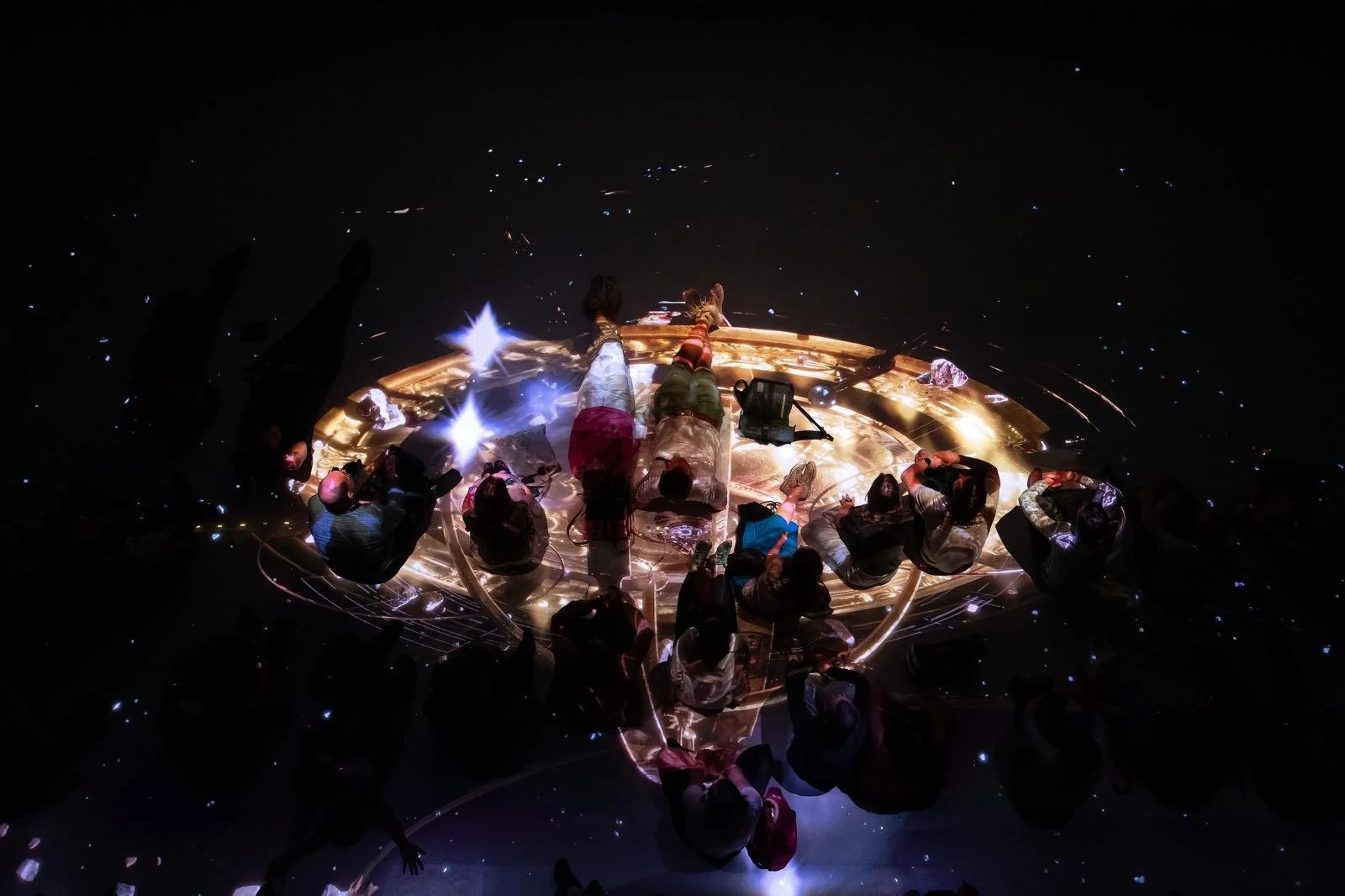
Wendi Yan, Dream of Walnut Palaces, 2025. Single-channel video. On view at Ars Electronica, Linz. Image courtesy of Ars Electronica. Photo by vog.photo.
What were the unique challenges of making Dream of Walnut Palaces or other films you have worked on? And what are the most satisfying aspects of creating them?
The main challenge was probably a mental one: believing that I can pull off the artistic ambition and rigour I imagined for the project, and trusting the day-to-day process. Even just technically, I was doing the work of maybe 10 different specialised jobs, in the making of a CGI film. While I had spent years making 3D models, 3D environments, and making 3D games with the same workflow before, I still had many new skills I needed to learn with animation and cinematics, and improving my skills in 3D art, directing and editing. So it was hard to design a detailed production schedule, as I could not estimate how long it would take me to do something.
I also wanted to balance between making the work inviting and accessible, and pursuing intellectual and artistic rigour. I wanted to pack a lot of fun references and ideas into a maximalist 10-minute work, but also hoped that children would enjoy them for a different reason than an expert in a related field would have.
Perhaps the most satisfying part was during the editing process, when I put my composer’s tracks into the video editing software, and my new animation renders matched with the music. I worked closely with my composer Dasychira, and involved them early on in my production process. We had countless meetings about the timbre to bring in, and how the diegetic sounds could blend into the compositions to enrich the storytelling and add new information that words or visuals could not give to the audience. The feeling when everything came together for a scene was hard to explain. And the moment I finished the film was the happiest moment of my year.
What drives your practice in general, and how do you expand the scope of work as both an artist and researcher?
Emotionally, I am driven by a sense of alienation in an intellectual way. That motivates me to conduct research in the history of art, science and technology, and to come up with different stories I share as art.
I think about the concept of “epistemic courage” a lot. I grew up in China and came to the United States for school alone when I was 15, so I spent a formative period of my life trying to integrate things I learned from two very different cultures, oftentimes alone. It showed me the importance of openness as I navigated a deep epistemic shock I could not verbalise for many years, until I started learning the history of science in college. I learned that it is a history of contingencies, a history of imaginations and dreams, and that freed me to build upon the alienation I feel, and go somewhere new. Instead of dwelling on criticism, I am much more excited about the power of believing, dreaming, and the states of mind that demand an honest commitment to intuition and the subconscious.
I have always aspired to make art professionally, but it was not until I was introduced to the methods of history of science that I found myself grounded in my artistic voice. History as a discipline gave me the cognitive tools to make sense of anything I wanted to know, and my art practice expands my inquiry into the exciting, unpredictable zones beyond cognition, reason, and lucidity.
“Instead of dwelling on criticism, I am much more excited about the power of believing, dreaming, and the states of mind that demand an honest commitment to intuition and the subconscious.”
In your opinion, what is the importance of the VH AWARD, given its aim to support emerging media artists who engage with the context of Asia through an online residency programme and exhibitions of commissioned works? How has experience of participating in the award helped you to expand your practice thematically or critically?
I am grateful for the Eyebeam residency, which was a part of the 6ᵗʰ VH AWARD programme. The Eyebeam team did a wonderful job curating a tailored selection of mentor sessions for us finalists. We got to hear from and speak with mentors who were either practising artists or writers, all engaging critically with technology in different ways. That was helpful as we were all working on preproduction for our projects, determining how to metabolise our big questions into distinct methods and imageries.
Working on my VH AWARD film alone was a deeply meaningful learning experience. As soon as I finished my work, I felt I just completed a mini evolutionary phase: I gave everything I could to the production of an ambitious film I had dreamed of making, and it transformed me as a person in the process.
The VH AWARD was a dream opportunity for me, as it allowed me to spend a significant amount of time on focused, deep work. It also gave us a platform to share our work. I am a product of different cultures, and my film is about bringing knowledge from one culture to another, so to have the film exhibited in Europe and Asia added further meaning to the work. I hold tremendous gratitude for the VH AWARD, and am encouraged to keep using my research methodology to make more rigorous, artistically ambitious projects.
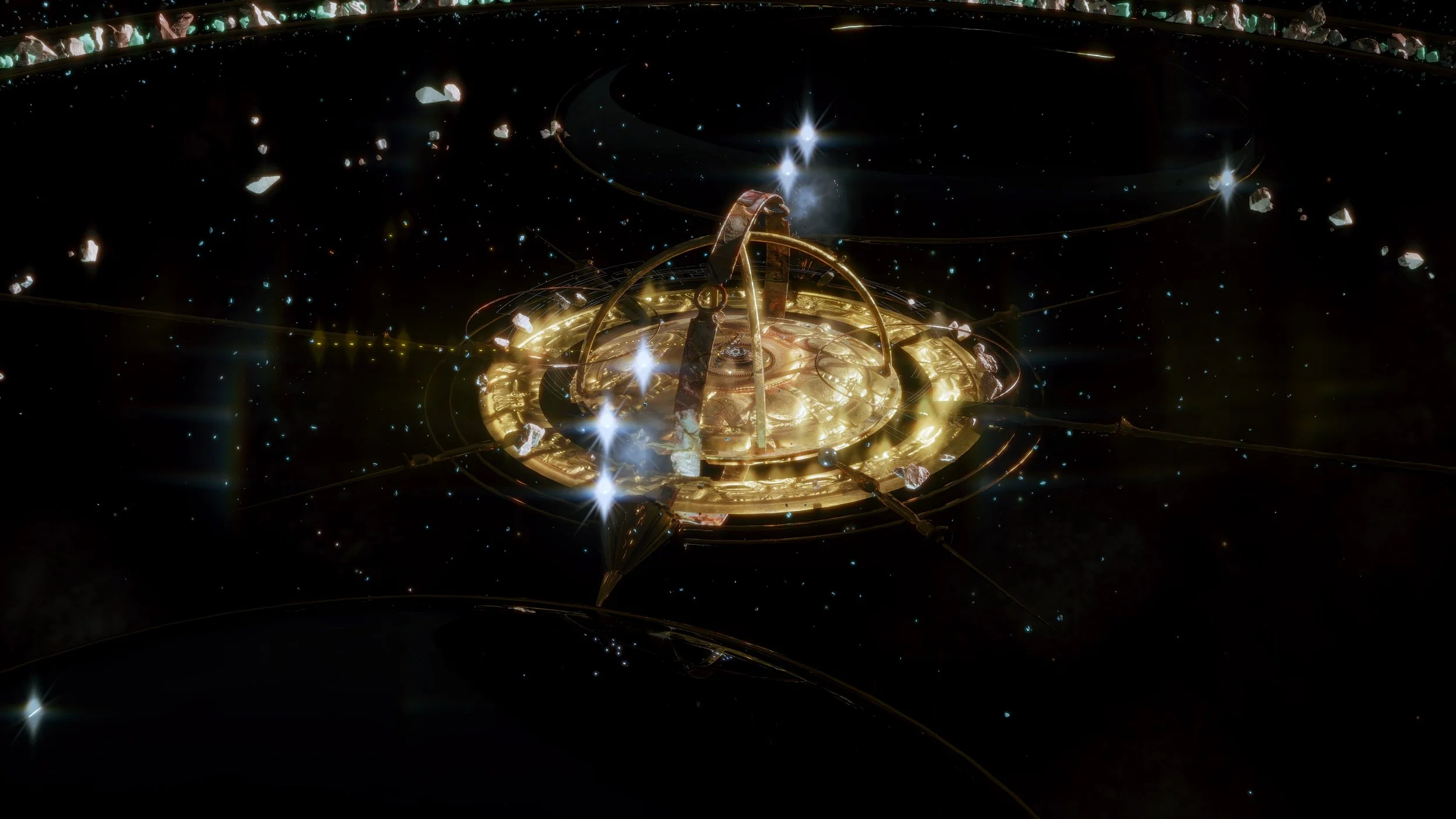
Wendi Yan, Dream of Walnut Palaces, 2025. Single-channel video. 10 min. 09 sec. Commissioned by the VH AWARD of Hyundai Motor Group.
What do you think is the trajectory of media art based on your observations of the work of peers? And how are you thinking about your future projects to contribute to this trajectory as well?
As our digital cultures evolve and more seamlessly integrate into our daily lives, media art as a category will eventually become less helpful in understanding the complexity of how we engage with the ever-expanding informational technologies and their material roots. With paintings, we do not talk about the painting materials or techniques as often as we talk about the imagerial spaces they create. Similarly, we will expand within the space of media as a concept, and probe more specifically into the varieties of digital experiences: tools for cultural production, platforms of social activities, notions of machine intelligence and so forth. As people build their literacy across the technological stacks, “game engine art”, for example, will be increasingly futile in understanding what is aesthetically, culturally, and epistemically, possible with game engine as both a tool and a medium.
I use game engine as a knowledge engine, where I remix ideas I resurrect from archival research, and compose visual narratives shaped by cosmological philosophies. The epistemic capacity of the game engine as an interface and infrastructure for facilitating open-ended inquiries is integral to my practice, and I am excited to keep exploring these critical folds with more rigour.
The 7ᵗʰ VH AWARD is now accepting submissions. More details here. Apply before 21 July 2026.
This article is presented in partnership with the VH AWARD of Hyundai Motor Group.