Conversation with Founders of ara contemporary
Megan Arlin, Fiesta Ramadanti and Fredy Chandra on their first anniversary

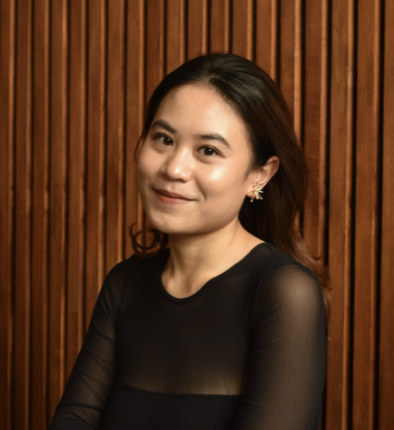
Megan Arlin, Fredy Chandra and Fiesta Ramadanti. Photo by Indra Leonardi. Image courtesy of ara contemporary.
Megan Arlin, Fiesta Ramadanti and Fredy Chandra founded ara contemporary in April 2025 as a space for artistic practices from Southeast Asia. Its programme spans artists across diverse, interdisciplinary fields, with an emphasis on research-driven work. Located in South Jakarta, the gallery comprises a Main Gallery on the upper floor and a Focus Gallery below, dedicated to experimental presentations by emerging practitioners. The founders bring distinct perspectives to the gallery’s direction, shaped by their experiences in regional and international art institutions: Megan at Sullivan+Strumpf, Fredy at Mizuma Gallery, and Fiesta at Art Jakarta and ROH.
In this conversation, they discuss building a gallery together and how ara contemporary’s identity continues to take shape.
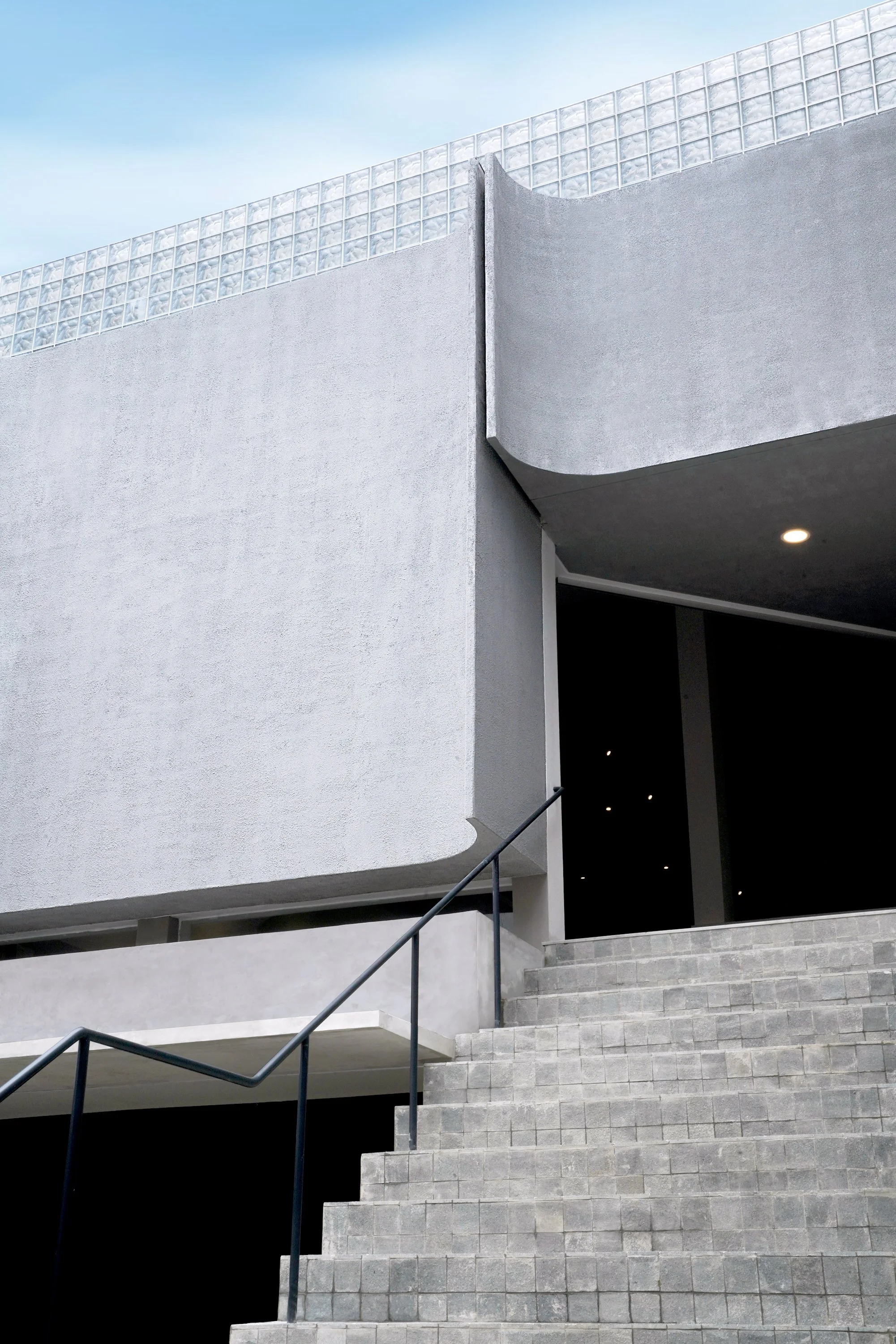
ara contemporary façade. Image courtesy of ara contemporary.
What were the gaps in Jakarta’s contemporary art landscape you were hoping to respond to or reframe?
Megan: It is more about changing the equation rather than filling the gaps. When we decided to launch ara contemporary, we collectively agreed that despite the rapidly growing Indonesian art scene, artist representation remains a question. Of course, we greatly admire the galleries that have been doing this well. However, there is still a certain scarcity of galleries or spaces that consistently operate as platforms for discourse around artists’ practices. While this may point to a broader and more diverse scene where there is something for everyone, it is precisely within this space that we hope to respond.
Fredy: We spent a lot of time asking ourselves where we fit within this larger ecosystem. Indonesia already has many strong galleries, so the question for us became: why should ara contemporary exist, and what kind of contribution could we make? Back then, we realised there were not many Indonesians working in the international art scene, so we felt a responsibility to bring that experience back. For us, representation is not only about exhibitions, but also sustained advocacy around an artist’s practice and career.
Fiesta: Because the three of us have worked closely with artists for years, we understood early on that we wanted to build relationships that go beyond individual exhibitions. That became one of the starting points for the gallery as well.
“It is more about changing the equation rather than filling the gaps.”
In what ways do your respective backgrounds shape the way you work together, and where do your perspectives diverge?
Megan: We started off with a shared background, which made it easy to speak the same professional language from day one. After running the gallery for a year now, we have come to better understand its focus and direction as well as our own, and how each of us works within it. We all have different ways of understanding and approaching things, so being clear about what the gallery is and where we want to go next has been important in guiding our decisions. For instance, Freddy focuses mostly on artist and client relations, I focus on curatorial and programming, and Danti oversees the gallery’s operations and offsite projects.
Fredy: The focus on Southeast Asia was already there in the background of what we had all been doing. We just took time to put it into words and solidify it into something more intentional. Because we each came from slightly different working experiences, the gallery also became a way for us to bring those perspectives together more clearly.
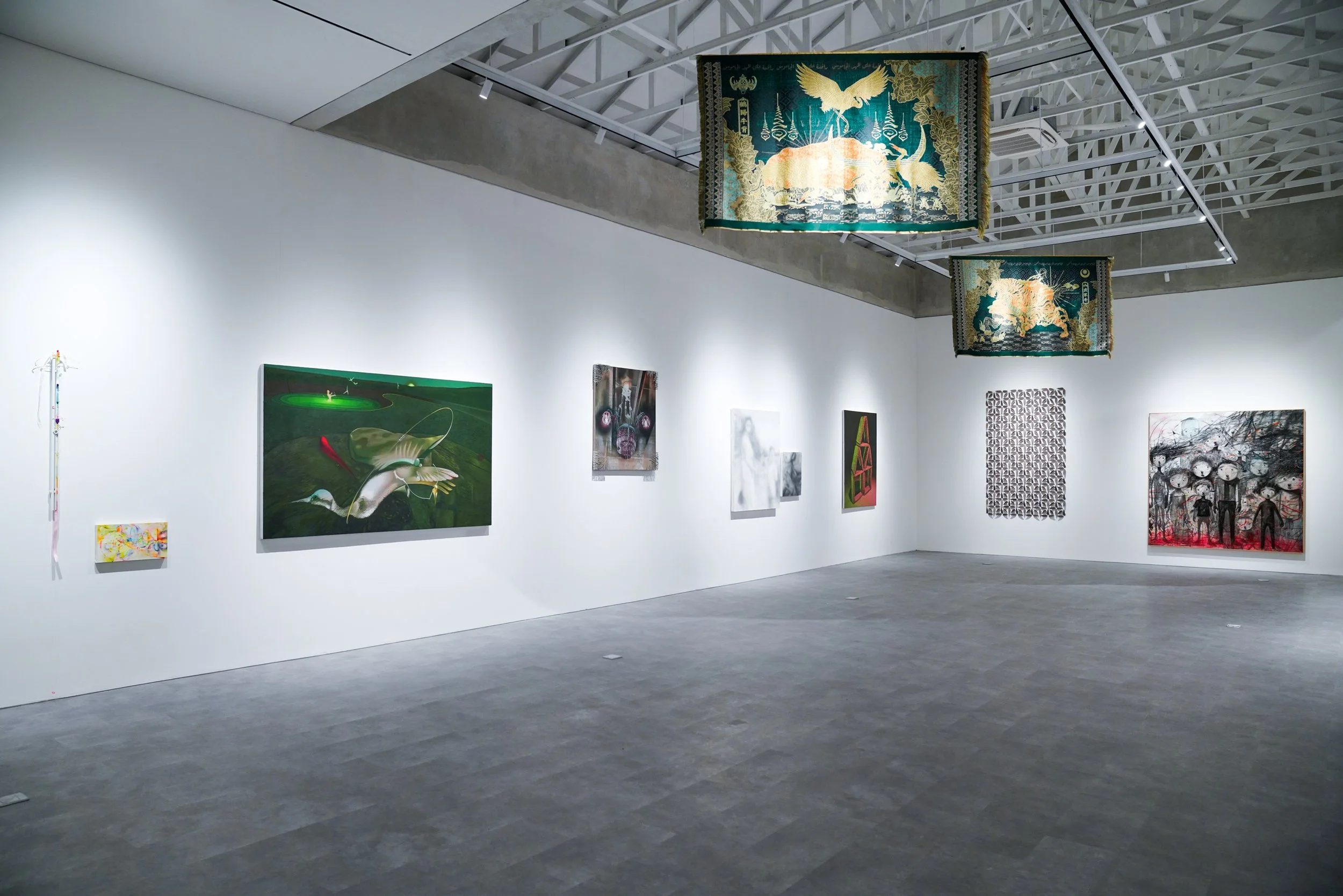
We Begin with Everything, 2025, exhibition view at ara contemporary. Image courtesy of ara contemporary.
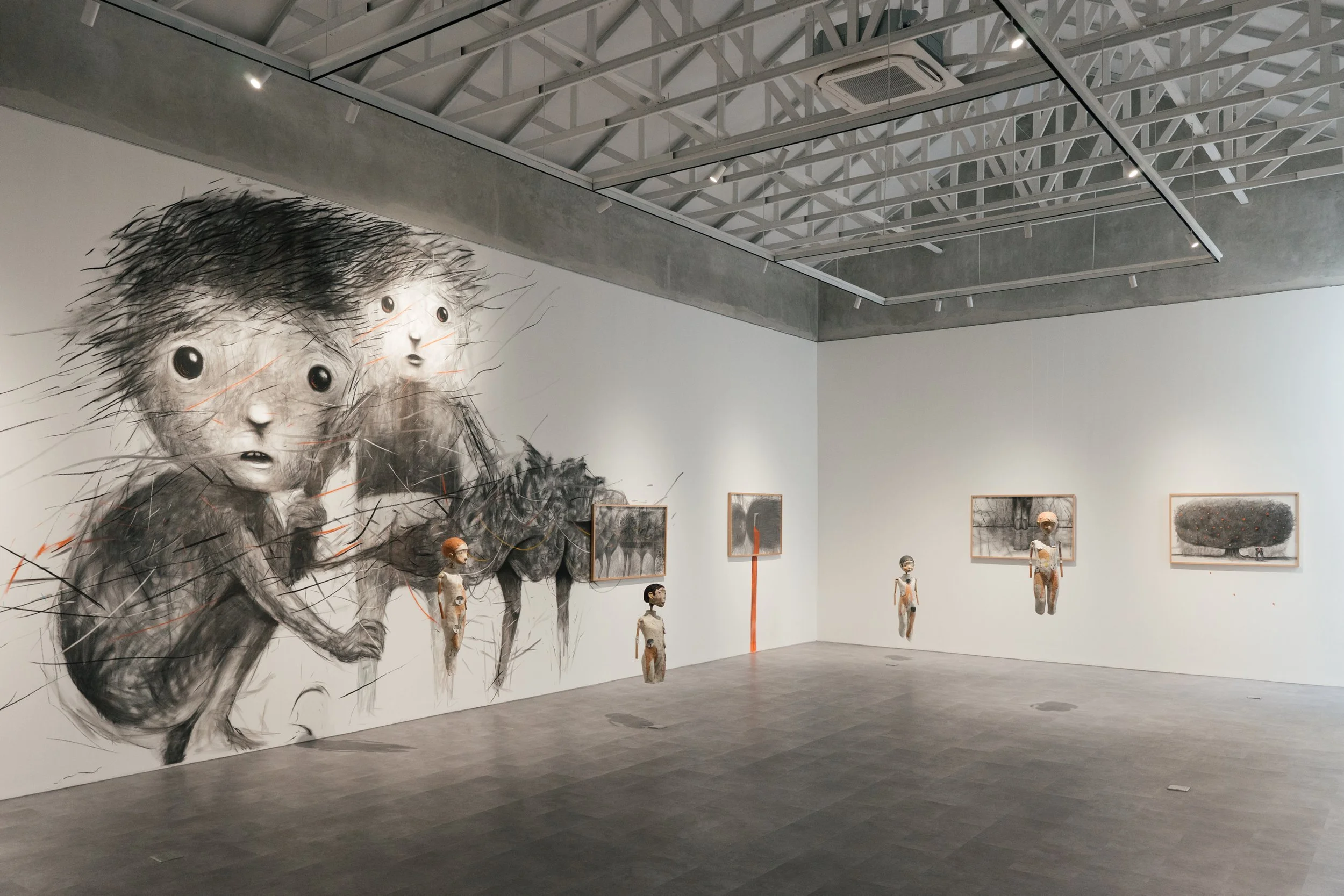
Iwan Effendi, Once Was, 2025, exhibition view at ara contemporary. Image courtesy of ara contemporary.
What does decision-making look like within a three-person founding team, particularly around programming and artist representation? Have distinct roles emerged, or does the structure remain fluid?
Megan: We try to set clear boundaries around who makes the final decision in certain situations based on our dedicated roles, while still ensuring that everyone brings their perspective to the table. We think this works well for us, because every decision is shaped by three different viewpoints, leaving less room for impulsive choices. Take artist representation, for example. The decisions involve my perspective on how an artist fits within our programming, Fredy’s thinking on how the gallery can support the artist’s career, and Danti’s evaluation of whether the gallery is ready for the artist based on our current resources.
Fredy: The three of us fill different gaps for each other. One person may become more emotional about a decision, while another becomes more practical, so there is a balance in how we approach things. We trust each other quite equally, and that makes the process easier.
At the same time, it also means no one is making decisions alone. Even if one of us feels strongly about something, the decision still goes through the three of us. Personally, that shared responsibility gives me some comfort because if something works, or even if it fails, we go through it together.
Fiesta: It also works because we have known each other for a long time. There is already an understanding of each other’s personalities and instincts, which helps when we need to navigate more difficult decisions together.
In a feature article with Manual Jakarta, you described ara contemporary as artist-centred, with artists positioned as partners. What does that look like in practice, and how does it influence your decisions when it comes to working with an artist?
Megan: When we describe ara contemporary as artist-centred, we mean that the gallery functions as a platform for discourse centred around its artists. In practice, this means our decisions are rarely one-sided. Every step, especially those related to an artist’s development within and beyond the gallery, comes through open communication and collective brainstorming. Beyond representation, we collaborate closely with artists to align their creative aspirations with the gallery’s trajectory.
Fredy: At first glance, the work may appear aesthetically pleasing, but what interests us is what exists behind it. The histories, contexts, and personal relationships embedded within the work become part of the dialogue.
Fiesta: We often think about where an artist wants to see themselves in five or ten years, and how we can grow alongside them. It is not only about putting on a show, but about continuing a conversation over time. Some relationships also develop organically. We might encounter an artist through social media or through conversations within the community, then spend time understanding the practice before deciding how we want to work together.
“We often think about where an artist wants to see themselves in five or ten years, and how we can grow alongside them. It is not only about putting on a show, but about continuing a conversation over time.”

Irfan Hendrian, CLOSED, 2026, exhibition view at ara contemporary. Image courtesy of ara contemporary.
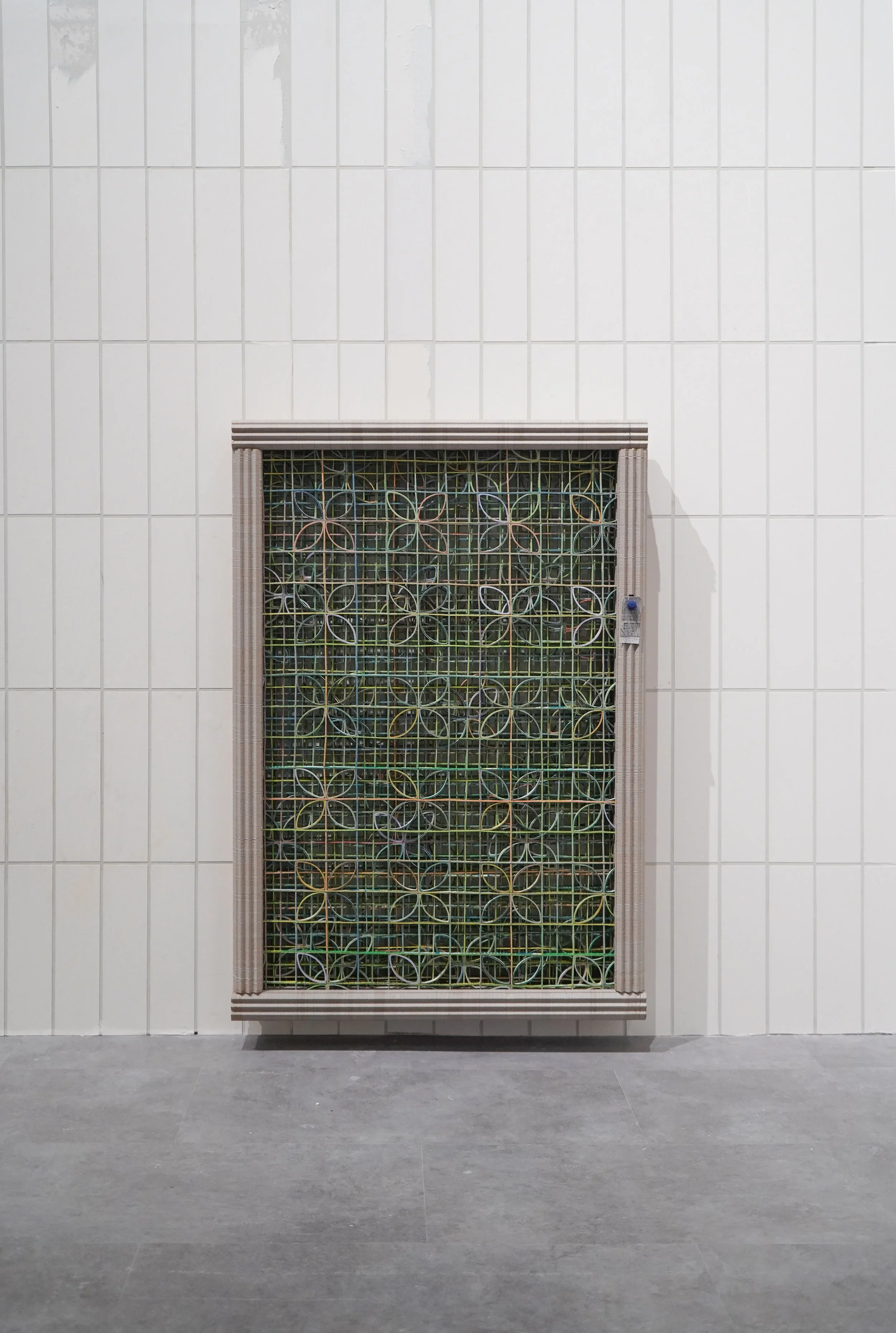
Irfan Hendrian, Chinatown Window Sample: Kawung 2, 2025, risograph and dye cut on layers of paper, 92 x 63 x 12 cm. Image courtesy of ara contemporary.
With CLOSED (2026) by Irfan Hendrian, which occupied both gallery spaces earlier this year, how does this project reflect your broader approach to exhibition-making, particularly in your commitment to more ambitious presentations or spatially driven works?
Fredy: We try to approach the gallery space as an extension of the artist’s language. Often, the more ambitious spatial elements emerge through conversations during the installation process.
Megan: Irfan Hendrian’s solo exhibition, CLOSED, is certainly a memorable one. The idea first came up in our presentation of his work at Art Jakarta 2025. We had a partition fully covered with paper tiles built for his Chinatown Window Sample series, which effectively mimicked the look of shophouses in Indonesia’s Chinatowns. These are places Irfan had visited for his research. We remember that while looking at the installed partition, Irfan jokingly asked if we could do this for the entire gallery space. For an exhibition that highlights the aforementioned series, it was an easy decision for us to make.
Fiesta: We are also interested in how artists respond to the space itself. The exhibition format can evolve gradually through the process of working together.
“We try to approach the gallery space as an extension of the artist’s language. Often, the more ambitious spatial elements emerge through conversations during the installation process.”

ara contemporary at SEA Focus 2026. Image courtesy of ara contemporary.
ara contemporary has participated in art fairs such as Art Jakarta and S.E.A. Focus and the upcoming LISTE Art Fair Basel. What is your art fair strategy in relation to how you aim to situate the gallery and your artists?
Megan: Art Jakarta remains an important platform for us locally, while fairs such as S.E.A. Focus align closely with the gallery’s regional focus. This year, we will also participate in LISTE Art Fair Basel, which feels significant as our first fair outside the region.
Fredy: We focus on collaborating with galleries that share our vision for Southeast Asian perspectives. Southeast Asia is still quite a small ecosystem, so for us, collaboration becomes important. Fairs like S.E.A. Focus or LISTE Art Fair Basel are about discovery, and for us they become opportunities to introduce our artists’ practices to audiences outside the region while remaining grounded in where the works come from.
Fiesta: At the moment, we are trying to grow at a pace that feels sustainable. Of course, there is excitement around participating internationally, but we also want to make sure we are building strong foundations first.
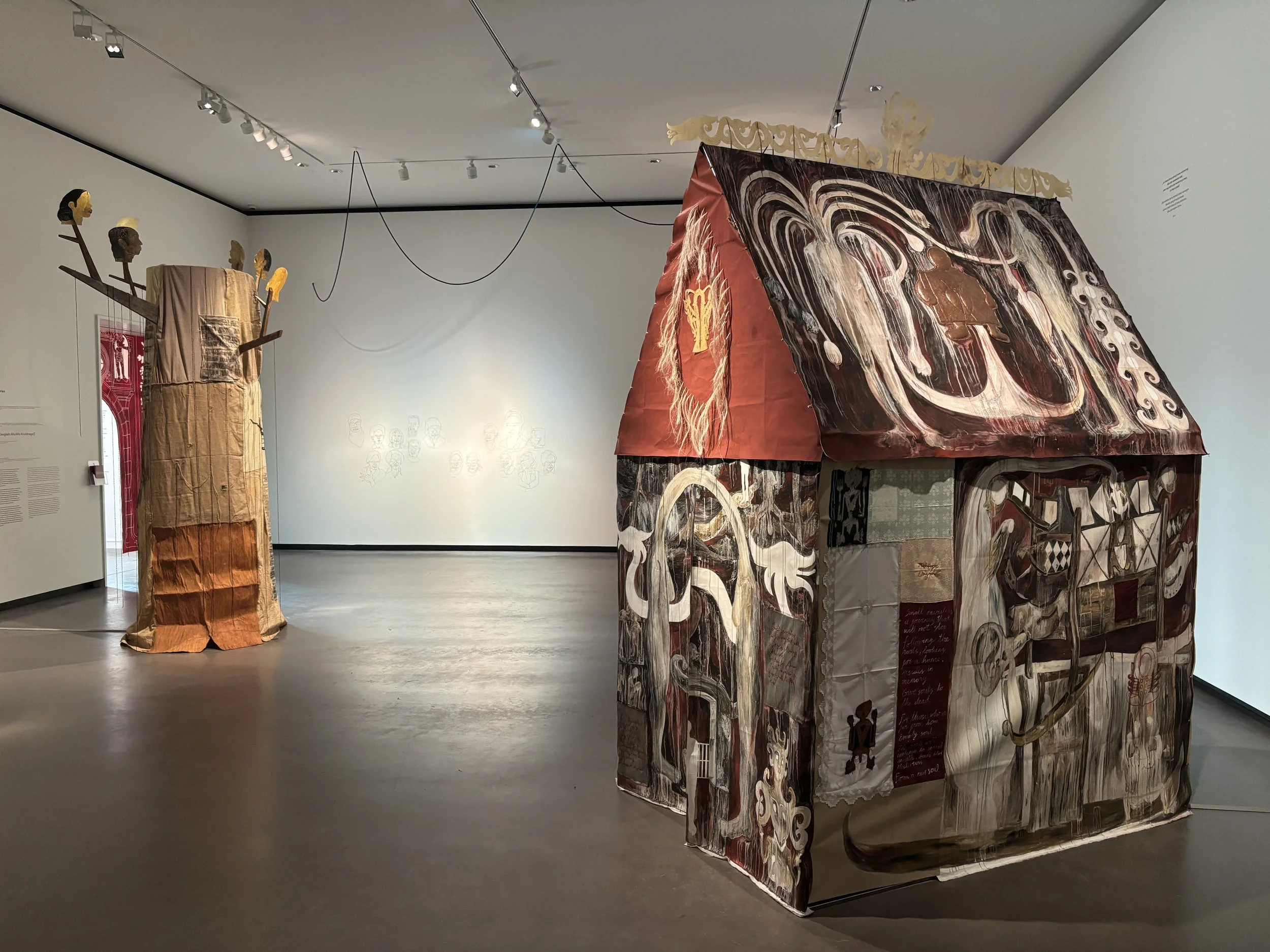
Ipeh Nur, Bakudengar, 2026, exhibition view at Museum Arnhem. Image courtesy of ara contemporary.

Natalie Sasi Organ, I bloomed where cut, I burned where placed, 2026, oil on canvas and stainless steel corners frame, 150 x 200 cm each (diptych). Exhibition view at She lit my mouth without a word at ara contemporary’s Main Gallery. Image courtesy of ara contemporary.
With upcoming presentations including Natalie Sasi Organ’s 40 40 HOME! at LISTE Art Fair Basel and Ipeh Nur’s Bakudengar at Museum Arnhem, ara contemporary is becoming more present beyond the region. What kinds of conversations do you hope these presentations open up, and in what ways do they shape your place within a broader international landscape?
Megan: When we collaborate with artists whose works carry stories and histories from Southeast Asia, each of us goes through a process of learning through their practices. Through Natalie Sasi Organ, we learned about the long history of betel nut in Thailand and its varied cultural and communal uses across different Southeast Asian countries. Through Ipeh Nur, we learned about Cengkeh-Afo, once part of one of the most profitable colonial monopolies and now known as the oldest clove tree still standing on the Indonesian island of Ternate.
Fredy: We often think about how to place Southeast Asian perspectives into wider conversations while retaining the particular histories and contexts from which the works emerge.
Fiesta: We are also interested in how these presentations create opportunities for exchange, not only for the artists, but also for ourselves as a gallery still learning how to situate Southeast Asian practices within broader international conversations.

Adytria Negara, Depictions, Depictions, 2026, exhibition view at ara contemporary’s Focus Gallery. Image courtesy of ara contemporary.
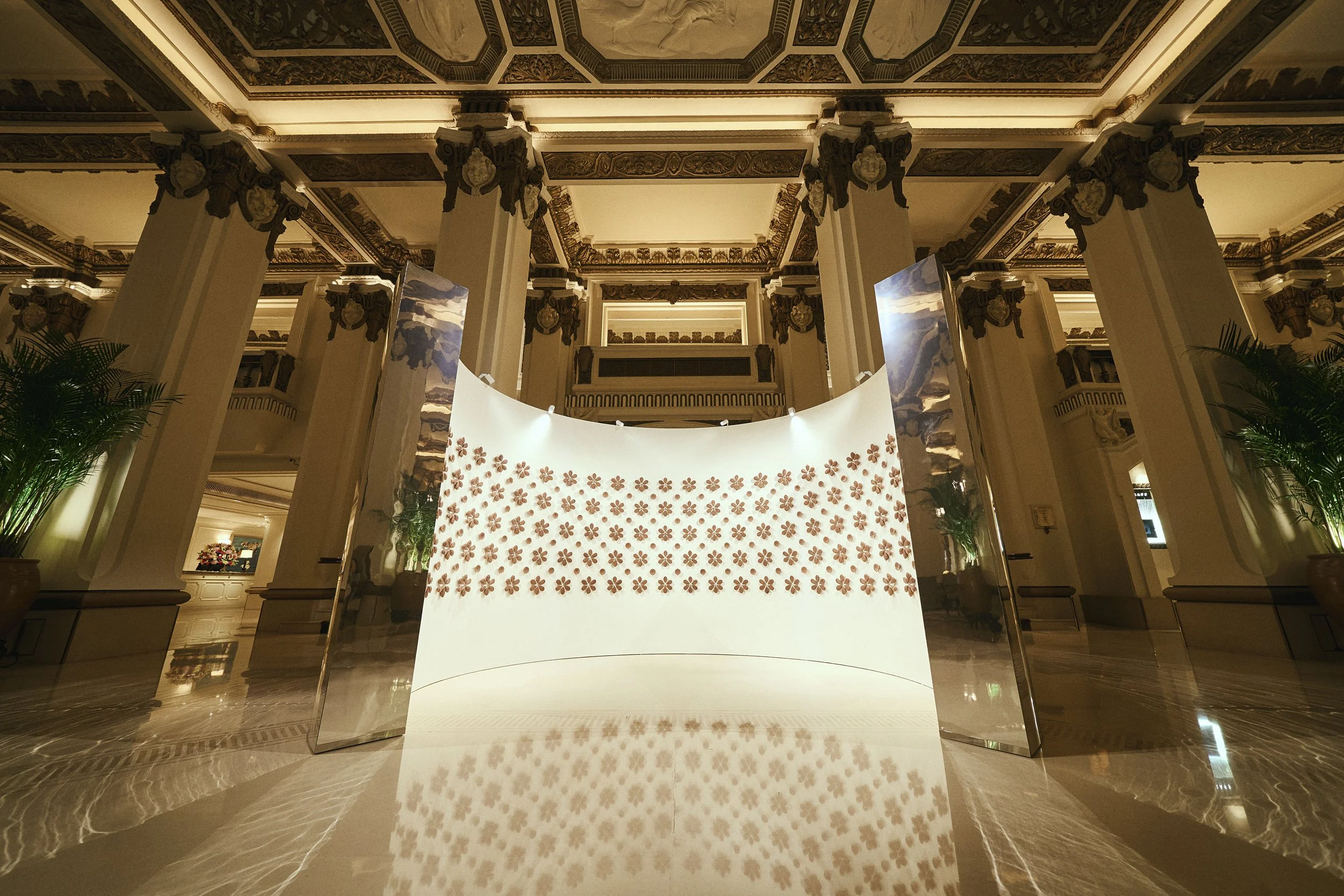
Albert Yonathan Setyawan, Metamorphic Modulation, 2026, presented at The Peninsula Hong Kong as part of Art in Resonance 2026, in partnership with the Victoria and Albert Museum (V&A). Image courtesy of ara contemporary.
April 2026 marks one year since ara contemporary’s opening. What has informed your approach to programming and pacing in this first year?
Fiesta: In the beginning, we worried people would see us simply as an extension of where we had worked previously. But over the past year, we have become more comfortable allowing the programme to evolve alongside the artists and conversations that emerge around the gallery.
Megan: Now that we are more comfortable with our identity and direction, our programming is guided by the goal to further expand and develop it. Our future programming focuses on highlighting the development of our represented artists, while also making room to introduce new artists. This year, I think we have become more confident in taking risks and expanding the scale of what we want to do.
Fredy: We are also trying to build a wider sense of dialogue around the gallery, with collectors, writers, and the broader community growing alongside these practices.
Lastly, what is next for ara contemporary? Are there any upcoming exhibitions or projects you can share?
Megan: We are also pleased to present Albert Yonathan Setyawan’s solo exhibition in the gallery space in May, continuing the dialogue from his previous solo exhibitions at Jogja National Museum in 2023 and Tumurun Museum in 2024. In July, we will present a group exhibition introducing several artists whose practices explore how origins and identities emerge and persist within displacement and in-between states.
Fredy: With artists like Albert Yonathan Setyawan and Iwan Effendi, there is already a long-standing familiarity with the practice. That sense of continuity is important for us as it allows the conversations to persist and evolve across different stages of an artist's career.
Fiesta: At the same time, we are also interested in introducing younger and emerging artists into the programme. We hope the gallery can become a space where artists, institutions, and the wider community continue learning alongside one another.