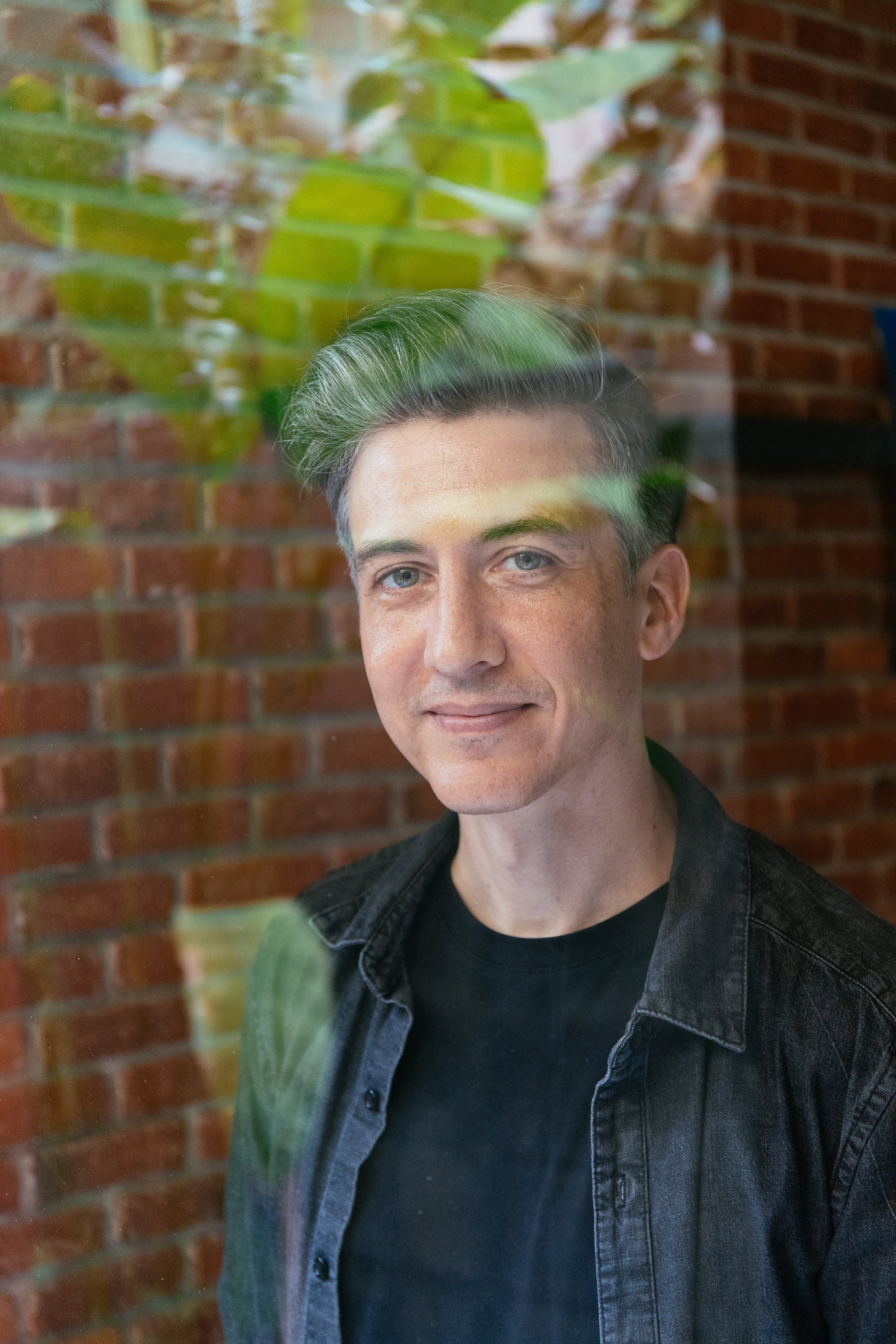
in-tangible Ecologies: A Year of Building Culture Through Connection
A commitment to Chiang Mai
My Own Words is a monthly series which features personal essays by practitioners in the Southeast Asian art community. They deliberate on their locality's present circumstances, articulating observations and challenges in their respective roles.
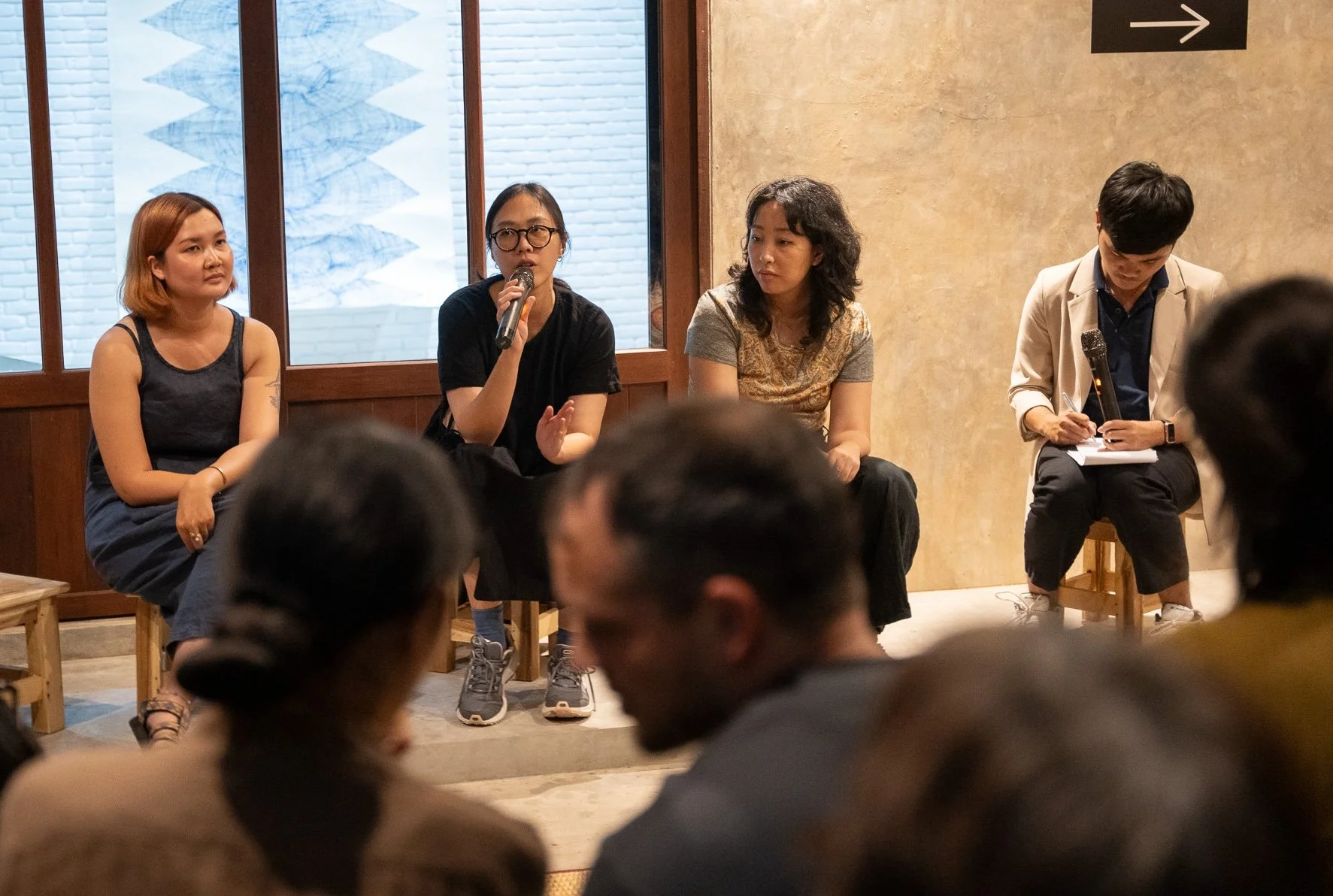
Artist talk from Just like heaven (if it doesn't feel like hell) (2024) by Kwanphitcha Kongsaeng. Curated by Kamonpan Tivawong as part of in-tangible institute’s Curatorial Fellowship programme. Image courtesy of in-tangible institute.
in-tangible institute was conceived and initiated with the mission of developing curatorial expertise in Southeast Asia, a project that has been at the core of Founder Zoe Butt’s ethos for nearly two decades.
Essential to this mission is an understanding of curatorial practice as inherently relational. Developing curatorial knowledge and skill must begin by understanding the multiplicity of worlds in which curators work—social, pedagogical, professional, political, historical, and cultural. Such understanding makes it possible to move within these worlds, cultivating interdisciplinary networks of support, growth, and learning. From this place of engaged and contextualised knowledge, nurturing curatorial talent is not only about individual training and mentorship. It is about fostering diverse, resilient, and sustainable cultural ecologies in which such talent can grow far beyond the scope of any particular workshop, residency, or exhibition.
My practice, prior to joining in-tangible, was as a writer interested in artists investigating the social and political dynamics that shape our interconnected worlds, and a social scientist researching entangled relationality in shared ecologies. When Zoe invited me in 2024 to work with in-tangible as Programme Manager, focused on editorial and research, the connection felt like a natural fit. I immediately resonated with her commitment to a curatorial approach focused on developing relational art worlds through deep critical engagement at a community level. This resonance deepened over the course of our work together, and one year ago, in July 2025, I took on the expanded responsibilities as Programme Director. Throughout this time, our work together has been built on a shared belief that, in the words of botanist and author Robin Wall Kimmerer, “all flourishing is mutual.” “Our” well-being, whether social, environmental, or professional, is dependent on the well-being of others with whom we are in community.
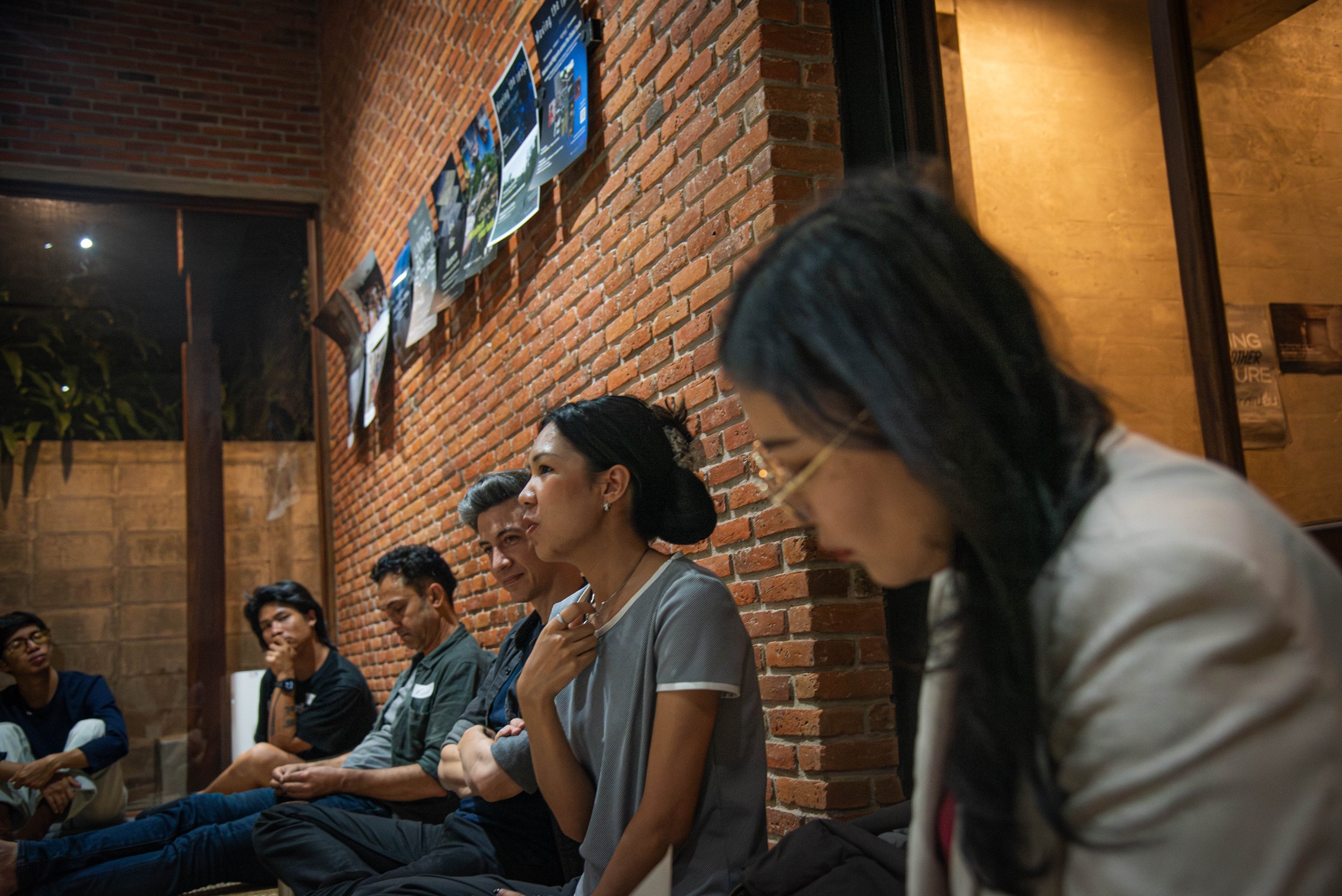
Talking and Listening 6 (2026), organised by in-tangible Curatorial Fellow Anantaya Chanlertpaisal, focused on what it means for arts workers to ‘live’ and ‘make a living’ in line with their values and principles. Image courtesy of in-tangible institute.

Talking and Listening 6 (2026). Image courtesy of in-tangible institute.
This mission is reflected in in-tangible’s commitment to Chiang Mai, Thailand, a “second city” also driven by community and relational connections, teeming with cultural activity but lacking in infrastructural support. Chiang Mai, like many other peripheral cities, is a home and training ground for artists and arts workers who drive much of the cultural production of hub cities like Bangkok. Despite Chiang Mai’s importance to the cultural ecology of Bangkok, art workers often lack access to the professional training, social connections, and cultural opportunities that the capital offers. The purpose of pointing this out is not to litigate blame for the disparity but to draw attention to the clear relation of mutual dependence between these two art worlds. Bangkok is stronger if Chiang Mai is stronger.
“Bangkok is stronger if Chiang Mai is stronger.”
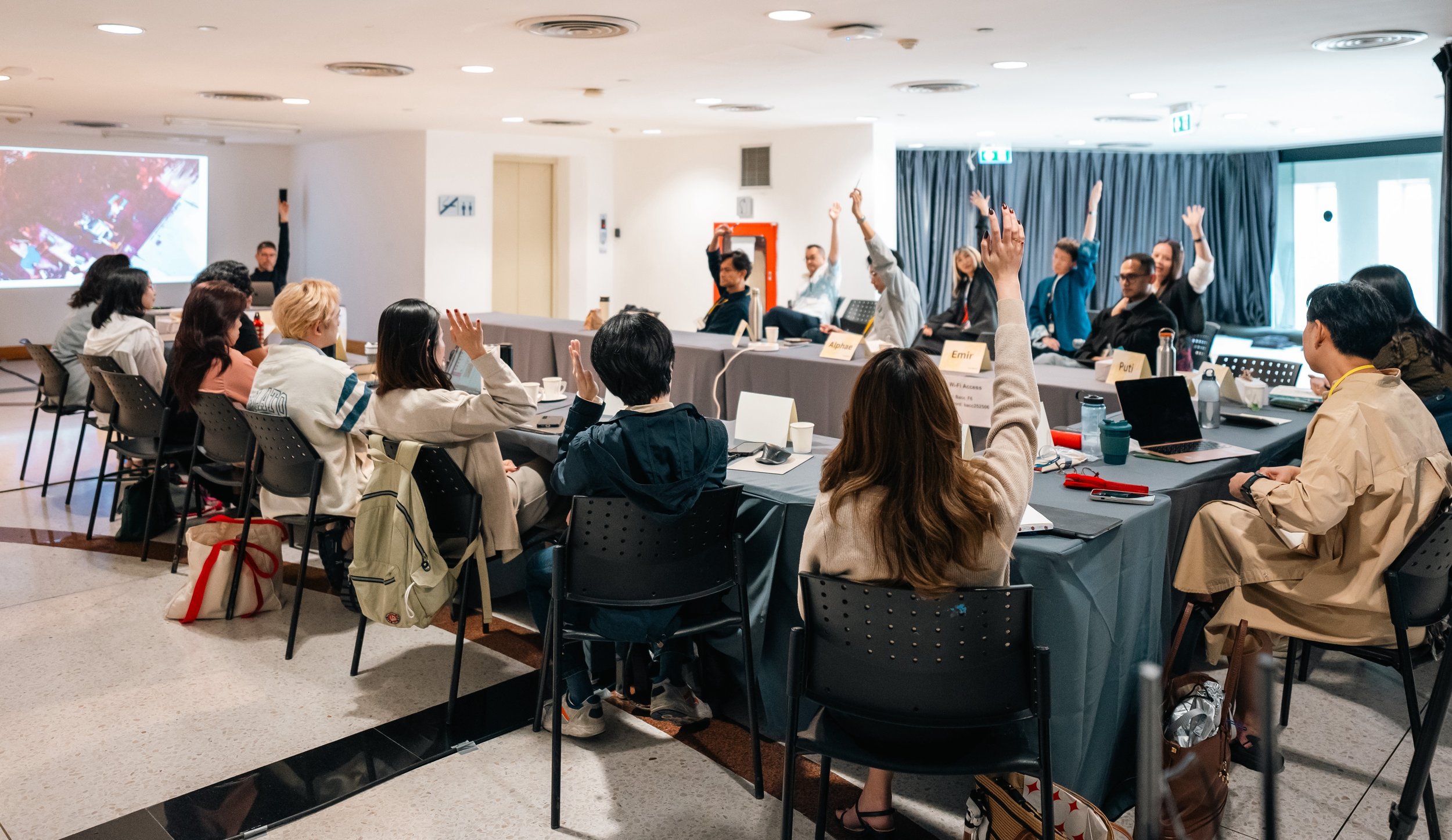
CULTIVATE: Module 2 brought curators, arts managers, entrepreneurs, and collectors together with an international faculty to discuss how to foster patronage that supports artistic communities and experimentation. Image courtesy of in-tangible institute.
Of course, Chiang Mai’s need for networks of mutual support extends beyond Bangkok. While in-tangible institute focuses its programming on our home community, our values drive us to develop sustained, meaningful relationships with diverse institutions, curators, artists, writers, students, and academics, not only in Bangkok, but in Kuala Lumpur, London, Chicago, Jakarta, Saigon, Khon Kaen, Pattani, Chiang Rai, and a host of other cities. A need to foster regional and global connections of reciprocal knowledge and cultural exchange is built into a number of in-tangible programmes.
For example, we partnered with the SAM Fund for Arts and Ecology in Jakarta, ILHAM Gallery in Kuala Lumpur, and MAIIAM Contemporary Art Museum in Chiang Mai to connect emerging curators and artists in Southeast Asia through the POLLINATION programme. CULTIVATE: Module 3, co-convened with Adeline Ooi, focuses on developing regional leadership in the arts. This year’s module connects participants with an international faculty from London, Yogyakarta, Kampala, Athens/Singapore, and New York/Los Angeles, sharing their expertise with curators and arts managers operating in Southeast Asia and Taiwan. Likewise, in-tangible’s outward-reaching Creative in Residence programme partners regularly with the POZEN Family Center for Human Rights at the University of Chicago, inviting residents to engage in reciprocal learning with our community through research, talks, screenings, seminars, workshops, music events, and, conversations. These programmes bring in-tangible and the community it serves into generative relationships with like-minded individuals and institutions. Cultivating such networks of mutual exchange between these already-entangled art worlds offers pathways for shared learning and support that not only strengthens the individual collaborators, but the arts ecology as a whole.
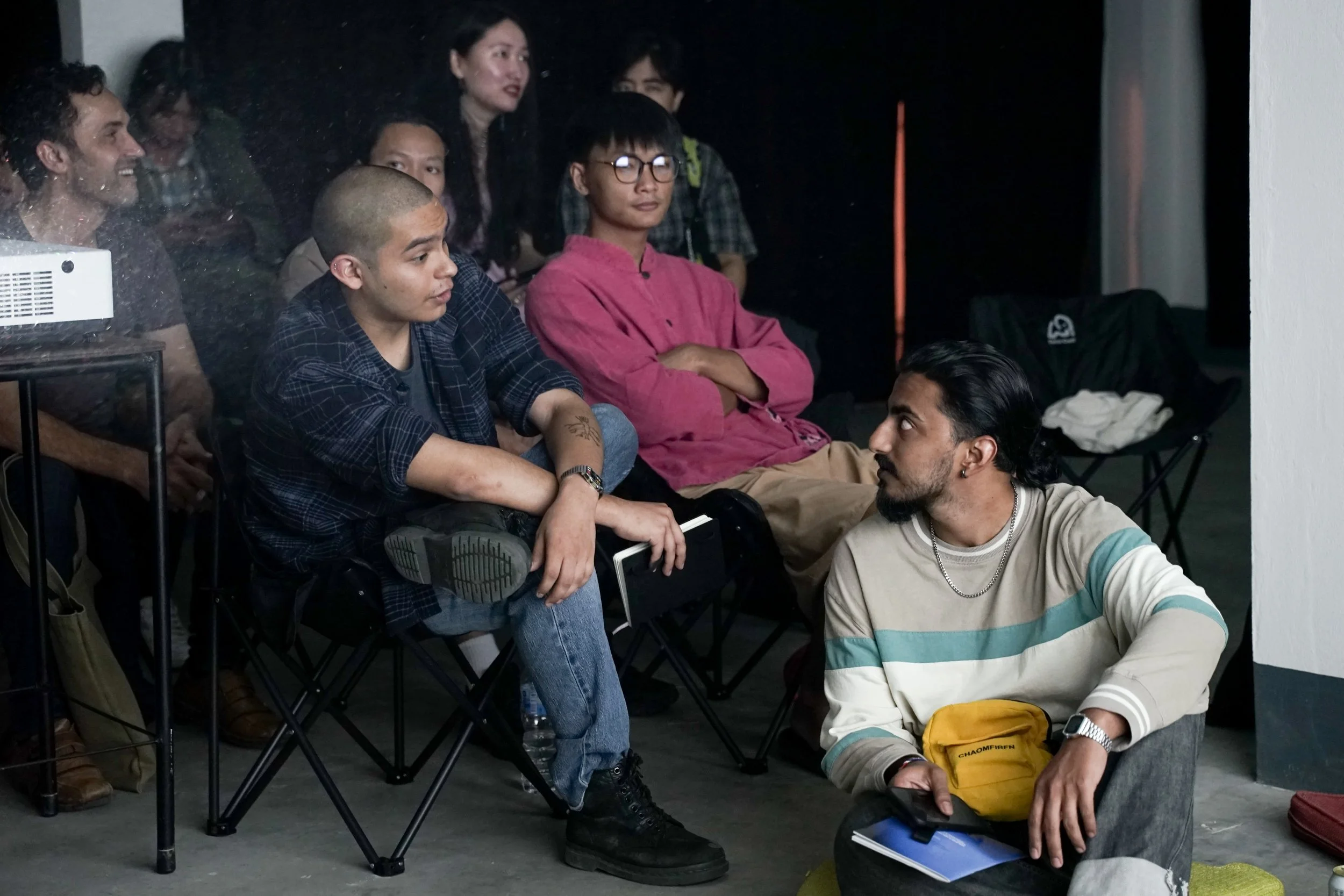
Moving the Image 2: Conversaciones, การสนทนา, ဆွေးနွေးပွဲ, Conversations (2025), programmed by POZEN Creative in Residence Paolo Diaz, screened films from Latin America and Southeast Asia, engaging discussion on migration and labor rights through the lens of exploitation and resistance. Image courtesy of in-tangible institute.
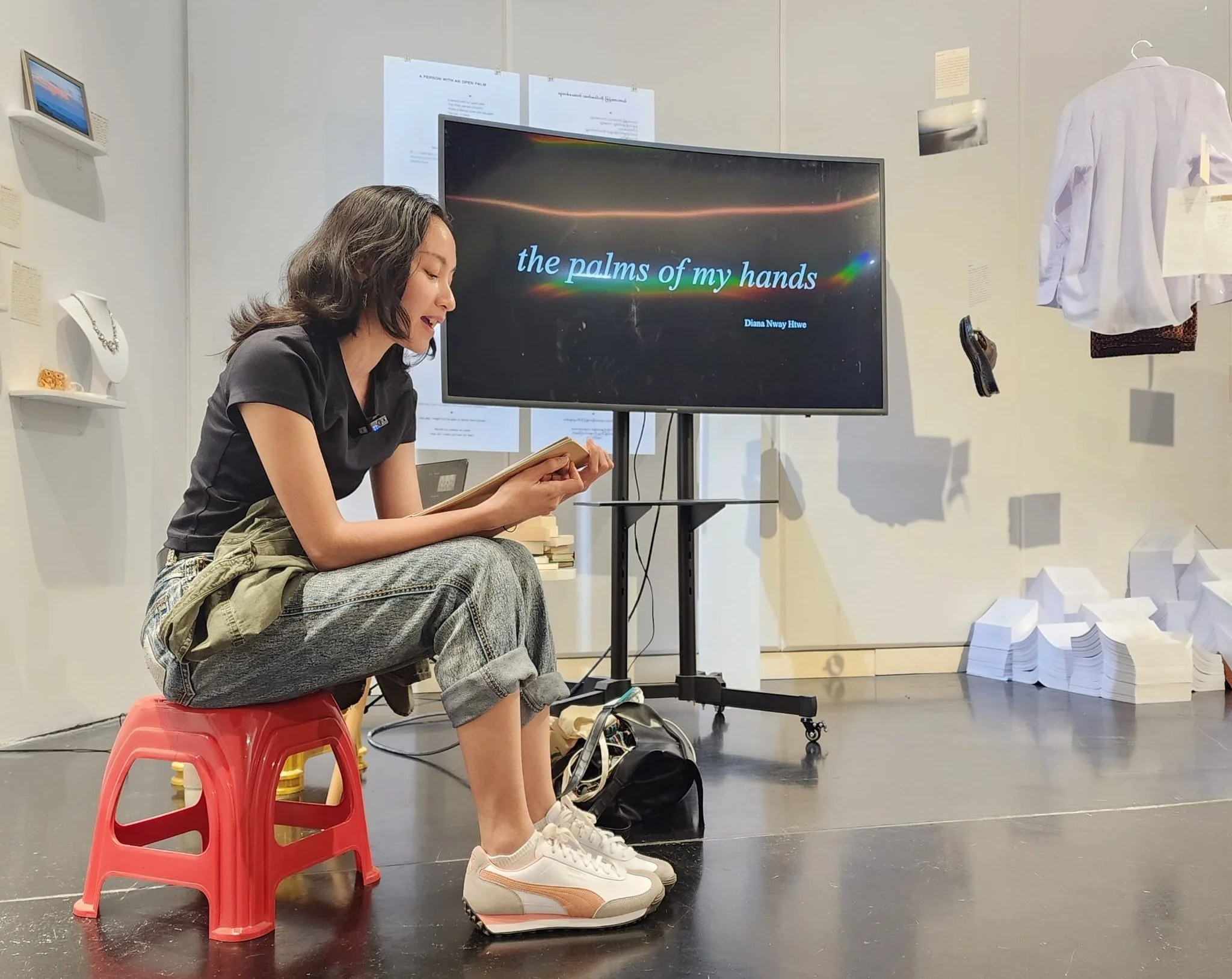
POLLINATION ed. 4: the palms of y/our hands (2025), curated by Diana Nway Htwe and Mark Teh explored hidden migration stories between Penang and Yangon. Image courtesy of in-tangible institute.
But the impact of these global collaborations relies a great deal on work aimed at strengthening local connections across disciplines. In order to be truly community-driven, the expertise and mentorship that goes into this work cannot only come from in-tangible, but also from members of our community who participate as both students and teachers.
Our Talking & Listening programme offers space for cultural workers to share challenges, support, critique, and advice among peers, and to develop networks of communication and collaboration in the community. ‘Moving the Image’ provides a platform to examine the role of the moving image in contemporary art and culture through public screening events and critical conversation that questions the contemporary media landscape and the images we consume. Specifically focused on emerging curators, in-tangible’s Curatorial Fellowship offers direct mentorship and paid experience, giving them the opportunity to develop their skills while assisting in the delivery of all of in-tangible’s programmes.
Initiated in 2026, the ‘Honing Method’ studio-residency programme works with recently graduated painters from Chiang Mai University’s Faculty of Fine Arts, offering support through mentorship, critical interventions, production funds, and a final exhibition. Working more broadly across Thailand, in-tangible texts, our most recent project in collaboration with art critic Lee Weng-Choy, commissions critical contemporary art texts from emerging writers. It provides participants with focused mentorship from established writers and a platform to publish their texts in both Thai and English. In the near future, in-tangible hopes to use this programme to engage the region more broadly, inviting writers from neighbouring Southeast Asian countries to develop texts addressing contemporary art in their own contexts.

The Writing with Friends collaborative writing workshop brought together a cohort of writers living in Thailand to develop their craft and ethos of art writing. Organised with art critic and writer, Lee Weng-Choy. Image courtesy of in-tangible institute.
All of this work, whether at local, regional, or global in scope, moves towards an arts ecology in which curators can develop their practice alongside diverse networks of interdisciplinary collaborators. Of course, the work of building our shared arts ecology comes with its own need for support. As a non-profit institute, we must also advocate for a more diverse pool of people to contribute towards the development of contemporary art and culture. For relational, community-driven models to truly take root, the models for financial sustainability must also shift to allow for the cultivation of resilient and long-lasting curatorial infrastructure, both within and beyond the region.
“As a non-profit institute, we must also advocate for a more diverse pool of people to contribute towards the development of contemporary art and culture.”
In doing this work, I often think of the social scientists, such as Arturo Escobar, James Scott, and Anna Tsing to name a few, who have devoted much of their careers to studying the critical need for a diversity of skill, knowledge, and practice in both human social worlds and natural ecologies. The same is true for our cultural spheres. Our art worlds need curators, artists, writers, academics, gallerists, patrons, and collectors who are critically-engaged in the development of their own practice and the communities through which their practices become possible. To this end, values like generosity, reciprocity, vulnerability, criticality, and community are essential to in-tangible’s mission and are core pillars of our programming. For all of our mutually-entangled worlds and collectively-shaped futures, relationships are everything.
To find out more about in-tangible institute and its programmes, click here.