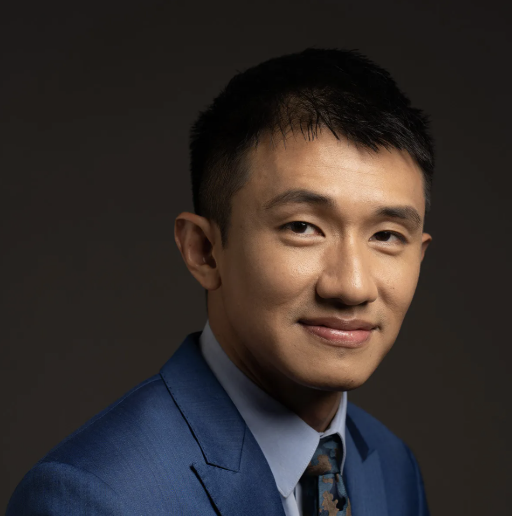
In Memoriam: Valentine Willie (1954-2026)
With respect, affection and gratitude
When I learnt of Valentine Wille’s passing on 9 June 2026, my thoughts went immediately not only to his place in the history of Southeast Asian art, but to the place he holds in my own life. I knew him affectionately as Om V—“Om,” uncle—and not simply as a dealer, not only as a gallerist, not merely as an important figure in the Southeast Asian artworld, but as an inspiring elder presence: bold and generous with his time, attention and critique.
How I came to first know of Om V is a haze now, though it almost definitely was in 2007 or 2008 when I was living in Yogyakarta, Indonesia. Those were years when I was still very young in the art world, having only recently graduated, still trying to understand who I might become within it. Om V was double my age, in his early 50s then and reputable.
Years later, in describing him to others, I would often fall back on the shorthand that he was “the Larry Gagosian of Southeast Asia”. Bigger, bolder, brasher, but with the cultural nous of our region. He was one of the few people of his generation who truly seemed to think regionally. Kuala Lumpur, Singapore, Yogyakarta and Manila; in quick succession, he built four galleries and a rigorous exhibition programme. For someone like me, he seemed to belong to a bigger, faster, more expansive world; he was possibilities embodied.
Even as the Southeast Asian art world experienced heady growth led by the art market in the years running up to the global financial crisis of 2008, the majority of actors worked in silos in their national scenes, rarely venturing beyond to consider the region as a whole. Modern and contemporary art were often treated as separate domains of expertise.
Om V was different. Because he had come to dealing through collecting, he seemed to move with fewer inhibitions and fewer inherited boundaries. He had curiosity, appetite, eclecticism, and an instinctive faith that things could connect across borders, across categories and across scenes.
“He had curiosity, appetite, eclecticism, and an instinctive faith that things could connect across borders, across categories and across scenes.”
The eponymously named gallery Valentine Willie Fine Art (VWFA) worked principally with artists from the region but was also ready to deal internationally as evidenced by the Fernando Botero exhibition VWFA presented across landmark sites in Singapore in 2004 and 2005. In 2008, the gallery also partnered with an auction house to present curated sales of contemporary Southeast Asian art, thus challenging the traditional tastemaker function of the Christie’s-Sotheby’s duopoly.

Valentine Wille and Wang Zineng at the exhibition a private collection at Helutrans Singapore, 3 to 19 September 2010. Image courtesy of Wang Zineng.
Together, Om V and Valentine Willie Fine Art perpetuated a sense of boundlessness important not only for the market, but for careers. Here is a photo of Om V and I at the exhibition, a private collection, I curated for him and his life partner Karim Raslan in 2010.
I do not know what it was that Om V saw and acted instinctively to assign a near complete novice like myself the responsibility of presenting key works in his and Karim’s collection. It does not matter as well now. What mattered is that at that moment, a young person was suddenly entrusted to deliver something real and of consequence and visibility. Om V saw no bounds, no reason to doubt, and was nonchalantly confident in his decision.

Installation view of a private collection showing Pressure and Pleasure (1999) by Agus Suwage in the background and History Class (2000) by Sutee Kunavichayanont. History Class was subsequently acquired by the National Heritage Board, Singapore, the year after the exhibition. Image courtesy of Wang Zineng.
For all his stature, Om V could make one feel included, as though one had been brought into his orbit not merely to serve, but to grow. Through him, I came to understand that one could move between the institutional and the commercial worlds without shame or compromise. One could think and write and curate seriously and still remain engaged with the market. That natural ease, borne out of a sense of boundlessness, is instructive.
“Through him, I came to understand that one could move between the institutional and the commercial worlds without shame or compromise.”

Valentine Willie, Wang Zineng and Nadya Wang at the 18 April 2026 event to mark the relaunch of vwfa.net as a digital archive. Image courtesy of Wang Zineng.
He believed in partnerships and treated others as equals. He would ask for thoughts on an artwork, a curatorial proposal, a fee structure, and suddenly one had to define oneself professionally. One had to speak in one’s own name. One had to determine what one’s labour was worth. I remember in our correspondence, as well as when he visited Yogyakarta, I would be conscious to be ready to discuss, to proffer a point of view and to be ready to be challenged and to learn. He did so not by imposing fear but because he elicited seriousness. You wanted to rise to his level. You wanted to do well by him. That, too, was a gift: he brought out one’s better self.
To many, Valentine Willie is a name and a gallery establishment that speaks of daring and deep cultural expertise. To me, there is only respect, affection and gratitude toward Om V. Respect, because he was a senior gallerist and dealer who shaped the Southeast Asian market decisively. Affection, because he was warm and witty almost all the time. Gratitude, because he has shaped the course of my career in the artworld in ways that I continue to understand more fully with time.