
Fresh Face: Chia Amisola
Hypertexts, internet art, Filipino and technological history
A&M Fresh Face is where we profile an emerging artist from the region every month and speak to them about how they kick-started their career, how they continue to sustain their practice and what drives them as artists.
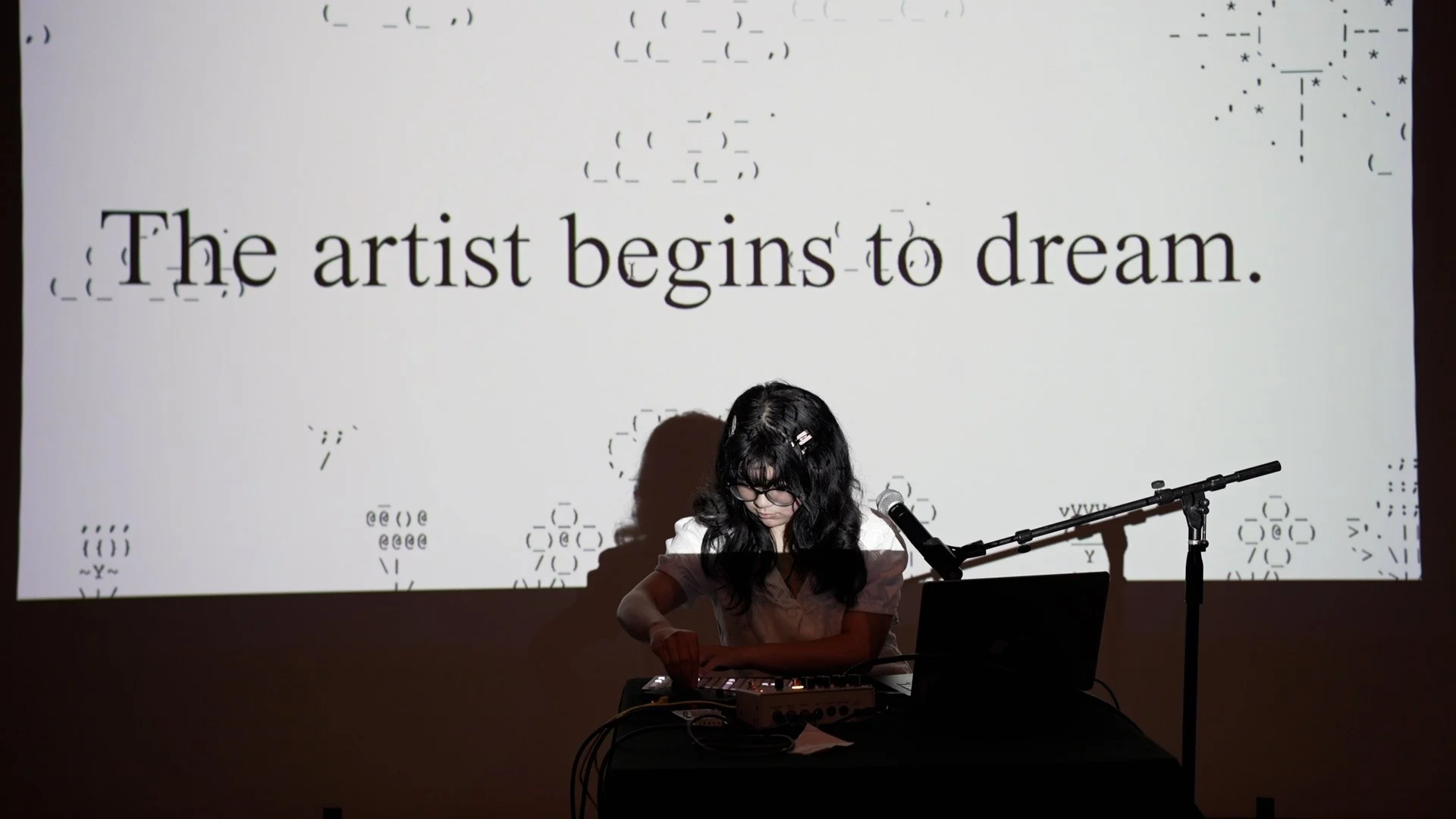
Chia Amisola. Image courtesy of artist.
Chia Amisola (b. 2000, Manila) makes art out of websites. Their works take the form of games, executable software and performances. What they build sits between an archive and a diary, densely linked and plumbing both historical and personal material. Chia received a Bachelor of Arts in Computing and the Arts from Yale University in 2022, and works as a product designer at Figma. They are a Lumen Prize winner, and have participated in residencies with NEW INC, Gray Area and the Internet Archive. Their work has been presented at Tate Britain and the Victoria and Albert Museum in London, the Museum of the Moving Image in New York and Art Fair Philippines.
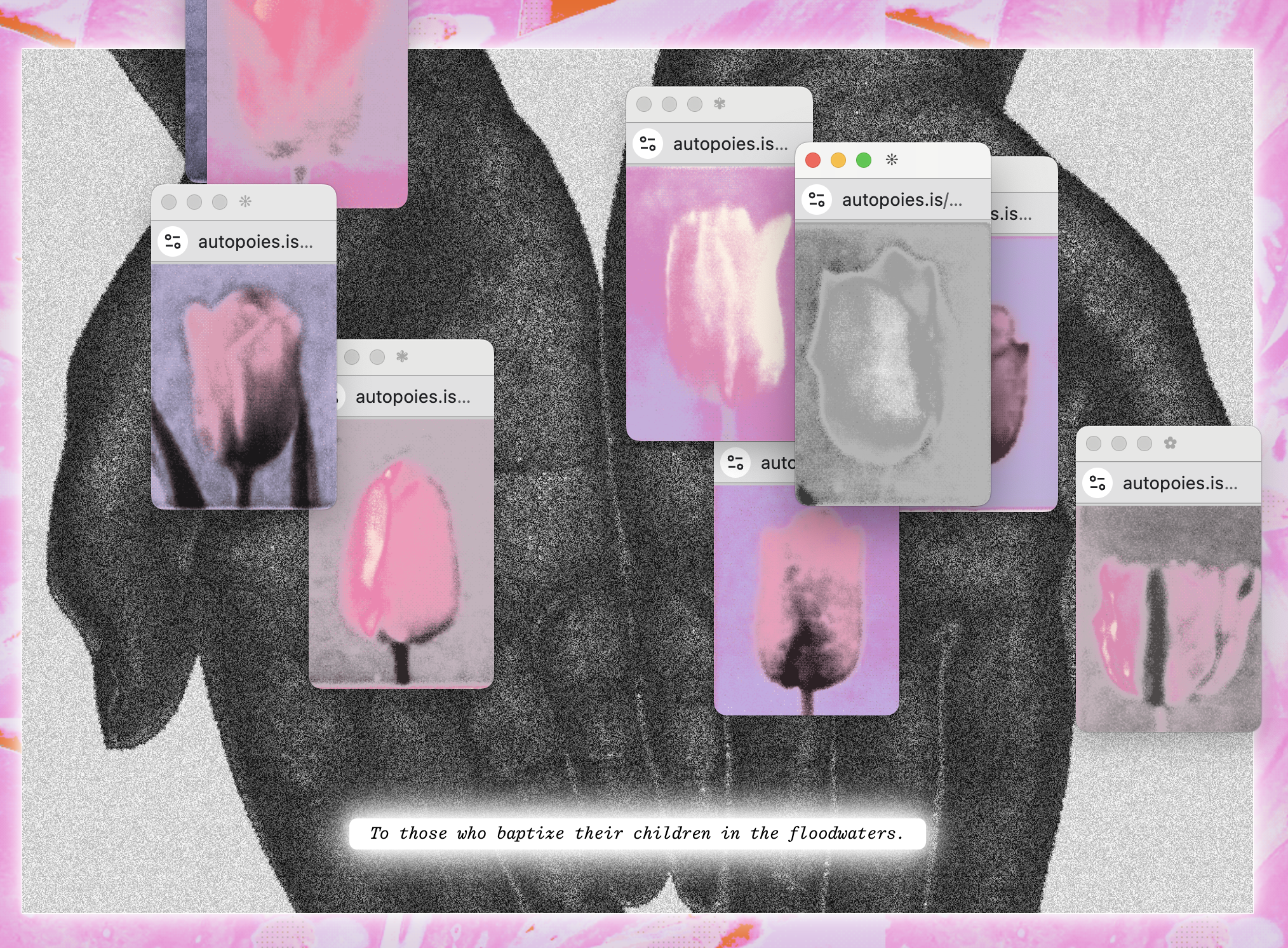
Chia Amisola, here, flower picking, manila north, 2025, HTML, variable dimensions. Commissioned for Indiepocalypse. Image courtesy of artist.
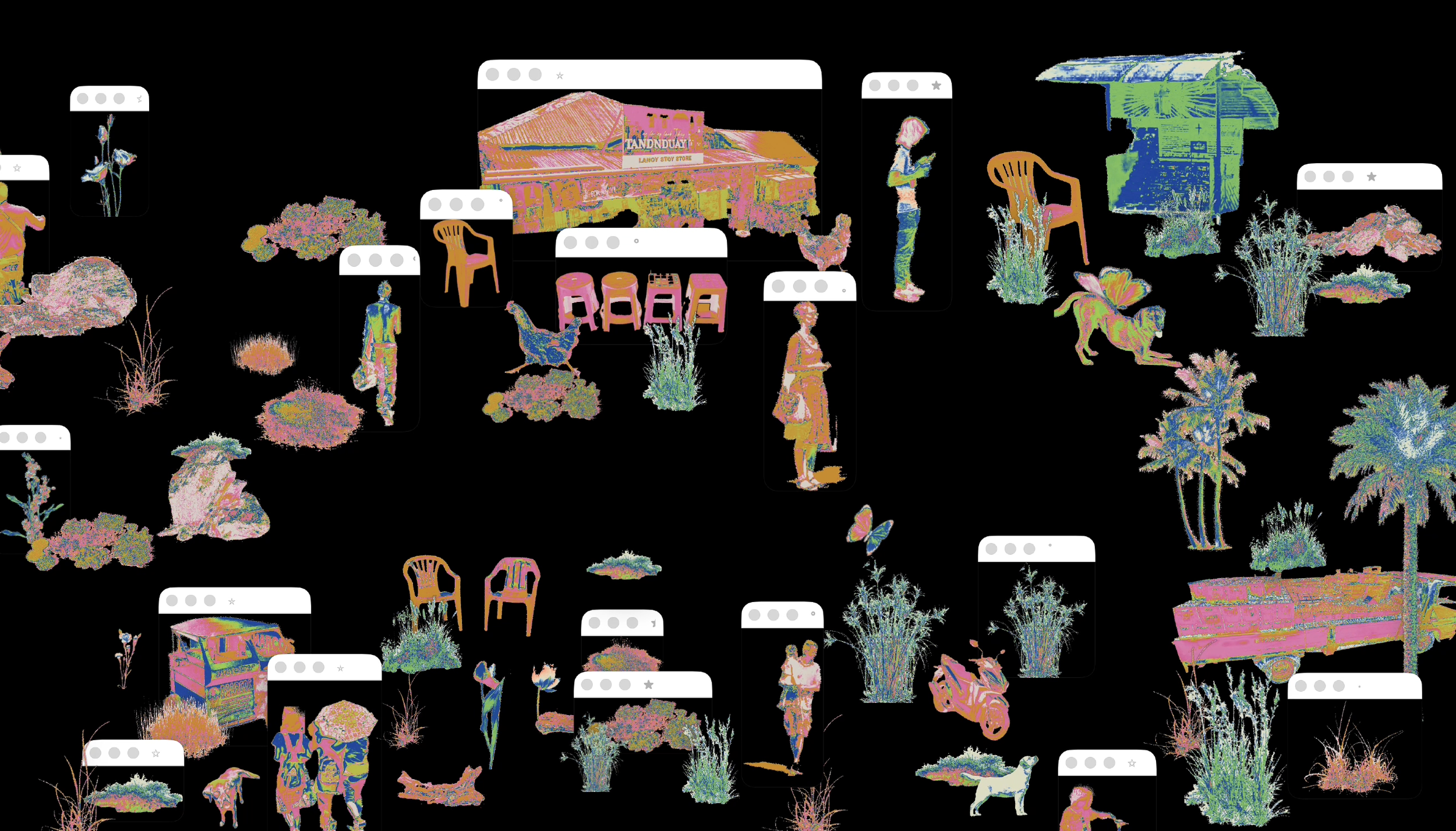
A hypertext is a text one reads by clicking from one page to the next. It is among the web’s native forms, and the one Chia returns to most. Their hypertexts are composed of literal browser windows, title bars and address fields, so the scaffolding of the web is presented in plain sight. These hypertexts open onto fragments: text and solarised images that look like reproductions, rendered in acid pink, green and ultramarine. They multiply and cascade left and right until the viewer is inundated with them. References to the personal and the political appear side by side.
here, flower picking, manila north (2025) is set in the Manila North Cemetery, where thousands of families live among the graves: “in manila north, i saw a home underneath rubble, bodies and bottles / who sweep graves, share bathwater and pray all the same / who hold the last of history, who live in this human purgatory / cradled next to the father of opera, former presidents, the american revolutionaries, the national artists”.
On screen, a gumamela fills a white window, its pink petals and orange centre enlarged until it breaks into grain. Over it is a passage attributed to Thich Nhat Hanh: “a flower is not a flower / it is made up only of non-flower elements / sunshine, clouds, time, space, / earth, minerals, gardeners, and so on / a true flower contains the whole universe / if we return any one of these non-flower elements to its source / there will be no flower.” The line describes how Chia builds. Each hypertext is made of windows, and each window holds one part of the story.
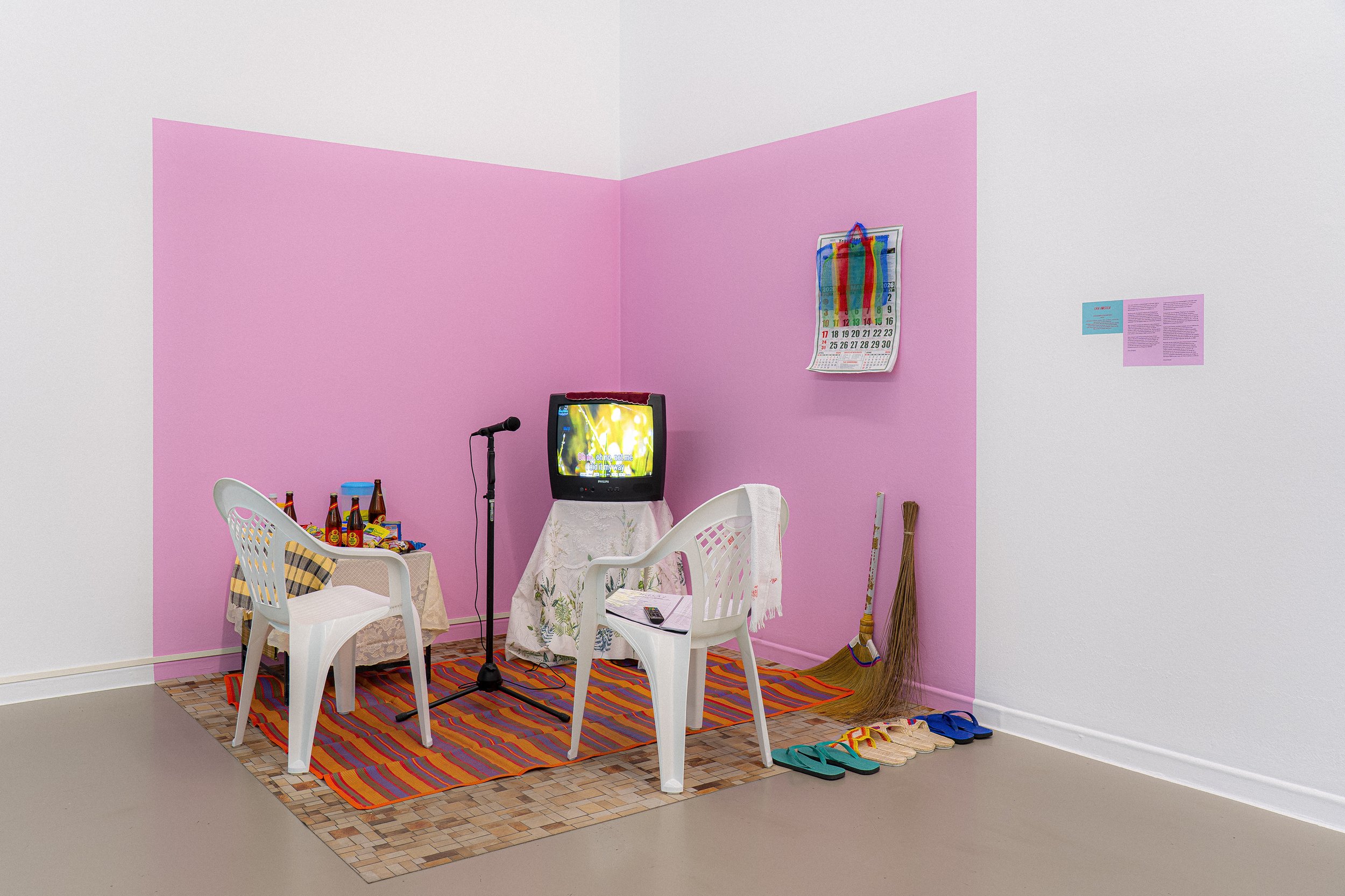
Chia Amisola, KAKAKOMPYUTER MO YAN, 2026, Exhibition view at La Casa Encendida, Madrid, Spain. Photo by Maru Serrano. Image courtesy of artist.
Some works extend beyond the browser. KAKAKOMPYUTER MO YAN is an anthology of Philippine net art that Chia curated and developed. Its title is taken from a familiar parental scolding translated to mean “that's what you get for using the computer!” After presentations at space63 in Makati and Art Fair Philippines, the piece is currently staged in Kumusta na kayo? (2026) at La Casa Encendida in Madrid. The installation is composed of objects found in a Filipino home. On a lace-covered table, a CRT television plays a karaoke interface. But the songbook lists artworks instead of songs, each piece has a number code, and visitors punch it into the remote to play the work. It hosts the work of 11 artists and proposes an alternative genealogy of internet art constructed from the developing world.
Across Chia’s practice, their work is assembled by accumulation. In some pieces, browser windows open onto a build-up of text and image fragments. In other pieces, the objects of a Filipino home are catalogued and arranged. Read together, they take on the density of a Filipino household and of a Philippine history of technology. The same subjects recur: labour, love, faith and life on a networked archipelago.
Interview
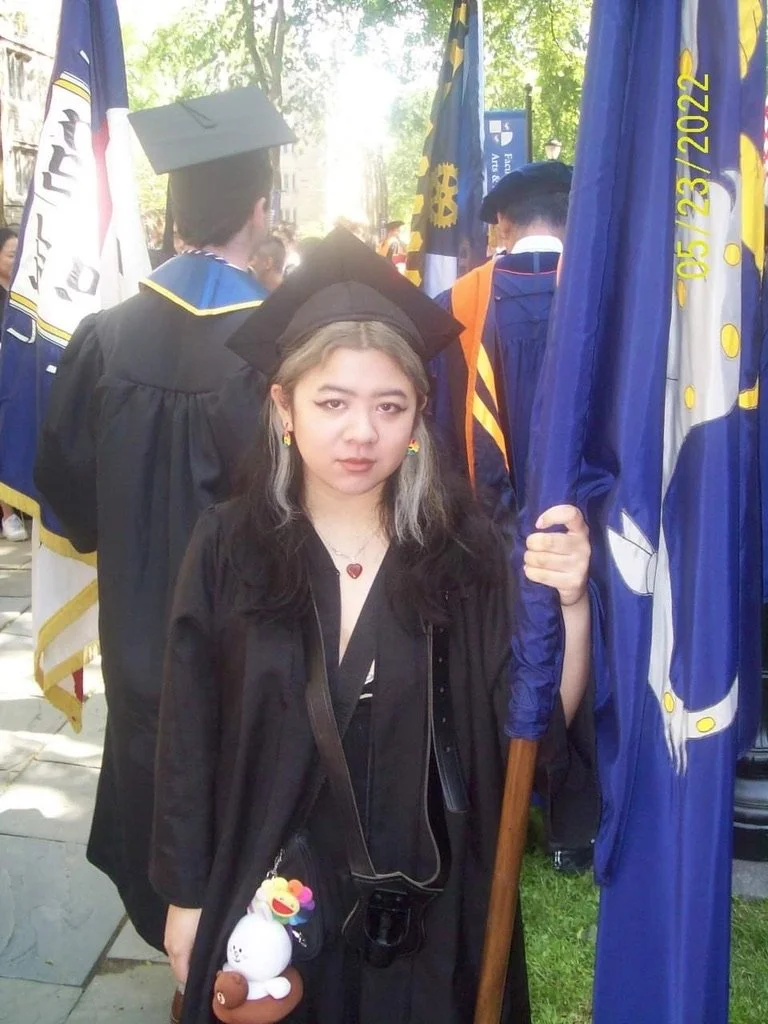
Chia Amisola at Yale. Image courtesy of artist.
In 2022, you graduated from Yale University with a BA in Computing and the Arts. Could you describe your experience there, both the education you received and the cohort you interacted with?
I taught myself how to apply to American colleges through Reddit. Moving from an incredibly sheltered upbringing to another country was jarring. I wanted a career in computer science, and I came out realising how the art I have been making on the computer since I was seven was the type of work I wanted to make for the rest of my life.
At Yale, I had a dream of gathering all the people I love in one place, and I thought about how the internet could be that place. I was desperate to be nearer to my country and the internet enabled that. I also struggled with what a career in technology could mean against its impact on the third world.
My most lucid realisation might have been that the students in an elite institution were no more talented or hardworking than the other people in my life. The students I met were largely equipped with a vocabulary and set of signals, seemingly deterministic trajectories that I benefited from imitating, but had no interest in carrying.
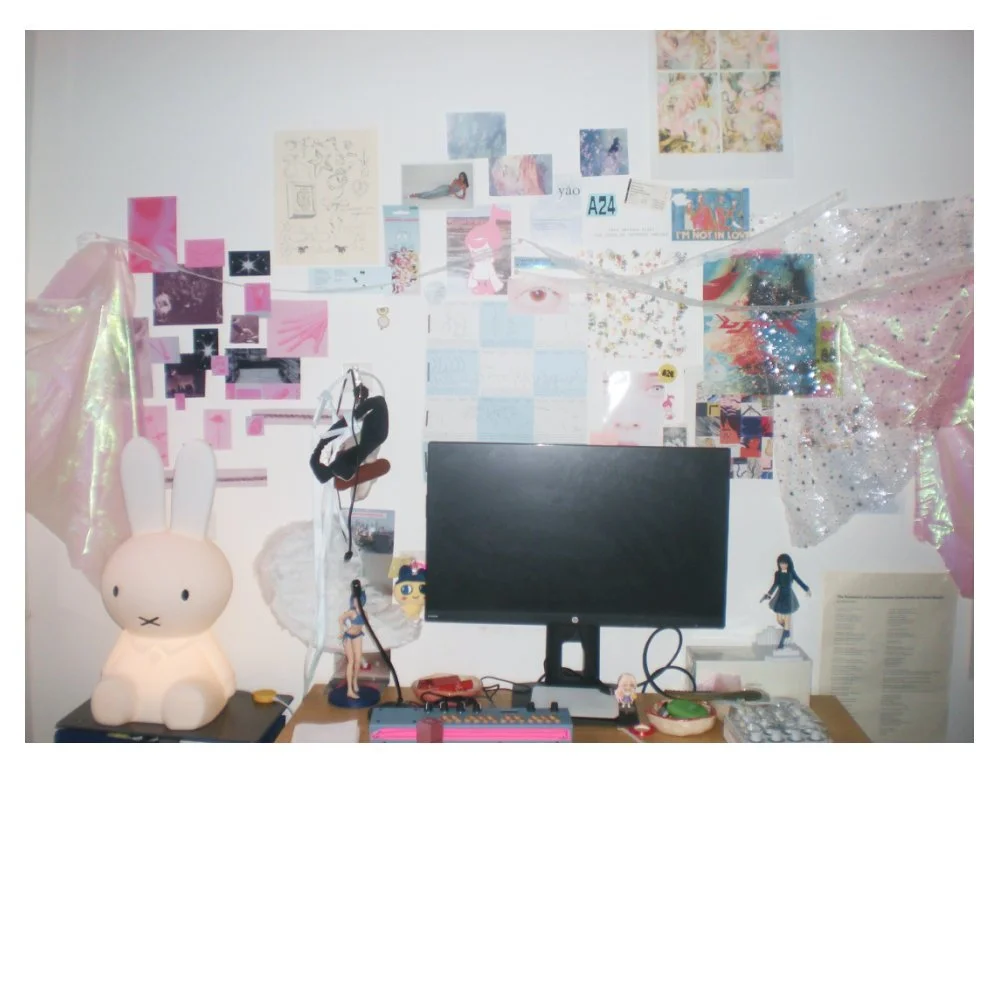
Chia Amisola’s studio. Image courtesy of artist.
Who has been a mentor or an important artistic influence for you? And why?
Ever since I was a teenager, I have been obsessed with lengthy projects, like the fanfic The Subspace Emissary's Worlds Conquest, Frank Stanford’s The Battlefield Where The Moon Says I Love You, and Lav Diaz’ Evolution of a Filipino Family, one of my all-time favorites. I admire friction, slowness, realism and how Lav Diaz describes how his films are not “long”, but free. I like to watch the atmosphere.
You have worked as a Product Designer at Figma since 2022, alongside your art practice. How do you balance the two, and does this affect the work you make as an artist?
Like many artists, I cannot live on my art alone… I am surprised by how much money I lose making websites. I am interested in producing tools and infrastructure for other people. Toolmaking is the most human thing about us. The historian and theorist Beatriz Colomina described that only humans invent tools to make tools, and have used its own artifacts to reinvent itself.
Working in the industry has given me an understanding of what parts of me can scale, and what else lends itself to smaller myths, worlds and prototypes normally unfavoured by platforms or corporate funding. My work in design and creative tooling shapes the workflows and the imagination of millions of other designers, students and artists daily. It is a hefty responsibility that humbles me and demands more rigour in what I do. Venture-backed software has its own language and artistry, even if still largely foreign to me.
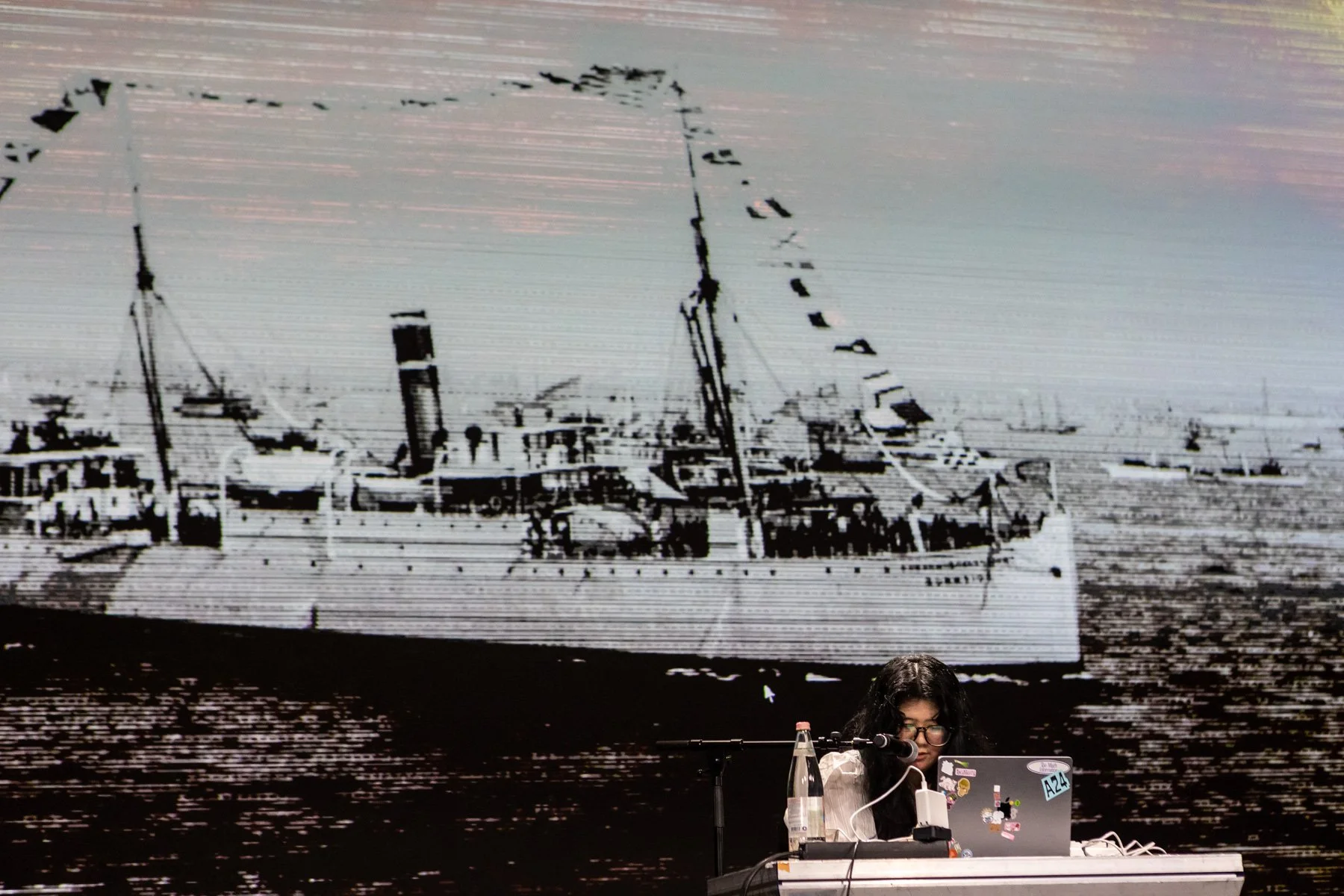
Chia Amisola, Every Love Song in the World, 2026, Lecture Performance at transmediale 2026, Berlin, Germany, Photo by Laura Fiorio.

Chia Amisola, Performance, 2026, HTML, variable dimensions. Image courtesy of artist.
You have been working on long-term projects such as Every Love Song in the World and your ongoing Internet Ambient pieces. Can you tell us how these works begin and how they have evolved?
As a technologist, sometimes I begin from a formalist inquiry: what mechanisms mediate text and interactivity on the browser? There are many works that emulate an interface, but do not directly explore its ontologies and textures. My Internet Ambient series is a collection of my browser-based literary pieces and games, presented in live settings with elements of a reading or ambient set. Sometimes, it can be durational and protracted like a performance for Himala’s hypertexts that stretched to six hours. I am interested in reading a database like a novel, or the syntax of a programming language like a poem, where I become a system that recursively retrieves meaning from a published corpus of self and my samples. I also look at the non-linear, generative, improvisational properties of what multimedia on the internet looks like. Inverting the desktop from a place of utility, seamlessness and the performant to one of theatrics, excess and chaos helped define the form for my work. I utilise this vocabulary to both critique and inhabit these systems as a performance.
Every Love Song in the World is an expanded series about the third world's entanglement with infrastructure. It began from a prototype of a performance-lecture presented at Transmediale 2026: By the Mango Belt & Tamarind Road in Berlin this January. I gathered vignettes from the past decade of Filipino and technological history. I intend for each performance to be a rearrangement of the set of events. They include: Filipino maritime workers who laid out telegraph communications for colonial control after the Spanish-American war, or the legal discourse and mocking ringtones from the Hello Garci wiretapping electoral crisis, to individuals like Romana Didulo, a Filipino-Canadian conspiracy theorist, self-proclaimed alien and “Queen of Canada”. Each chapter is centred on a different technological condition or artifact as subject of study.
“Inverting the desktop from a place of utility, seamlessness and the performant to one of theatrics, excess and chaos helped define the form for my work.”
Chia Amisola, Screens Contextualized, 2026, Exhibition view at ShinQs, Tokyo, Japan for DIG SHIBUYA 2026.
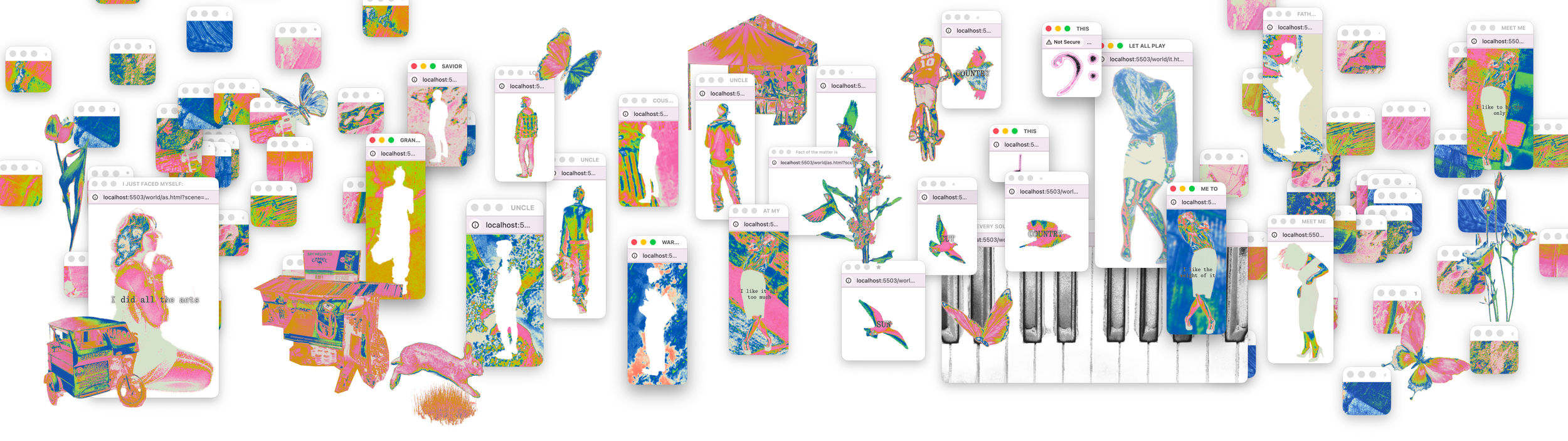
Chia Amisola, Parade/March After the Flood, 2026, HTML, variable dimensions. Image courtesy of artist.
Your text ‘Tropical Technologist’ is being republished for Green Archiving: Imaginaries of archival futures this year. It opens with the claim that “the Filipino is a weather machine”, and moves from the pisonet to the Philippine Offshore Gaming Operators (POGO) to make its case. How do you see the Filipino’s relationship with technology?
‘Tropical Technologist’ looks at climate and cycles of entrapment. An example is how the air conditioner started out as a means of moisture regulation which was designed with human comfort as a byproduct but it has now become a necessity in public spaces. The narrow vision of technology as means of domination comes from imperialist ideology, but their applications tend to falter in the tropics, becoming far more intermittent, fragile and unstable. We come to live with machines as unique co-conspirators to survive with and steward. In decentring a need “to be served” and instead living with technology while tending to it and knowing it, we might liken our entanglement more like an ecology, just as we have grown to understand nature.
“In decentring a need ‘to be served’ and instead living with technology while tending to it and knowing it, we might liken our entanglement more like an ecology, just as we have grown to understand nature.”

Chia Amisola, KAKAKOMPYUTER MO YAN, 2026, exhibition view at La Casa Encendida, Madrid, Spain. Photo by Maru Serrano. Image courtesy of artist.
You live and work between Manila and New York. Could you share a favourite art space or gallery in either city? Why are you drawn to that space and what does it offer to your practice?
In New York, I have been inspired by spaces hosted in studio apartments, warehouses, U-Haul trucks, abandoned coworking offices… One example is The Gallery, a time-limited curatorial platform that operates nomadically in vacant office spaces. Art that exists within constraints feels most alive. Maybe I am just drawn to art that feels lived in.
What are your hopes for the Philippine art scene, and for Southeast Asia more broadly?
How do we better remember? Every process in my practice lays a dream for a better infrastructure for memory, either through intentional retrieval and revealing, or in a plan for preservation or graceful deprecation. I would like to see more archives emerge, like that of Mon Ramirez, Arkibong Bayan, José Maceda’s collection of traditional music, or the Philippine Labor Movement Archive. I want informal archives molded by communities, and the means to process these many representations of history, rejecting a rigid historiography. Art has held this potential to save ourselves.
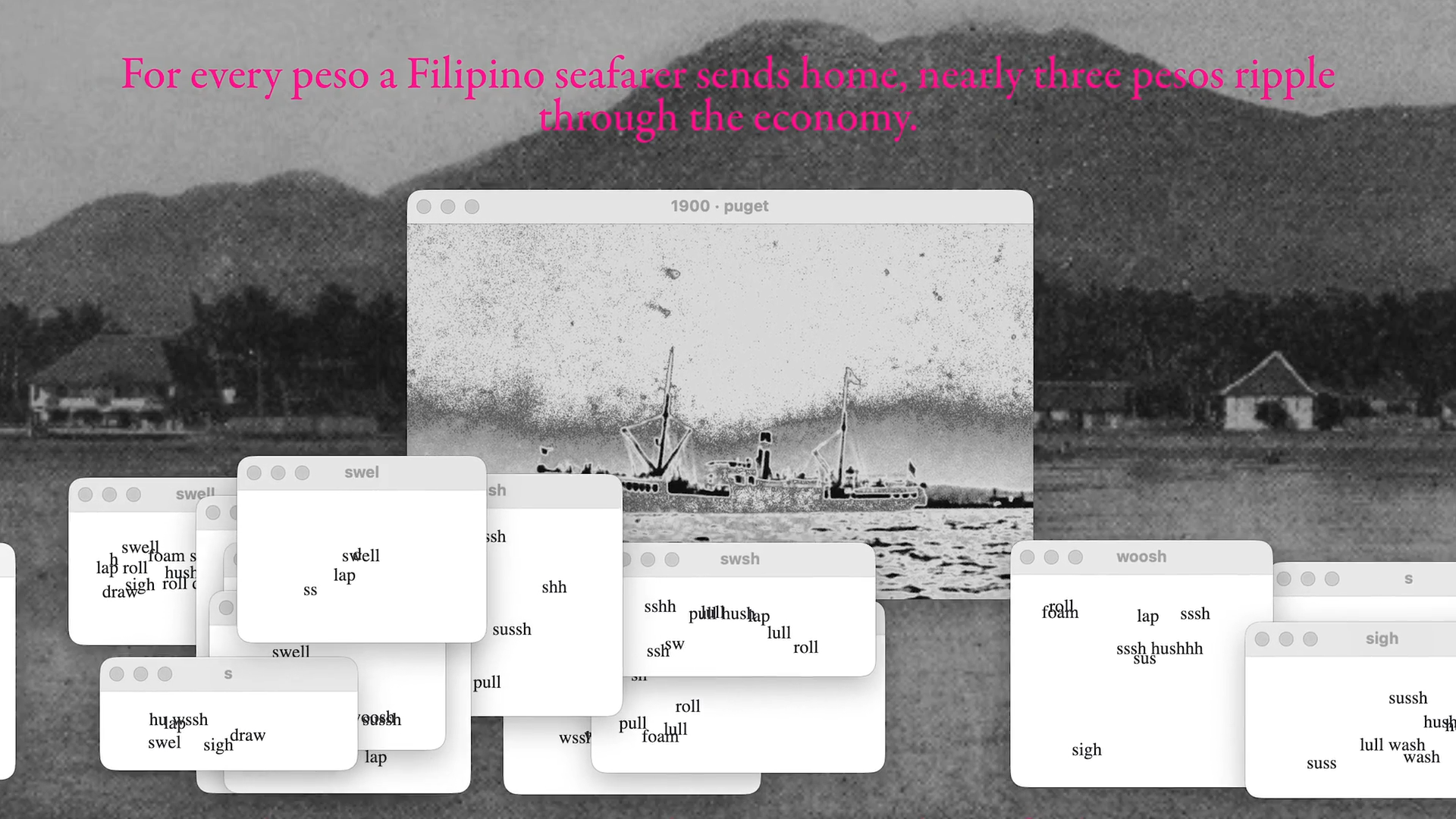
Chia Amisola, Burning, 2026–, executable software, variable dimensions. Image courtesy of artist.

Chia Amisola, Burning, 2026–, executable software, variable dimensions. Image courtesy of artist.
Are there any upcoming exhibitions or projects that you would like to share?
My focus right now is Every Love Song in the World, a performance-lecture and expanded series of works about Filipino and technological history that will unfold over the next few years. One of the chapters, Burning, looks at the USAT Burnside, a cableship with 116 Filipino crewmen who laid telegraph cable across the Visayas and American military bases. It is a short speculative film programmed as executable software rather than a video, living on your actual desktop rather than emulating an interface. The work becomes a story that uses the lineage of communication technologies our seafarers have enabled to tell itself.
Outside of Every Love Song…, this fall I am working on a hypertext commission critiquing the “digital garden” and other natural metaphors imposed on the web. I am also developing a social game, a dating simulator where you date everything, for NYU’s annual No Quarter exhibition.
Follow @hotemogf for more of her work.