An artist residency programme and photographic exhibition about later life in China
By the end of 2025, more than 300 million people in China had stepped into later life. As life expectancy increases and retirement at 60 or 65 opens onto decades of what demographers and social planners call the Third Age, ageing is no longer a quiet epilogue but opens up possibilities for new ways of living, and living well.
At Beijing’s Taikang Art Museum (TAM), housed within the corporate headquarters of Taikang Insurance Group in the city's Central Business District, Life Takes Place: Taikang Architecture and the Everyday through Photography in the Era of Longevity confronts this demographic shift head-on. With the Chinese title The Bright Room (明亮的房间 míng liàng de fáng jiān), the exhibition is the culmination of an ambitious commissioning and residency programme.
Twelve artists and collectives undertook residencies at Taikang Tower in Beijing and in Taikang Community senior living residences in cities ranging from Hangzhou and Chengdu to Fuzhou and Kunming, where they lived alongside residents and caregivers for three weeks to a month. Rather than treating senior living facilities as clinical backdrops the artists created works that examine how architecture acquires meaning through use: the width of a doorway, the placement of a handrail, the timing of meals, and the delicate negotiation between institutional care and individual autonomy.
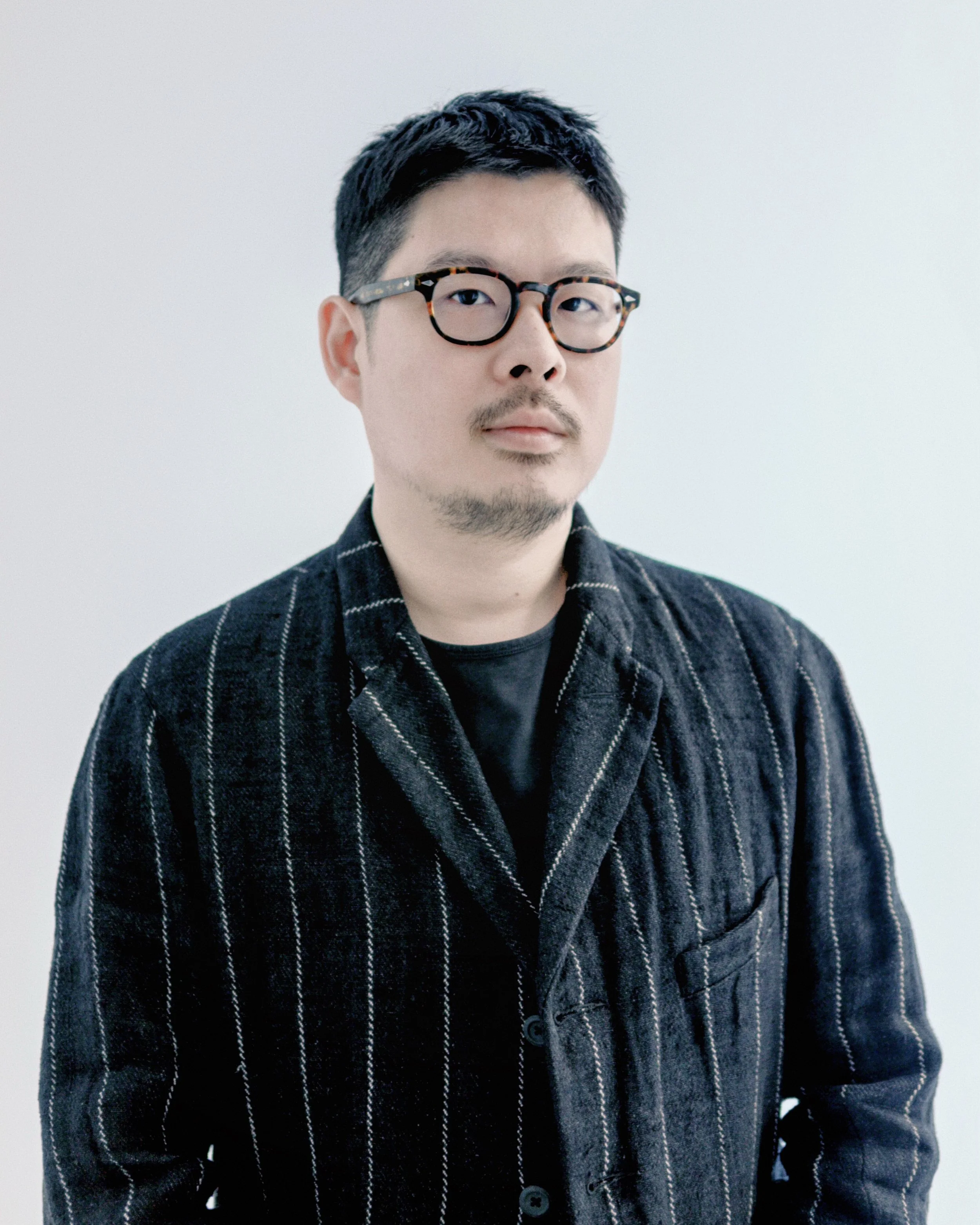
Shen Chen curated Life Takes Place at Taikang Art Museum.
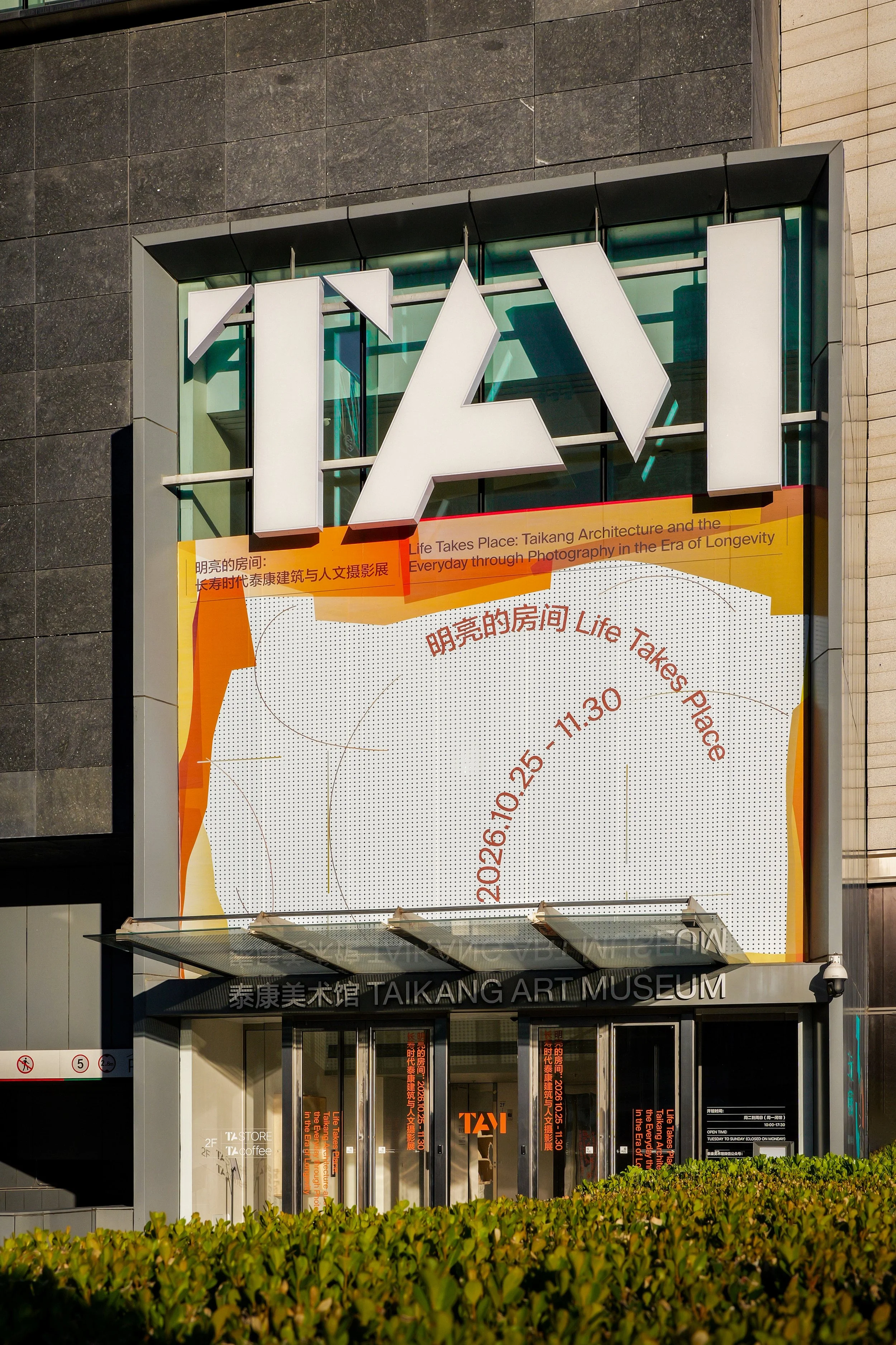
Taikang Art Museum. Image courtesy of Taikang Art Museum.
Curated by Shen Chen and co-organised by Taikang Insurance Group and Taikang Art Museum, the exhibition unfolds across six thematic chapters—Perspective, Contact, Everyday Life, Narration, Interdependence, and Coexistence. Intriguingly, this narrative arc was not imposed from the top down. "At the very beginning of the exhibition, we did not predetermine the chapters we see today," Shen explained during a gallery walkthrough. "We initially invited participating artists based on their past practices, and as each artist entered these spaces and developed their own working methods, the thematic chapters emerged organically from the works themselves."
In assembling the roster for such an intensive artist residency, Shen intentionally brought together familiar collaborators and new participants, inviting both Chinese artists and international practitioners from Switzerland, Spain, the United States, and Chile. Even the domestic artists largely travelled outside their home cities. "This sense of unfamiliarity can sometimes spark new perspectives and bring out subtle things that those of us too accustomed to an environment might no longer notice," Shen noted.
The exhibition opens with Chapter 0: Perspective, anchored by Beijing-based digital artist Huang Heshan’s two-channel video installation Headquarters View (2026). Filmed at Taikang Tower, the work stitches together casual mobile phone footage taken by employees looking out from floor-to-ceiling windows on different floors into a seamless, panoramic urban vista. Here, the corporate headquarters—where demographic shifts are routinely abstracted into actuarial models and data forecasts—becomes a site of collective human observation.

Life Takes Place exhibition installation view on the first floor. Image courtesy of Taikang Art Museum.
From this bird’s-eye vantage point, the exhibition zooms in on the tactile intimacy of daily life, aided by exhibition designer Yu Dao’s sensitive spatial interventions. Confronted with two massive structural columns that imposed a rigid, singular order on the gallery, Yu arranged the works around them like orbiting satellites. For Chapter 1: Contact, which features intimate works by Zhang Zhizhou and Du Yang, Yu worked with structural engineers to suspend 1.2-metre-high folded partition walls in mid-air via slender steel cables. "These works carry a very delicate, subtle aura," Yu observed. "If you simply placed them on a standard three-metre gallery wall, that aura would be swallowed up."
Displayed at eye level, Zhang Zhizhou’s Drawing Close from his residency at Beijing’s Yan Garden pairs black-and-white Polaroids with vibrant triptychs mounted on wooden panels. A native Beijinger, Zhang chose his hometown community to project himself into his own future. "I wanted to start from my own perspective—to imagine what my physical and mental state might be like when I reach old age," he shared. Upon arriving, Zhang immediately sought out the community’s palliative-care ward, driven by memories of his late grandfather’s painful battle with cancer. Speaking with hospice doctors, volunteers, and families, he discovered a poignant detail—that terminally ill patients often craved ice-cream and popsicles near the end of life – and spent his middays photographing the resilient, untamed growth of vegetables and flowers in the ward’s adjacent "Life Garden".
Beside Zhang’s panels, Du Yang’s Echoes – Where Touch Remains (2026) shifts focus to the memory-care unit at Gui Garden in Nanning. Printing images onto textiles and paper, Du treats human skin as an expansive "fabric" that records warmth, weight, and memory even as language recedes. In Chapter 2: Everyday Life, institutional routines meet personal rhythms. Ryan Debolski’s A Choreography of Care (2026), shot at Shen Garden in Shanghai, captures how pathways, stacked tableware, and group dance classes choreograph bodies between care and control. Nearby, Chengdu-based artist Zhang Xiao’s At the Same Time (2026) embeds surveillance stills from Shu Garden directly into the faces of a grid of ticking clocks—turning the abstract, uniform march of institutional schedules into a polyrhythmic meditation on subjective time. Meanwhile, Barcelona-based photographer Aleix Plademunt’s All I Say Is: Let It Continue (2026) reflects on his three-week stay at Daqinggu in Hangzhou. Unable to speak Mandarin, he found that real-time translation apps turned daily conversations into disorienting, accidental poems.

Diana Pfammatter, Women of Wu Garden, 2026. Image courtesy of the artist and Taikang Art Museum.

Diana Pfammatter.
Image courtesy of the artist and Taikang Art Museum.
In Chapter 3: Narration, Swiss photographer Diana Pfammatter’s Women of Wu Garden (2026) strips away domestic surroundings altogether. Her tightly cropped portraits focus solely on the faces and direct gazes of seven women at Suzhou’s Wu Garden. Each portrait is simply titled with the sitter’s name, her year of birth, and the cities she has lived —such as Zhao Fengquan, 1941, Beijing, Shanghai, Suzhou. "I came to Suzhou open-minded, with no clue what to expect," Pfammatter recalled. The turning point came during a couples' dance workshop where only women were dancing together because no men were present. "The women I met there stood out for me," she shared. Free from familial labels of wife, mother, or daughter, her subjects emerge as singular protagonists of their lives. Across the room, fellow Swiss artist Taiyo Onorato’s Who Knows Where the Time Goes? (2026) brings collages made with residents during workshops at Yunnan’s Dian Garden into his own photographs.
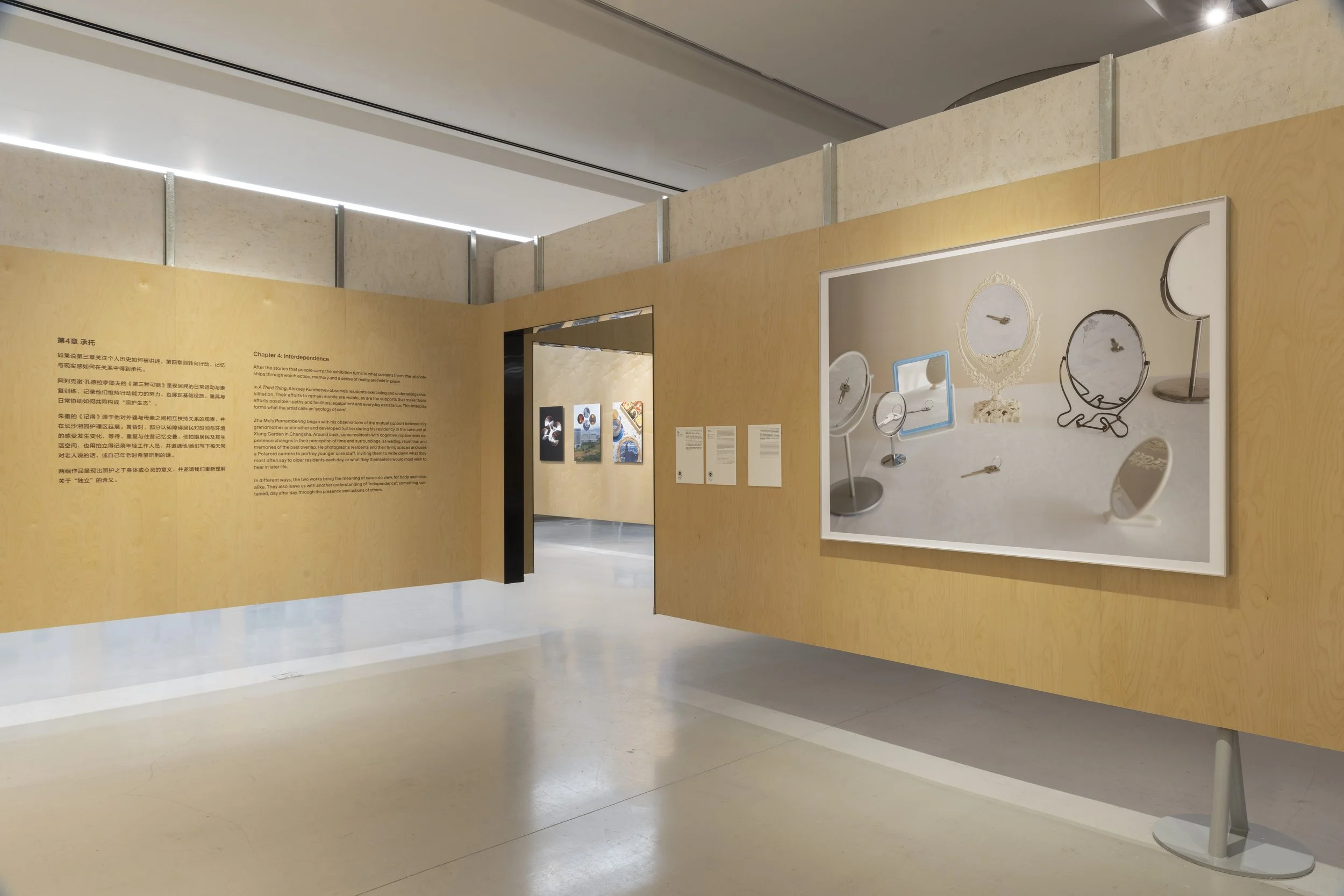
Chapter 4 at Life Takes Place. Image courtesy of Taikang Art Museum.
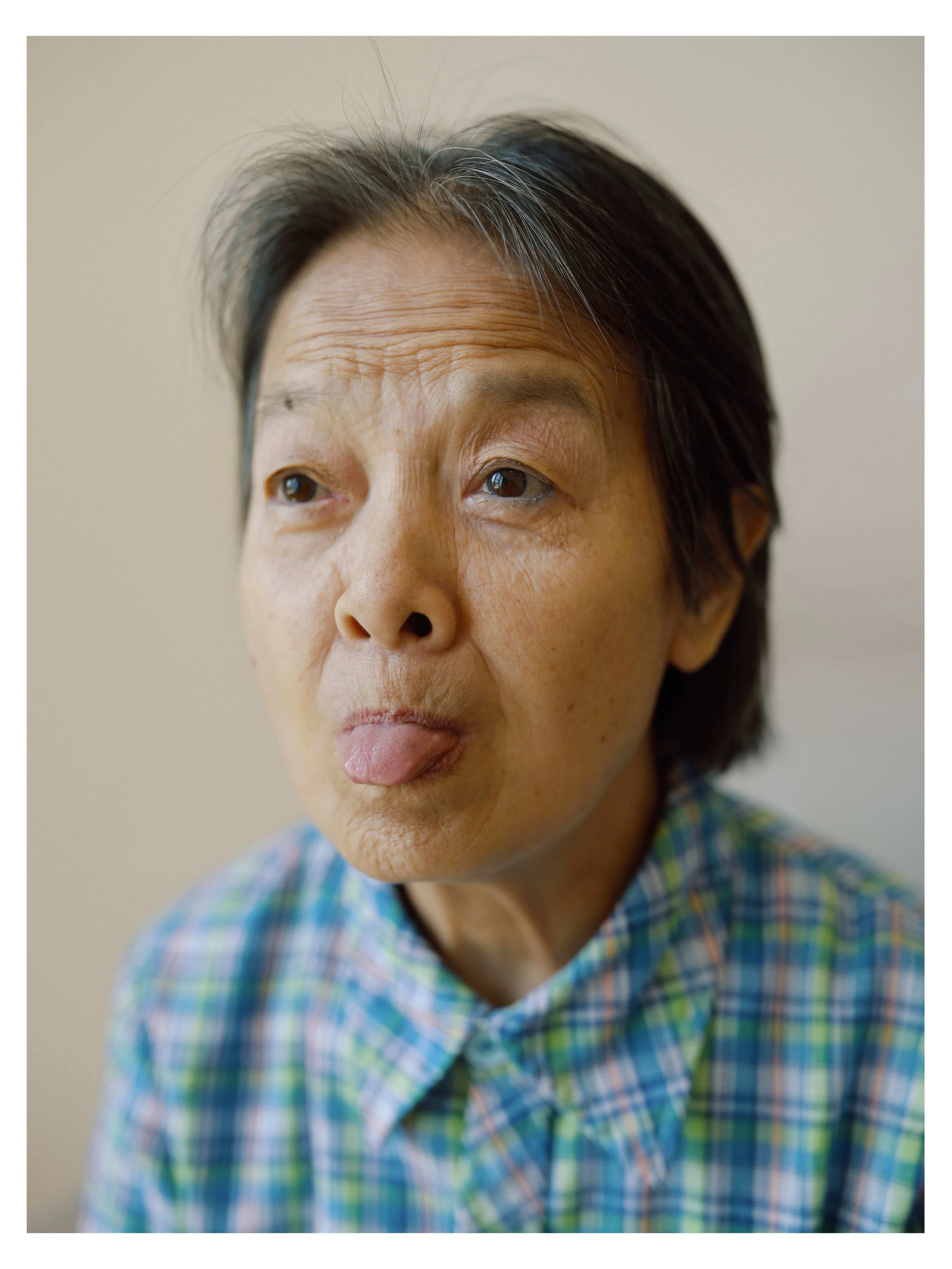
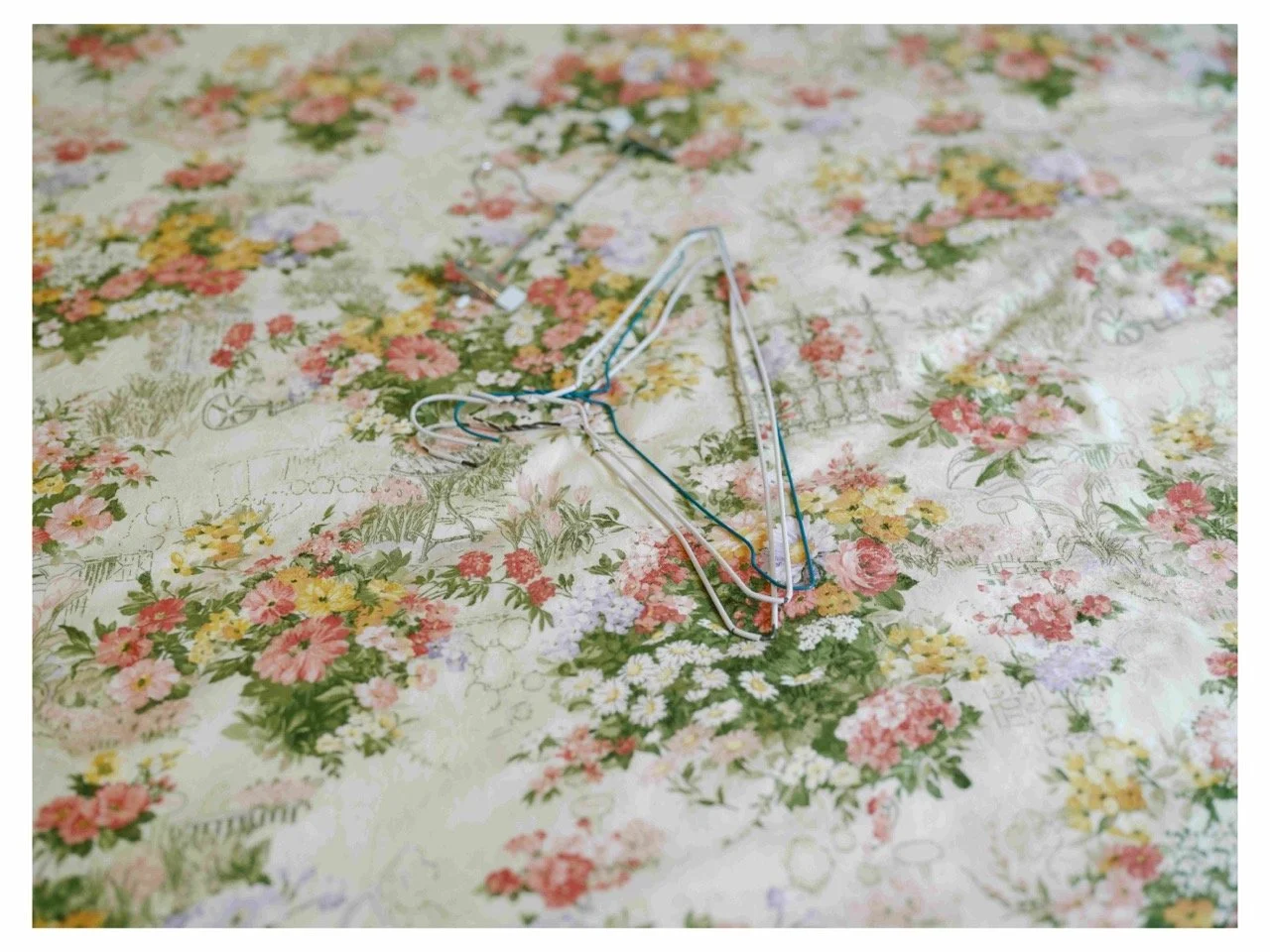
Zhu Mo, Remembering (2026) at Life Takes Place at Taikang Art Museum. Images courtesy of the artist and Taikang Art Museum.
The exhibition’s final chapters deepen its inquiry into relational care and mortality. In Chapter 4: Interdependence, Los Angeles-based Aleksey Kondratyev’s A Third Thing (2026) documents rehabilitation exercises at Guangzhou’s Yue Garden, framing the physical touch between resident and caregiver as an "ecology of care" where agency persists through mutual support. Especially moving is Zhu Mo’s Remembering (2026), inspired by his 92-year-old grandmother’s dementia and developed at Xiang Garden in Changsha. Confronting " Sundown Syndrome"—the dusk-hour confusion experienced by residents with cognitive impairment—Zhu pairs atmospheric prints with Polaroids of young care staff inscribed with the phrases they most often repeat to soothe residents, or hope to hear themselves in later life. Finally, Chapter 5: Coexistence widens the lens across species and generations through London- and Beijing-based duo O Group’s stone prints Quietly Shining Under the Lifting Veil (2026) and video Under the Banyan Tree (2026) made during their residency in Fuzhou, alongside Yuan Xiaopeng’s intergenerational exchanges, concluding in a contemplative, courtyard-like gallery designed to invite visitors to linger.
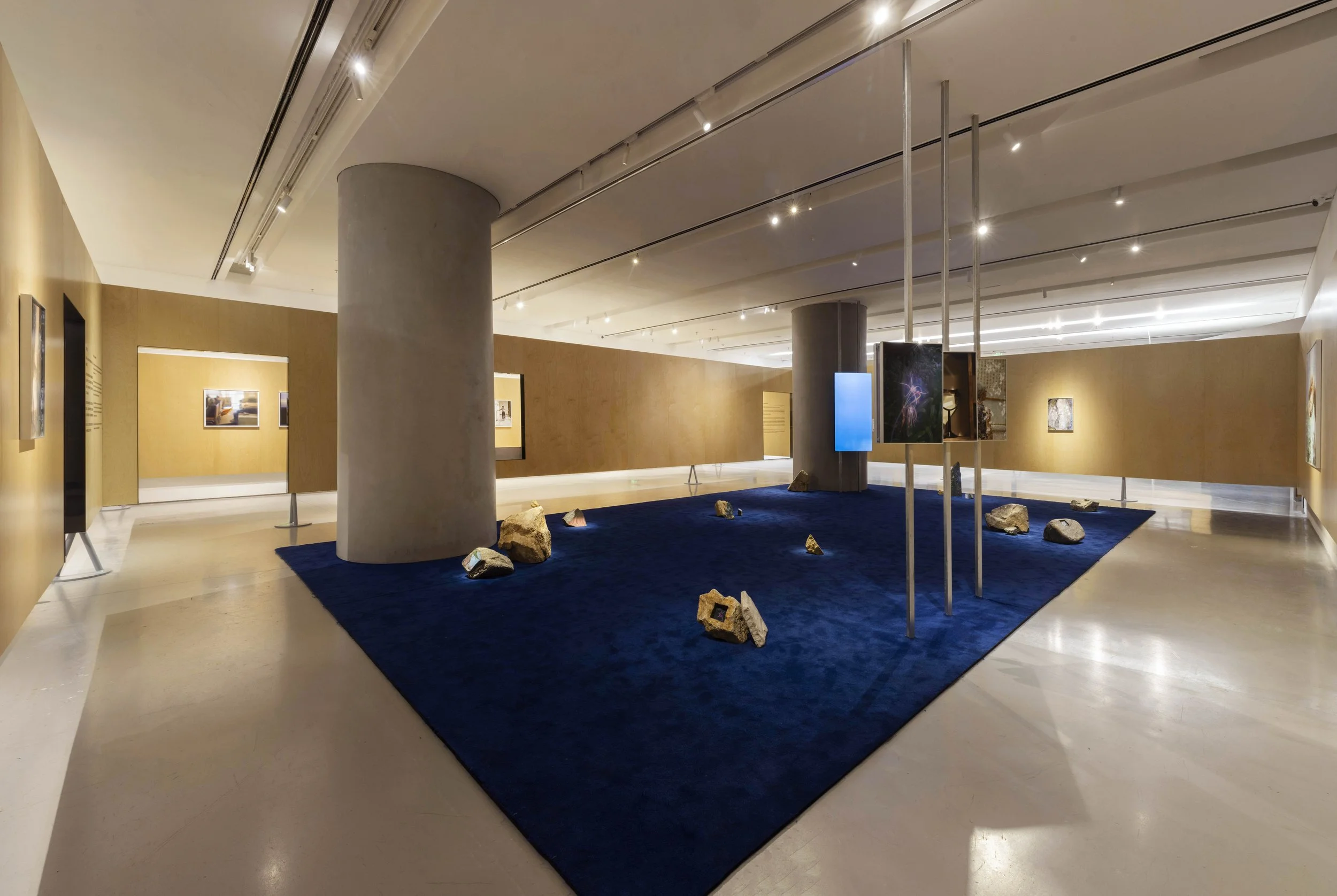
Life Takes Place exhibition installation view featuring Chapter 5. Image courtesy of Taikang Art Museum.
That emphasis on introspection anchors both the curatorial model and the physical architecture of the show. Shen sees the project’s focus on senior living communities as a blueprint for how Chinese art institutions can engage with urgent social shifts, combining site-specific photography, embodied spatial design, and an upcoming publication that uses text to expand on what images alone cannot convey. "Through photography and residency as working methods, we wanted to take abstract notions that people previously only imagined and open them up, presenting all the complexity and richness contained within them," Shen explained.
“Through photography and residency as working methods, we wanted to take abstract notions that people previously only imagined and open them up, presenting all the complexity and richness contained within them.” - Shen Chen
Yu echoes this refusal to treat accessibility as a purely technical checklist. While step-free flooring, widened pathways, and calibrated sightlines ensure physical ease for visitors of all ages, Yu considers them merely the baseline of an architect's duty. "What matters more to me, when we talk about being friendly to older visitors or all age groups, is what kind of reflection this exhibition leaves people with, and what atmosphere it conveys," he said. "We hope that after leaving the exhibition, viewers can shift their conventional perceptions of old age—seeing it not as a heavy, burdensome process, but as a stage of life on equal footing with every other stage. Ultimately, we hope the space prompts viewers to look at their own lives."
“We hope that after leaving the exhibition, viewers can shift their conventional perceptions of old age—seeing it not as a heavy, burdensome process, but as a stage of life on equal footing with every other stage. Ultimately, we hope the space prompts viewers to look at their own lives.” - Yu Dao
What makes Life Takes Place compelling is the refusal to smooth over the tensions inherent in institutional elder care. Guided by Shen’s open-ended curatorial framework and Yu’s nuanced spatial choreography, the artists hold space for ambiguity, acknowledging fatigue, memory loss, and institutional boundaries alongside humour, resilience, and grace. In doing so, the exhibition transforms the architecture of longevity from an abstract policy concern into something deeply human: a shared room where life, in all its unpredictability, continues to take place.
Life Takes Place: Taikang Architecture and the Everyday through Photography in the Era of Longevity is on view at Taikang Art Museum (1-2F, Building 1, Yard 16, Jinghui Street, Beijing) from 25 October 2026 to 30 November 2026.
The author was invited on a press trip by Taikang Art Museum to review the exhibition.