
Conversation with Nawapooh Sae-tang, Director of Tang Chang Private Museum
Estate of Sino-Thai modern master
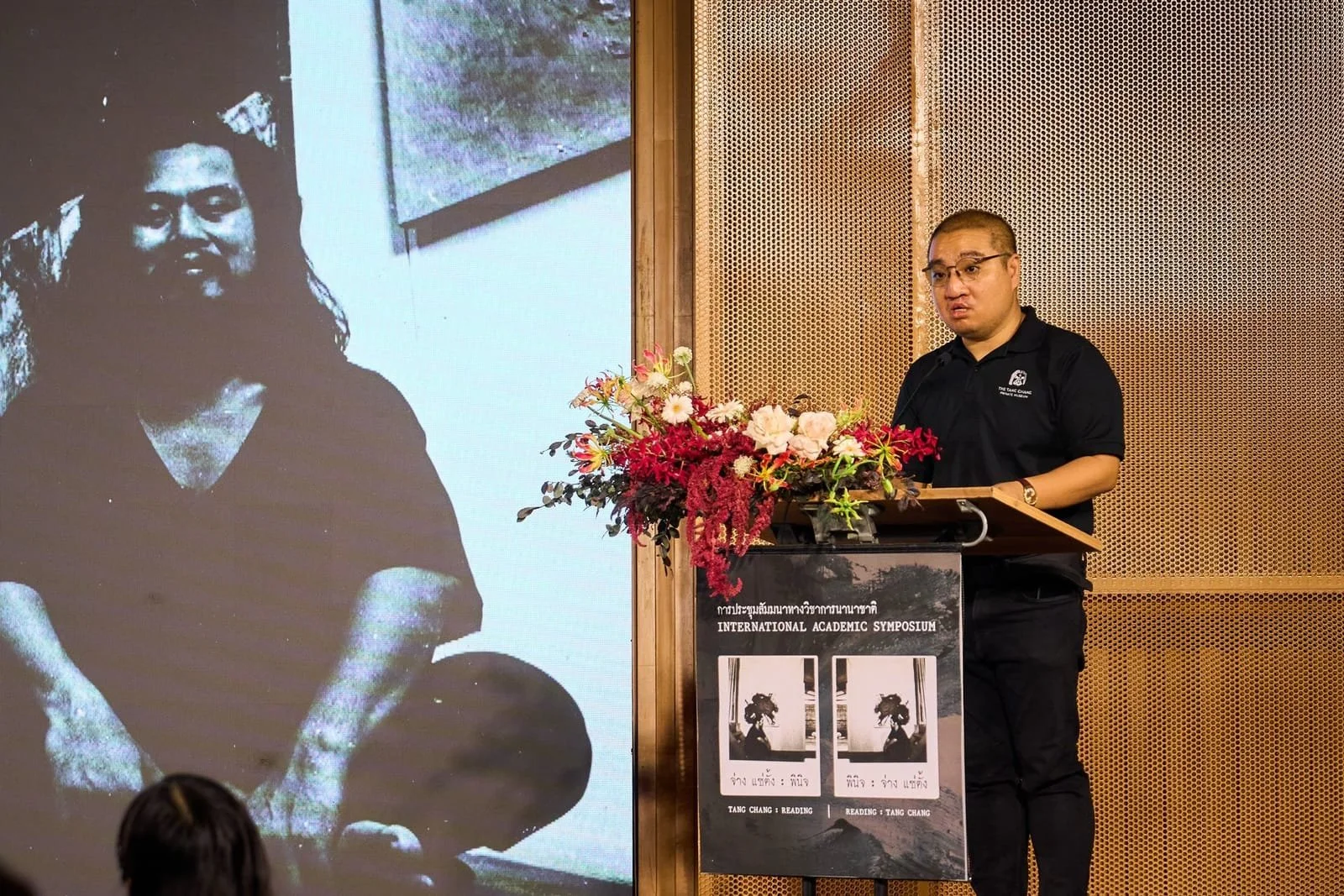
Nawapooh Sae-tang, Director of Tang Chang Private Museum.
Nawapooh Sae-tang is the Director of Tang Chang Private Museum and Tang Chang’s estate. A grandson of the late Bangkok-born artist, he has inherited the responsibility of championing the modern Thai master’s legacy. Tang Chang (1934-1990), also known as Tang Sae-chang, was a self-taught artist and poet who shattered the conventions of Thai modernism. He is best known for his calligraphic abstractions and pioneering a new style of Thai concrete poetry that abandoned erudite language in favour of simple words. Throughout his life, Chang positioned himself outside of the mainstream art and education institutions, and instead created a space in his home to exhibit works by him and his students. Today, his work is recognised within global art histories with major presentations at National Gallery Singapore, Haus der Kulturen der Welt (Berlin), Smart Museum of Art (Chicago) and Centre Pompidou (Paris), among others.
I spoke with Nawapooh in person a month after the opening of the Tang Chang Private Museum, where he curated its inaugural exhibition Poet Tang Chang's Institute of Modern Art (2026). In this conversation, he offers insight on Chang’s story, managing the artist’s estate, how they are engaging in the art market and the institution’s future plans.

Archival photo of Tang Chang. It was likely taken at the opening day of Tang Chang's art exhibition held at his house on 3 October 1970. Image courtesy of Tang Chang Private Museum.
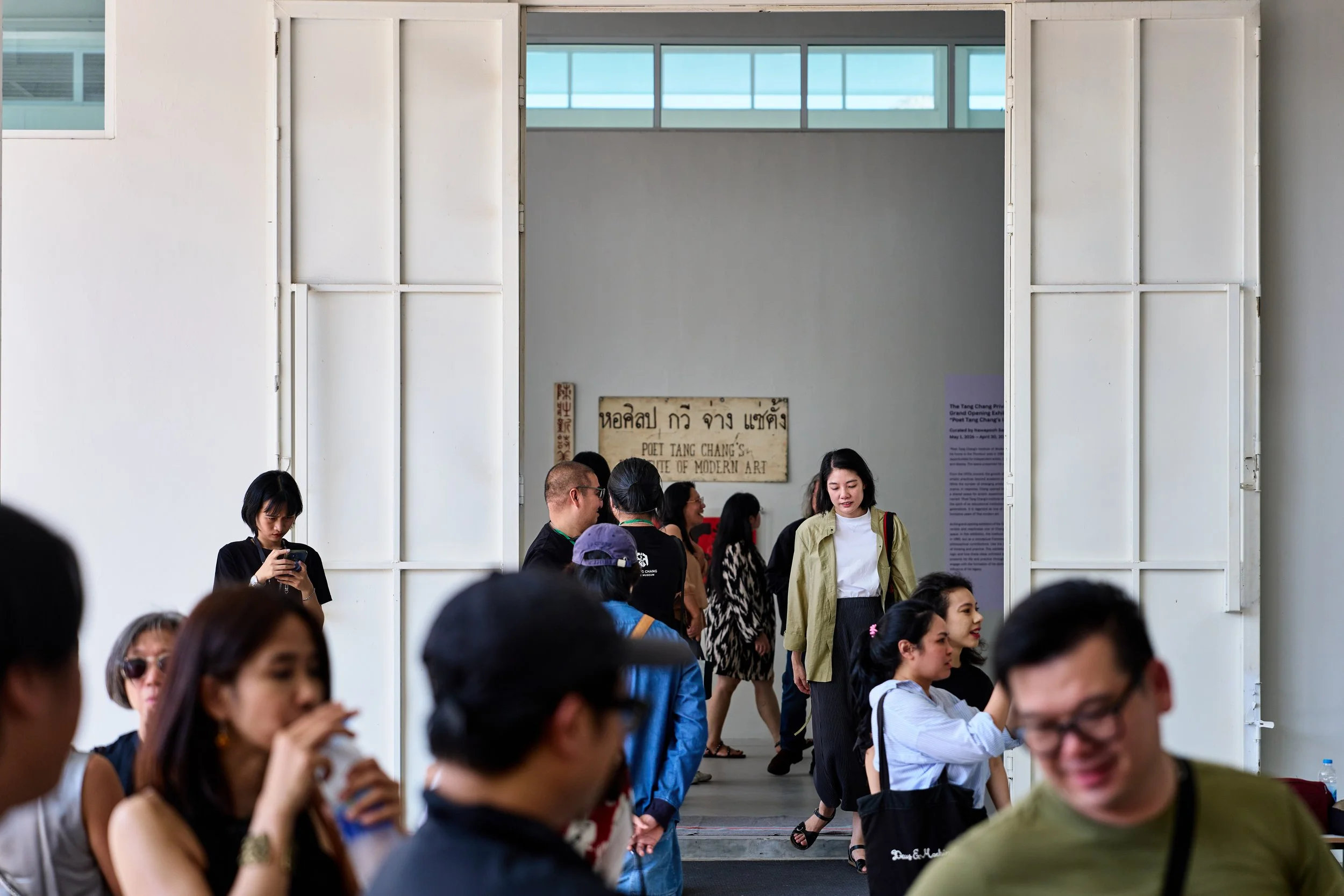
Opening of Tang Chang Private Museum on 1 May 2026. Photo by Preecha Pattara-ampornchai ปรีชา ภัทรอัมพรชัย.
You curated the inaugural exhibition at the Tang Chang Private Museum titled Poet Tang Chang's Institute of Modern Art (2026). Could you say more about the title?
The exhibition is developed from my PhD thesis on my grandfather’s life and work. Poet Tang Chang Institute of Modern Art is the name of the exhibition space that he opened in his house in 1970 to show his artworks as well as those by his students and children. It was started earlier in 1970 but only formalised in 1985. Our house is next to the museum and in a way, this title reactivates the spirit of the space. I wanted to re-interpret it as a concept that speaks about his life and legacy. The exhibition shows the development of my grandfather’s artistic practice from his early life into his prime years in the 1960s, and how it continued to unfold until his death in 1990.
“I wanted to re-interpret it as a concept that speaks about his life and legacy.”
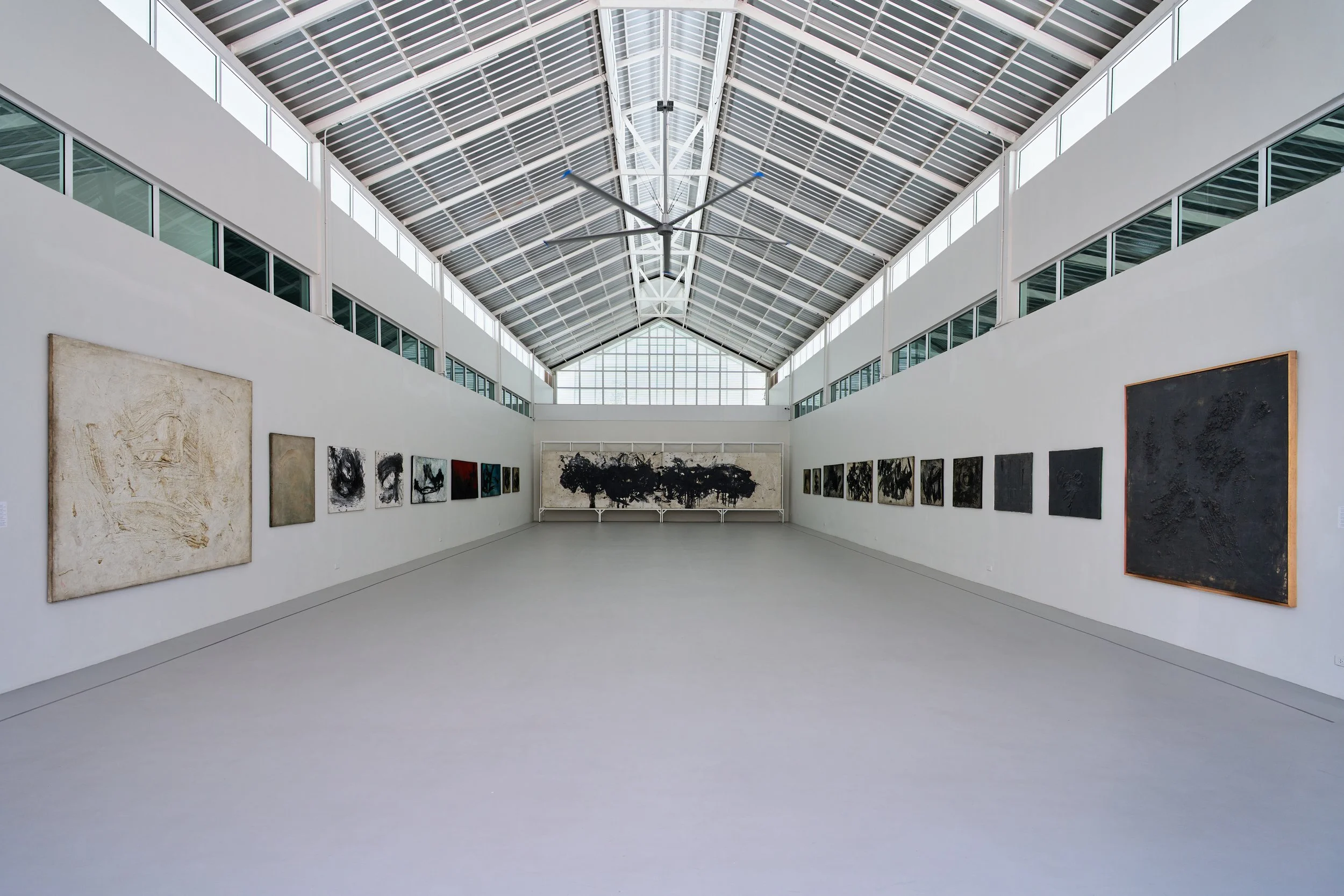
Poet Tang Chang's Institute of Modern Art, 2026, exhibition installation view. Image courtesy of Tang Chang Private Museum. Photo by Preecha Pattara-ampornchai ปรีชา ภัทรอัมพรชัย.
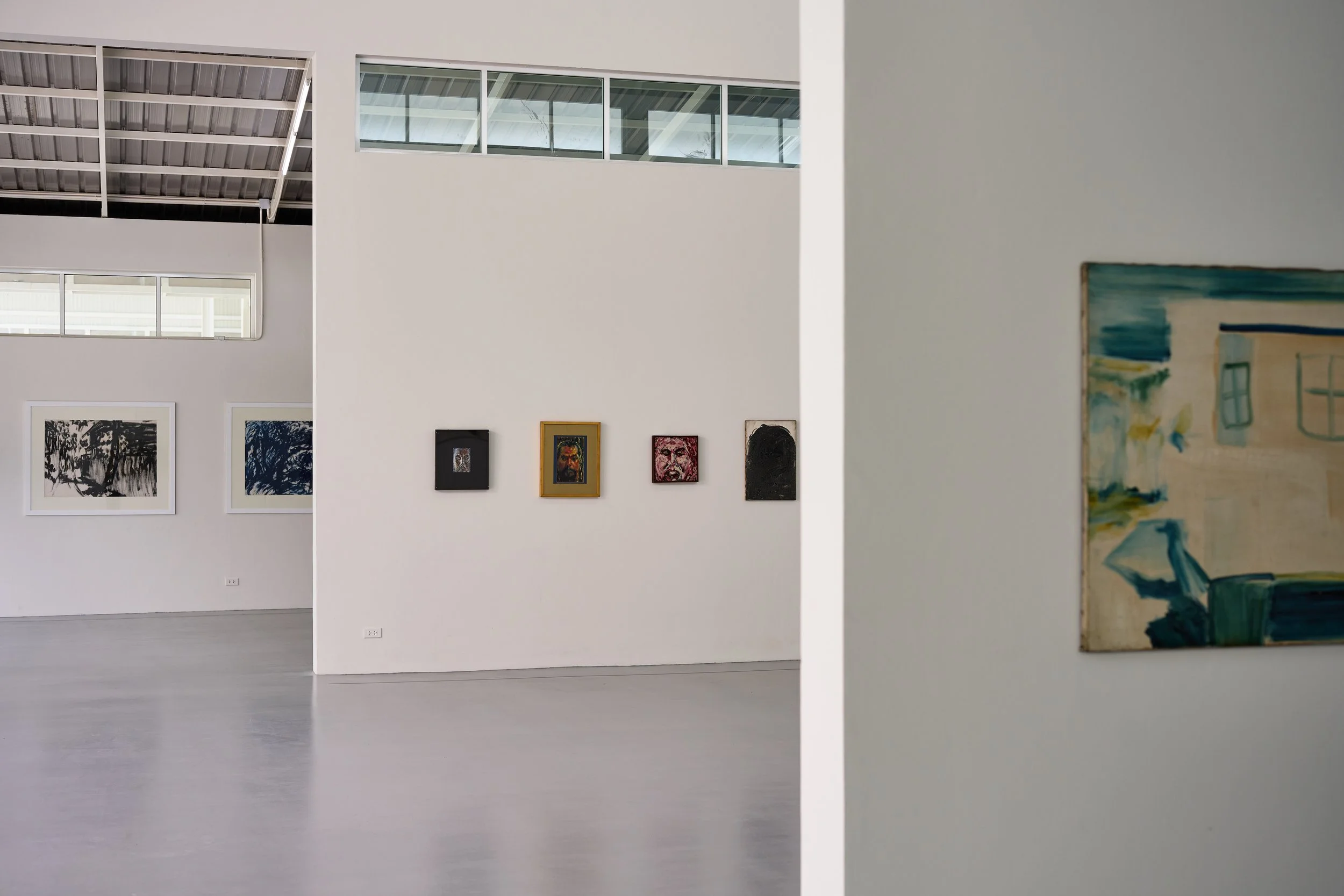
Poet Tang Chang's Institute of Modern Art, 2026, exhibition installation view. Image courtesy of Tang Chang Private Museum. Photo by Preecha Pattara-ampornchai ปรีชา ภัทรอัมพรชัย.
What are the narratives or aspects of Tang Chang’s practice you aim to highlight with this show?
The exhibition tries to show that his path as an artist is non-linear. Many artists may begin with realism and end with abstraction. But for my grandfather, he started out as a self-taught artist making photorealist portraits before going into pure abstraction in the 1960s, and returning to representation again later in life. He was deeply influenced by Theravada Buddhism, Chan Buddhism and Taoism, and even translated the Tao Te Ching into Thai in 1973. I think his understanding of their philosophies changed his perception of the world. He saw the relationship between all things in the world, including himself being part of nature. At some point, he went back to painting landscapes and self-portraits as a way to reflect on these conditions.
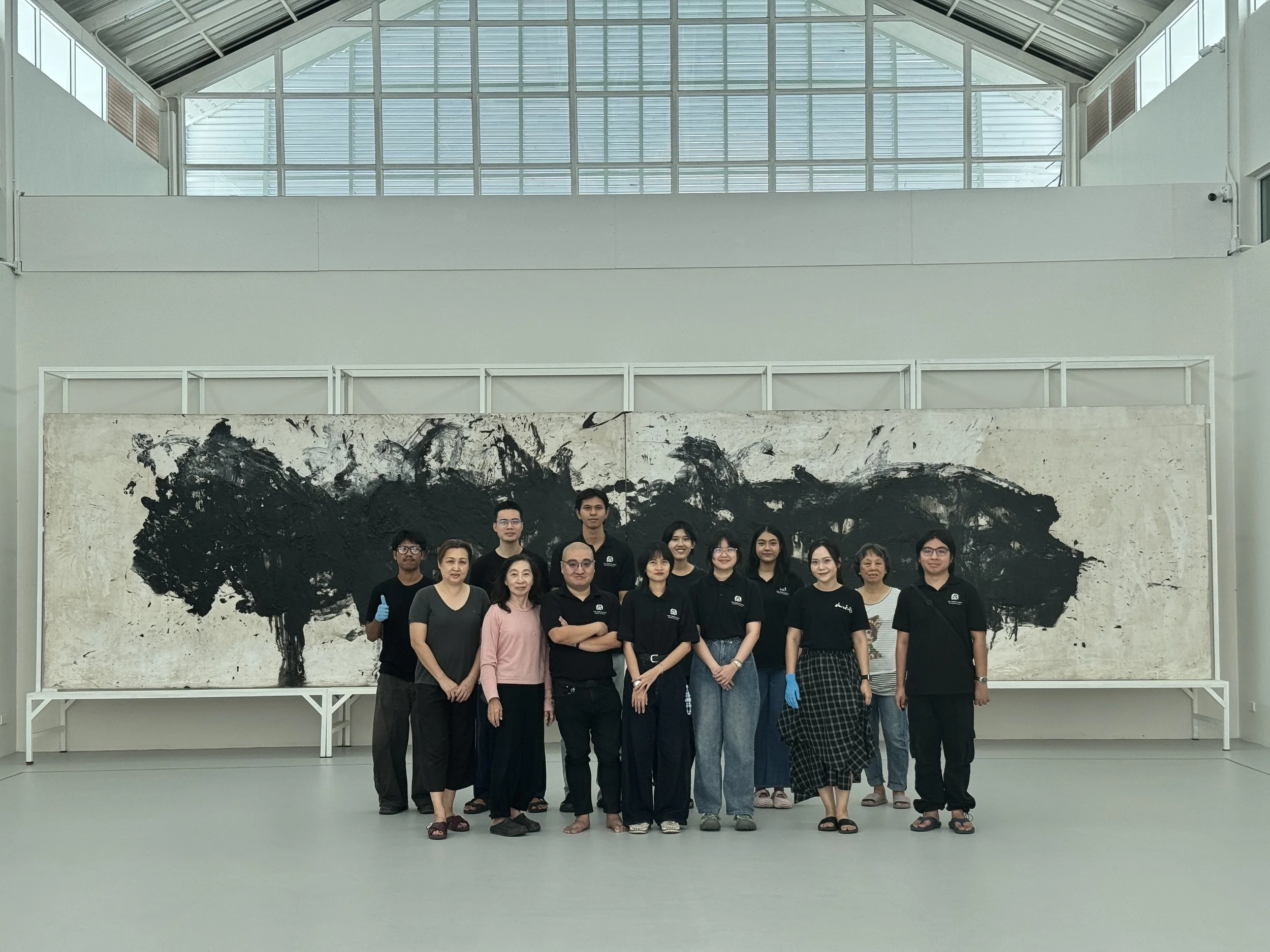
The team at Tang Chang Private Museum. Image courtesy of Tang Chang Private Museum.
The establishment of this museum has been an enormous undertaking. When was the plan first conceived and what were the steps taken to realise it?
The Poet Tang Chang Institute of Modern Art is a historical starting point for the museum. My grandfather wanted his work to be shown to the public and studied. He lived in a small house in a slum in Bangkok, built on rented land. In 1992, my father tried to find land outside of Bangkok and we settled on this current location in Nakhon Pathom because it was affordable. We needed to bring the works into a bigger space so they can be properly cared for. This place is not only where we live but also where people interested in Tang Chang can come. We named it Tang Chang Private Museum, but it was an informal name then.
After a major solo exhibition Tang Chang: “It was My Desire to Have My Very Own Space” (2013) at Subhashok The Arts Centre (SAC Gallery) in Bangkok, we had opportunities to exhibit internationally at venues such as Shanghai Biennale (2014), Para Site Hong Kong (2015), National Gallery Singapore (2016), Has der Kulturen der Welt in Berlin (2017) etc. Working with institutions and curators, we felt that having our own space would better enable the estate to fulfil its mission. We were able to secure some money after the Centre Pompidou exhibition Tang Chang: Non Forms (2023) and that was when we set out to build the museum. We finally opened it on 1 May 2026.
How many people are involved with running the estate?
The core group is our family: my parents, my brother and I. We also involve other family members in the museum and estate, as well as hire staff who form the in-house research and conservation teams.
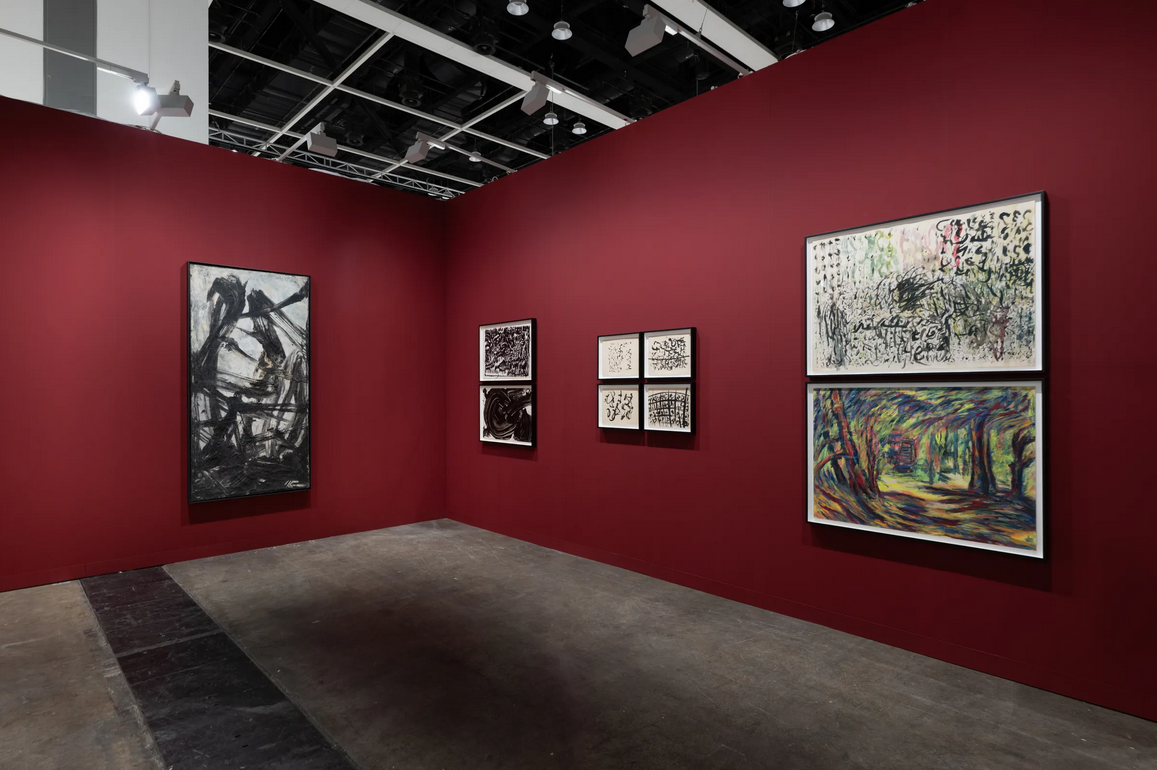
Solo presentation of Tang Chang’s work with gdm at Art Basel Hong Kong 2026 Kabinett sector. Image courtesy of gdm.
In your opening address at the symposium, you spoke about the estate being structured around three interconnected areas: research, institution and market. On the point about artworks entering the market, the estate is working with gdm. Could you talk about the decision to work with gdm?
Before the 2023 Centre Pompidou exhibition, we did not have the intention to work with a gallery. When my grandfather was alive, he did not sell any of his artworks because he felt they were part of his intellectual practice which he did not want money to influence. He wanted to position himself outside of the market, but did not reject his works being sold after his death. We thought to emulate that and position ourselves solely within the academic world. However, when my grandfather passed away, my father needed to sell some works to maintain the rest of the collection.
The market is not just a place to find money. It is also a pathway to gain recognition from institutions, curators and collectors. But how can we develop the market side of things by ourselves? I do not have the knowledge, so we needed to work with a gallery, and many approached us. Some of them primarily work with young artists, others mainly represent Southeast Asian artists, and we wanted to find our position. A patron who supported the Centre Pompidou exhibition connected us with gdm and told me he trusts this gallery. gdm works with artists from the Chinese diaspora and ink masters such as Liu Guo-Sung, Irene Chou and Wesley Tongson. This is a compelling position for the estate and we hope to further explore how my grandfather’s practice intersects with modern art and ink discourses.
“The market is not just a place to find money. It is also a pathway to gain recognition from institutions, curators and collectors.”
What are the considerations around releasing works from the estate into the market?
After my grandfather passed away, the first types of works that my father sold were the landscapes. He told my father that the landscape works would probably be the easiest for people to appreciate. This is why most of his works in the Thai market today are his landscapes.
Since joining gdm, one area we wanted to work with the gallery is to develop a market for his works on paper. The estate has around 200 canvas paintings and more than 5000 works on paper. Together with our family members, we decide on which works to keep with the estate and which to place with museums and collectors.
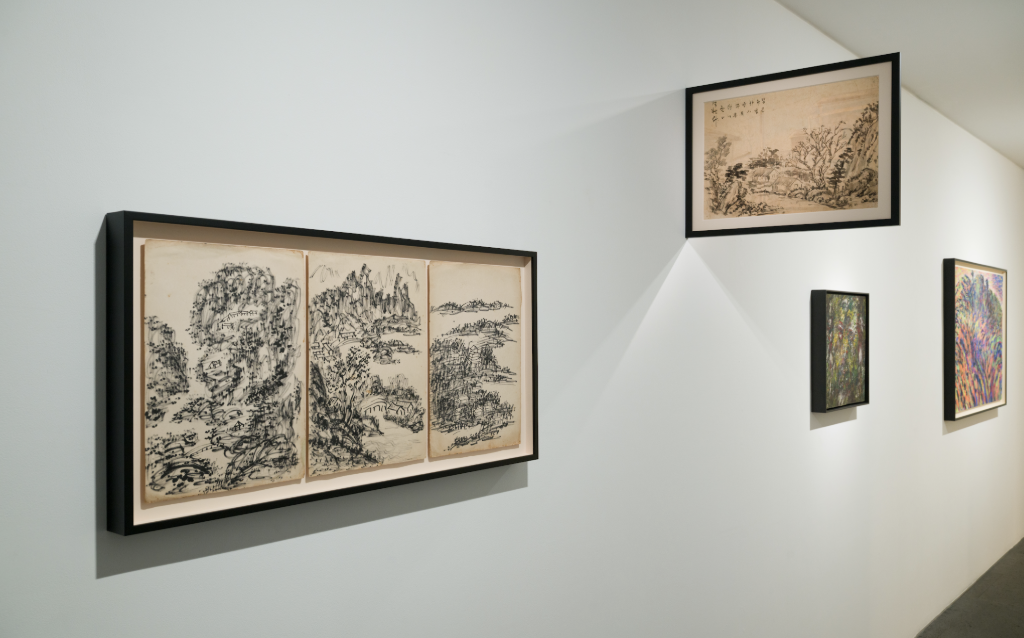
Tang Chang, Into the Heart-Mind, 2026, exhibition installation view at gdm, Hong Kong. Image courtesy of gdm, photo by Felix Wong.
gdm has highlighted Tang Chang’s works at Frieze Seoul (2025), Art Basel Hong Kong (2026), and organised his first solo exhibition in Hong Kong titled Into the Heart-Mind (2026). What has the response been like?
These opportunities have been great for us to show the diversity of his practice. For example, Into the Heart-Mind focuses on his landscapes which certain curators and collectors may not be aware of. It opened up conversations about how artworks in different styles, medium or subject matter connect. We received interest from institutions who already have his abstract works and concrete poetry in their collection and seek to collect across his oeuvre.
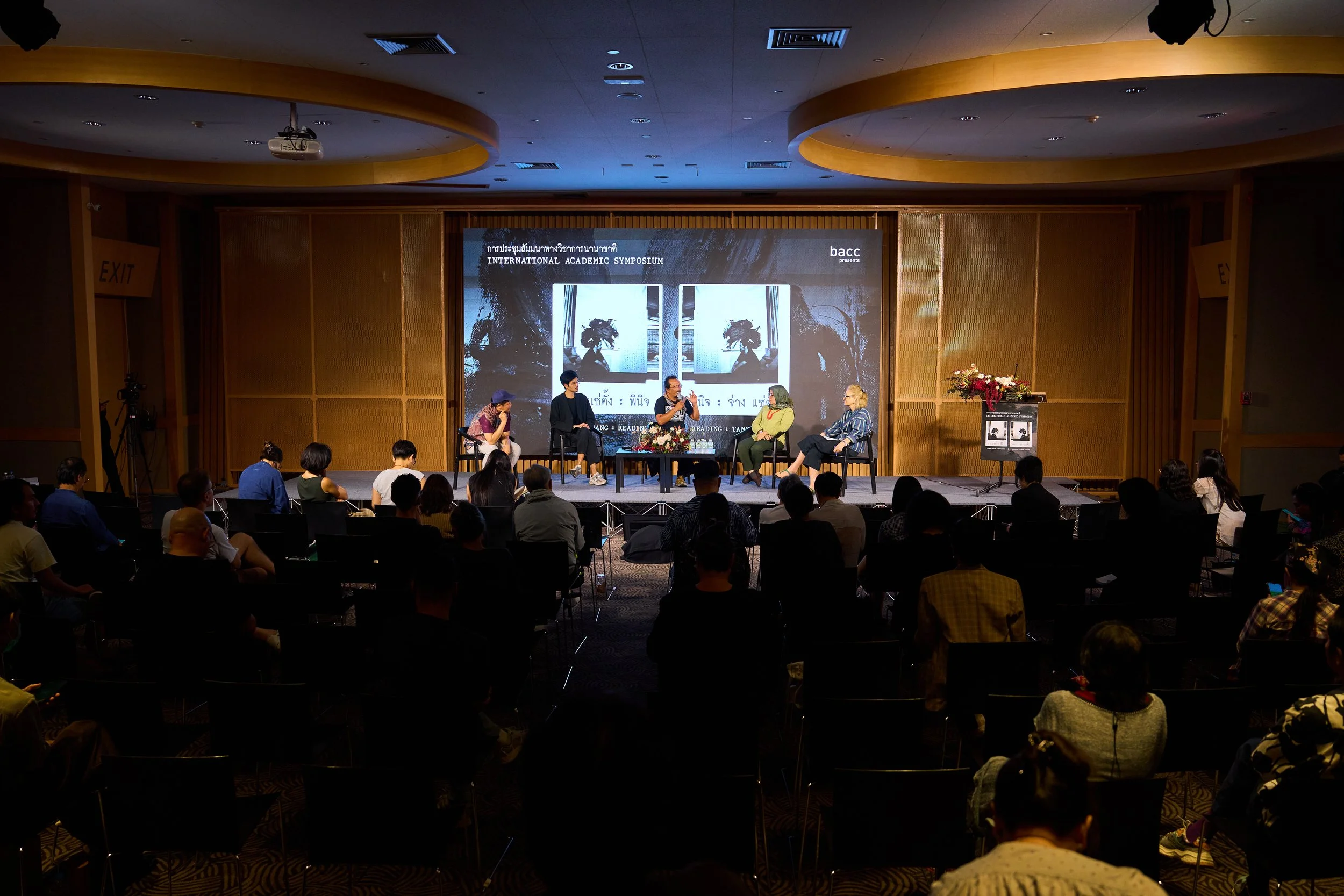
International Academic Symposium “Tang Chang: Reading / Reading: Tang Chang”, Panel Discussion 1, at Bangkok Art and Culture Centre (BACC), on 2 May 2026. Image courtesy of BACC.

Nawapooh Sae-tang and the in-house conservation team at Tang Chang Private Museum. Image courtesy of Tang Chang Private Museum.
What are important lessons you learnt from managing the estate?
There is little knowledge in this area of managing artist estates. And because the context for each artist is different, there is no one-size-fits-all approach. Tang Chang’s estate is quite unique because my grandfather did not sell his artworks during his lifetime. This is very different from another estate which perhaps may only have 20 paintings in their collection. We have a significant body of work and his archives intact to conduct in-depth research. Research is crucial because it forms the foundation of knowledge. This is why I decided to pursue my PhD at Universiti Malaya with Dr Simon Soon, so that I can participate in this field and actively contribute. Through this process, I also learnt how scholars work and how the estate can position itself to collaborate with other experts. With this knowledge foundation, one can think about the estate’s goals and the plan to reach them.
Are there future plans or projects you wish to share?
In the coming years, we plan to publish five books and establish a strong knowledge foundation from our collection. Two books are anthologies developed from the symposium that took place in May. The remaining three are monographs dedicated to his paintings, concrete poetry and ink works. These are three core areas in our collection and ways of understanding my grandfather’s practice. We hope to publish this set of books before 2034, which is my grandfather’s centennial. It is an ambitious project and we are working on it using our own resources.
This article is presented in partnership with Tang Chang Private Museum.
Poet Tang Chang's Institute of Modern Art is on view from 1 May 2026 to 30 April 2027, at the Tang Chang Private Museum, Thailand. For more information, click here.