
Conversation with Curator Sarah Burney
‘Zarina: Directions to My House’ at STPI
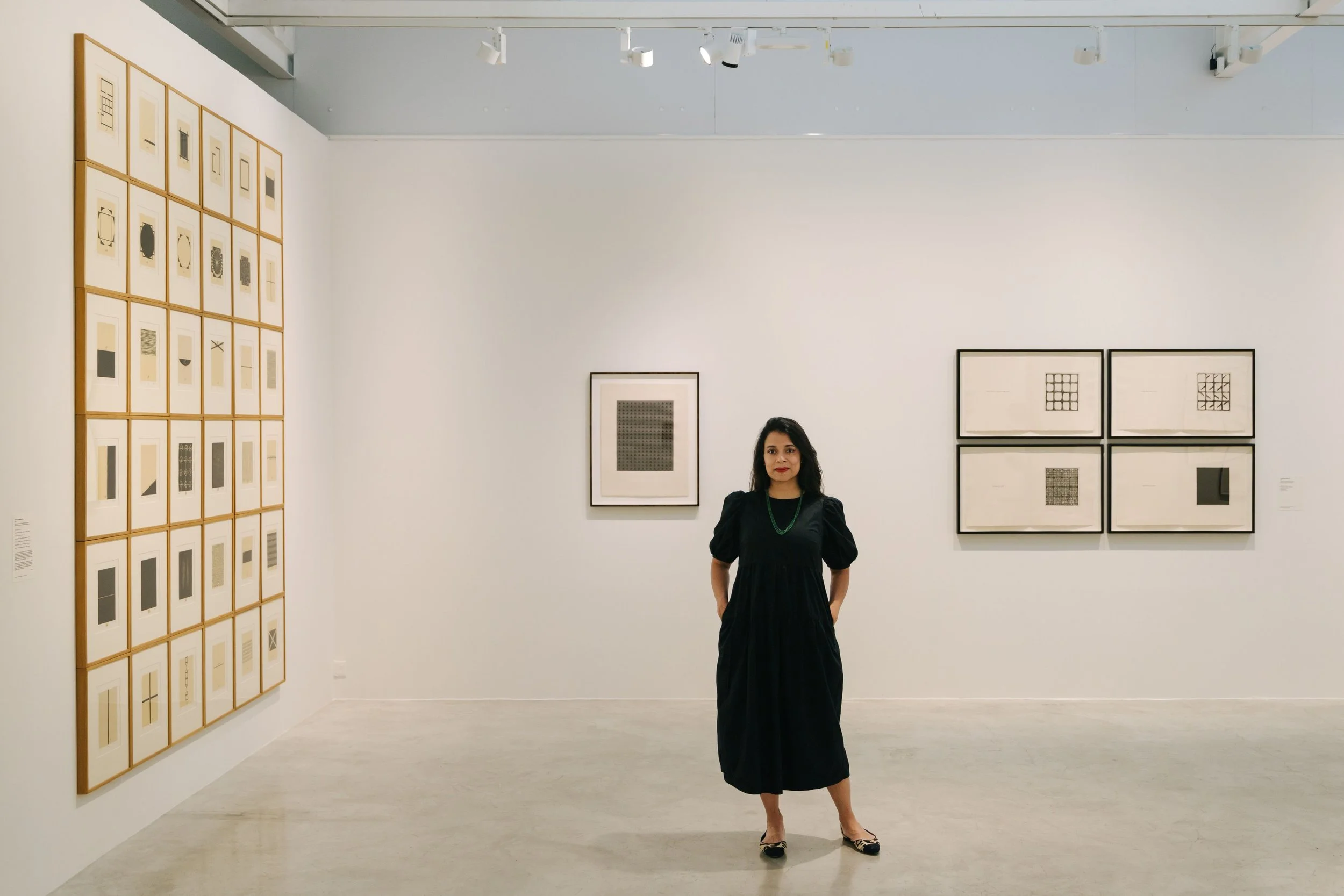
Sarah Burney. Image courtesy of STPI, Singapore.
Sarah Burney is an independent curator and writer who specialises in contemporary printmaking and contemporary art from South Asia and its diasporas. Raised in Kuwait and Pakistan and currently based in New York, her practice is informed by a range of perspectives gained across the field, including her work in Zarina’s studio, the Robert Blackburn Printmaking Workshop, the South Asian Women’s Creative Collective, and the Guerrilla Girls. Zarina (1937–2020) was one of the most significant printmakers in the late 20th and early 21st centuries and a key figure in minimalist and diasporic practice. Her work is in the permanent collections of Tate Modern, London; National Gallery of Art, Washington DC; The Metropolitan Museum of Art, New York; Museum of Modern Art, New York, among others.
Burney’s curatorial projects include Krishna Reddy: Heaven in a Wildflower at Print Center New York (2025), Umber Majeed: Digital Handicrafts at 12Gates Arts (forthcoming, 2026) and Chitra Ganesh: Impressions of Mythic Futures at the Eskenazi Museum of Art at Indiana University, co-curated with Ben Levy (forthcoming, 2027).
I speak with her on the occasion of Zarina: Directions to My House, the 2026 STPI Annual Special Exhibition. Curated by Burney and titled after a poem by the artist, Directions to My House is the largest presentation of Zarina’s work in Southeast Asia. In this conversation, we discuss the show’s themes and how Zarina’s worldview surfaces in her unique approach to printmaking and choice of materials.

Zarina: Directions to My House, 2026, installation view at STPI, Singapore. Image courtesy of STPI, Singapore.
From 2009 to 2013, you worked in Zarina’s studio where you assisted the artist with major exhibitions and publications. Tell us how you came to know Zarina and your time working with her.
I met Zarina in 2008 while I was working at the New York outpost of Bodhi Art, a gallery that specialised in contemporary Indian art. Bodhi Art had a physical space in Singapore and was my first introduction to STPI. Two Bodhi artists, Anju and Atul Dodiya, collaborated with STPI in 2007 and 2005 respectively. Zarina was also one of the gallery’s artists.
I say this mostly in jest, but I think I was a kind of nepotism hire at Zarina’s studio. A few weeks after I joined the gallery, Zarina walked in for a meeting with the director. In a gesture that was quintessentially Zarina, she took the time to introduce herself to me, though of course I was well aware of who she was, and asked me many questions about myself. It was not the typical dynamic between a major artist on a gallery roster and the person sitting at the front desk. In our conversation, I mentioned that my family was originally from her hometown, Aligarh, and I could tell that immediately intrigued her.
When the gallery closed, rather suddenly, in 2009, Zarina asked me to stop by her studio once a week to “help with emails”. I would sit next to her and read her emails out loud, she would dictate a response, and once we had worked through her inbox, we would drink tea together and talk about art, books and life.
My position grew very quickly into a more robust studio management role. Luhring Augustine started representing Zarina about a month after I joined the studio, and honestly, we were off to the races. Zarina was also showing with Gallery Espace in Delhi and Galerie Jeanne Bucher Jaeger in Paris. She had a critically acclaimed retrospective that originated at the Hammer Museum (2012) at University of California, Los Angeles, then travelled to the Guggenheim in New York (2013) and the Art Institute of Chicago (2013). She represented India at the Venice Biennale in 2011; and she was included in countless significant biennales and group exhibitions.
It was a very intense time. But between emails, checklists, captions, artwork shipments, and interviews — and always over tea — I learned so much from her. Working with Zarina was an education. She modelled not just how to be a creative person in the world, but how to marvel at it, critically examine it, and, perhaps most importantly, chart one’s own path through it.

Zarina. Photo by Ram Rahman. Image courtesy of the artist and Luhring Augustine, New York.

Zarina, Letter IV from the portfolio Letters from Home, 2004, Portfolio of eight woodblocks and metalcuts printed in black on handmade Kozo paper and mounted on Somerset paper, Edition of 20, 56.5 x 38.1 cm. © Zarina. Image courtesy of the artist and Luhring Augustine, New York. Photo by Farzad Owrang.
How would you describe Zarina’s relationship with printmaking?
Zarina created works on paper, collages, and sculptures but printmaking was her definitive medium. Zarina grew up in a house of books, her father was a professor of history and she grew up playing in his library. She often cited this childhood intimacy with books, with paper and ink, for her affinity for printmaking.
Zarina was a highly skilled printmaker; she supported herself by teaching printmaking at colleges and universities and printing for other artists. Yet, she was also a slightly subversive printmaker who experimented with the medium and blithely transgressed its norms to satisfy her creative curiosity. At the same time, she transposed many of the fundamentals of printmaking onto her works on paper and sculptures. She was first and foremost a printmaker and often said in interviews: “I do not draw but carving comes naturally.”
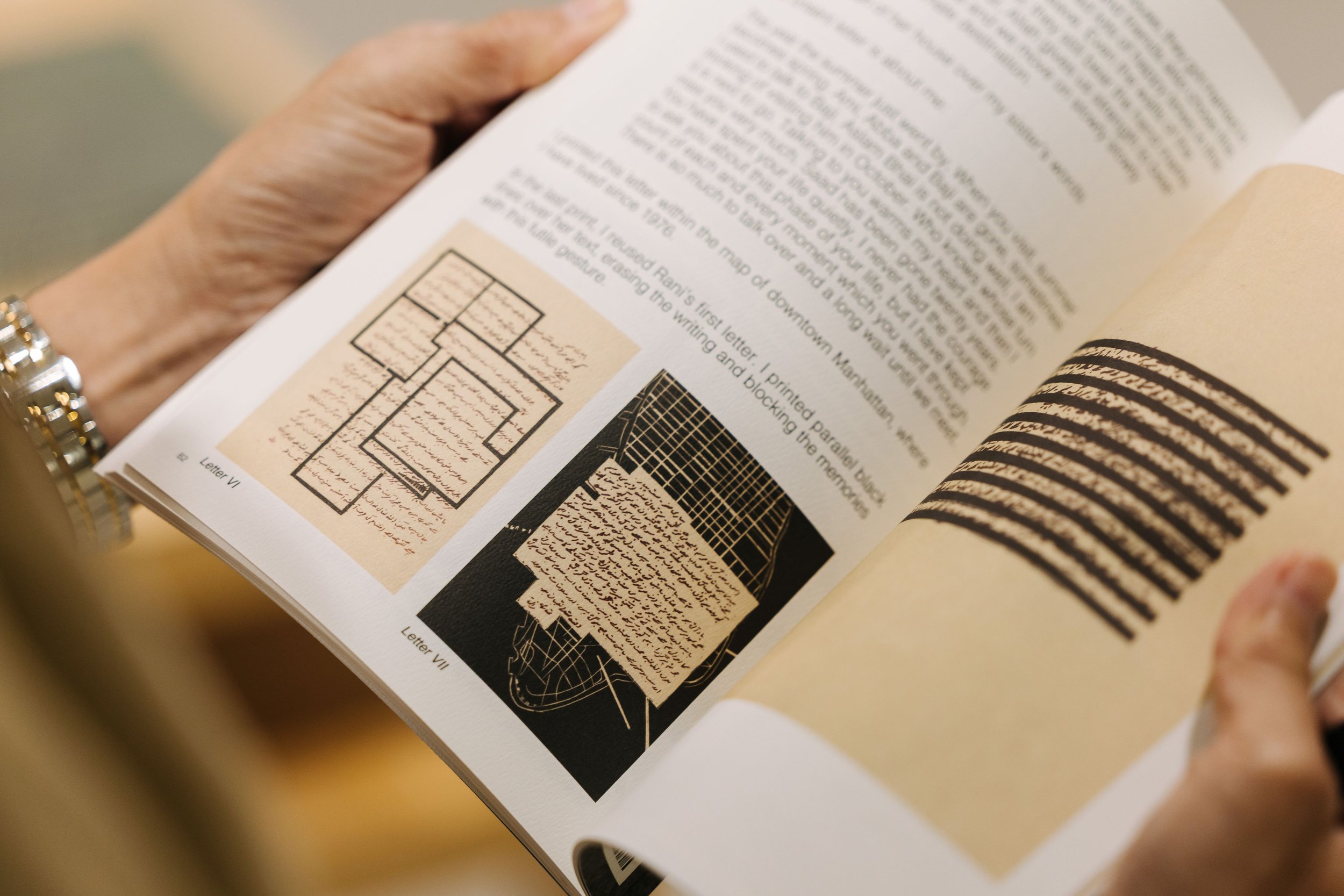
A spread from Zarina’s memoir Directions to My House (2018) published by Asian/Pacific/American Institute at New York University. Image courtesy of STPI, Singapore.
The exhibition Directions to My House (2026) shares the title with the publication you co-authored with Zarina in 2018 published by Asian/Pacific/American Institute at New York University. Could you say more about the title and the decision to use it for this show?
Directions to My House is the title of a poem Zarina wrote in 2001. It is one of the only poems that she wrote that does not accompany an artwork. It is a standalone text that she printed on a postcard and gifted to close friends, and it is in our exhibition. This title encapsulates for me the most enduring question in Zarina's practice: how to orient oneself.
The 2018 memoir, while it did include images of Zarina's art, was more of a narrative biography. In many ways, I wanted to continue the conversation Zarina and I were having as we wrote the book, but this time illustrate how Zarina abstracts and refracts the quest for home in her uniquely elegant, playful and poignant artistic voice. There are so many threads in Zarina's practice that I could have organised an exhibition around but this idea of home felt the most compelling. This is especially in the context of today’s political reality and as the first institutional presentation on Zarina in Singapore.

Zarina: Directions to My House, 2026, installation view at STPI, Singapore. Image courtesy of STPI, Singapore.
Could you briefly talk about the structure of the exhibition? And does the context of Singapore and Southeast Asia affect its curatorial message?
Singapore is a multicultural country with a large international population, and I felt that the many definitions of home Zarina explored would resonate with the wider community, such as the remembered childhood home, the built environment of home, the homes we make, family, language, borders, migration, and spirituality.
The exhibition is organised thematically around these different understandings of home. There is a loose chronology, because Zarina moved through these themes in an organic progression over the course of her life and career. I hope the exhibition allows viewers to follow the evolution of her thinking: from architecture and memory to language and geography, and from displacement and borders to more spiritual or cosmic understandings of home.
The context of Singapore matters because it allows Zarina’s practice to be seen within a broader Asian and transnational framework. Much of her work was shaped by movement and by questions of belonging, language, and cultural memory. Presenting her work at STPI allows those questions to open outward, beyond a New York or South Asian frame, and to speak to audiences for whom migration, multilingualism and layered ideas of home are lived realities.
I want to add, Nathaniel Gaskell, Director, and See Wah Ho, Senior Manager, of STPI’s exhibition team were critical sounding boards for me during the initial conceptualisation phase of the exhibition and I am so grateful for their insights into what would resonate with STPI’s audience.
“Presenting her work at STPI allows those questions to open outward, beyond a New York or South Asian frame, and to speak to audiences for whom migration, multilingualism and layered ideas of home are lived realities.”

Zarina, Dividing Line, 2001, Woodcut printed in black on Nepalese handmade paper mounted on Arches cover white paper, Edition 17 of 20 and 1 AP, 65.4 x 50.2 cm. © Zarina. Image courtesy of the artist and Luhring Augustine, New York. Private Collection, New York City. Photo by Robert Wedemeyer.

Zarina, Beyond the Stars, 2014, Woodcut printed on BFK light paper collaged with 22-karat gold leaf and Urdu text mounted on Somerset Antique paper, Edition 17 of 20, 61 x 58.4 cm. © Zarina. Image courtesy of the artist and Luhring Augustine, New York. Photo by Farzad Owrang. Private Collection, New York City.
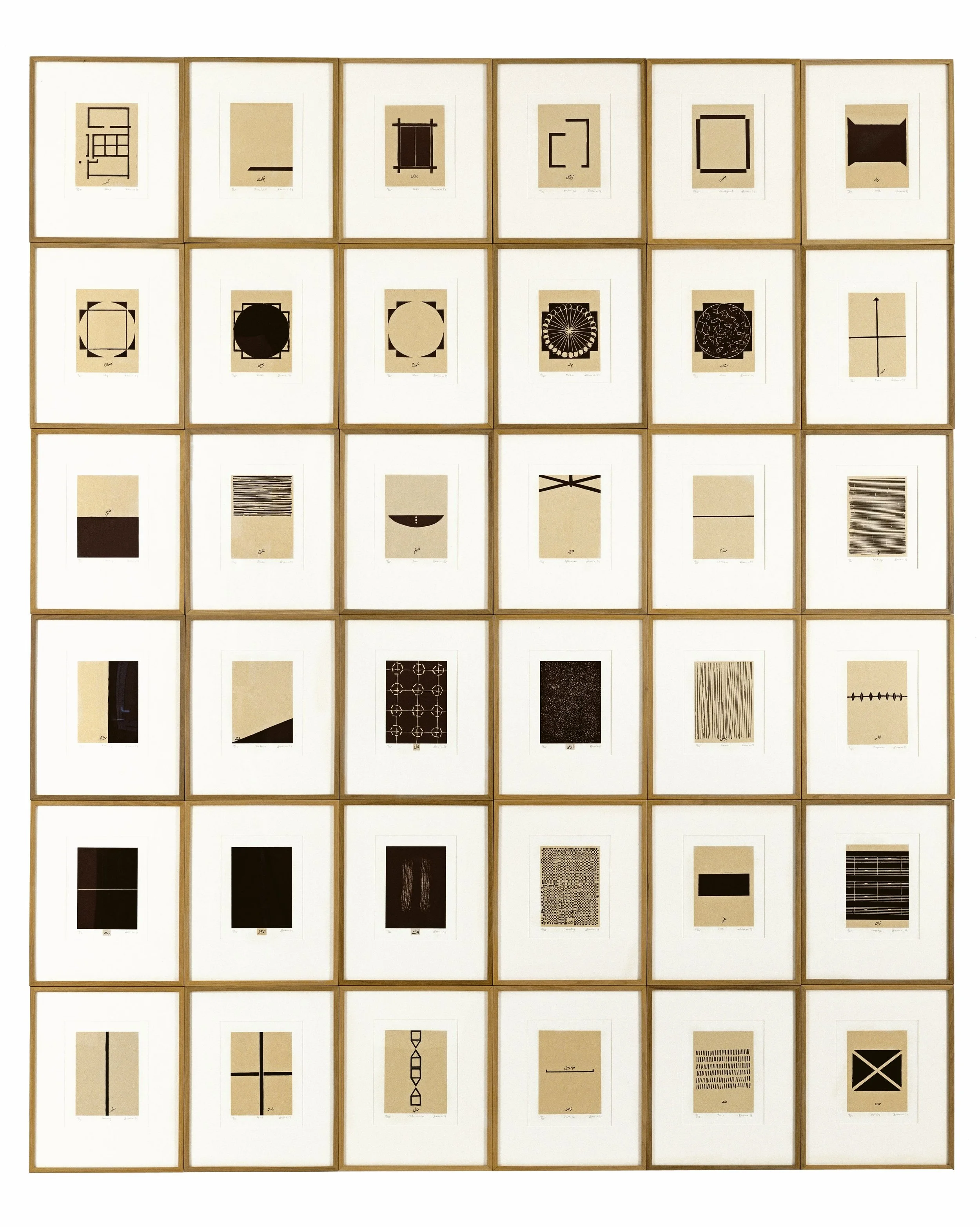
Zarina, Home is a Foreign Place, 1999, Portfolio of thirty-six woodcuts with Urdu text printed in black on Kozo paper and mounted on Somerset paper, Edition 19 of 25, 40.6 x 33cm each. © Zarina. Image courtesy of the artist and Galerie Jeanne Bucher Jaeger, Paris-Lisbon. Photo by Jean-Louis Losi.
Zarina had likened handmade paper to skin, as a sensitive and living material. Did the artist source specific papers for individual projects?
Yes. Zarina was incredibly specific in her choice of materials, especially paper. At first glance, people often describe her work as monochromatic, or as being without much colour, but if you look carefully, there is actually a wide range of tones within her paper palette.
Handmade papers from India, Nepal, and Japan were her favourites. Kozo, a Japanese mulberry-fibre paper, is at the top of the list. These are delicate yet resilient sheets, and Zarina would typically print on them in black ink and then mount the handmade sheets onto a larger, machine-made paper, framing the earthy beige or cream-toned sheet within a smooth white expanse that heightened its organic beauty. Zarina’s most iconic works, including Home is a Foreign Place, Atlas of My World, Dividing Line, and These Cities Blotted into the Wilderness, to name a few, are great examples of this signature style.
Zarina’s affinity for these papers was haptic, aesthetic and also political. As a proud Gandhian, she believed deeply in championing the papermakers of India and Asia. For her, paper was never a neutral support. It carried place, labour, touch, and history; it was part of the meaning of the work itself.
“For her, paper was never a neutral support. It carried place, labour, touch, and history; it was part of the meaning of the work itself.”
In your opinion, how does her personality or sensibility come through in her works?
Zarina’s astute eye and sensitivity come through in her choice of materials, in her ability to see the nuance within her collection of handmade papers. Her sense for abstraction and magpie-like love for shiny surfaces, such as pewter leaf and gold leaf, capture her playfulness and humour. Her curiosity and rebelliousness are visible in her subversive uses of materials: her self-invented method of cast-paper sculpture, her use of pinpricks and punctures as drawing, her embossing without ink and her transformation of humble materials into objects of deep emotional and spiritual resonance. Zarina’s treatment of materials is a fundamental part of the magic in her art.
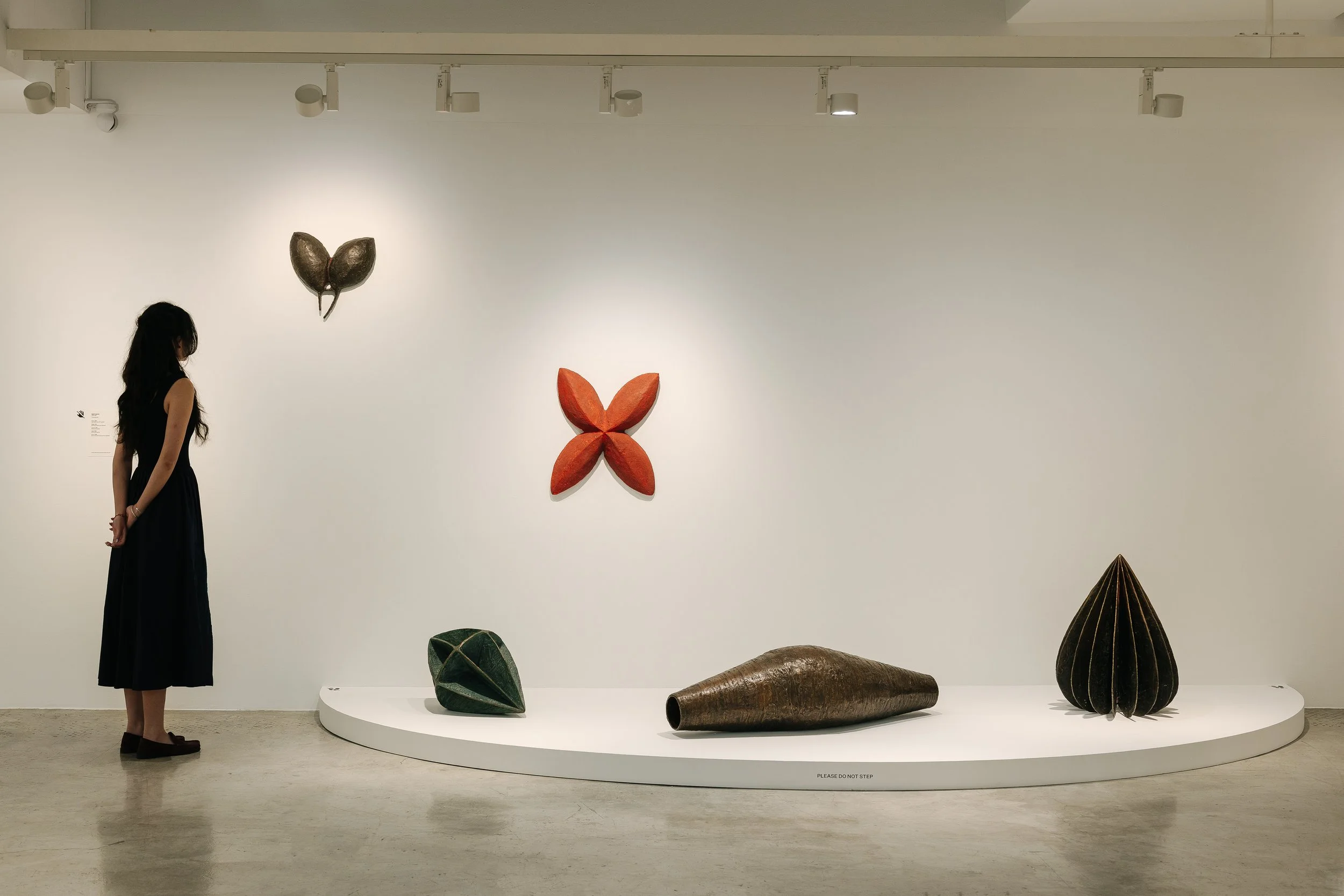
Zarina: Directions to My House, 2026, installation view at STPI, Singapore. Image courtesy of STPI, Singapore.
From 2020 to 2024, you wrote a recurring interview column on Kajalmag.com titled “One Piece by”. Could you talk about your approach to these interviews and what you learnt from this project?
Thank you for looking at the column! It was actually tied to Zarina. In the summer of 2012, the Hammer Museum mounted the exhibition A Strange Magic: Gustave Moreau’s Salome. It was a small show in one of the side galleries. I was in Los Angeles for the installation of Zarina: Paper Like Skin and walked into A Strange Magic to kill some time. It was an entire exhibition, albeit a small one, devoted to a single work of art: Moreau’s iconic Salome Dancing before Herod (1876). The painting was displayed prominently on the back wall of the gallery, while the two walls leading up to it were filled with sketches, notes, the artist’s source materials, and details about his life. The slim catalogue that accompanied the exhibition was in the gallery, and I read it cover to cover. I do not particularly care for Moreau’s work, or for history painting in general, but the exhibition was exhilarating. It offered a comprehensive education in how one work of art was created and, as a byproduct, an education in Moreau’s creative process and the time in which the painting was made. Looking deeply at one work of art provided both depth and breadth.
I think the exhibition resonated so deeply with me because my training as a printmaker, coupled with my experience working in Zarina’s studio and at the Robert Blackburn Printmaking Workshop, gave me firsthand knowledge of the small universe that exists within each artwork. From conception to physical creation, a multitude of decisions is made. Yet once an artwork is released into the world, it is rarely given that kind of attention. We tend to look at multiple works of art together, whether in an exhibition, a book, or a conversation with an artist.
In pitching the column “One Piece By” to Kajal Magazine, I wanted to create the kind of discussion that I find most engaging: one with a singular focus, and with enough time and space for details. I wanted to have an in-depth conversation about just one work of art; a deep dive into one piece, rather than a skim across an entire practice. Read independently, each interview offers an entry point into a powerful work of contemporary art. Read collectively, I hope they present a broader understanding of the art-making process itself.
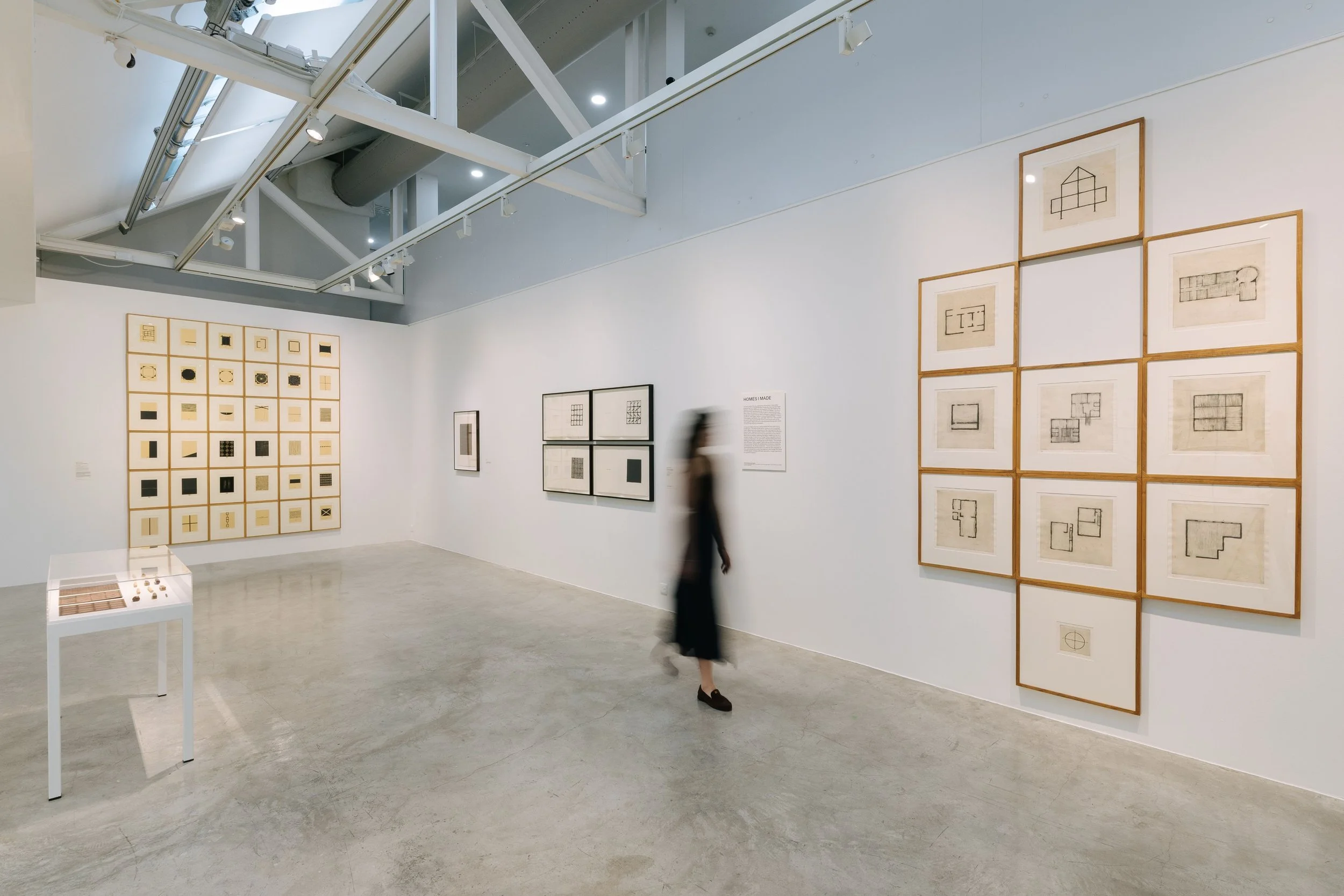
Zarina: Directions to My House, 2026, installation view at STPI, Singapore. Image courtesy of STPI, Singapore.
What sustains your personal interest in contemporary printmaking?
The short answer is: I just love looking at prints! Every time I am at an art fair, I will be walking through the aisles and often the artworks that catch my eye are prints. The rich depth of a lithograph, the graphic contrast of a woodcut, the delicacy and precision of engraved lines, there is no real equivalent in other mediums. The way ink sits on paper, the impressions of plates, the texture of etched lines, I find it all sublime.
But to expand my answer: I love the printshop. Having worked in both Zarina’s studio and the Robert Blackburn Printmaking Workshop, I have a deep affection for the magical, collaborative energy of a printshop and a communal art-making space. I recently contributed an essay to an upcoming book on Atelier 17, and I have been thinking about how the printshop functions as a kind of artistic passport. For an itinerant artist like Zarina, it is a space you can enter and immediately find a community that is usually diverse in age, cultural background and artistic experience. It enables cosmopolitanism in a way that is more accessible.
I also love the history, politics, and economics of printmaking. When so much of the art world’s conversation can veer toward the glorification of a singular genius, or of a single extremely expensive object, the plurality of ownership, collaborative process, and relative affordability inherent to printmaking feels like a refreshing antidote. I am most drawn to contemporary prints where artists are not just engaging with the medium, but testing it: playing with its histories, pushing its boundaries, and experimenting with what a print can be.
And I have to add, I also adore the people who make up the print world. I think because of its collaborative nature, proximity to activism, and affordability it draws a certain kind of person–my favourite kind of person.
And what is one aspect in the field which deserves more attention?
One aspect of the field that deserves more attention is the need to decentre Western narratives of printmaking, both historically and in the present. Working with STPI has been especially meaningful for me because it has given me an opportunity to point my New York community toward Asia when they think about printmaking.
There is, thankfully, a growing awareness of artists of colour working in America and Europe. But I think it is equally important to direct people’s attention to Asia not as an origin story for artists or site of historical inspiration, but as a contemporary central hub of artistic innovation, technical experimentation, and creative exchange. Printmaking has been a deeply international medium, shaped by movement, collaboration, and migration. We need to expand the geography of how we tell and write its rich history.
This article is presented in partnership with STPI.
Zarina: Directions to My House is on view at STPI from 6 June to 1 August 2026. For more information, click here.