
Conversation with Emi Eu and Nathaniel Gaskell
The STPI Perspective
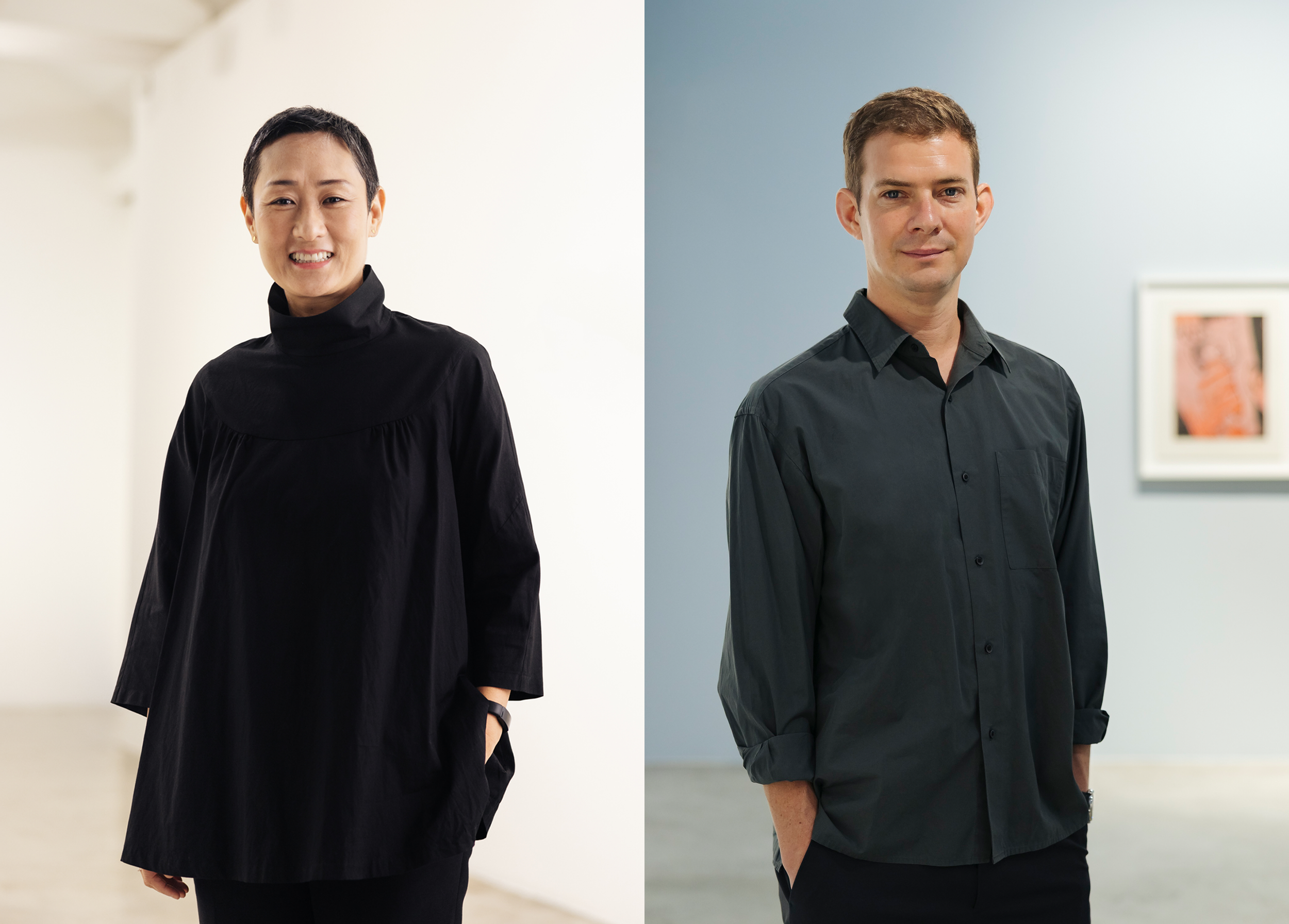
Emi Eu and Nathaniel Gaskell.
Ahead of the debut of The Print Show & Symposium Singapore 2026, organised by STPI, we speak to Emi Eu and Nathaniel Gaskell. Emi is STPI’s Executive Director, and Nathaniel is Director (Exhibition Programming & Content Development). In this interview, they talk about rigour and appeal of print as an artistic medium, STPI’s evolving residency programme, and its next trajectory.
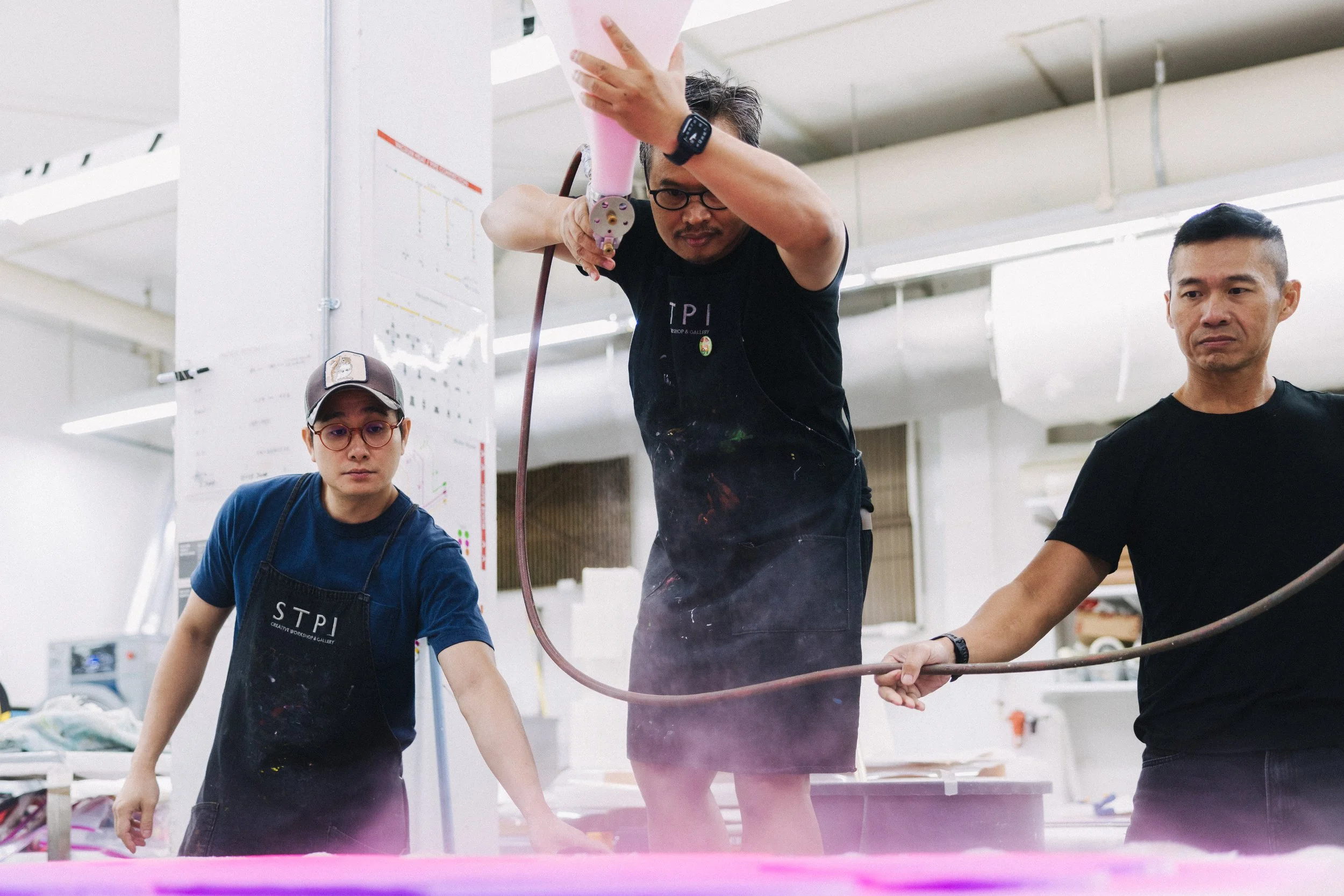
Eko Nugroho and the STPI Workshop team. Image courtesy of STPI, Singapore.
STPI celebrates its 24th anniversary in 2026. Looking ahead, could you talk about the organisation’s future direction?
Emi: After two decades in operation, STPI is well-positioned to be the flag bearer of promoting prints. Our new direction is most palpably articulated in the upcoming The Print Show & Symposium Singapore. We hope to create a print renaissance, carrying forward the legacy of master printmaker Ken Tyler, who brought about its revival in the 20th century in the United States of America (USA).
I think this is an apt moment for prints, especially after the COVID-19 pandemic and amidst the current influence of Artificial Intelligence (AI). Prints remind audiences, and even artists, that creation and creativity come from within human nature, from the heart and the brain. We aim to convey this sentiment as we forge forward through our exhibitions and programmes.
Nathaniel: As demographics and markets shift over the years, STPI aims to be more accessible and relevant to a wider range of audiences while staying true to our ethos of putting artists and their creative development first. Our evolved brand aligns with our innovative approach where we work with a diverse selection of artists to open up the world of contemporary art through print and paper. The core of STPI’s residency programme is the Workshop and we will be highlighting this unique, foundational aspect increasingly as part of our story.
Prints remind audiences, and even artists, that creation and creativity come from within human nature, from the heart and the brain.
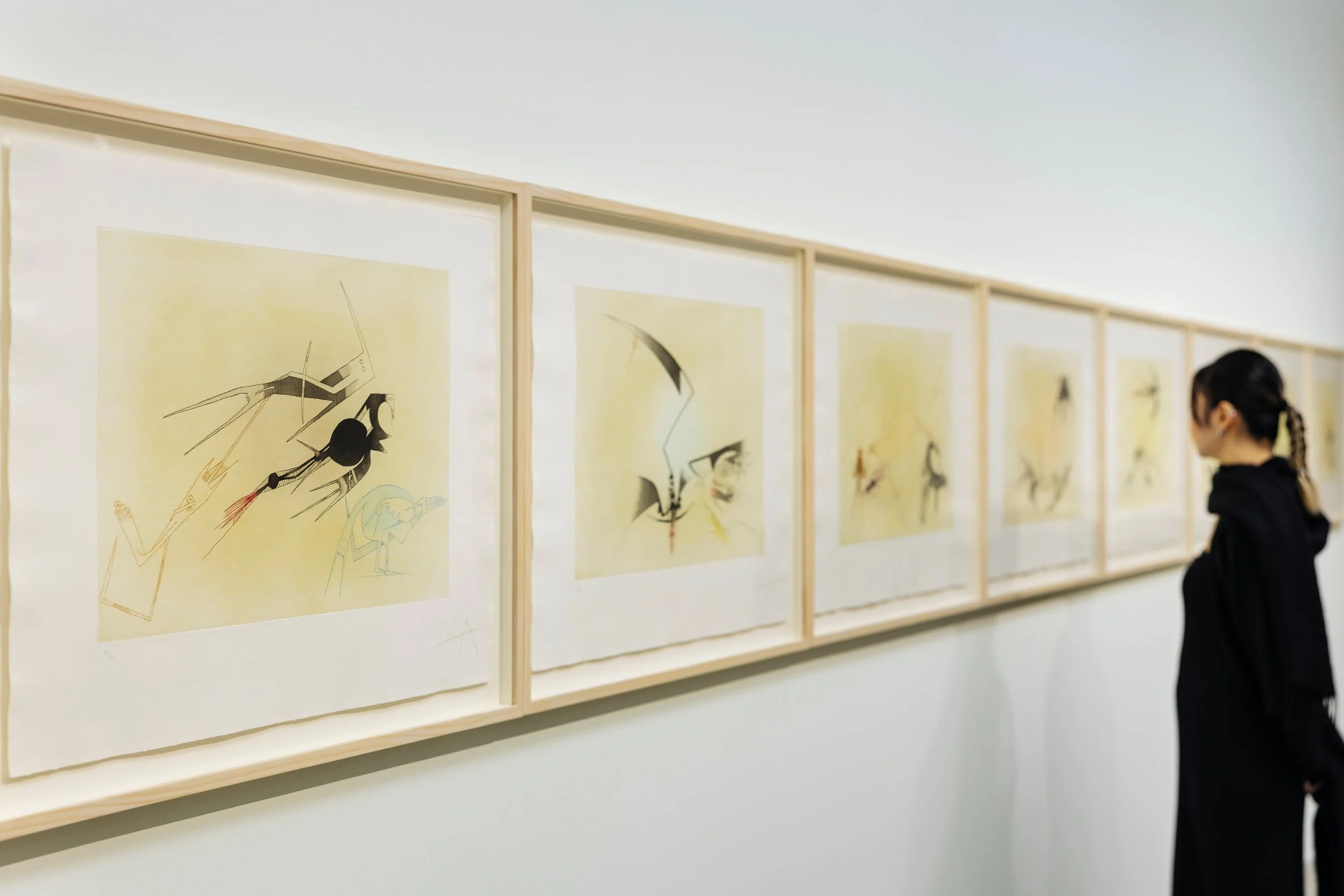
Wifredo Lam: Outside In, 2025, exhibition view at STPI, Singapore. Image courtesy of STPI, Singapore.
The relationship between artist and print masters is a unique one fuelled by expertise and collaboration. Could you talk about how STPI engages with this history of collaboration?
Emi: The collaboration process is integral to this relationship. We presented Wifredo Lam: Outside In (2025) over last summer, and Lam is a very compelling example to speak to this point. He had an extremely close relationship with his printmaker in Milan, Giorgio Upiglio. Upiglio was more of a technician, but by understanding Lam’s philosophy and intentions, he was able to translate those concepts into a visual language that the artist cannot achieve on his own.
This can be seen among many important modern artists, especially Pablo Picasso, who engaged in many types of printmaking techniques. The same can be said for Joan Miró, who was prolific in his lithographic production. This close relationship guides the collaborations that we do in STPI’s Workshop. When our resident artists comment on their experience here, the first thing they say is: everything goes to the workshop and the workshop team, because they are the real creators. Without the workshop team, the artist could not have achieved what they hoped to in the medium of printmaking and papermaking.
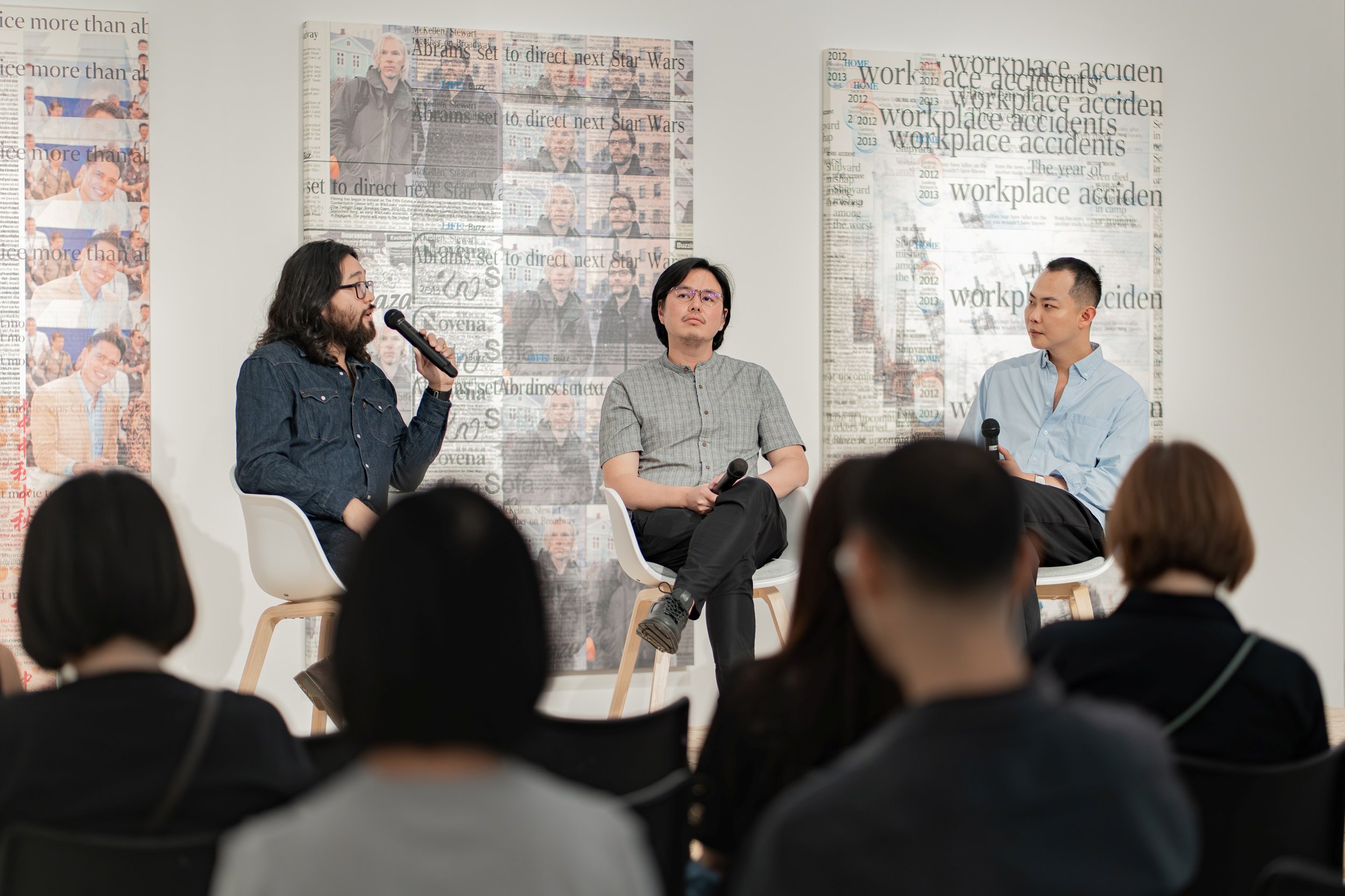
The Persistent Print: Reimagining the Handmade in a Digital Age, panel discussion on 15 November 2025 at Central Chidlom, Bangkok. Featuring John Tung, Vipash Purichanont, and Jefferson Jong. Image courtesy of STPI, Singapore.
In your opinion, what is the relevance of print in Singapore or Southeast Asia?
Nathaniel: Printmaking has been an important part in the development of art history across the world, and Southeast Asia is no exception. There is a rich and diverse history of artists working with prints in the region, driving artistic movements, and shaping artistic and political developments across borders. The mass circulation of images we see today in the digital world is rooted in printed matter and we often overlook that. These two points are topics we are exploring in the upcoming symposium, The Politics of Print. As we collaborate with leading contemporary artists who are often new to print through our residencies, STPI strives to recentre the medium as a material possibility.
As we collaborate with leading contemporary artists who are often new to print through our residencies, STPI strives to recentre the medium as a material possibility.
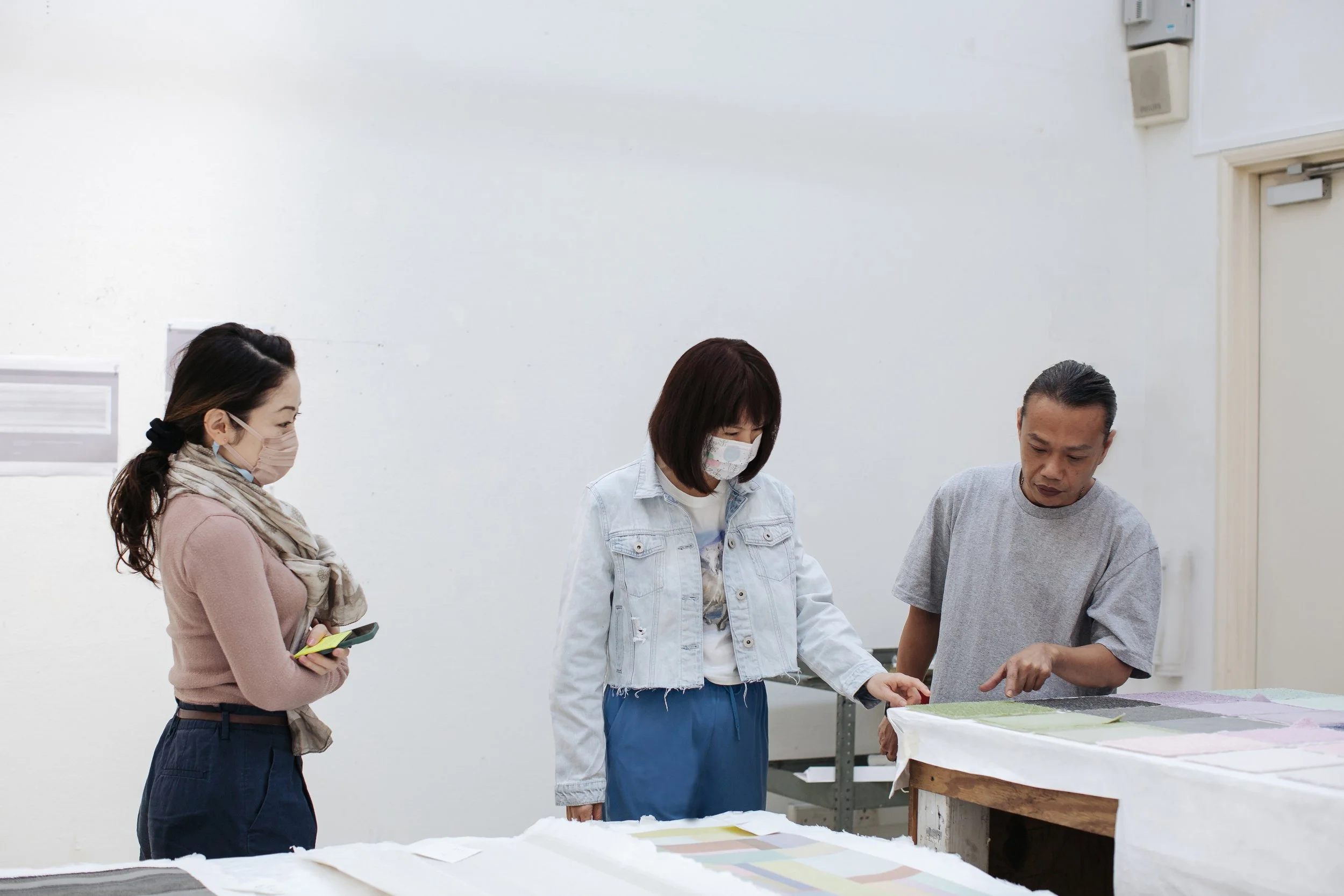
Jane Lee and STPI Workshop team in the residency studio. Image courtesy of STPI, Singapore.
What has been an important change in terms of how the residency programme functions?
Emi: The idea of a residency was novel to this region when we set up STPI’s residency programme 25 years ago. The framework of giving an artist time, producing works in collaboration, and bringing these prints to market, was very new to everyone, including ourselves. That was a major change to how things were done, and the biggest step we put on the artistic map and regional arts ecosystem.
Through the years, we realised that we share better chemistry and deeper understanding with some artists, and invite them back to the residency more than once. It matters that we think at the same level for the quality of engagement. The COVID years were very tough, and we had to rethink how we can work with artists. All these factors play a part in refining our programme and its structure. We are always evolving.
The idea of a residency was novel to this region when we set up STPI’s residency programme 25 years ago... That was a major change to how things were done, and the biggest step we put on the artistic map and regional arts ecosystem.
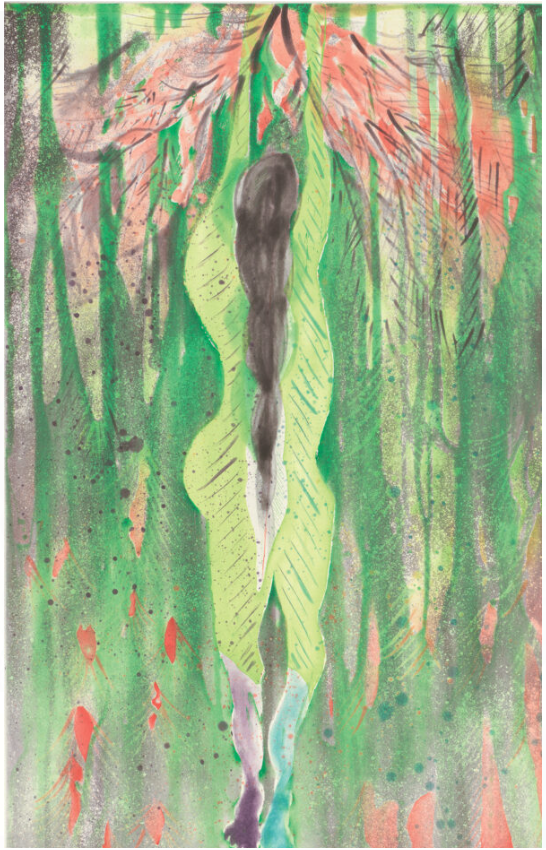
Chris Ofili, Habio Green, 2009, colour spit bite aquatint with aquatint and drypoint. Image size: 23½ x 14¾”; paper size: 32½ x 22¾". Image courtesy of the artist and Crown Point Press.

Natee Utarit, IT WOULD BE SILLY TO BE JEALOUS OF A FLOWER, 2025, Serigraph on paper, 80 x 60.5cm. © Natee Utarit / STPI. Image courtesy of the artist and STPI, Singapore.
How would you describe the perception of today’s audiences and collectors towards print? Does it differ from prior generations?
Emi: I think it is still a challenge for print publishers like us, that the general public thinks prints are just reproductions, as if the artwork is produced by a copy machine. Because of this perception, prints are seen to be inferior to paintings and sculptures. Even though sculptures are often made by a workshop, or coming out of a mould, they do not think about it that way. I know collectors who do not collect prints because it is not unique, which is understandable.
So what we are trying to do through The Print Show & Symposium Singapore, is to chip away at this misconception of print being an “easy medium”. In fact, it is not. I still remember when I approached the late Frank Stella to come to STPI’s residency, because he had a very close relationship with Ken Tyler. The first thing Stella said was he did not think he could do it, because the printmaking process is very complex and it needs a lot of commitment of time and effort. At his age and stage in life then, he did not think he could do it. This statement is a true reflection of the challenging nature of printmaking.
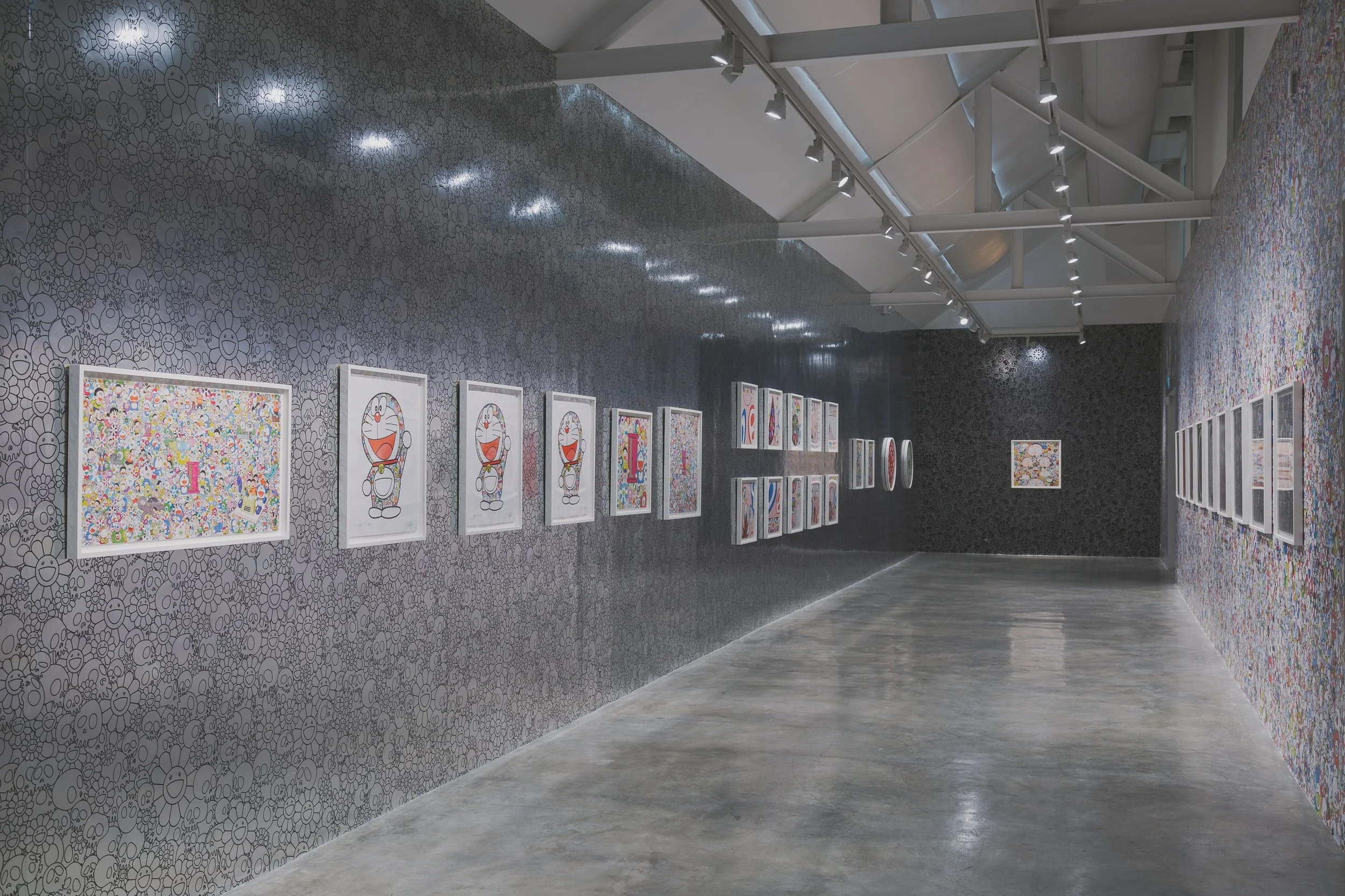
Takashi Murakami, From Superflat to Bubblewrap, 2019, exhibition view at STPI. Image courtesy of STPI, Singapore.
In your opinion, what is the appeal of print and multiples?
Emi: The first appeal is basically the price point. For the buyers, it is a lower and accessible entry point to collecting art, and then for a creator, it gives a satisfaction that so many people can own their art. For instance, Andy Warhol brilliantly said basically the reason why he started to make prints is because he wanted to have the public be able to own a piece of art. At the same time, I am sure he was a smart person and saw the numbers. Many well-known western collectors in the past started collecting prints. As they learnt more about the artworks and the artists, they go from prints to drawings, paintings, and sculpture as their capacity to spend grows. Prints remain a very good entry point.
Personally, I feel that prints are important because they are so intimate, as the artists are deeply involved in the making. It gives a lot more satisfaction to collectors that they are taking away something so close to the artists' hearts.
Emi, you have been part of STPI’s story since 2001. What is your biggest takeaway from your time so far?
Emi: I have learned what it truly means to work with artists through residency programmes. It is not about print, but about people, life skills in this environment, and how creative people think and behave. As arts professionals, how we can translate artistic intent into language that everybody can enjoy. I strongly believe in the collaboration part of printmaking processes, and I treasure all the residencies I have witnessed. It is an experience that one cannot get anywhere else. One gets to know the artist very, very personally.
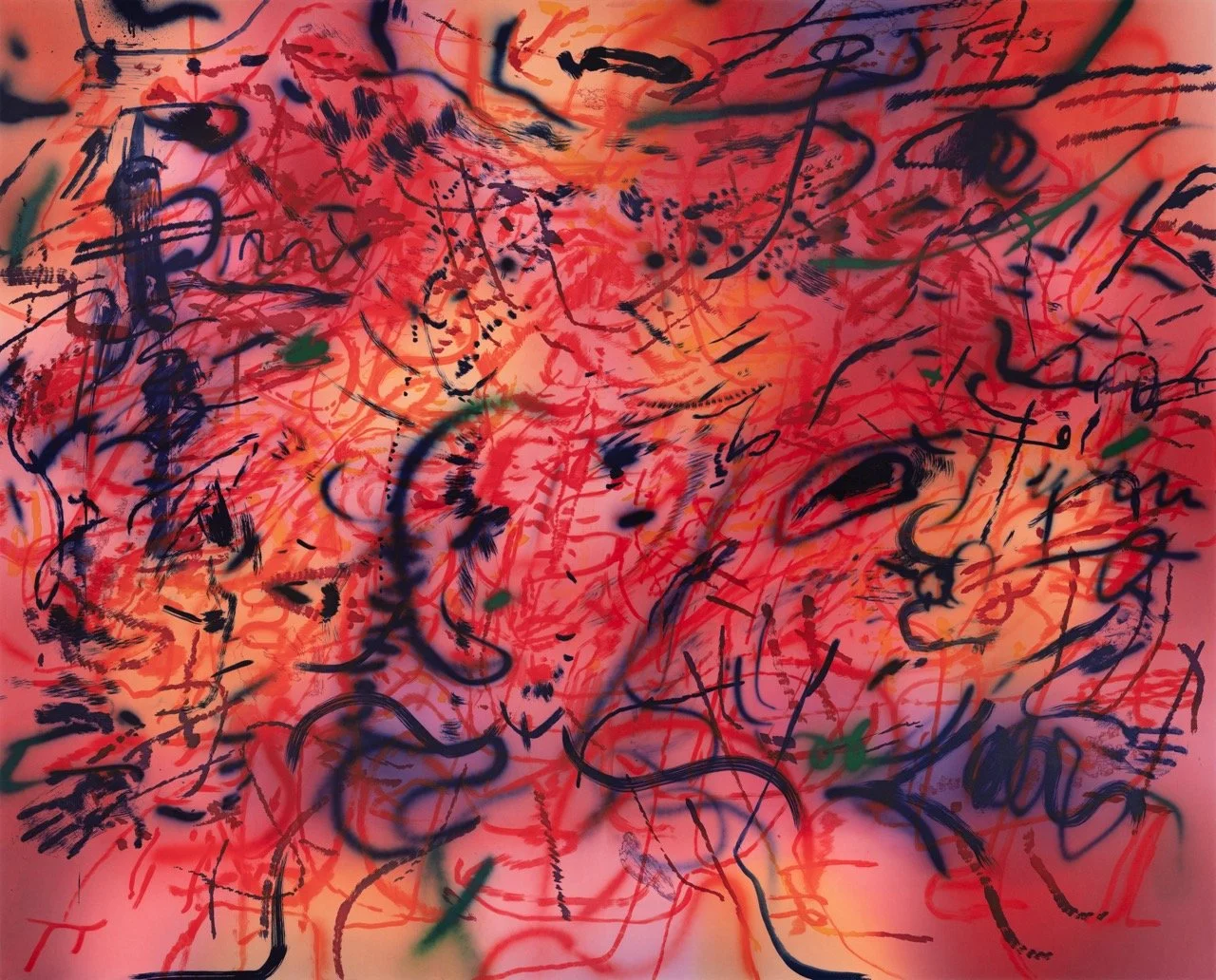
Julie Mehretu, Fourth Seal (R 6:7), 2020, photogravure, aquatint, open bite, sugar lift aquatint, printed on four sheets of Somerset White Satin 400 g, 170 x 208cm (paper); 185 x 224cm (framed). Image courtesy of the artist and BORCH Editions.
The Print Show & Symposium Singapore is set to debut during Singapore Art Week 2026. What are you personally most looking forward to?
Emi: I am really excited for The Print Show. The prints have arrived from all over the world, and I know those works very well. But seeing them in STPI’s newly transformed gallery space, I think I will be able to uncover a lot more. I wish visitors will have the same type of discovery and be inspired to buy the works they see.
From a broader perspective, I hope that the public will find the Symposium eye-opening. Even though it happens over two short days, we have prominent speakers and arts professionals who are working very closely with artists. Some of them are from beyond the region, so they will impart their views and knowledge from contexts where we are not operating.
Nathaniel: This has been a long time in the planning and a real team effort from all of us at STPI. So I am looking forward to seeing all this work come to fruition, and observing audiences enjoying the programme. I have been an admirer of Salima Hashmi since I was a student. She is someone who demonstrates the power of art in social activism and as a force for good. I cannot wait to hear her speak!
This article is presented in partnership with STPI.
The Print Show opened on 22 January, and has been extended to 7 February 2026. For more information, click here.
To read our preview coverage, click here.