
Art x Business: Kim Tay
On place-making curation and technical excellence
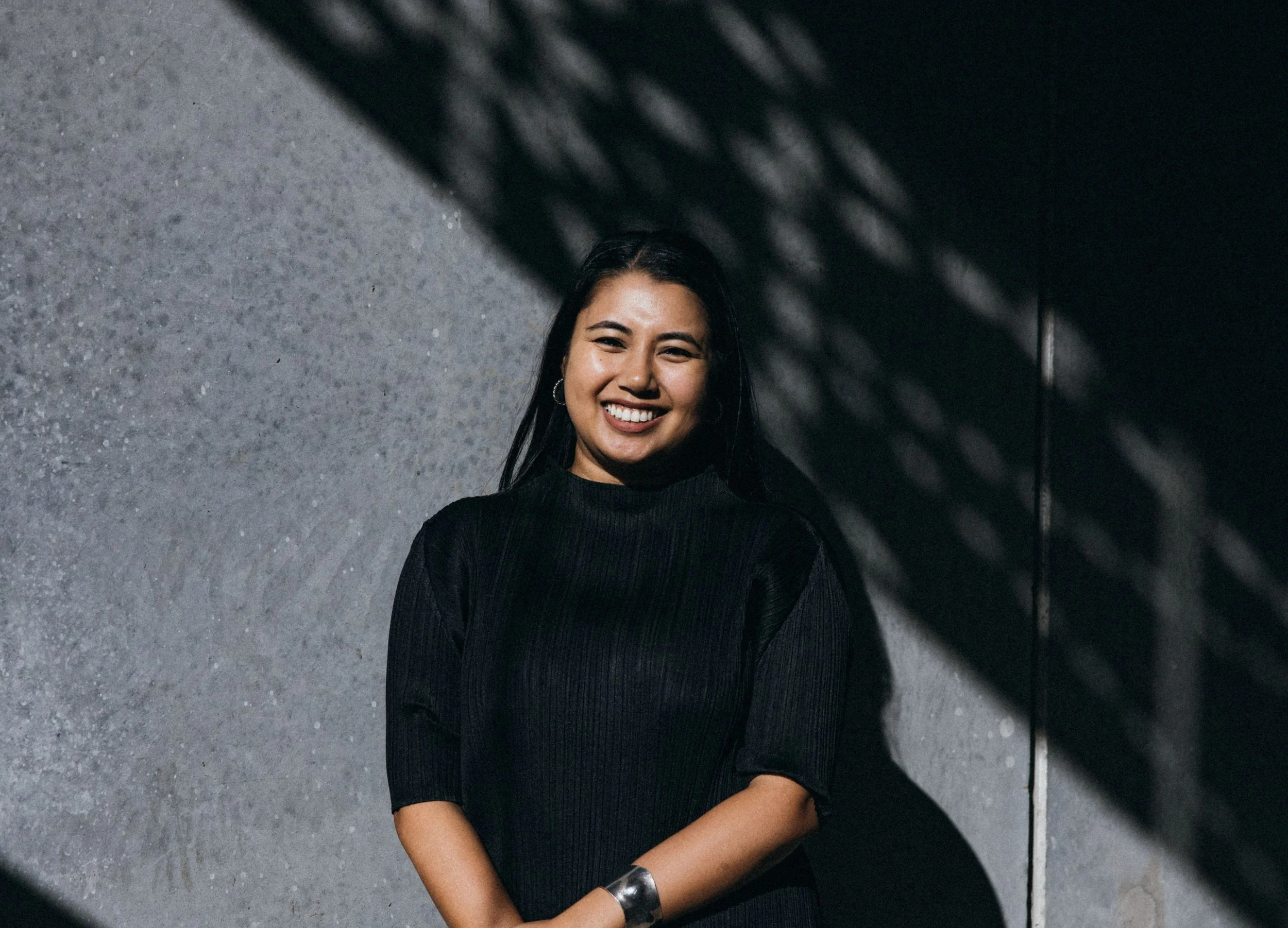
Kim Tay.
Kim Tay is Co-Founder and Gallery Director of The Artling, an international art and design consultancy. Established in 2013, The Artling offers end-to-end advisory services to both private and corporate clients, ranging from developing art themes and narratives, to concept design development, and the commissioning of artworks to site specifications. Tay oversees The Artling’s online inventory and leads the company’s various consultancy projects across the globe for clients such as Google and Ritz-Carlton, among others.
In this conversation, Tay shares her insights into The Artling’s business model, the elements that shape impactful corporate collections, as well as the complexity of working across industries.

Villa, Patina Maldives. Palms by Cássio Vasconcellos. Image courtesy Patina Maldives. Photo by Georg Roske.
Could you share a major turning point in The Artling since you joined in 2014?
A major turning point was the expansion of our platform from a B2C online art gallery into a fully-integrated B2B art consultancy working on large-scale projects internationally. When we first started, the idea of buying art online was quite new, and buyers were cautious about making large transactions online. Over time, they became more comfortable with operating online, and we were thus able to grow the website into a trusted platform connecting artists and buyers around the world.
As the online side of the business grew, we increasingly received requests for offline consultancy projects. One of the bigger projects that kicked things off for us on the B2B side was the Fari Islands development in the Maldives, where we worked on the Patina Maldives with MK27, and the Ritz-Carlton Maldives with Kerry Hill Architects. Completing these projects completely changed the trajectory of the company, giving us access to much larger opportunities.
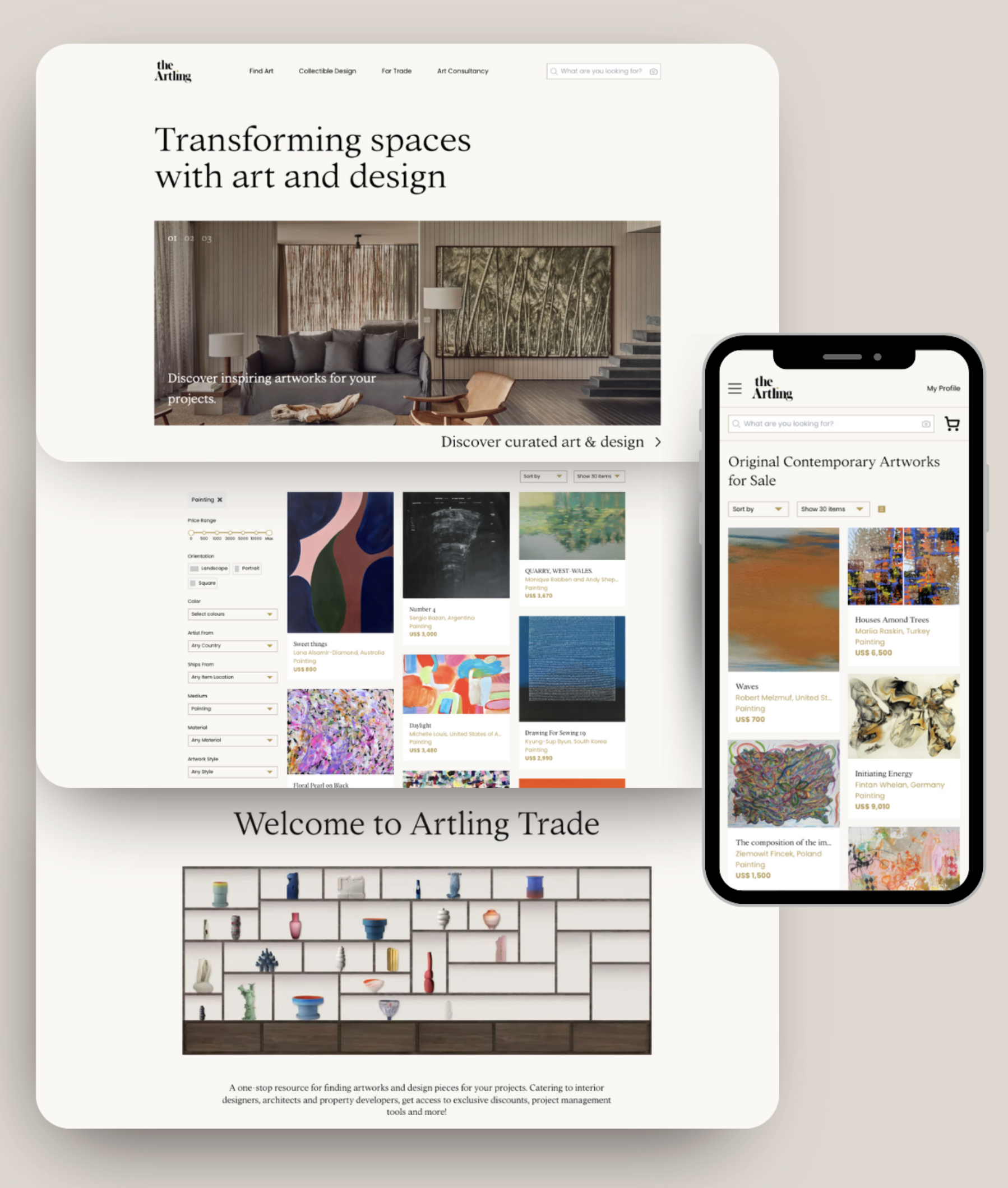
The Artling’s online platform.
What is the team size today? And how is it organised in terms of roles, geography etc.?
We are a team of 10 to 12 people which includes full-time staff, freelancers and interns. We have dedicated in-house technology developers who build everything you see on the website, and the rest of the team is made up of art consultants, project managers, and sales representatives. We are a closely-knit team with partners across the region, as well as in Europe and the United States of America.
The Artling comprises a consultancy, as well as an online platform where artworks and design items are available for sale. How would you describe the relationship between these two aspects of the business?
The two distinct sides of the business are closely interlinked. The online platform has over USD2billion in inventory that our art consultants use to source for ongoing projects. In turn, sales from the consultancy side result in more artists and galleries listing with us. The online platform allows us to operate differently from a typical art consultancy, because we have access to such a huge amount of inventory, on top of our existing network of artists and galleries across the globe.
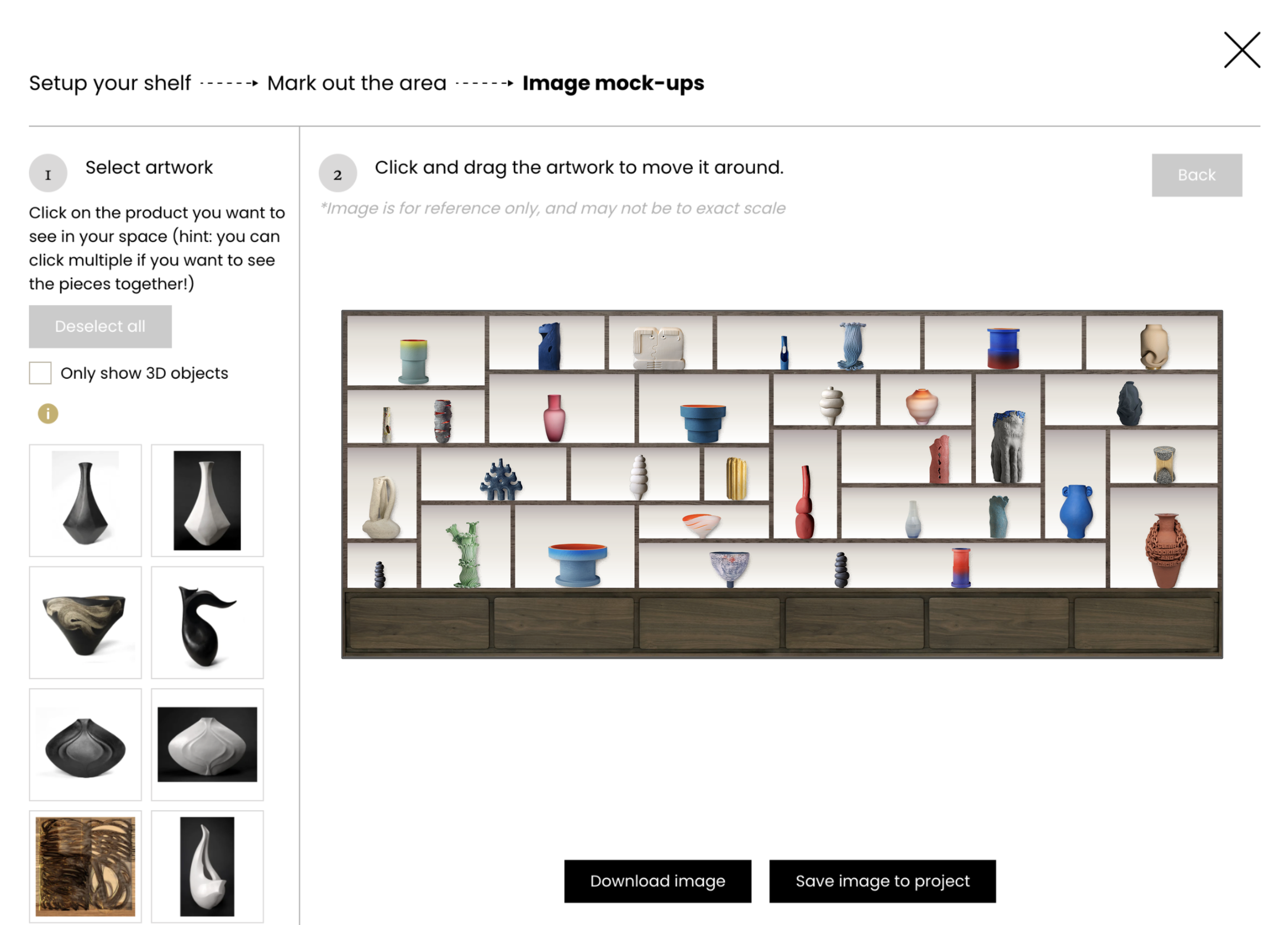
The Artling’s “Try it in your space” feature.
What is The Artling’s strategy when it comes to engaging collectors and clients online and in-person?
For the online platform, the focus is on discoverability and access to information. Nothing can replace viewing an artwork in person, but we try to replicate the experience through providing high-resolution images, information about the artists’ processes and backgrounds, as well as tools to allow customers to mock-up the artworks in situ in their space. We have also built customised tools for trade users, such as interior designers and architects, for them to discover artworks and source for their projects in a way that aligns with their general project flow.
In person, our consultancy work complements this by creating real-world experiences. Through art programmes for hotels, residences, and public spaces, as well as events and exhibitions, we operate as the bridge between clients and artists. This combination of digital reach and personal engagement is what makes us unique, allowing us to serve both private collectors and large-scale developers with the same focus on curation and placemaking.

The Lands by Capella, Sydney. 16-290 Karlamilyi by Amy Wurta French and Lily Jatarr Long. Image courtesy The Lands by Capella.
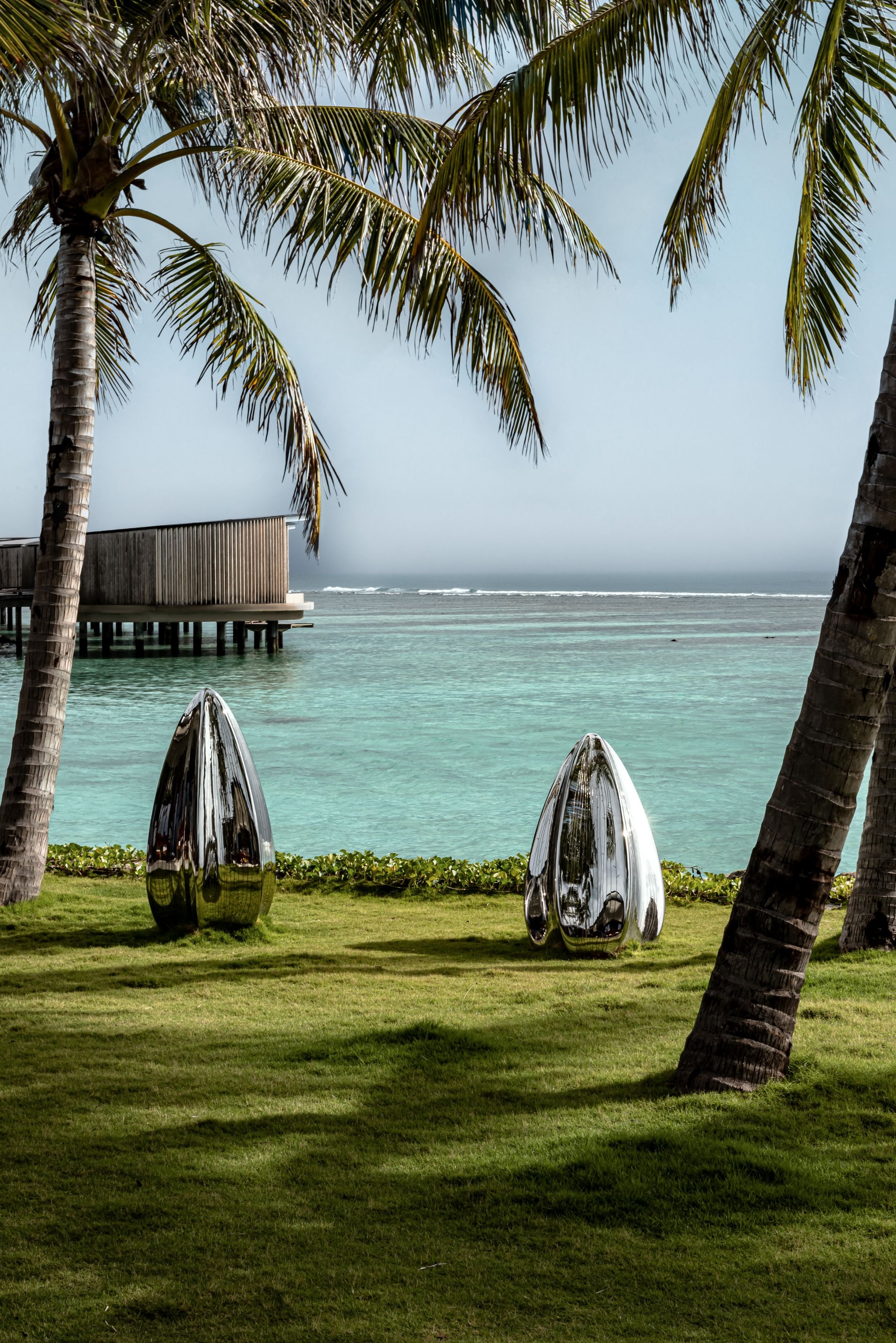
The Ritz Carlton Maldives. Bloom by Sebastian di Mauro. Image courtesy The Ritz-Carlton Maldives.
The Artling has worked with international hotel groups such Capella and Ritz-Carlton, among others. Could you talk about your approach towards such projects?
We always start with the same framework, with a deep dive into the local context as well as the hotel brand’s ethos. Brand values vary greatly across the international hotel groups we have worked with, such as the Capella or Waldorf Astoria. We work closely with the client and designers to understand the story they want to tell. From there, our role is to translate this vision into a curated art experience that feels authentic and site-specific. Once we have settled on a theme for the project, we build out the artwork collection, following the artworks all the way from the conceptual phase up to installation on site. Behind the scenes, there is also a huge logistical and technical component, from working with architects and designers early in the process, to managing production and installation across multiple countries.
We approach every hospitality project as an opportunity to create a sense of place and to form unique experiences through art. This means sourcing from both established and emerging artists, often commissioning works that respond to local culture, materials, and narratives.
Behind the scenes, there is also a huge logistical and technical component, from working with architects and designers early in the process, to managing production and installation across multiple countries.

High House, Singapore. Urban Luminance series by onformative. Image courtesy HighHouse. Photo by Ben Teo.
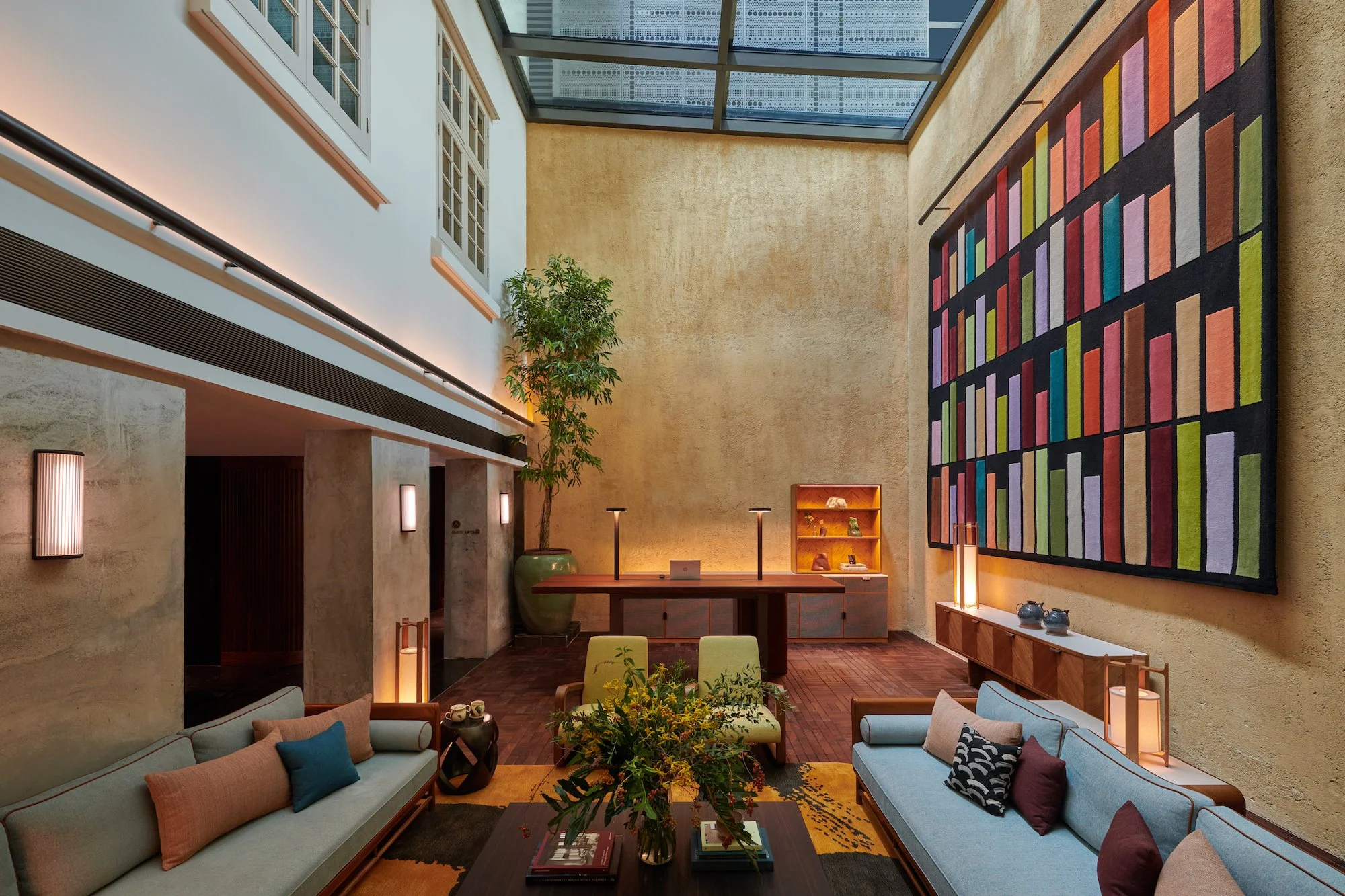
21 Carpenter, Singapore. Reader and Writers #1 by Heman Cong.h Image courtesy 21 Carpenter.
What are the key differences when working across various contexts, in Singapore, China, Australia, etc?
Each project has its own quirks and discoveries through the process. Working across different regions brings unique dynamics, from cultural expectations to design sensibilities and working styles. Our approach needs to be adapted accordingly; it is crucial that we are hyper aware of the cultural nuances and specificity of each context in order to deliver a project smoothly. What stays constant regardless of location is the importance of how people experience space, how art interacts with architecture, and what stories resonate locally.
What do you think is your winning formula when it comes to securing new projects and retaining clients?
I think most of our success comes down to trust, creativity, and consistency. Many of our clients return because they value that we understand both the creative and commercial sides of a project. We are not just sourcing art. We are helping them tell a story and elevate their brand through thoughtful curation. That combination of creative sensitivity and professional execution has been key to retaining clients over the years.
When it comes to securing new projects, much of it stems from word-of-mouth and the visibility of our work. Each completed project becomes a living showcase of what we do. We have been fortunate to have an amazing group of clients and customers who have a shared vision to create amazing art collections, both public and private.
That combination of creative sensitivity and professional execution has been key to retaining clients over the years.
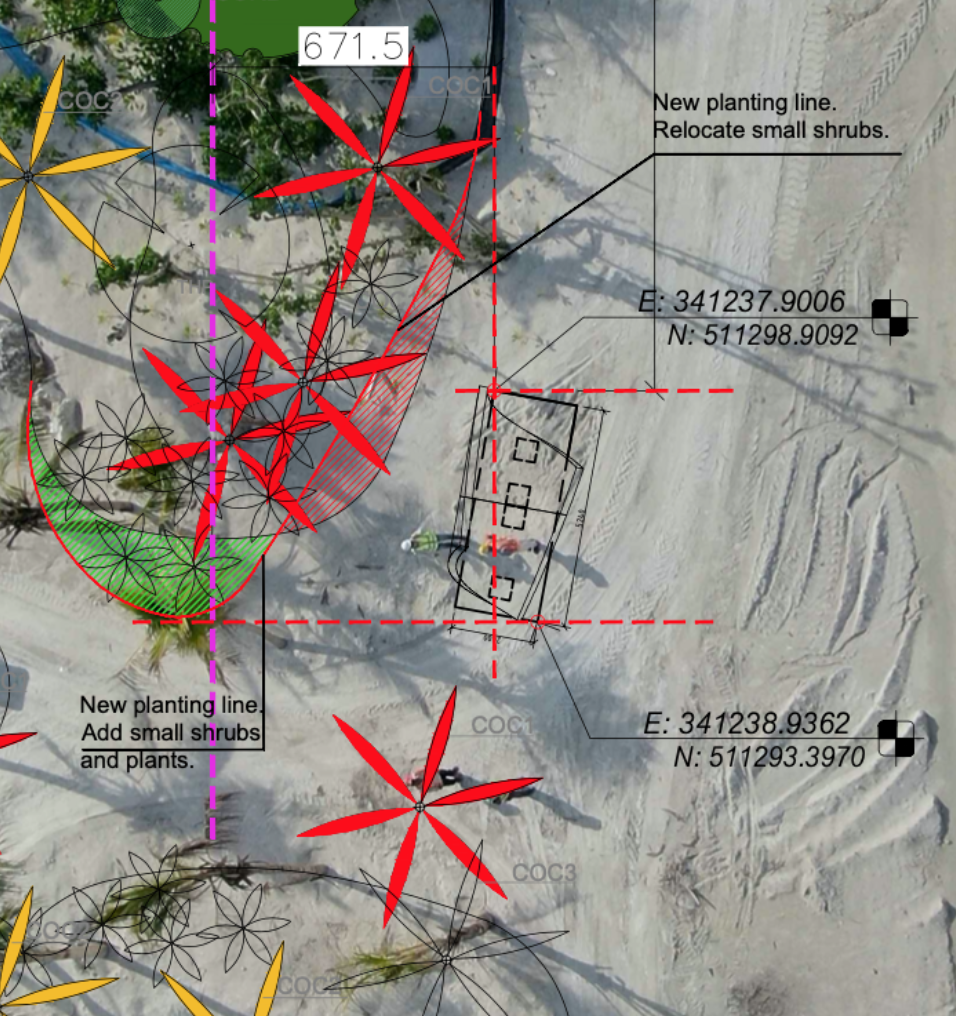
Artwork setting out plan for Momento, by FAHR 021.3.

Patina Maldives. Momento by FAHR 021.3. Image courtesy Patina Maldives. Photo by Georg Roske.
What is one challenging project that The Artling worked on? And how did your team overcome the difficulties?
The projects we have worked on in the Maldives were some of the most challenging. They involved monumental-scale sculptures being installed outdoors on islands in the middle of the Indian Ocean, all in the midst of a lockdown on the islands during the COVID-19 pandemic. Many artworks had to be assembled in pieces due to restrictions on the size of ships that could be used to offload on the islands. There were severe limitations with the equipment that we had access to on-site, and no art installers available so we had to work closely with the contractors to get the works up. It was a huge challenge, but so rewarding to finally see all the works come together in such a unique location!
In your opinion, what are two common pitfalls in curating artworks for corporate collections?
There is a tendency to treat art as an afterthought, only remembering that it needs to be done after construction is completed. When artworks are selected too late in the design process, they risk feeling disconnected from the overall concept or architecture. The most successful collections come from early collaboration, where art is considered alongside materials, lighting, and spatial flow, allowing it to truly enhance the environment and narrative of the space. When decisions are driven by a strong strategy for long-term value, this can create an art collection that is timeless and can speak to the company’s values.
The most successful collections come from early collaboration, where art is considered alongside materials, lighting, and spatial flow, allowing it to truly enhance the environment and narrative of the space.

Arrival Entrance, Capella Taipei. Basin Sansui by Chen-Lin Lee. Image courtesy Capella Taipei. Photo by Timothy Kaye.

Lift Lobby, Monetary Authority of Singapore. River of Flowing Histories By Suzann Victor. Image courtesy MAS and &Larry.
What are the recent shifts or trends you observed in terms of the expectations of clients?
We have seen positive growth in clients placing more importance on artworks in their corporate or hospitality projects. Art is no longer treated as purely for aesthetics, but as an integral part to any project that can be woven into marketing stories and guest experience. We have also observed that clients are more keen to explore site-specific, bespoke commissioned pieces for their spaces.
Looking ahead, what is one underappreciated skill or quality necessary to thrive in this industry?
The art world is constantly changing, and I think everyone has to be open to how we can engage with other industries to broaden the impact of art. Through our work in consultancy projects, our entire team has learned to have fluency in operating in the design and construction sphere. As commissioned artworks and installations get increasingly complicated, it is important to be able to balance supporting and guiding the artists with ensuring the final installation can be achieved smoothly.
As commissioned artworks and installations get increasingly complicated, it is important to be able to balance supporting and guiding the artists with ensuring the final installation can be achieved smoothly.
Are there other upcoming projects you wish to share?
We have some very exciting projects coming up across the region! There are a number of them in Australia, including the Waldorf Astoria Sydney which is slated to have one of the biggest collections we have worked on. We are also working on a corporate office tower in Singapore which will have some major large-scale commissioned works.
We have also recently been appointed for WOHA’s major hotel project in Changi for OUE, as well as our first Capella in China, Capella Shenzhen. We are looking forward to putting all these wonderful collections together!