Inside Cambodia’s Art for Kep Residency Programme
Knai Bang Chatt, Karona Hoeuy and Kanha Hul

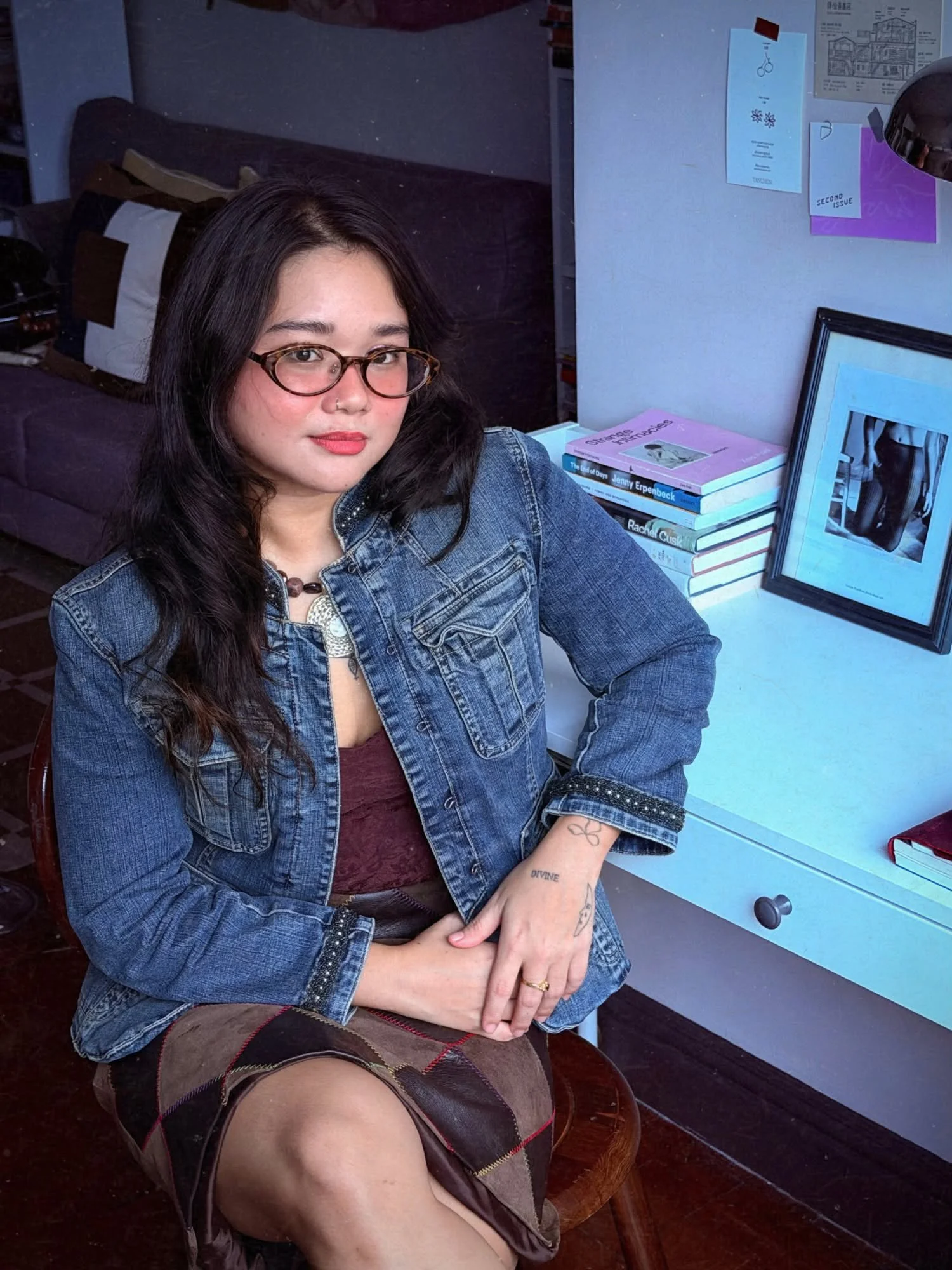
Art for Kep Residency Programme grounds. Image courtesy of Knai Bang Chatt.
Kep is a small coastal town in southern Cambodia, set against the Gulf of Thailand. Under French colonial rule it served as the country’s premier seaside retreat, and the modernist villas erected here in the 1950s, part of the New Khmer Architecture movement pioneered by Vann Molyvann, lent the town an architectural distinction that few places in Cambodia could claim. The Khmer Rouge drove its inhabitants out during the 1970s, and most of those structures were left abandoned or severely damaged in the protracted conflicts that followed. Many remain in ruins.


Scenes of Kep’s local life. Every morning fishing boats arrive at the crab market, known locally as Psah Kdam.
The sea, though, has remained central to daily life. Every morning fishing boats arrive at the crab market, known locally as Psah Kdam, and offload their catch: blue swimmer crabs, squid, prawns, to be cooked with Kampot pepper at the wooden-shack restaurants along the shoreline.
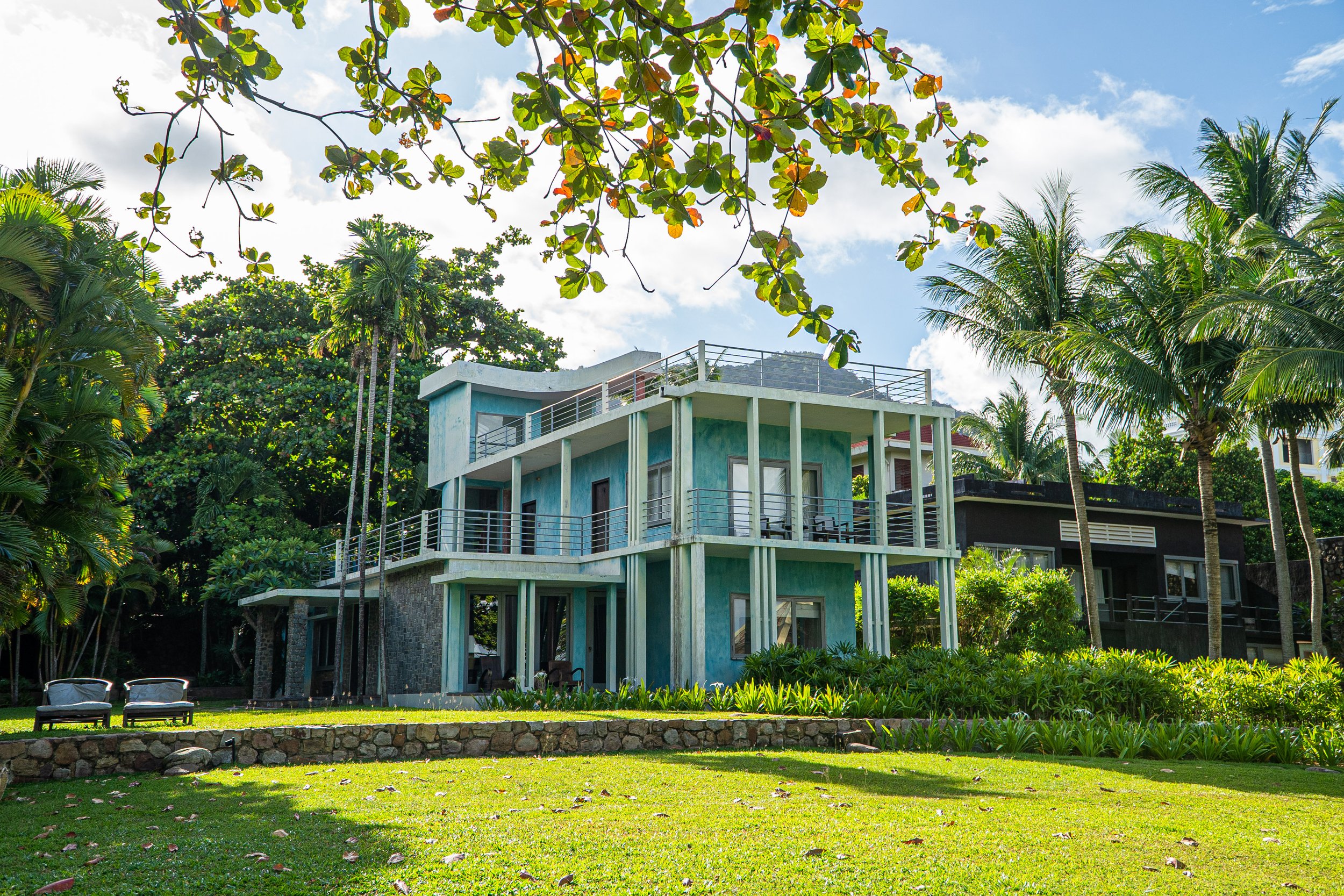
The 1950s villa was transformed into suites at Knai Bang Chatt. The modernist villas built here were part of the New Khmer Architecture movement championed by Vann Molyvann, later abandoned during the Khmer Rouge. Images courtesy of Knai Bang Chatt.
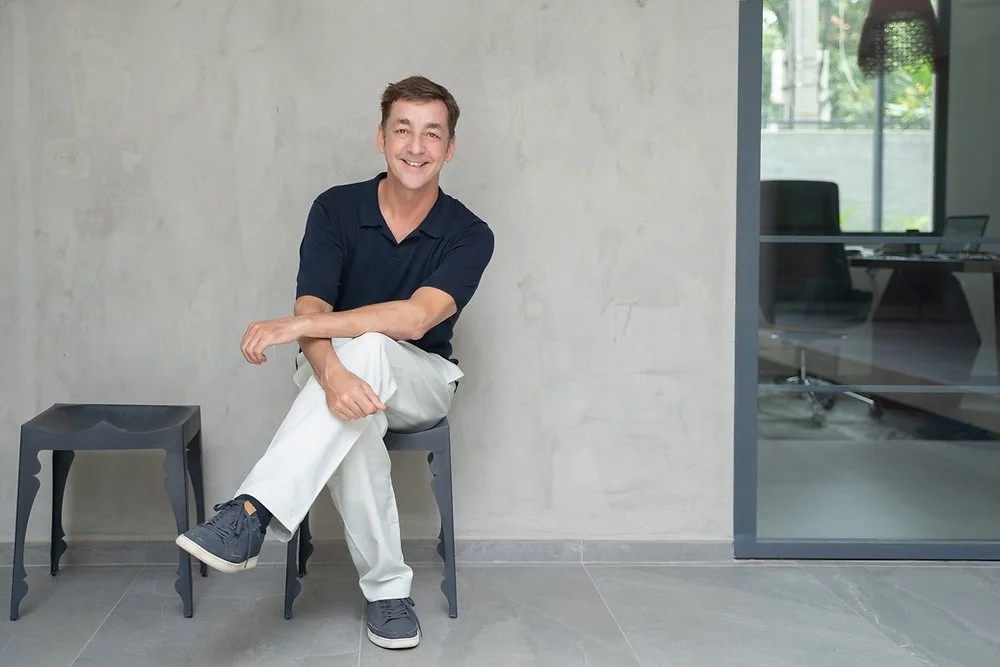
Jef Moons. Image courtesy of Knai Bang Chatt.
In recent years, a 2.7-kilometre land reclamation project along the beachfront has substantially redrawn the coastline. Local crab fishers, who set their traps in the shallow waters close to shore, have had to reckon with the altered seabed and the loss of accessible fishing ground. Knai Bang Chatt, a resort established through the restoration of a group of mid-century modernist villas on Kep’s seafront, was among those who developed the new land, securing a long-term lease on the beachfront buffer zone. The property now also serves as the base for Art for Kep, a non-profit cultural programme.
Knai Bang Chatt has launched Art for Kep, a programme structured around three chapters: art, music, and marine conservation and restoration. The programme is chaired by Jef Moons, a Belgian-Khmer citizen who has lived and invested in Cambodia since 2003. Its steering group includes Satcha, the Cambodia International Film Festival, Kep Music City, and Marine Conservation Cambodia. Moons describes the programme's origins in terms of a broader vision for the town: “My vision for Kep is to help it reclaim its past as the Saint-Tropez of Southeast Asia by shaping it into a refined cultural and artistic coastal destination through our new cultural chapter.”

Coral Kingdom by Sothea Thang at the Kep seafront. Image courtesy of Knai Bang Chatt.
Its first significant public commission, Coral Kingdom (2024), was installed on the Kep seafront in 2024. The artwork is a 5.7-metre sandstone sculpture by Cambodian artist Sothea Thang, a self-taught sculptor who holds a degree in architecture and urban planning from Norton University, the oldest private university in Cambodia.
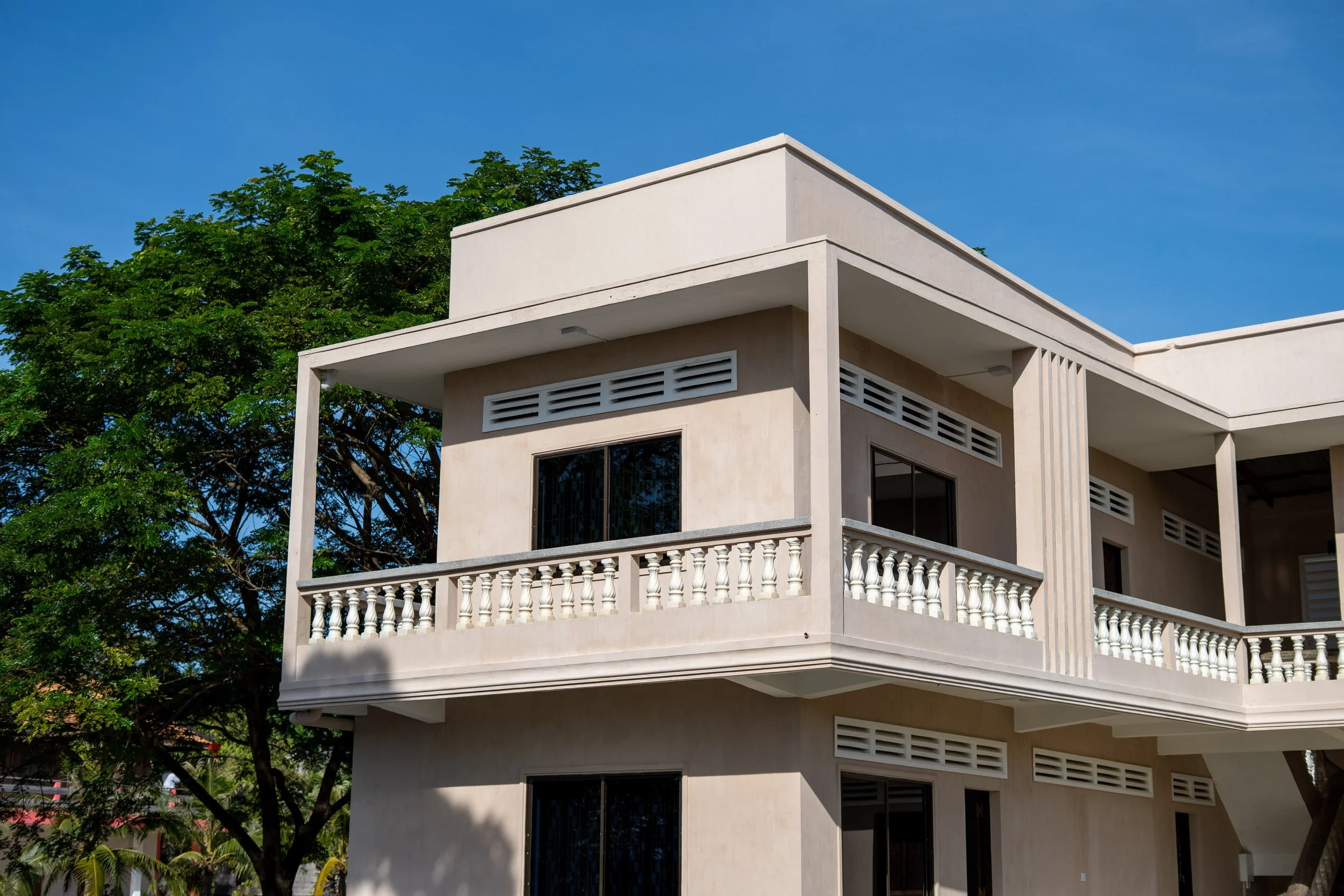
The artist atelier. Image courtesy of Knai Bang Chatt.
The most developed chapter so far is the artist residency, which accepts up to three Cambodian and international artists per monthly cycle. Residents are housed in renovated former staff quarters on the Knai Bang Chatt grounds, with a studio space, accommodation, meals, and access to the resort’s community networks. The selection process is worth noting. Artists are chosen via a blind judging process by an independent committee: Dr. LinDa Saphan, Cambodian-born artist, Fulbright Scholar and cultural historian; Pierre-André Romano, founder of Satcha, a Cambodian handicraft centre and the Sar Modern Art Museum in Siem Reap; and Reaksmey Yean, Cambodian curator and co-founder of Silapak Trotchaek Pneik. The committee evaluates applicants on artistic rigour, conceptual clarity, alignment with the residency’s values, and the potential for community engagement.
Commenting on the residency’s distinctive position within the Southeast Asian landscape, Moons is precise. He says,“Kep sits slightly off the main map of well-known Southeast Asian residencies, and that is exactly its strength.” He elaborates, “Instead of a big-city, white-cube context, Art for Kep offers an intimate coastal ecosystem where the coastline becomes the studio, the community a partner, and conservation an active part of creation.” He describes its distinguishing feature as a triangle of art, hospitality, and marine regeneration, where artists live and work within Knai Bang Chatt and Kep West, engage directly with local culture, and feed into long-term projects.
Moons is equally candid about the challenges. “The biggest challenge is not a single obstacle, but holding the integrity of the mission while each chapter faces its own resistance,” he says. “Every step asks us to balance three forces at once: artistic freedom, ecological responsibility, and the realities of hospitality and tourism.” Government procedures, timing, and market readiness, he acknowledges, can push a project like this towards something more superficial. “Our task is to grow slowly but decisively, to welcome partners without losing our independence, and to keep the work courageous and honest, so that art, ecology, and hospitality truly reinforce each other instead of becoming separate worlds that just happen to share the same coastline.”
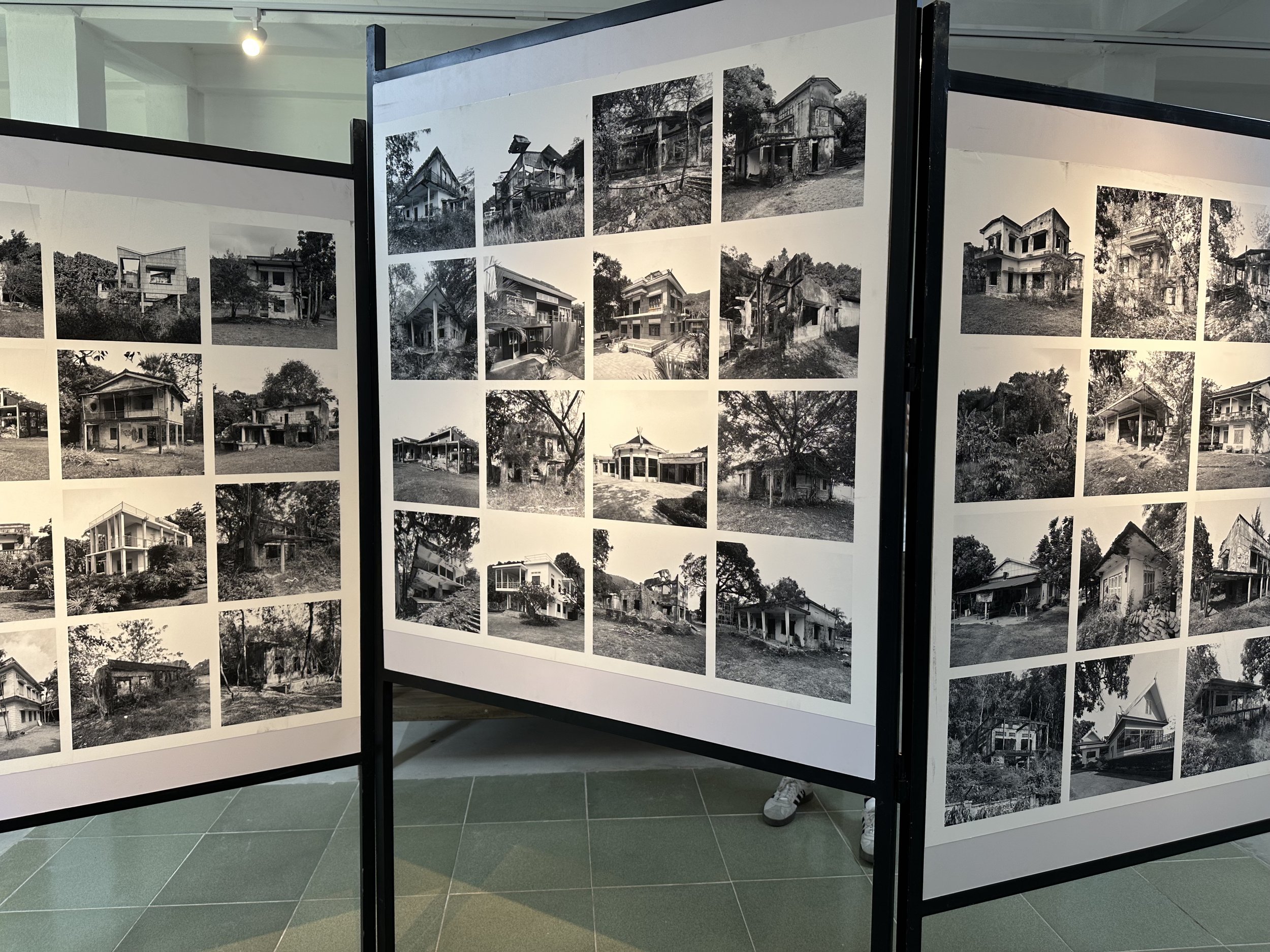
Walter Koditek’s photography exhibition on Kep’s modernist built heritage, documenting the town’s surviving and ruined villas as a result of his residency at Art for Kep.
The residency grounds also include an artist atelier that doubles as an exhibition space. In March 2026, it housed a photographic survey by Walter Koditek, a German urban planner, author, and photographer now based in Siem Reap. Koditek has published works including Hong Kong Modern Architecture of the 1950s-1970s and the Architectural Guide Phnom Penh, co-authored with Moritz Henning. During his residency, he focused on Kep’s modernist built heritage, systematically documenting the town’s surviving and ruined villas through a combination of archival research and large-format photography.
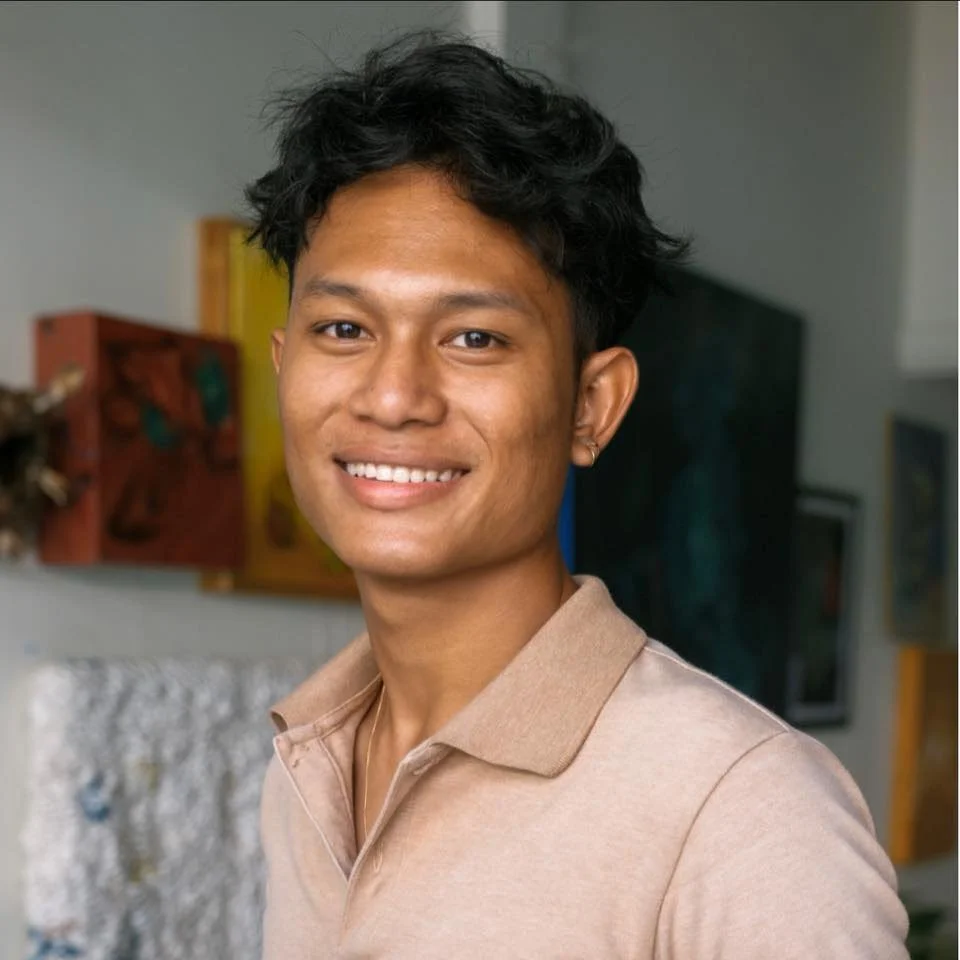
Karona Hoeuy.
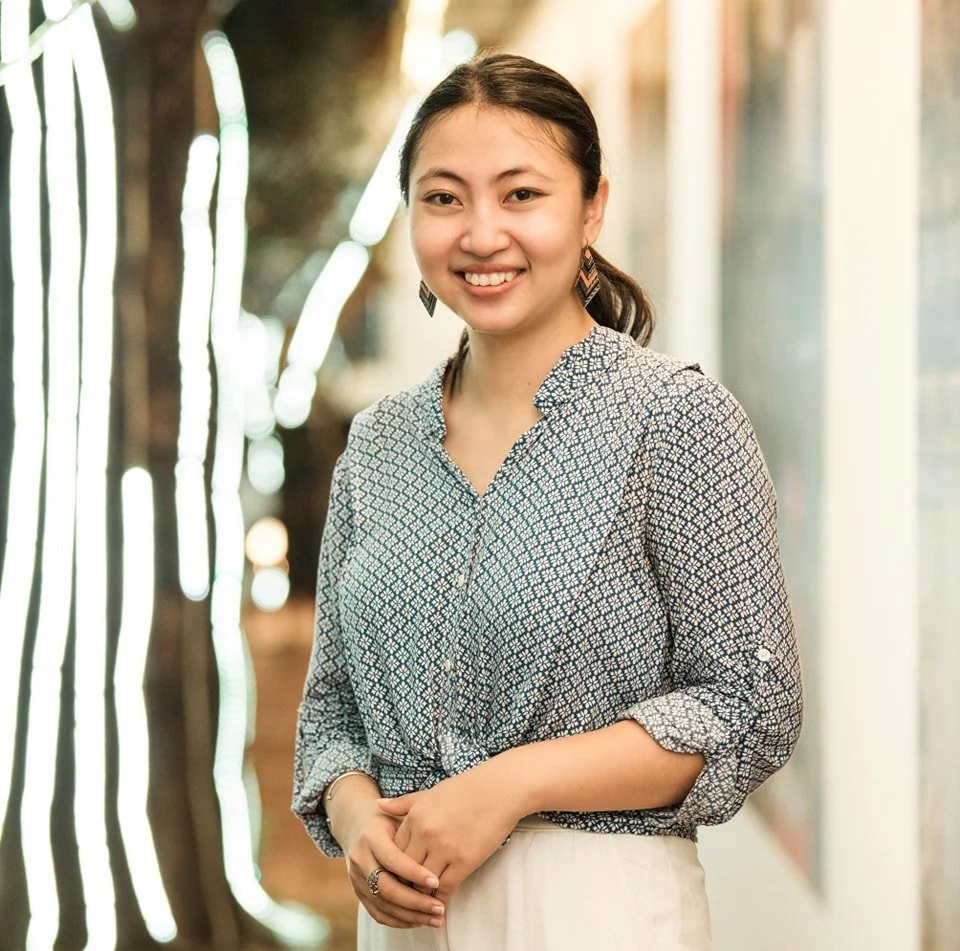
Kanha Hul.
The residency’s recent cohort included Karona Hoeuy and Kanhal Hul. Hoeuy is a visual artist from Siem Reap. Hoeuy began painting as a teenager and was offered a scholarship to study visual art at Phare Ponleu Selpak. Where his earlier paintings were completed in single sittings, his practice now unfolds over months. A recent work titled Nothing Wasted, depicting a red ant nest teeming with frogs and mushrooms, took six months to create. He keeps returning to nature and memory: abandoned rivers, disappearing habitats, the slow encroachment of human activity on fragile ecosystems.


Work-in-progress photos of Adaptation (2026) by Karona Hoeuy at the studio. Images courtesy of the artist.
In Kep, Hoeuy’s attention turned to the sea. He spent time snorkelling, visiting Marine Conservation Cambodia’s site on a nearby island, and walking the coastline. What struck him most were the crab traps he found: green-netted structures covered in plastic, floating near the shore, with marine life growing inside them. The sight struck him immediately. For Houey, whose practice has long circled the theme of belonging, the image carried a private weight. That coexistence of life and refuse became the animating subject of a series of paintings produced during the residency.


Material experiments and sketches by Kanha Hul during her residency. Images courtesy of the artist.
Kanha Hul, the second artist in this cycle, arrived from Phnom Penh. Her practice is oriented towards communities. Born in 1999, Hul left her family at the age of ten to pursue an education, living in an orphanage where conditions were difficult. While she does not have formal art training, in 2019, she joined Open Studio Cambodia, a Siem Reap-based artist collective, and began producing works across photography, performance, painting, collage, and installation.
Kep presented Hul with unfamiliar territory. She previously worked with forest communities, villages, and urban settings. The sea was new. She described arriving and feeling initially at a loss, the landscape sparse and the town small. But the disorientation proved generative. It prompted her to question how the water and the community’s relationship with it might find a way into her practice.
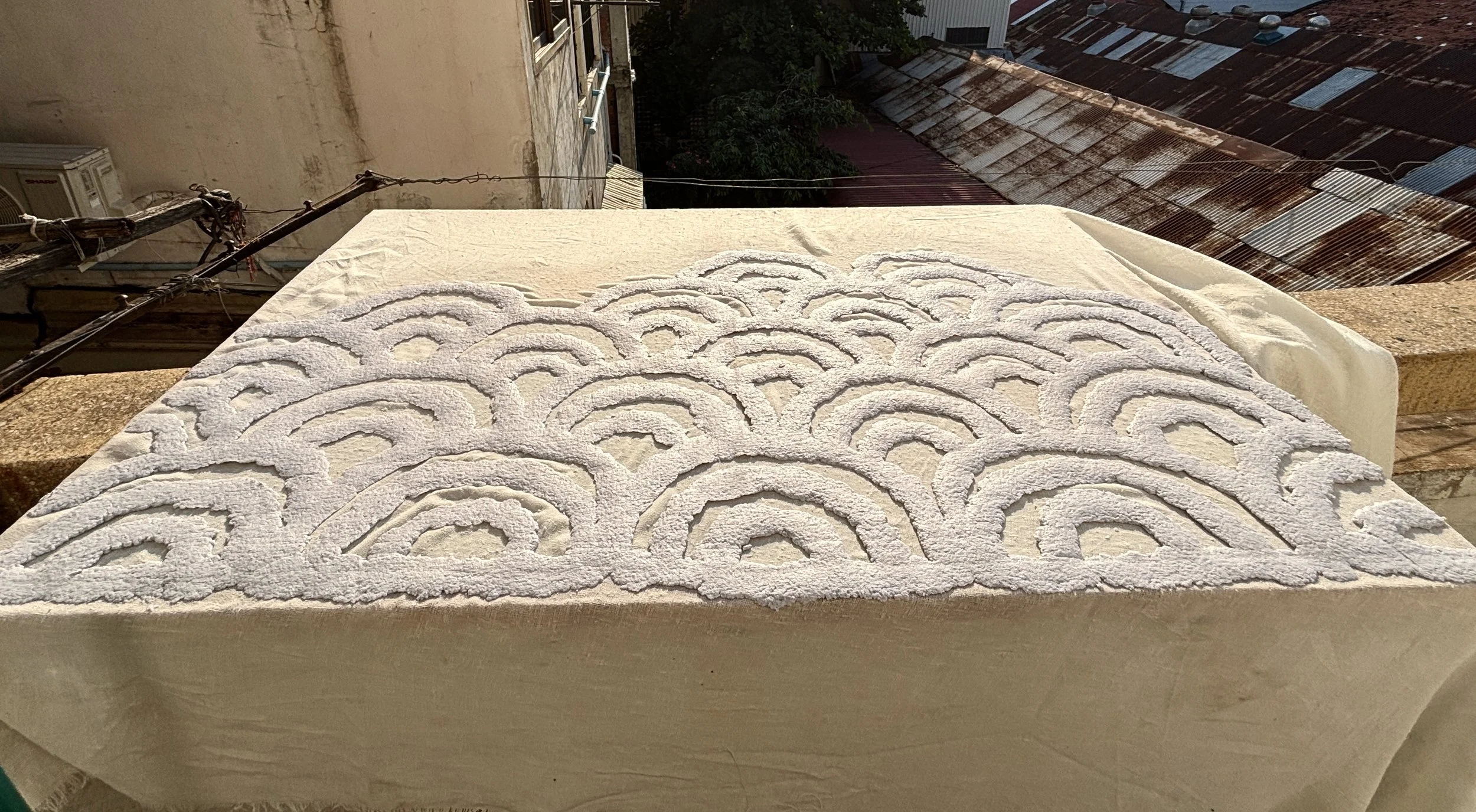
Kanha Hul’s work-in-progress at the studio. Image courtesy of the artist.
These became the foundation of her residency project. She planned to interview fishing communities and food sellers living near the coast, building relationships before beginning any visual work, as she has always done. She describes her broader practice in direct terms, saying “I bring their stories, ones they have never shared with anyone. But they told me.” In this residency, she first experimented with recycled paper and photo transfer rather than her customary photo-painting technique, using discarded paper shaped into forms based on the movement of water.

Art for Charity event held in January 2026 at Kep West for prominent Cambodian artist Khun Vannak battling stage-four skin cancer. To support his treatment, the arts community came together for a silent auction featuring works generously donated by local and international artists.
Beyond their shared residency and nationality, the two practices share a quality of attention to the places in which they work. Neither arrived in Kep with fixed outcomes in mind. Both permitted the landscape, its communities, and its ecological pressures to determine the direction of what they made.
The Art for Kep residency programme, at its most effective, produces work that is genuinely site-responsive. The programme is also in the early stage of developing the S.E.A. Ocean Gallery, a large-scale underwater art and conservation destination planned in partnership with Marine Conservation Cambodia. For now, the work of these two artists, along with previous residents, is the clearest indication of what the programme can yield, which is promising for the Cambodian art ecosystem.
Click here to learn more about Art for Kep.