Independent video art space in Singapore
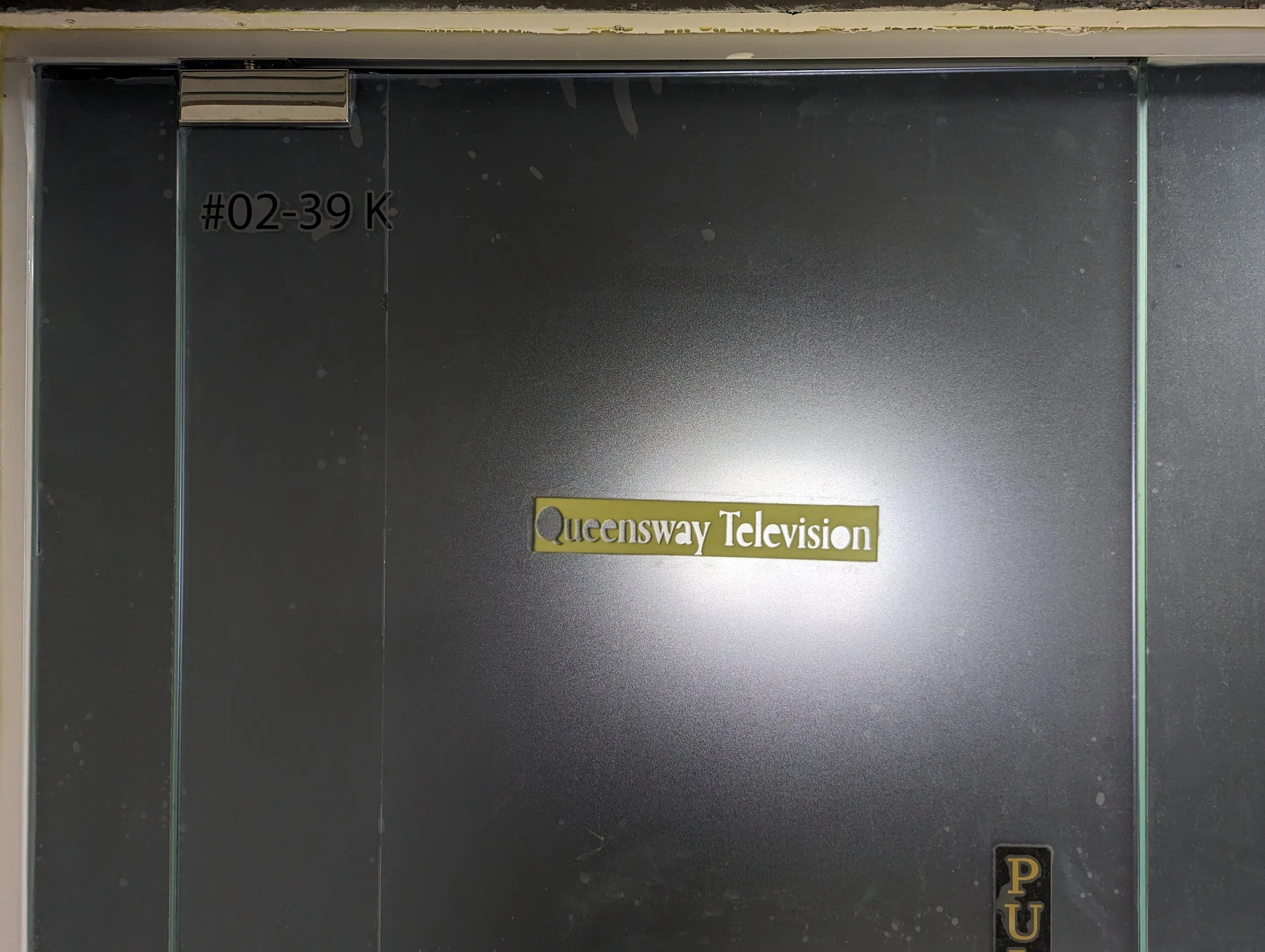
Entrance to Queensway Television, an independent video art space in Singapore. Photo by Goh Chun Aik.
More than three years ago in 2023, a painter friend, Damien Ding, was back visiting in Singapore and we caught up as we always do. He runs the gallery D.D.D.D. in New York while maintaining his painting practice. Similarly, I manage ShanghART Singapore as I develop my personal artistic practice. Seemingly out of nowhere, he floated the idea of running a video art space together. And that is how Queensway Television began, a video-centric project space presented by D.D.D.D.
The idea was simple: a space screening video art all day, that anyone can enter. But it had a big dream: to raise the level of appreciation for video art, by showing works from across the world and offering a platform for local artists.
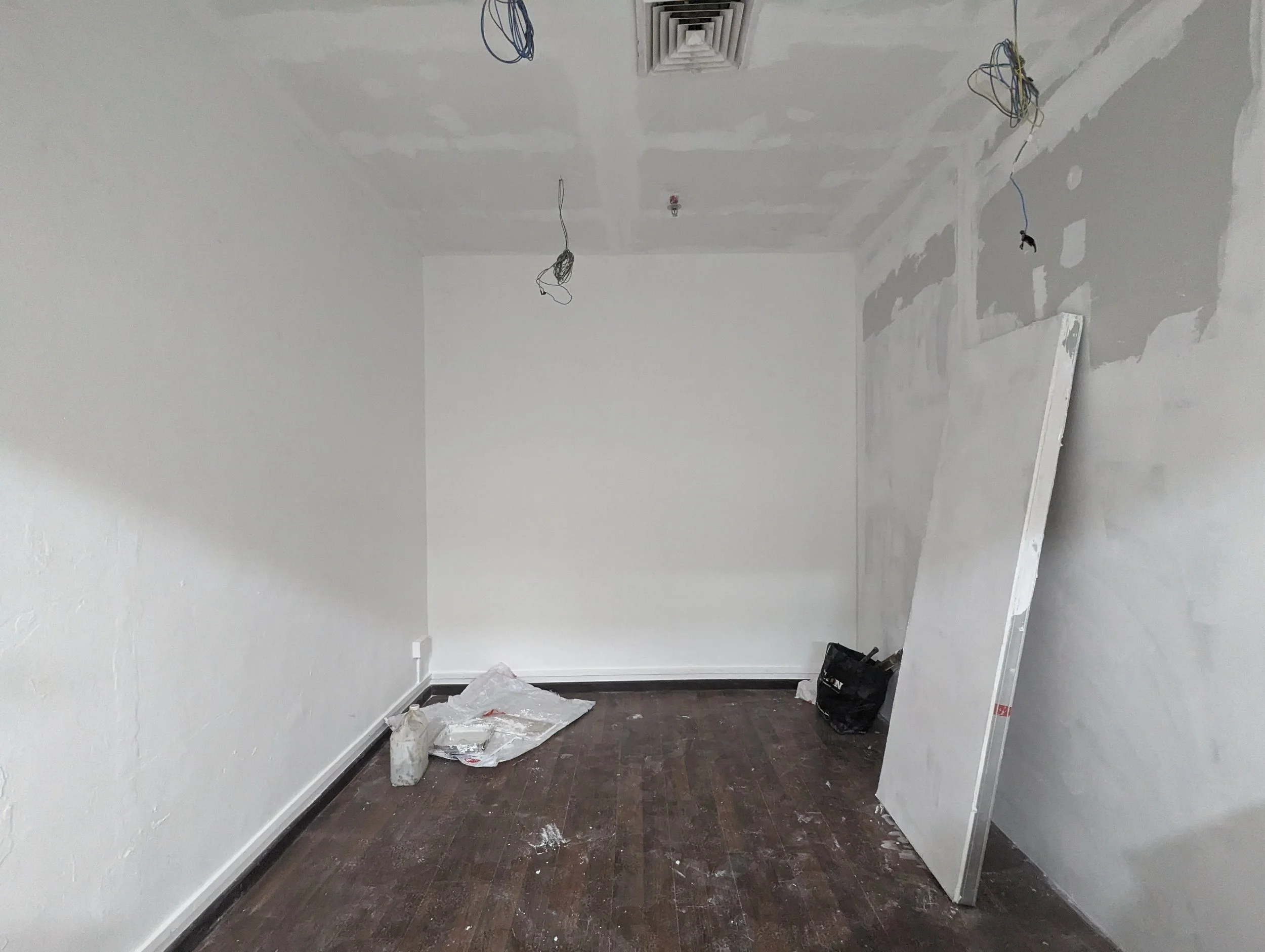
Setting the space up in early 2024. Photo by Goh Chun Aik.
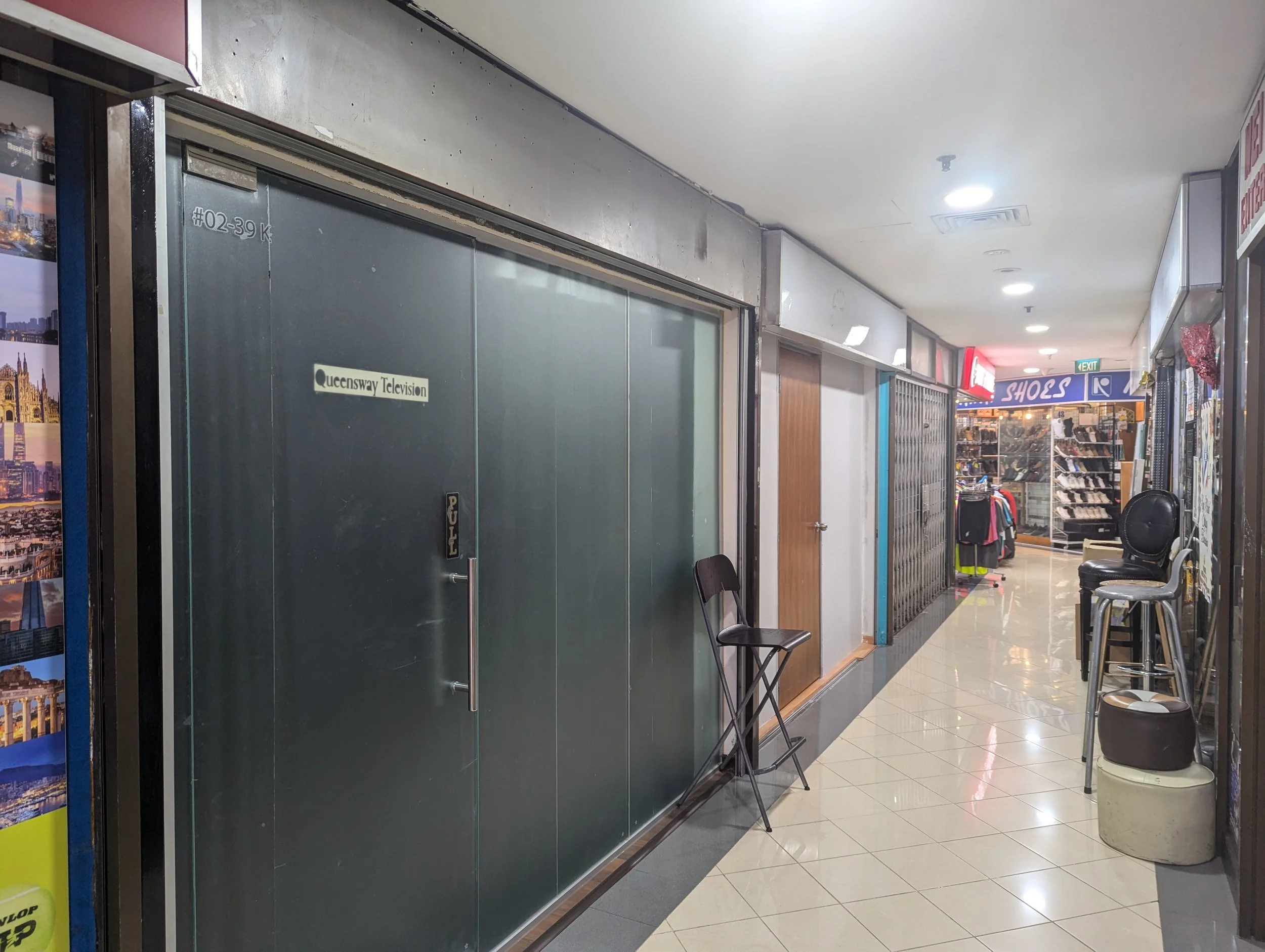
The view outside Queensway Television, along one of the maze-like corridors in Queensway Shopping Centre, Singapore. Photo by Goh Chun Aik.
Queensway Television officially opened in February 2024 to a cozy crowd, with excitement over the emergence of a new art space. Being the only person managing Queensway Television, I designed the space to be as automated as possible to minimise the manpower and effort required to keep operations going. The set up switches on and the video plays by itself every morning. The space remains accessible through the day, watched over by a surveillance camera. People can swing by at their convenience and spend as long as they wish watching the video works. Over the first few months, I made continual adjustments to the space, dropping by after work and staying past the mall’s closing hours to troubleshoot problems. It took a bit of fiddling but before long, everything was up and running. It was tiring but also fun, with some uncertainty about how everything would eventually turn out.
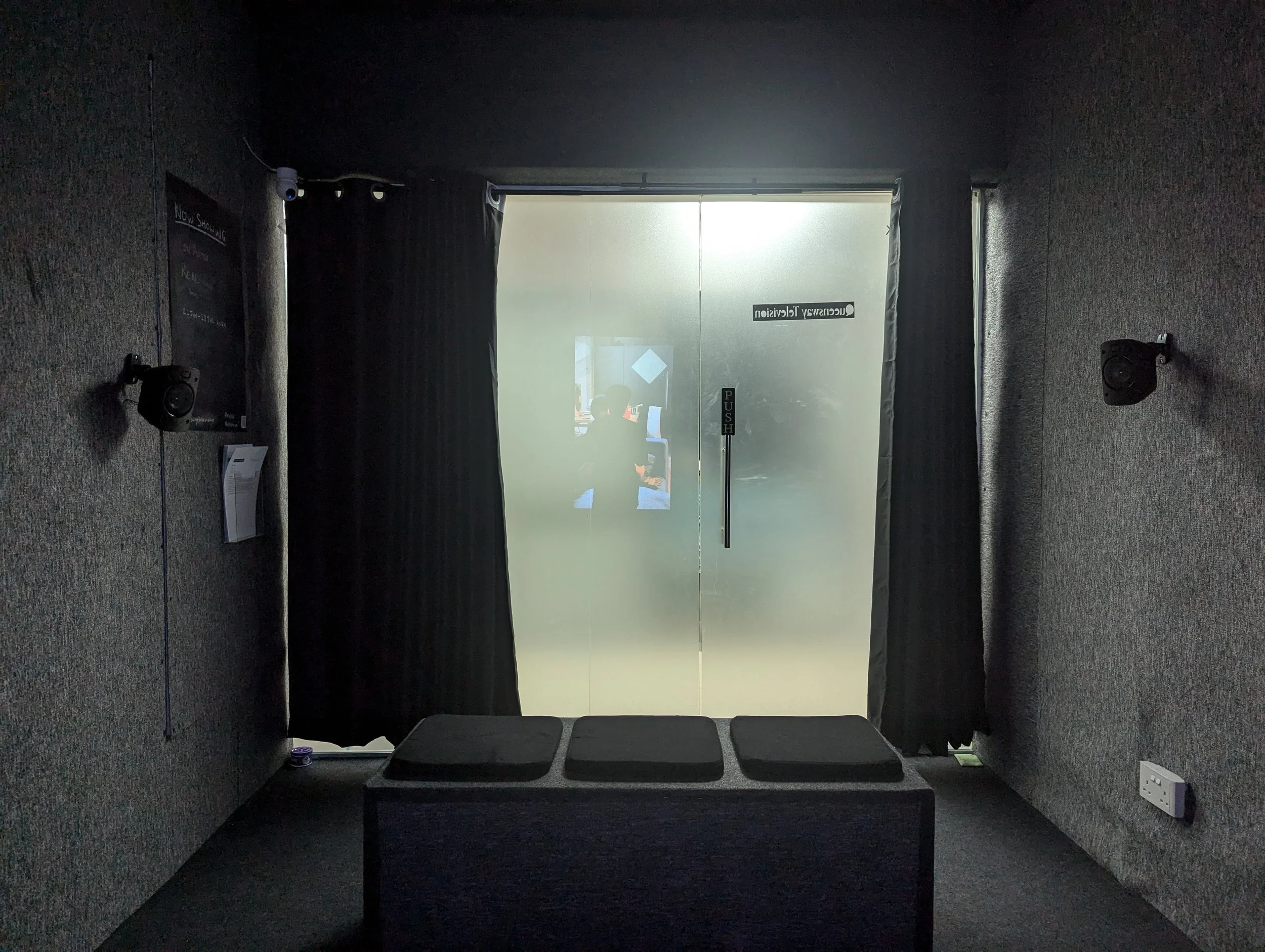
From the inside of Queensway Television; blackout curtains were only added after the opening of the space, after deciding that the space requires better control of lighting conditions. Photo by Goh Chun Aik.
Every step was a learning process to me. I quickly grasped the considerations for programming video art in such a space, and gradually shaped Queensway Television’s identity with each show. While I had been interested in new media art forms and also engaged with moving image artworks in my job, it was in the last two years that I learned the most about working with video art.
I initially saw myself more as a facilitator for sharing video art but have now come to recognise the curatorial role that I play. For every show, I speak with the artist and try to understand the work as much as possible, especially if it is by an overseas artist who would not be present during the show. I draft a write-up to communicate my understanding of the work and the artist’s intent for the wide range of audiences that we receive. I also ensure the work is presented as close as possible to the artist’s vision, adjusting the brightness and colours of the screen, the sound, to ensure a good experience within the space.
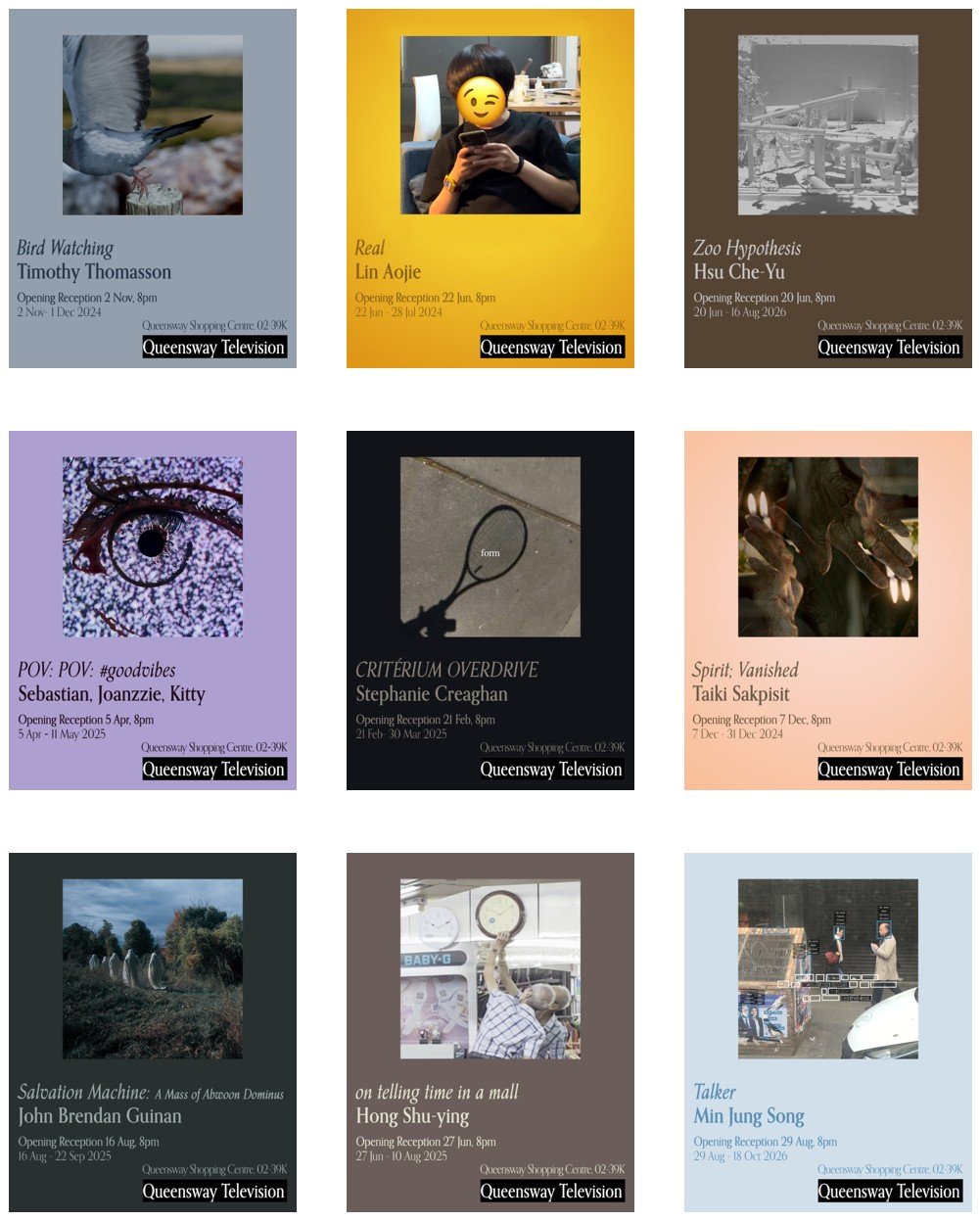
Selected posters of shows at Queensway Television. Design by Goh Chun Aik with video stills courtesy of the artists.
While I strive to do my best to ensure a good presentation, it is my belief that the audience completes the show. Therefore, publicity and outreach are essential parts of running the space. Designing the posters, posting on social media, and sending out personal invites for the opening receptions have since become part of the routine. Aside from being an opportunity for the audience to meet the artists, opening receptions also offer an occasion for people to speak with each other. This process of building a community around Queensway Television has also become a precious one for me.
All the little tasks to keep the space going add up, and require a significant amount of time and energy. I strive to keep the space open as much as possible without much of a break between shows, to keep true to the idea of a television station that airs daily, and is always ready for its audience.
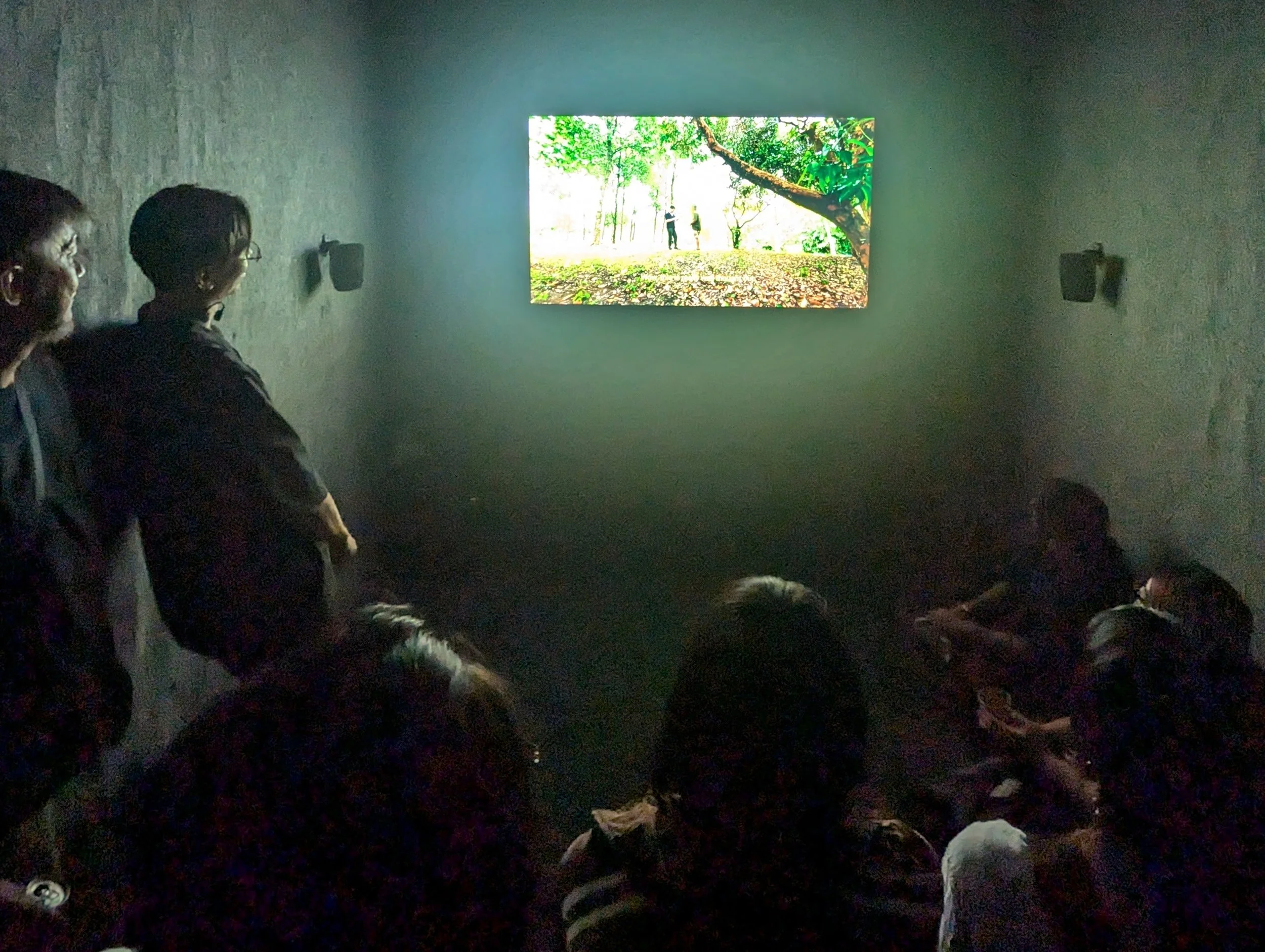
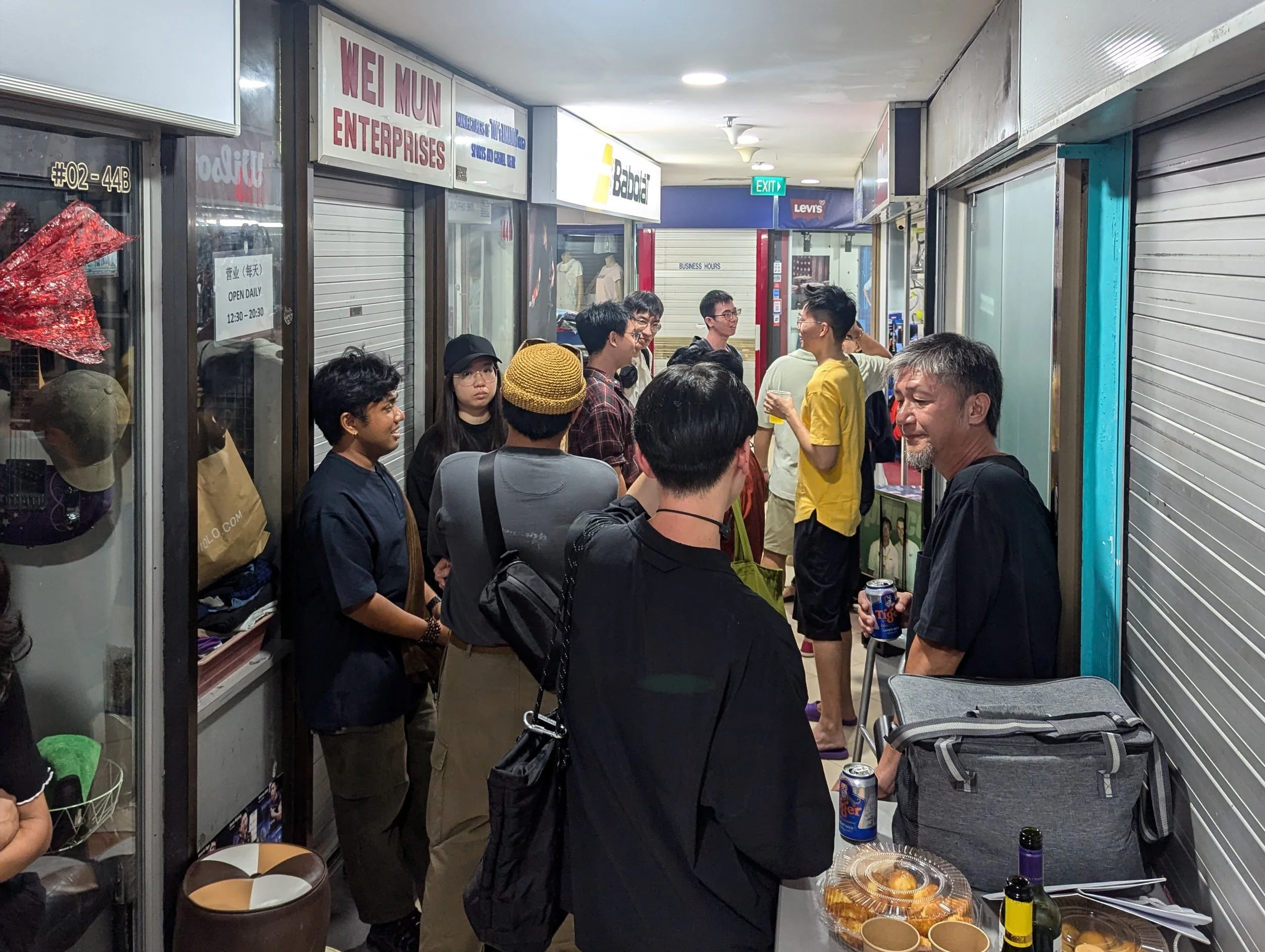
During the opening of They Showed Me Their Hole by Joshua Kon in 2024. Photos by Goh Chun Aik.
I remember a point when I found myself in conversation with four artists concurrently. Three were making new works for their shows and one whose practice I was totally new to. Looking at four different artists working within the same set of parameters, with varied approaches and exploring different themes gave me an immediate look at the possibilities of video art, even on just a single-channel format.
And it is not just the conversations leading up to the shows. The space itself has become a place where discussions about video art happen among artists, curators, collectors, art students, writers, researchers and more. While only time will show the impact of Queensway Television on the landscape of video art in Singapore, I value the meaningful conversations generated around the platform, and I also hope that people gain new perspectives from this. These gatherings and conversations have helped ease the doubts and uncertainties I had at the beginning.
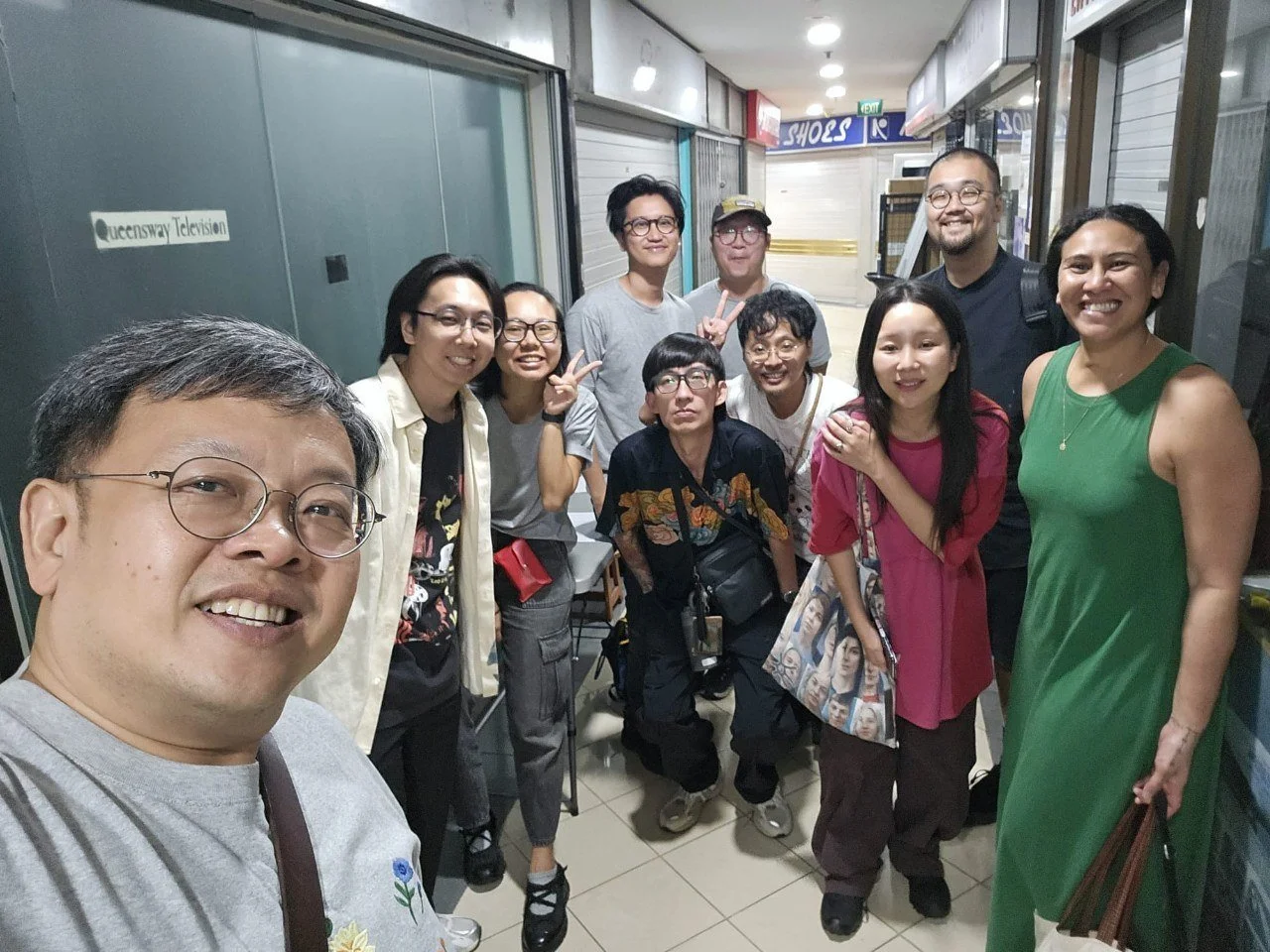
During the opening of Talker by Min Jung Song on 29 August 2026 with the artist present. Photo by Nicholas Song.
I recall spending time researching all sorts of independent spaces to learn how to run one. I read interviews with different founders, many of whom are artists themselves, and looked into examples from Singapore. There is of course one-size fits all solution, but one of the more impactful spaces that I read about was Arrow Factory in Beijing. Situated in a hutong, or narrow alley commonly found in northern Chinese cities, the three founders came together to explore the possibility of starting a smaller art space in a place where people lived and worked. It stood in contrast to the large galleries at that time in the late 2000s.
What struck me especially was how while the space was a direct integration of art into the community, there was no aggressive attempt to educate its neighbours or cultivate an audience out of them. The founders simply continued doing what they were doing and gradually, the art space became part of the life around this community. The neighbours learned to live with it, with some even becoming unofficial guides for visitors.

Snapshots from the surveillance camera capturing anonymous visitors watching the video. While I usually do not get much direct feedback, it is heartening to know that people do go in their own time to check out the shows.
Arrow Factory inspired me greatly to imagine what Queensway Television could become, and gave me a vision without a specific blueprint to achieve certain outcomes. Instead of chasing any metrics as qualifiers of success, I began to see Queensway Television as something that could become meaningful through continued presence.
After running the space for more than two and a half years, I feel privileged to have this opportunity to work with artists, to share about video works, to speak with different audiences, and to be able to offer a little space for video art in the local art scene. I have learned so much, and it has also influenced my own practice, my relationship with it, and required me to maintain a fine balance between the different roles I play. I would not have been able to do this without the support of my friends from the arts, the people who visit Queensway Television, and Damien who thought of working with me to make this happen.
“Instead of trying to chase any metrics as qualifiers of success, I began to see Queensway Television as something that could become meaningful through continued presence.”
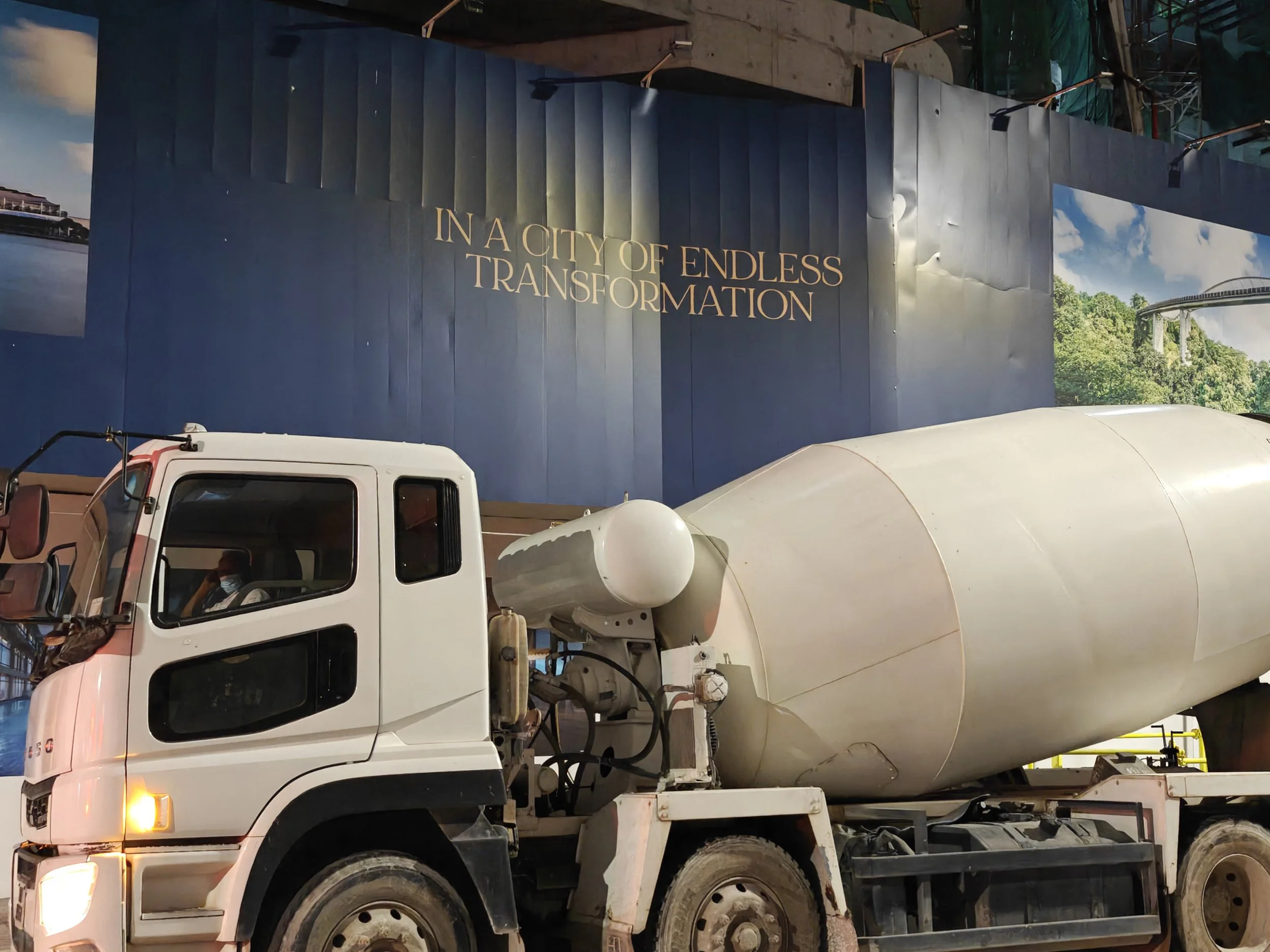
Construction hoarding, “In a City of Endless Transformation.” Photo by Goh Chun Aik.
In a city where changes happen even while we are asleep, having time to let something stick around and grow on its own has become a rare occurrence. One thing I hope for people to take away from the presence of independent art spaces like Queensway Television, is for us to learn to see the possibilities that can emerge, if we are willing to have a little bit of belief and give a little bit more time.
An Chen, Tunnels and Candles is on view from 31 October to 27 December 2026 at Queensway Television, Singapore. Presented in collaboration with LIT, it marks the first time Queensway Television is exhibiting video art from a private collection. For more information, click here.