The Map That Does Not Exist
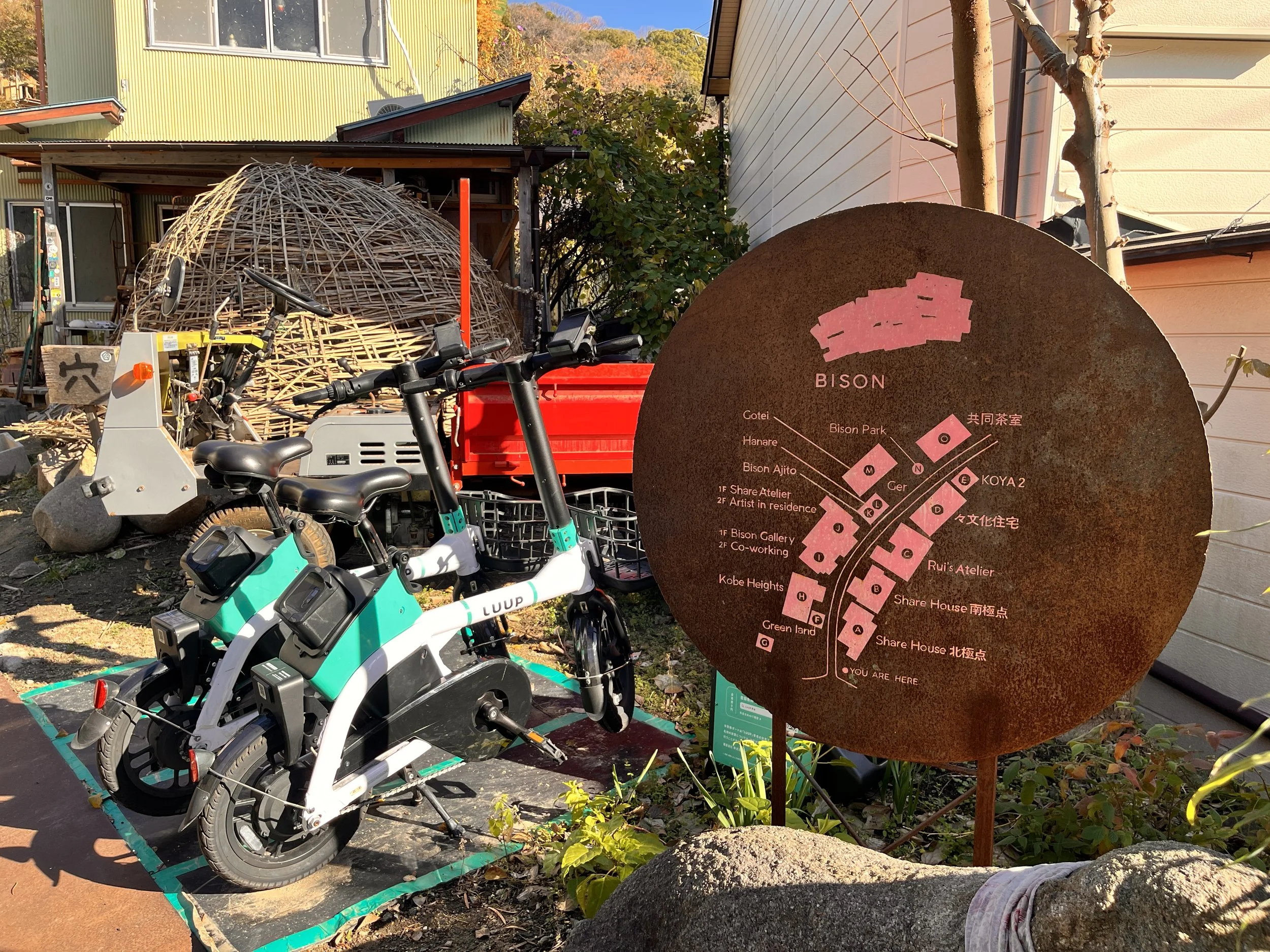
Entrance of Bison Village run by HAIOKU Group in Kobe, Japan. Image courtesy of the author.
For six months, under the Japan Foundation Asia Cultural Exchange Fellowship 2025-2026, AiRViNe co-founder Trần Thảo Miên and I travelled through Japan, the Philippines, Indonesia, Timor-Leste, Malaysia, Thailand, Laos and Cambodia. I went looking for a regional map of how artist-in-residence (AIR) programmes get built, funded and sustained. I did not find one. What I found instead was something more like a trail of footprints, some leading to a proper building with a proper address, but most leading only to a name someone had mentioned in an interview.
Here are some highlights from the journey, mostly centred around my own reflections.
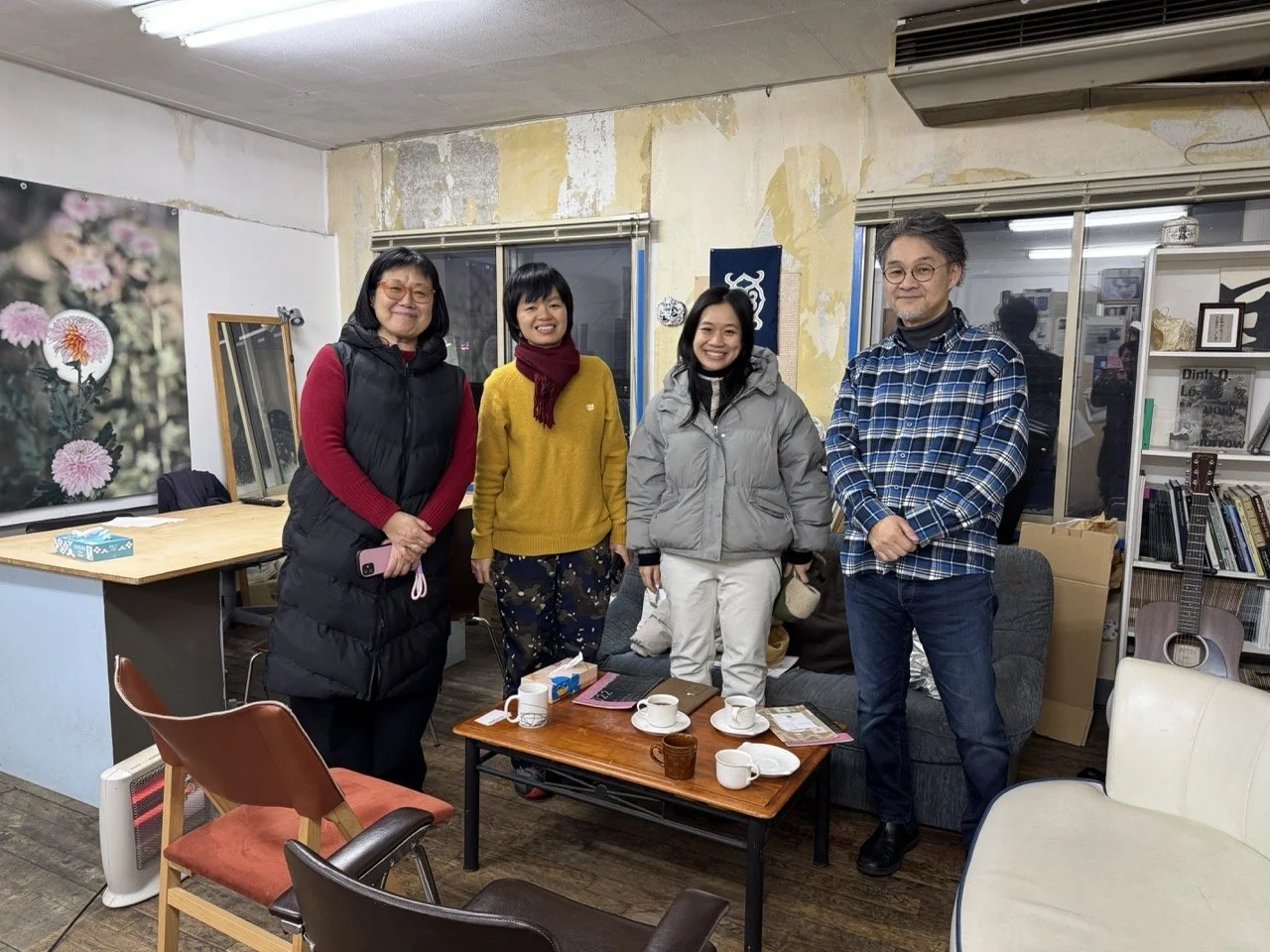
From left to right: Mami Odai (AIR Director of Sapporo Tenjinyama Art Studio), Nguyen Tu Hang (author), Tran Thao Mien (Co-founder, AiRViNe), Shibata Hisashi (Director, S-AIR).
Can a system that has lasted decades still be fragile?
Japan’s AIR scene has existed for almost four decades, with steady government support since 1997. However, in 2023, the Agency for Cultural Affairs cut its AIR budget by 60%, with no warning beforehand. The organisers I met at Sapporo Tenjinyama Art Studio and ARCUS Project in Ibaraki told me they had managed to continue receiving some government funding, even as the pool got smaller. But almost everyone said the same thing: the reporting one has to do after getting public money has become “tricky”. Some of the required numbers are nearly impossible to hit, because what the government and AIR organisers consider as success are not the same thing. A local government counts visitor numbers, media mentions and economic impact on the area. A coordinator notices whether an artist arrived tired and left with real work, or arrived hopeful and left worn out.
This is the first thing I learned: being established does not ensure stability. The real fragility sits in that gap, between how a funder measures success and how the person on the ground actually experiences it.
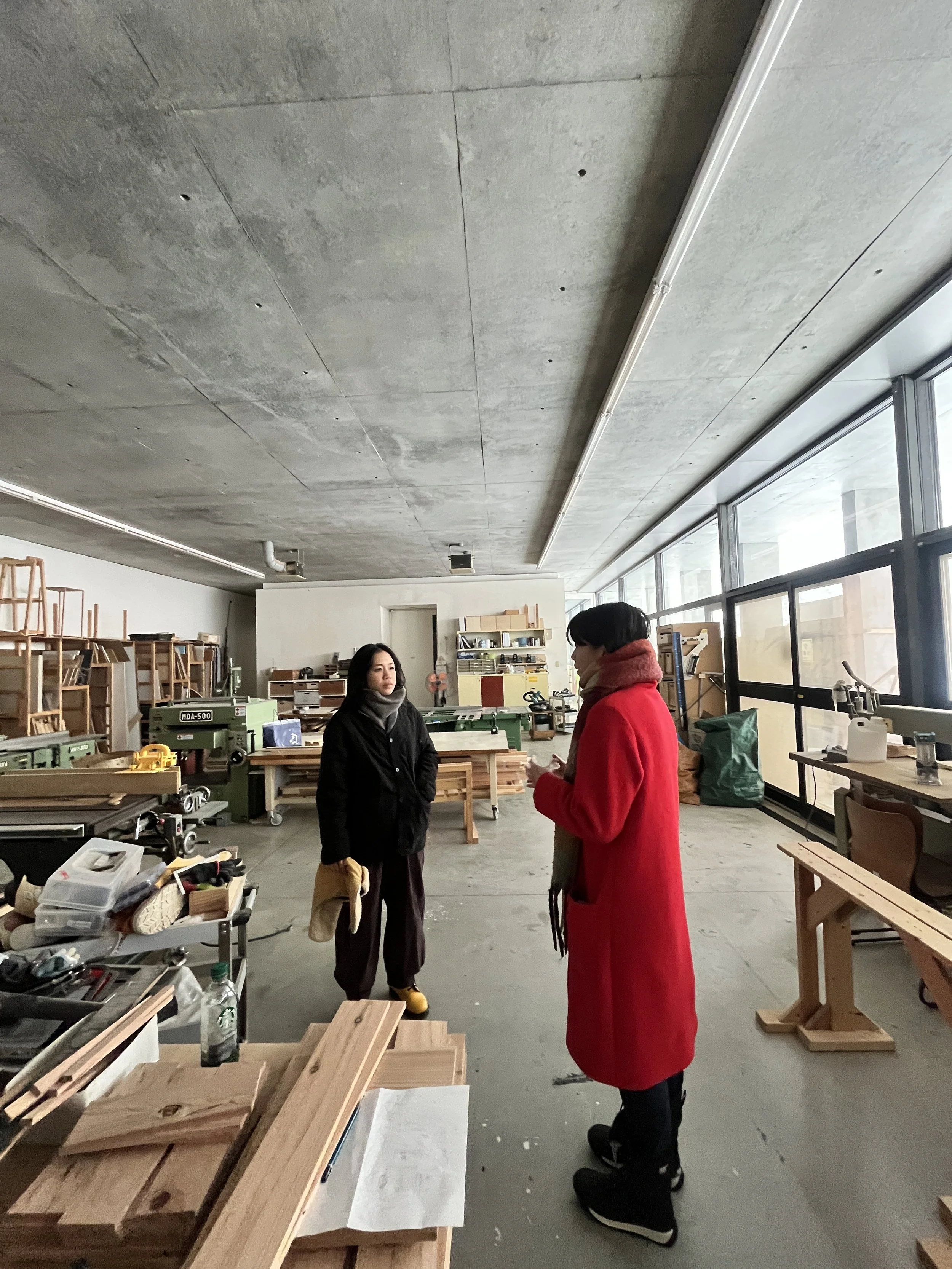
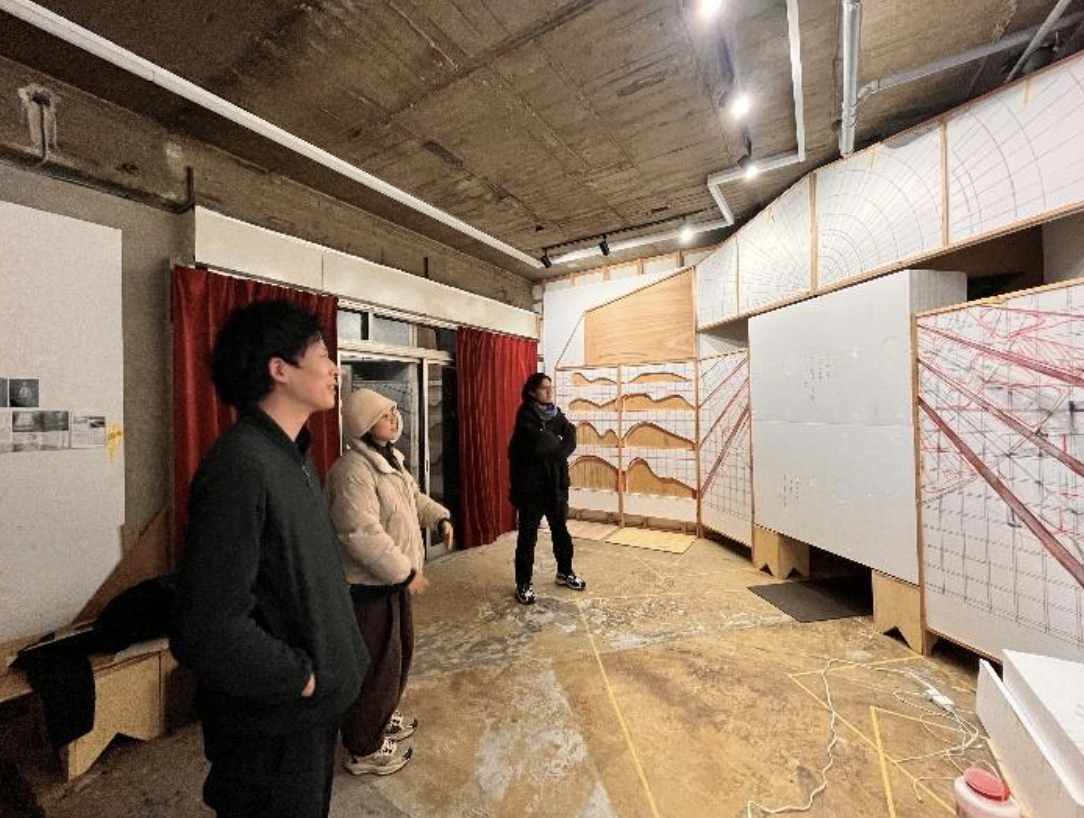
Tomo Setou, Curator at Aomori Contemporary Art Center (ACAC), giving a tour of the residency facilities.
Many residencies are now struggling as the money shrinks. Akiyoshidai is scrambling because the cost of maintaining its facilities keeps rising, which leaves less funds for the programme itself. Aomori Contemporary Art Centre (ACAC) has accepted that its funding will fall by one percent every year. There are exceptions, though. Beppu Project looked for other sources, including the Ministry of Internal Affairs and the Ministry of Economy, by setting a goal tied to the city itself: to raise Beppu’s population by one percent through creative workers. HAIOKU Group in Kobe is growing by renovating akiya (abandoned houses) into residency spaces and creative hubs for its members and participants, with support from academics and the local government’s revitalisation policy. In Sapporo, Sapporo Ekimae Street Area Management Co. has artists on its management team. It runs many programmes with companies and government, and makes compromises in order to use public space for arts and education. The organisations that are doing better are those that looked beyond the arts budget.
“The organisations that are doing better are those that looked beyond the arts budget.”
From left to right: Miyake Kan (transition2 residency artist at Beppu Studio 01), Tran Thao Mien (Co-founder, AiRViNe) and Ieiri Kensei (Director, Beppu Project). Image courtesy of the author.
Why are the most important people often the ones nobody sees?
Japan has a proper term for curator, gakugeiin (学芸員), a word with weight and a formal qualification behind it. There is no equivalent for coordinator. The role only exists as a borrowed katakana word, which tells you something about how new, and how incomplete, its recognition still is. Most residency coordinators I met were on informal, part-time contracts, and were paid noticeably less than curators for roughly the same amount of work. At Arita Creative Residency, coordinators are hired for six months at a time, matched to two residency cycles, and then spend the other half of the year finding other jobs just to get by.
In Southeast Asia, I saw a version of the same thing, just younger and more improvised: coordinators in their 20s and early 30s, full of energy, holding whole ecosystems together mostly through will, with even less support underneath them than their counterparts in Japan. In both Japan and Southeast Asia, the people translating between artist and institution, managing expectations and filing the reports nobody reads, are the ones a residency cannot run without. And these coordinators are the people the system has been slowest to look after.
“In both Japan and Southeast Asia, the people translating between artist and institution, managing expectations and filing the reports nobody reads, are the ones a residency cannot run without. And these coordinators are the people the system has been slowest to look after.”
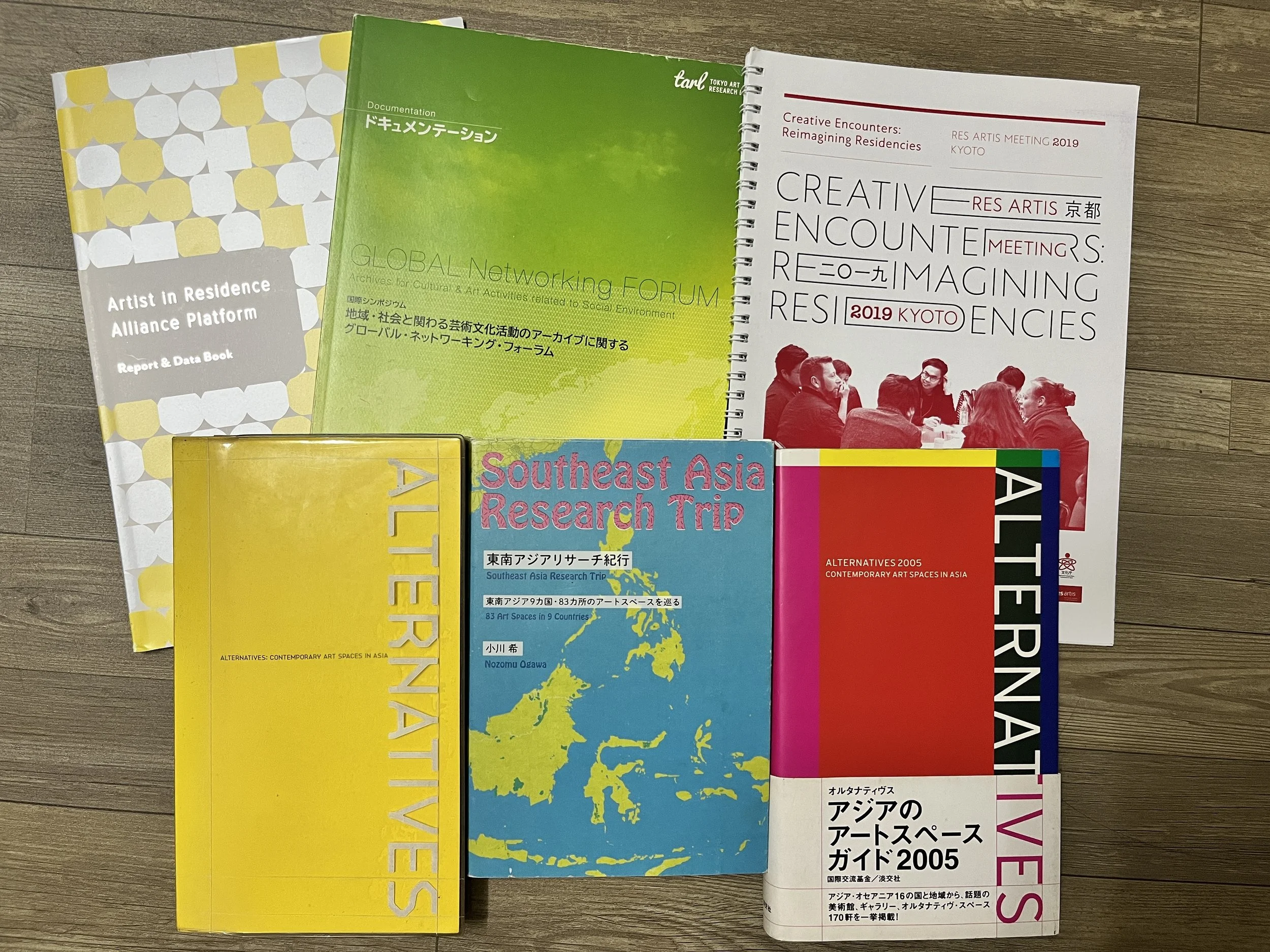
Previous publications in Japan that involved listings of art spaces in Southeast Asia. Image courtesy of the author.
What happens to the trail once the footprints disappear?
Southeast Asia has nothing like Japan’s AIR_J, the online database listing over 200 programmes. What exists instead is a web of relationships: someone mentions a space, you follow it, you meet people there who point you somewhere else. I began to understand how long this has been true when I came across some Japanese-language books from 2005 and 2009, surveying art spaces across Southeast Asia, residencies included. Most spaces and programmes named in those books are long gone. Some of the people behind them moved into new kinds of work; others simply stepped away. A few independent researchers and curators still bring up these names in conversation, almost like oral history, but the emails bounce back and the contacts have scattered. I realised the region’s AIR landscape has always lived partly in the past tense: remembered more than it is written down, or more often simply forgotten.
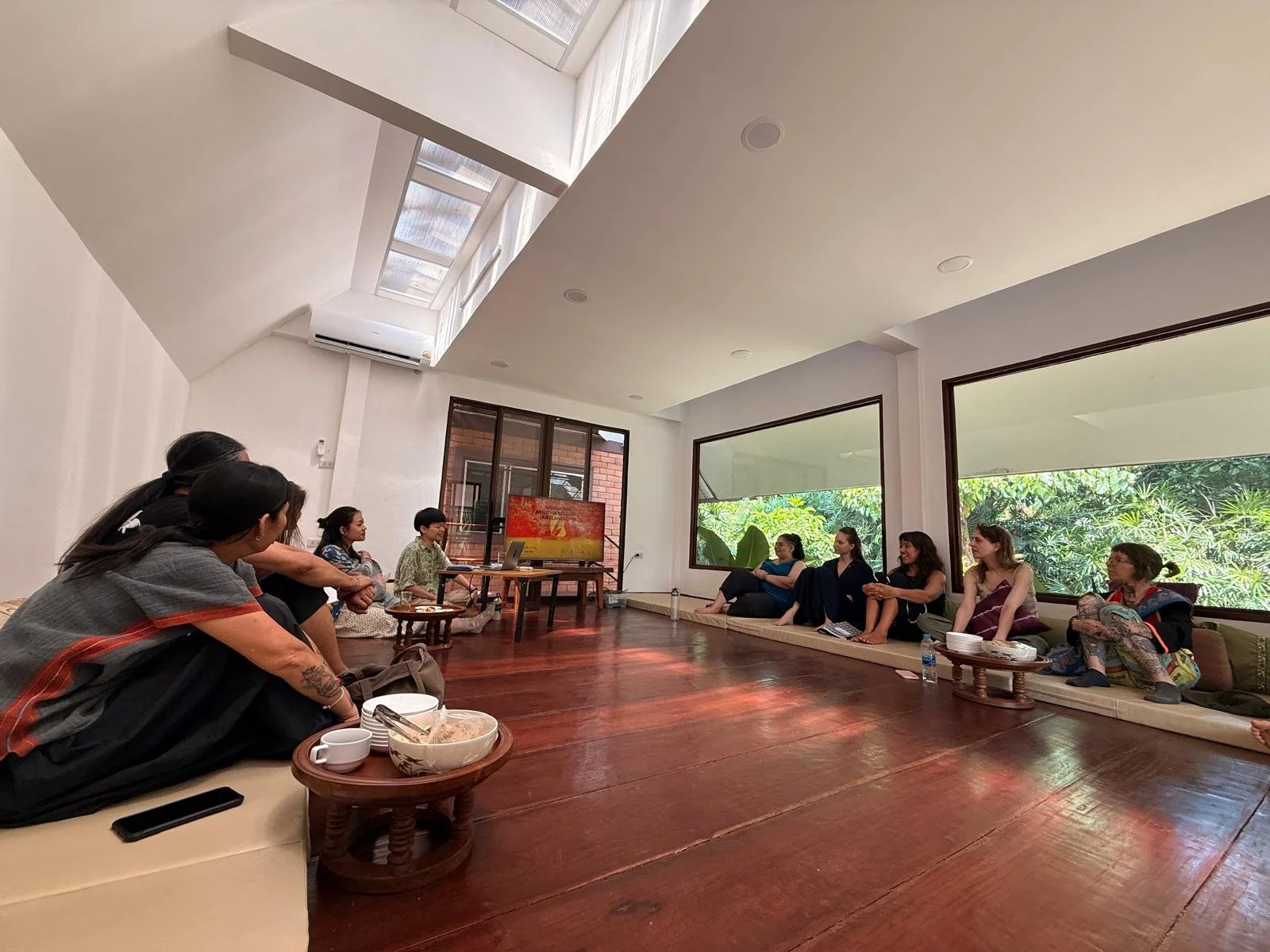
Our talk event ‘Navigating Artist-in-Residence (AIR) Landscape in Southeast Asia’ on May 05, 2006 at Studio 88 in Chiang Mai, Thailand.
Do artists only use residencies, or do they also decide what residencies become?
Most residencies in Southeast Asia are self-funded or only partly funded, which means they respond directly to what artists ask for. If artists keep asking for easy, holiday-style stays, that is what will keep showing up, and it gets harder for the next artist who actually needs a space built for real production. Search “artist-in-residence” for somewhere like Bali and dozens of listings pop up, many of them closer to Airbnb locations dressed up in artistic language, charging high fees through networks nobody quite knows.
Studio88 in Chiang Mai is a useful contrast. It is run by Sasiwimon “Aom” Wongjarin, who spent seven years at ASEF’s culture360 in Singapore and another seven at the British Council in Bangkok before coming home. That experience shows in how the space is set up: a dark room, areas for sculpture and performance, rehearsal space, and even a consultation and logistics service for visiting artists, the kind of detail most residencies never think to offer.
In the same city, Yarwpa Theepwong “Joy” is in charge of the SAC Residency programme, which operates in both Bangkok and Chiang Mai. Light Bulb is the residency model Joy started, using SAC’s apartments and studio building. This lets Joy share resources across the region, so that no single space has to carry the whole weight of hosting alone. What I learned here is that a residency is not a neutral container. It gets shaped, again and again, by what artists ask of it, which means artists also carry more responsibility for this ecosystem’s future.
“What I learned here is that a residency is not a neutral container. It gets shaped, again and again, by what artists ask of it, which means artists also carry more responsibility for this ecosystem’s future.”
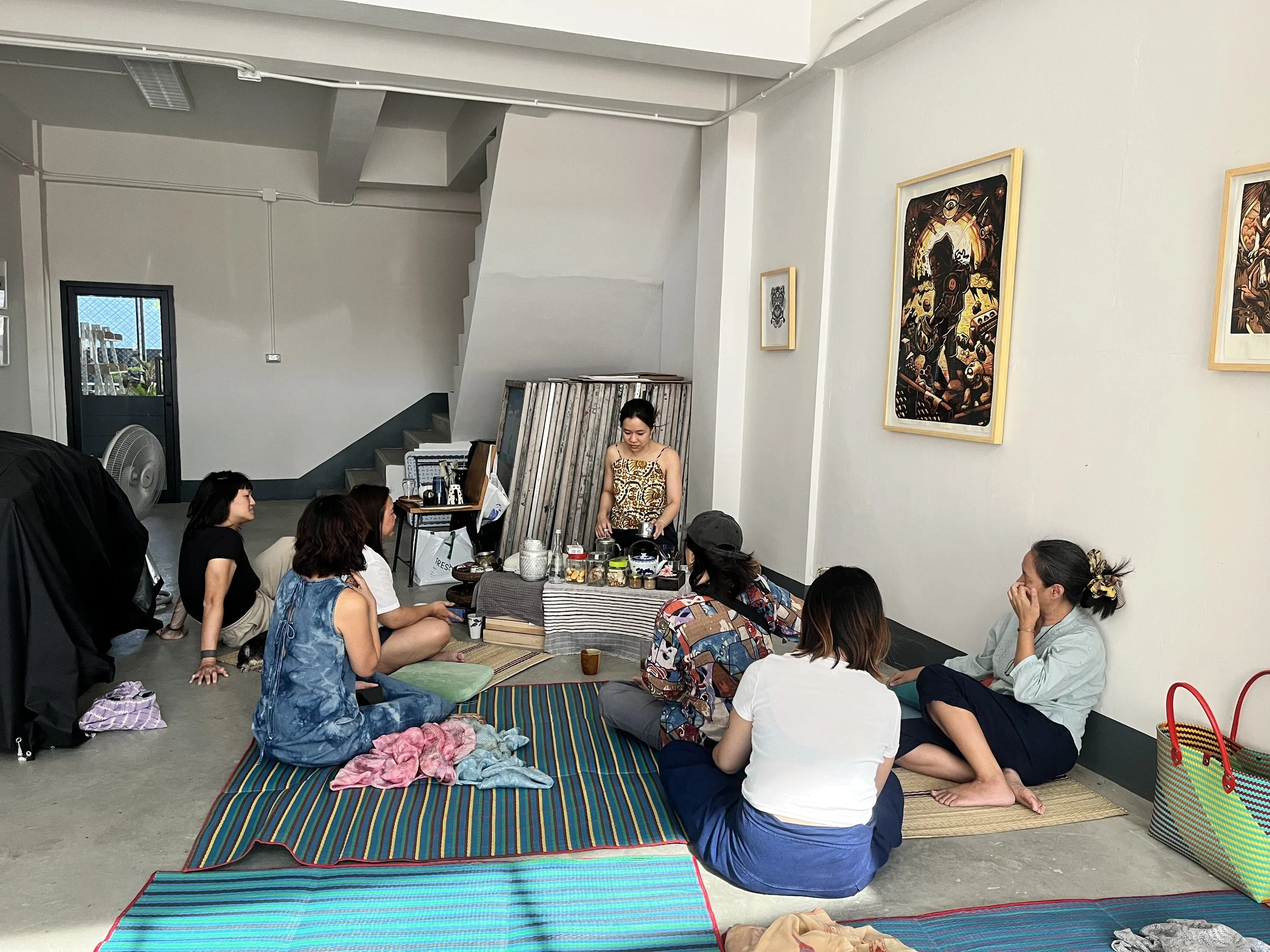
Tran Thao Mien’s participatory performance Trà đá ngủ trưa (2026) during our research residency at Light Bulb Studio in Chiang Mai, Thailand.
Why did comparing two systems teach me more than studying either one alone?
I expected the research on Japan and Southeast Asia to sit side by side as two separate case studies. Instead, each helped me understand the other.
Japan has a long, well-kept record of its residencies, from early research through to how programmes adapted over time. The Japan Foundation once ran AIR_J and used it to bring the network together. Today AIR Network Japan carries on that work, connecting residencies across the country to talk about their challenges and their chances.
Southeast Asia has had its own version, though a shorter one. The Southeast Asian Art Residencies Meeting (SEAARM) began as the Res Artis Meeting of Southeast Asian Arts Residencies, held at Rimbun Dahan in Malaysia in 2016. The next meeting took place in 2018 in Capiz, in the Philippines, organised by Green Papaya Project and 98B Collaboratory. In 2019 it moved to Taitung, Taiwan, alongside the Taiwan East Coast Land Arts Festival and the annual meeting of the Taiwan Art Space Alliance (TASA). After that, it folded into the TASA annual meetings. The region did once build a shared table, but it did not last as a regional one. That is why I am now initiating the Art Coordination Annual Meeting (ACAM), which gathers coordinators from across Asia to talk about the wider art ecosystem, residencies included.
“The region did once build a shared table, but it did not last as a regional one. That is why I am now initiating the Art Coordination Annual Meeting (ACAM), which gathers coordinators from across Asia to talk about the wider art ecosystem, residencies included.”
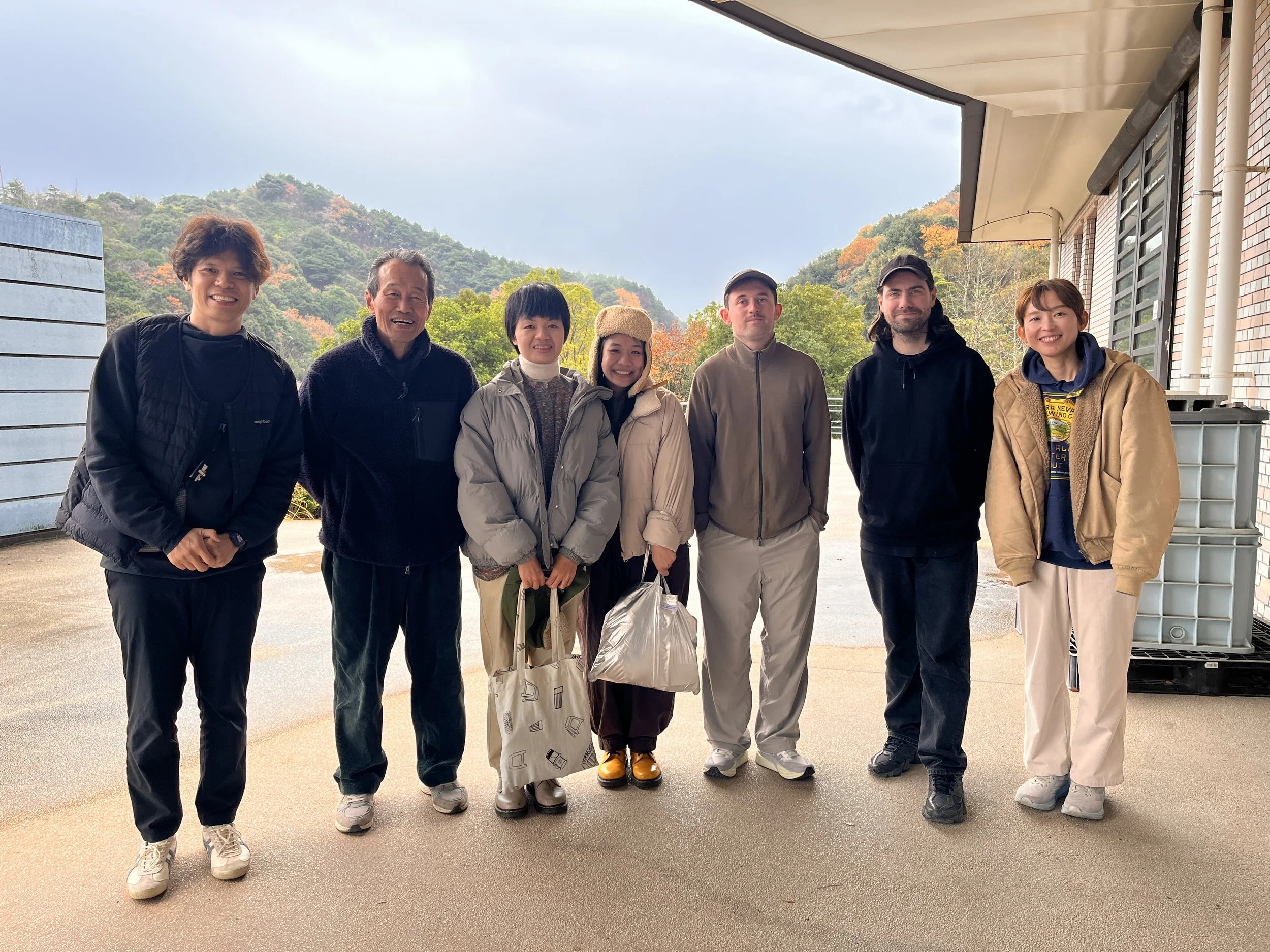
AiRViNe with coordinators and artists from Akita Creative Residency, December 2025. Image courtesy of the author.
Seeing the fragility of Japan’s AIR model, such as the funding cuts and the undefined coordinator role, helped me see Southeast Asia’s informality less as a weakness. It is a different, equally real way of organising care and knowledge. And seeing how Southeast Asia follows trails of people rather than listings helped me notice that much of Japan’s system, despite its databases and its decades of experience, still runs on the same quiet networks. Coordinators know each other, vouch for artists, and pass along a name.
By the end of the fellowship, I was less interested in the usual East–West exchange model, where Southeast Asian artists travel outward and Japanese institutions are the destination. What interests me more now is a North–South relationship, with Japan and Southeast Asia learning from each other directly as neighbours with similar problems. The map I set out to find still does not exist. But I have a much clearer sense of who might help draw it, and why it makes more sense for us to draw it ourselves.
Notes
Shibata Hisaishi. 2026. AIR and me: Part 6: AiR DNA. Institute of Contemporary Arts Kyoto. https://icakyoto.art/en/journal/articles/90740/
Southeast Asian Art Residencies Meeting. Asia Art Archive. https://cdn.aaa.org.hk/_source/gp2/20210114-10-countries-50-participants-came-together-for-seaarm-2018.pdf