Reflections on Delfina Foundation ‘Making and Materiality’ Residency
On taking up space, craft and the permission to be away
My Own Words is a monthly series which features personal essays by practitioners in the Southeast Asian art community. They deliberate on their locality's present circumstances, articulating observations and challenges in their respective roles.
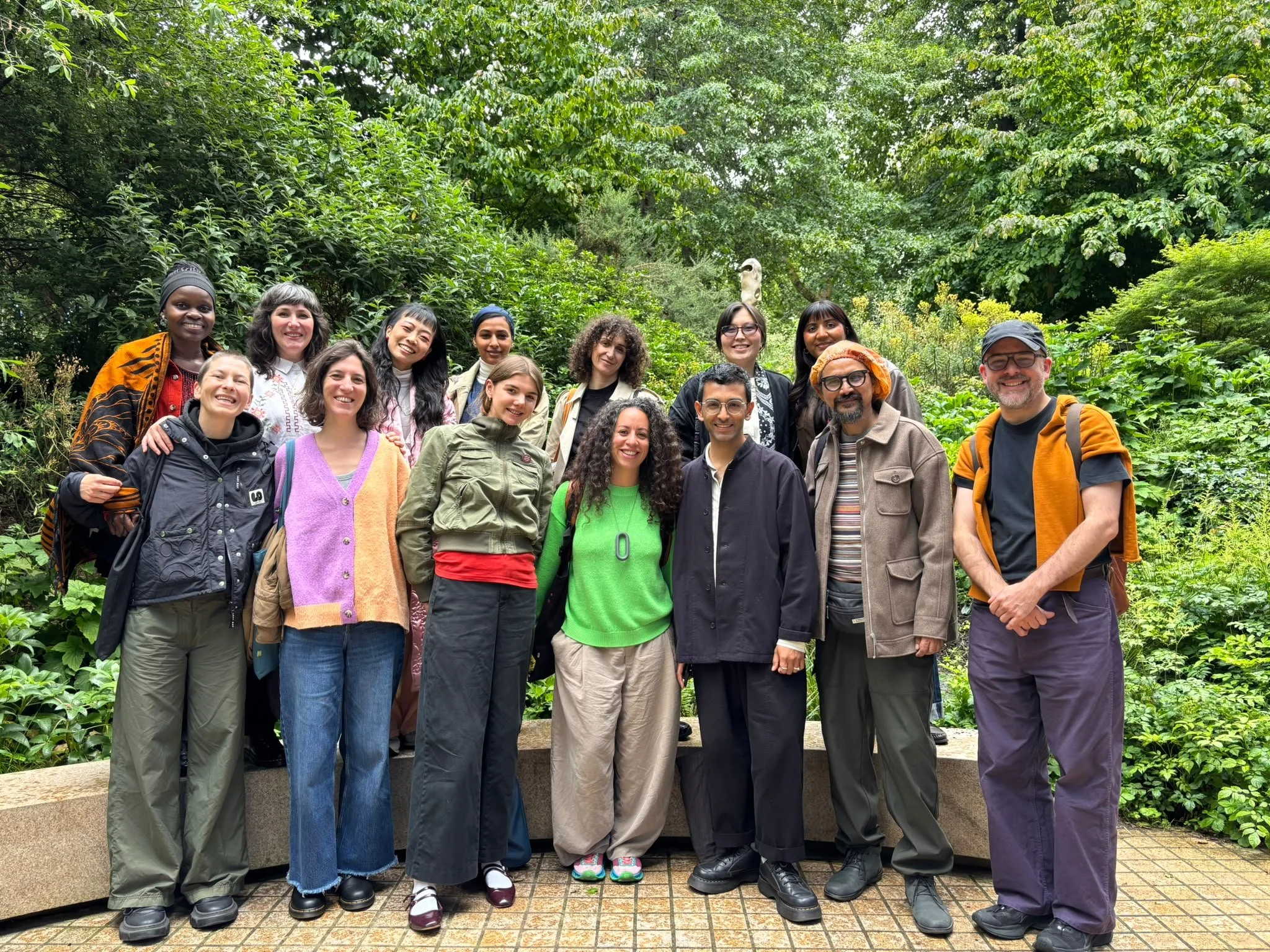
Group photo of the residents of the Making and Materiality cycle, and partial team from Delfina Foundation.
During my residency for the inaugural ‘Making & Materiality’ cycle at Delfina Foundation from April to June 2026, my mind often flitted to a story by Paulo Coelho, which I have summarised below.
A boy is sent to learn the ‘Secret of Happiness’ from a wise man. However, the wise man is occupied and sends the boy to explore his castle, but not without a condition: he hands the boy a teaspoon, and puts two drops of oil in it. “While you walk, carry this spoon and don’t let the oil spill,” he instructs.
The boy walks all around the castle, eyes fixed on the spoon and returns after two hours, proud that the two drops of oil remain safe. “So,” said the wise man, “did you see my Persian tapestries, or my beautiful parchments?” The boy was embarrassed and admitted that he had been so focused on the oil that he had missed the sights. Thus, the wise man told him to take another walk and discover the wonders of the castle.
The boy was entranced. Returning to the wise man, he described his journey in great detail. “But,” asked the wise man, “where are my two drops of oil?” The boy realised the spoon was now empty.
The wise man then explains, “The Secret of Happiness lies in looking at all the wonders of the world and never forgetting the two drops of oil in the spoon.”
In London, surrounded by some of the greatest museums and galleries in the world with monumental exhibitions I could previously only peer at through a screen, it can be difficult to focus on the two drops of oil, that being my practice.
One thing that stood out immediately upon meeting my fellow residents at Delfina Foundation was how we all connected over making, despite being from completely diverse backgrounds. There were times when a fellow resident would be sharing about their struggles—working alone with long production hours, being sidelined as making “craft”, experiencing social and class divides—and it would feel like I was listening to myself.
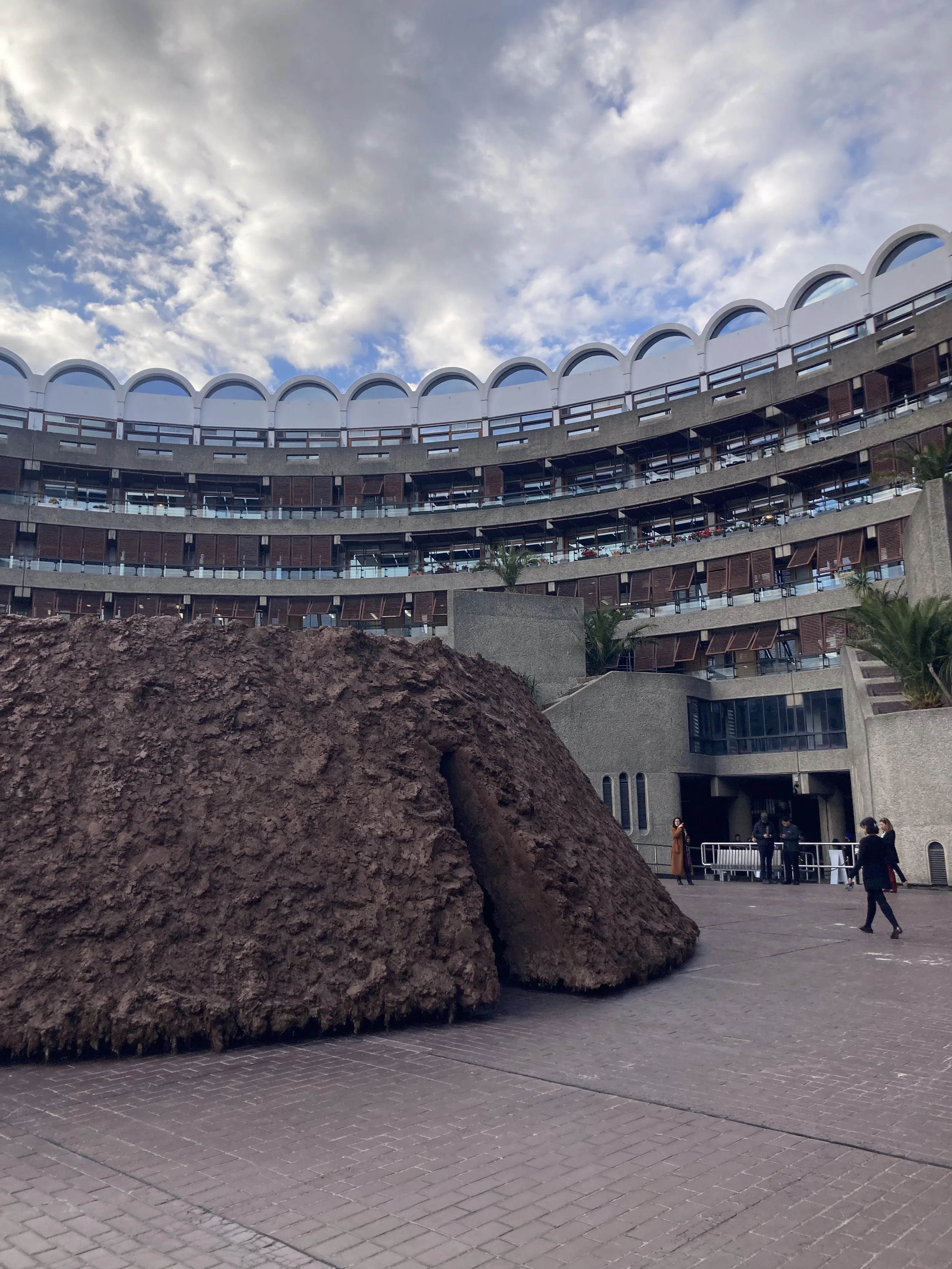
Delcy Morelos, origo, 2026, clay, soil, hay and plant seed, site-specific installation at the Barbican, London. Photo by Kelly Jin Mei.
This residency is one of the few that does not expect an outcome, which was comforting, yet made me realise how being still can feel foreign. Though there was a production space, the only commitments were our family lunches and dinners where we had the opportunity to share about our practice with the art community over meals. More than anything, I felt I had learned to live, in a time where every minute needs to be quantified. For the first time in a very long while, I cooked for myself. I read. I sat and contemplated. I looked at art and marvelled at expanse—of space, of scale, of potential.
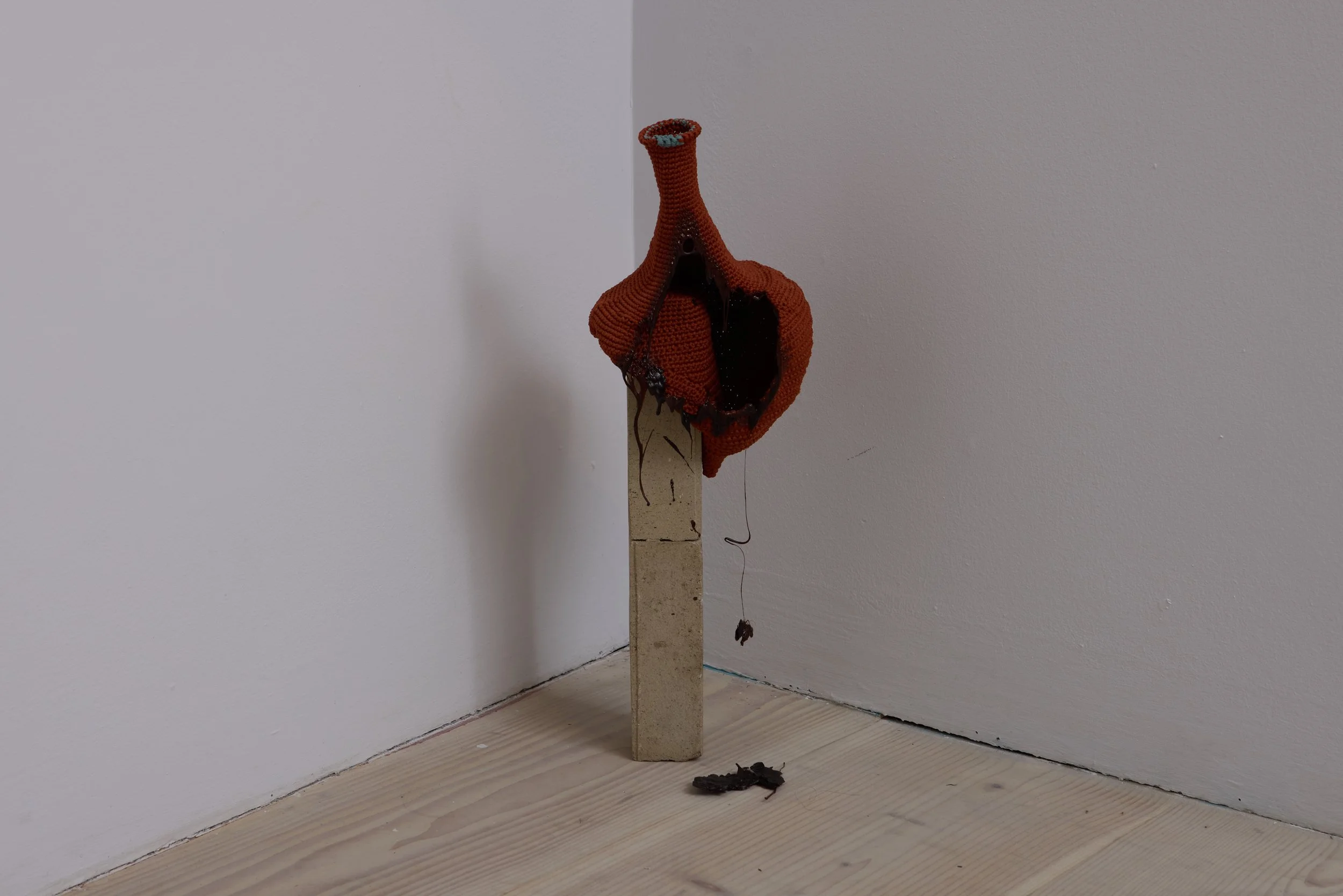
Kelly Jin Mei, Untitled, 2026, crocheted and melted nylon, found brick. Image courtesy of Delfina Foundation. Photo by Tom Carter.
Coming from tiny Singapore where space is scarce, I am often afraid of taking up space. Art does not exist in my household. Living in a humble apartment with my family, I have learnt that anything taking up space without a function is destined for the bin. The large artworks in equally large spaces in London wowed and scared me at the same time. It was not the size I feared, but the potential and consequence of that size. This fear became a seed for inquiry and I saw that within it was envy. How does one become so unapologetically expressive? How was one brought up, to think that one’s presence does not impose, or even, intend to impose on others? This resulted in my first experimental piece during the residency, where I crocheted a vessel around a brick I had found in the house. It is an interpretation of how, in my culture, we grow around trauma rather than acknowledge and process it. The obstacle simply becomes a mould around which we shape ourselves. Setting the crochet on fire is akin to destroying the armour we have created to reveal that anomaly in its very foundation.
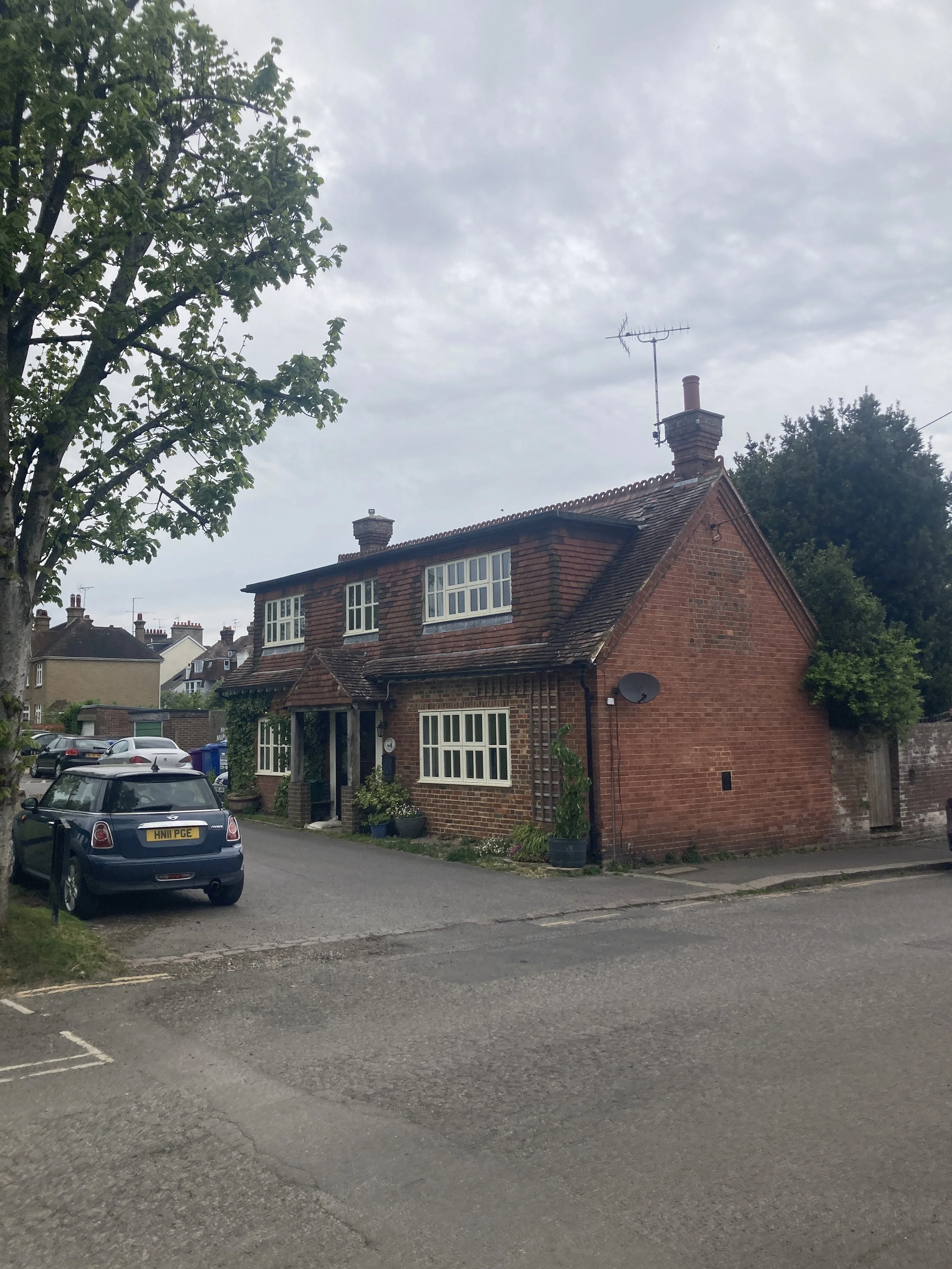
Photo of an English cottage in Sussex. Photo by Kelly Jin Mei.
I process the world by drawing parallels. During my two and a half months in London, I pondered the differences in Eastern and Western upbringing, while reflecting on aspects of British colonial rule that trickled into Singaporean education. One of the things I started picking up on was recognising things by literary description rather than sight. I attribute this to all the English writers I had been exposed to as a child. I spotted paddocks, stiles, rolling hills dotted with sheep, which I had encountered only through Enid Blyton’s writing. I almost laughed at the absurdity when I saw the cartoon-like cottages with chimneys and front windows, because I realised that was my childhood interpretation of a house, despite never having lived in one. A new mode of thinking opened up when I questioned the bizarreness of accepting something as default, even though it might not reflect my lived experiences.
My collection of books, supplemented by London’s ubiquitous bookstores, naturally grew. The funny thing about books is, they hold all the answers one might need, even if they seem completely irrelevant at the time you pick it up. When you finally do, you feel silly knowing the answer has been sitting on your desk all along! As such, I have seen bookstores as matchmakers, and a lot of times I buy a book because of a romantic encounter, or the effervescent review of a friend. You do not need to leave your comfort zone to read. But you do need to leave to create space for words to visit.

Kelly Jin Mei, work in progress. Image courtesy of Delfina Foundation. Photo by Tom Carter.
I had intended to investigate the boundaries between art and craft during the residency, but midway through, I felt like I had walked an entire round only to return to my starting point. I had no conclusion, and in fact felt even more confused. However, the conscious search was what held space for possibilities of new knowledge, allowing me to wander and articulate my thoughts about a recent observation that has been bothering me, one I associate with “craft washing”. It refers to the recent focus towards employing craft as a medium more than a technique within contemporary art, turning it into an aesthetic and reducing it into a vessel for concepts of labour, care and domesticity. This is an issue to a crafts practitioner like myself because it makes craft seem passive. To me, craft is about consciously building; an accumulation of embodied knowledge that transcends words.
“To me, craft is about consciously building; an accumulation of embodied knowledge that transcends words.”
This residency also made me aware of the fact that I work intuitively and develop thoughts through the act of making. After a month of cramming inspirations in my brain without making anything—a new experience for someone whose life revolves around making—I knew that I had to try expressing through creation in order to process my thoughts. This led to exercises in drawing, goldwork embroidery, and going back to my roots in fashion, encasing a vessel in stitched panels of fabric. These inquiries and exercises were my two drops of oil on the spoon.
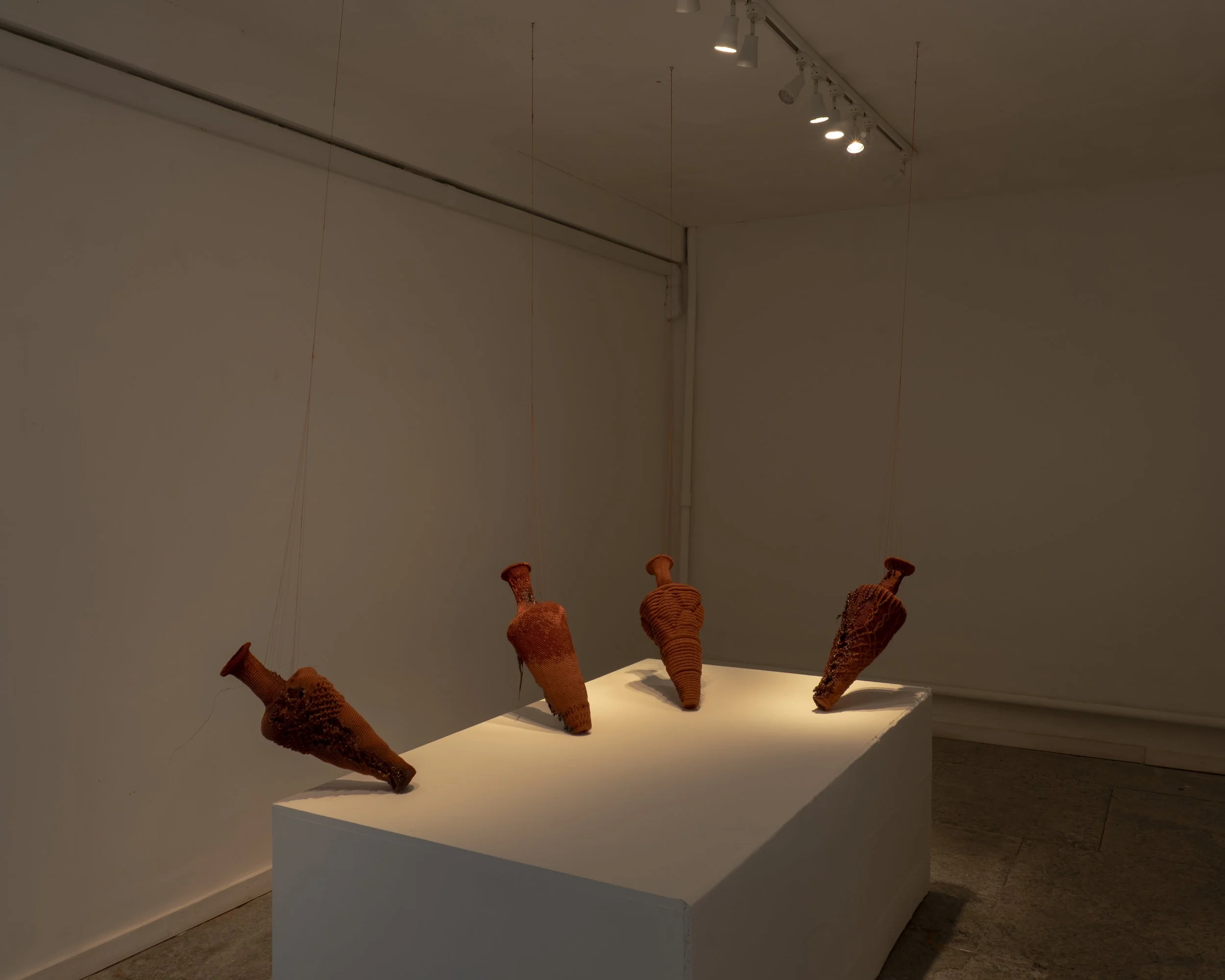
Kelly Jin Mei, Qiān Jīn, 2024, crocheted and melted nylon, dimensions vary. Exhibition installation view in A Pliable Wall: Weaving the Skin of Space (2026) curated by Yisi Li, at Paul Hughes Fine Arts, Warminster, United Kingdom. Photo by Quentin Latour Dauvergne.
While it was tempting to curl up indoors and focus on work in the studio, London called in the form of new gallery shows every week, parties and classes… If there was one thing I learnt about the city, it is that no plans ever work out. Not having fixed plans also meant that I was open for opportunities, and that is one other thing this residency gave to us—the permission to be away from our usual commitments. Through one of the events organised by Delfina Foundation, I met curator Yisi Li, who invited me to participate in my first group exhibition in the United Kingdom, titled A Pliable Wall: Weaving the Skin of Space.
A residency might take me far away from home, and ironically, leaving is a way to come home to myself. Familiarity became my set of tools, and strangeness became my material.
For more information about Kelly’s work, click here. To find out more about Delfina Foundation and its programmes, click here. Kelly’s residency was supported by Delfina’s Network of Asia-Pacific Patrons with additional support from The Institutum and E-Len Fu.