
Fresh Face: Tep York (TY)
Conceptual art and street-smarts
A&M's Fresh Face is where we profile an emerging artist from the region every month and speak to them about how they kick-started their career, how they continue to sustain their practice and what drives them as artists.
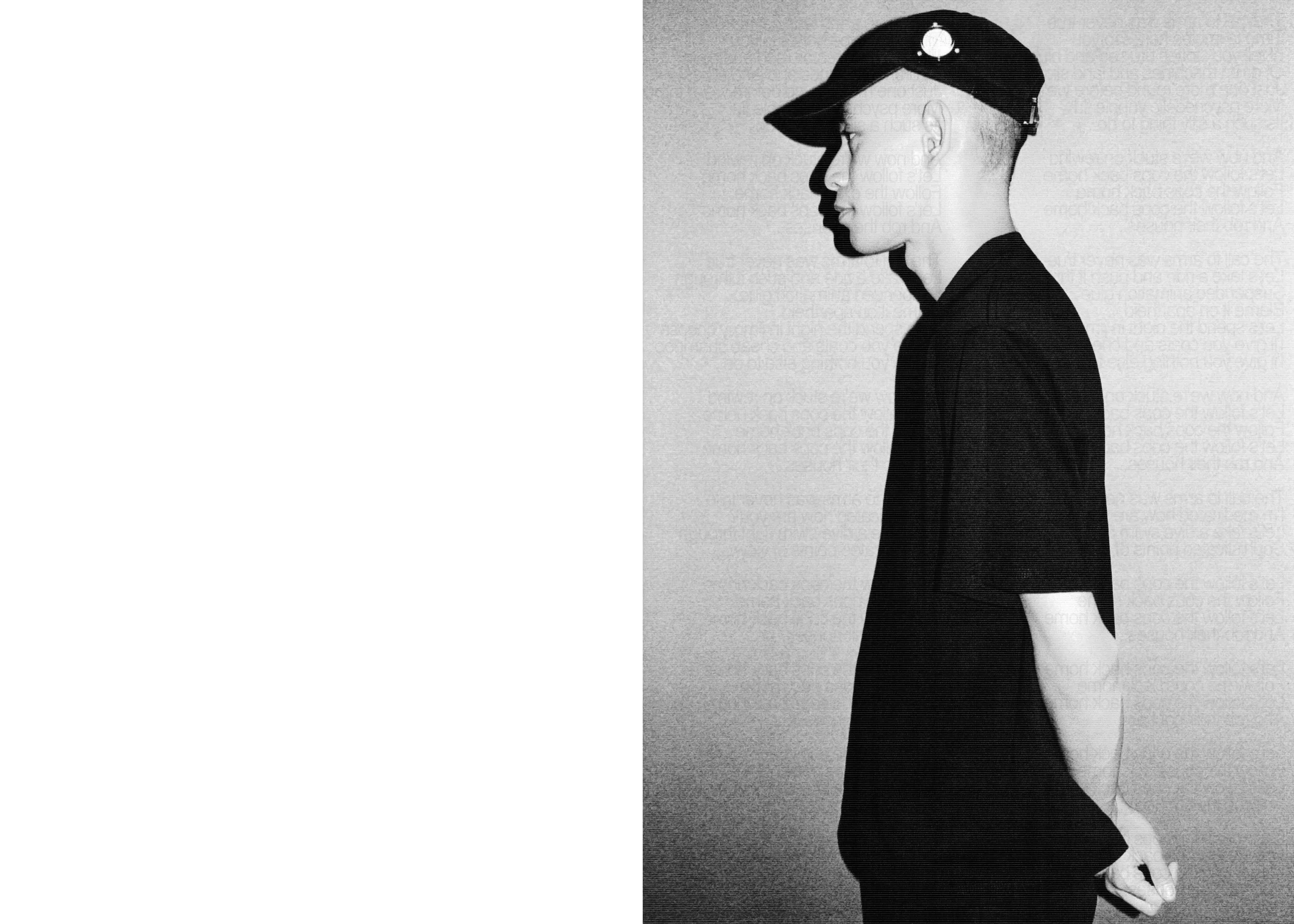
Tep York. Photo by Zilhanz Affendi.
There is a disarming quality in the work of Kuala Lumpur-based artist Tep York (TY). He engages with readymade objects and a visual language informed by branding and merchandising. This sensibility reflects his experiences running a skate merchandise company QUIT, as well as his attraction to conceptual practices. TY has exhibited at venues in Malaysia such as The Back Room and temu house in Kuala Lumpur, and Blank Canvas in Penang.
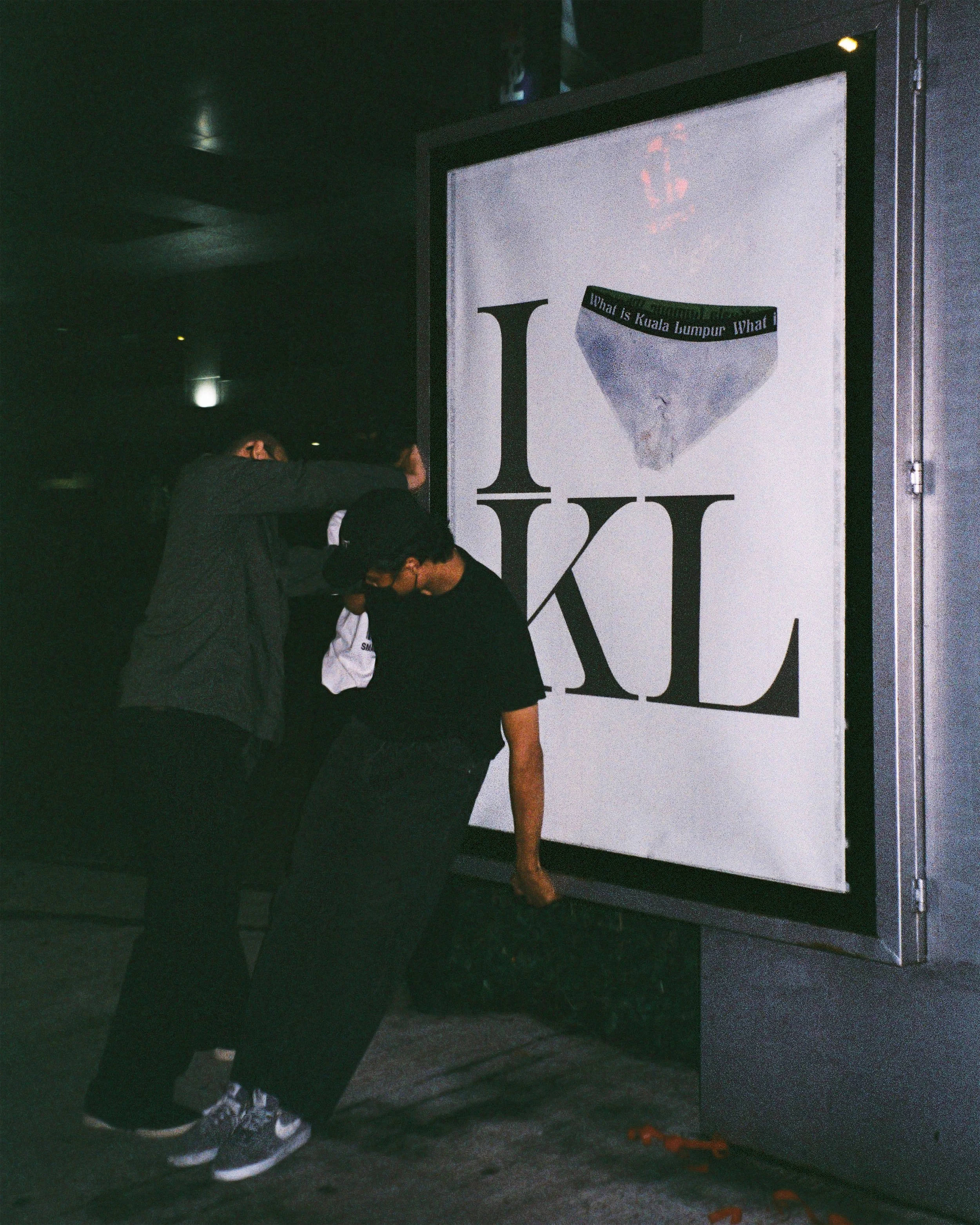
Hijacked ad light box, 2021, Kuala Lumpur Ceria’s first piece of guerrilla marketing on the streets of Kuala Lumpur.
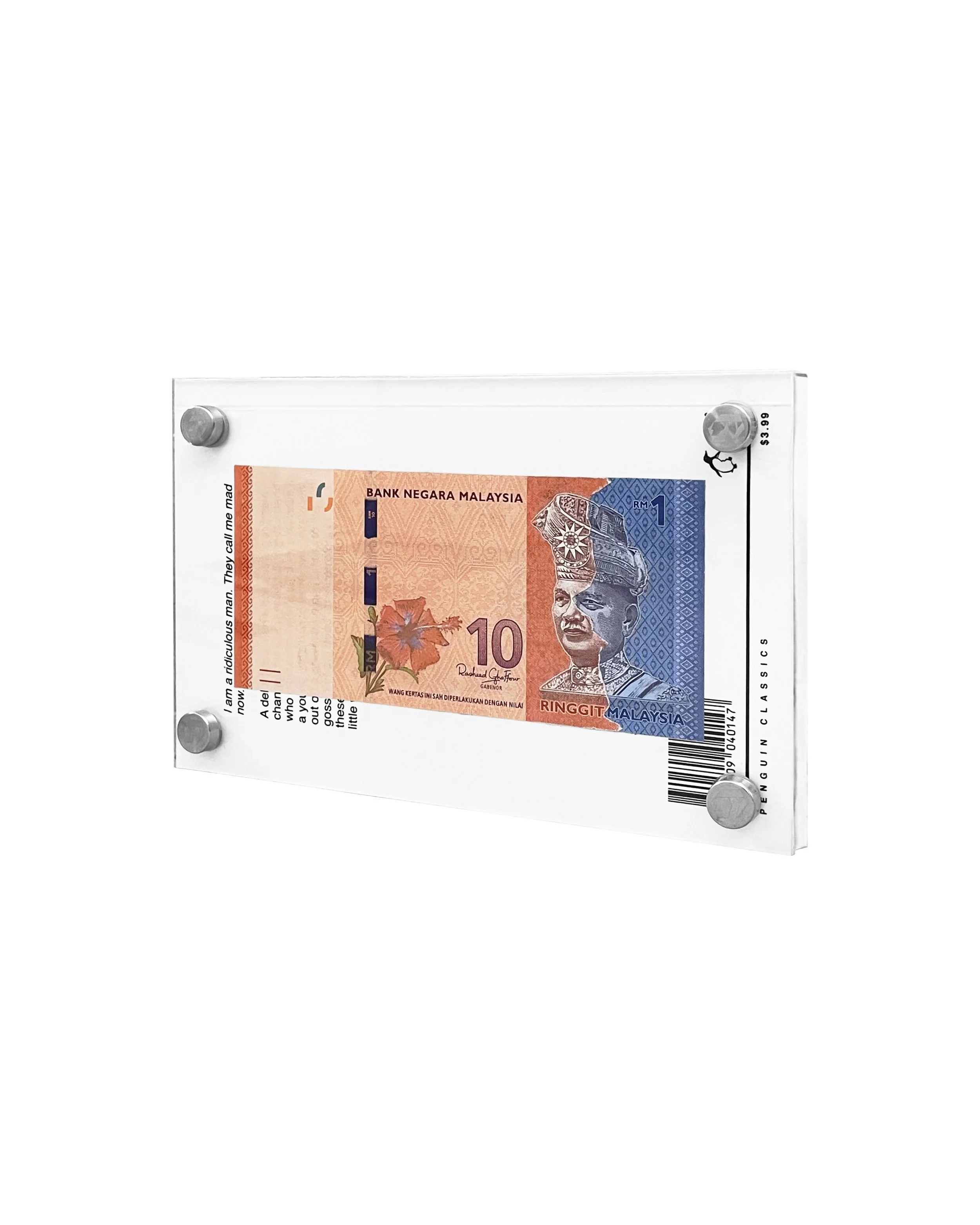
TY, RM11, 2025, Malaysian Ringgit notes, book, acrylic, 4.5 x 7.2inches. Image courtesy of the artist.
TY’s native Kuala Lumpur is a fertile ground for affection, imagination, and provocation. During the COVID-19 pandemic, TY initiated the online project Kuala Lumpur Ceria which ran from 2020 to 2024. Previously called “What is Kuala Lumpur”, It took the form of an Instagram page that curated user-submitted footage of what the artist describes as “the city that we love and hate equally”. Ceria is a Malay word that means bright or joyful, masking the project with a tint of irony as it featured the weird and wild side of daily life in Kuala Lumpur. Returning online sentiment back into the streets, Kuala Lumpur Ceria also expanded into guerrilla marketing, merchandising, and physical art-making.
Another work that holds a similar tension between humour and critique is RM11 (2025). It is made with two torn Malaysian Ringgit notes joined together to create an imaginary denomination that does not exist in the currency. The note is then mounted between an acrylic panel and a paperback copy of Fyodor Dostoyevsky’s The Dream of a Ridiculous Man, a short story that explores existential themes. As an art object, the book’s content remains inaccessible to the audience, but one is nudged to infer TY’s intent through the suggestion of words. His work reconfigures familiar places and items, to draw out its underlying absurdity.
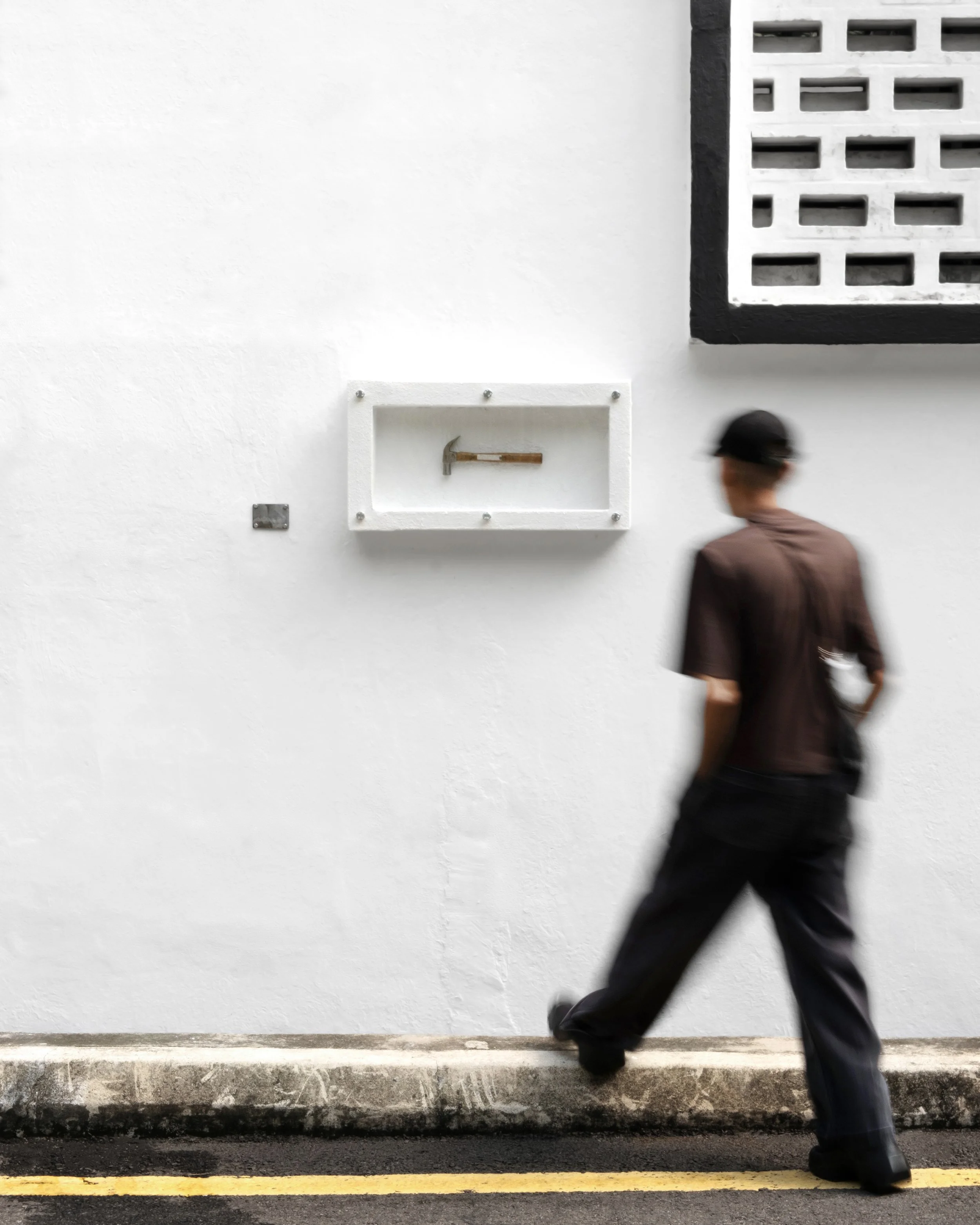
TY, Nailed Hammer (after Lee Kian Seng), 2024, site-specific installation of a hammer nailed into the wall and enclosed with an acrylic sheet, laser-engraved steel artwork label, dimensions variable. Image courtesy of the artist.
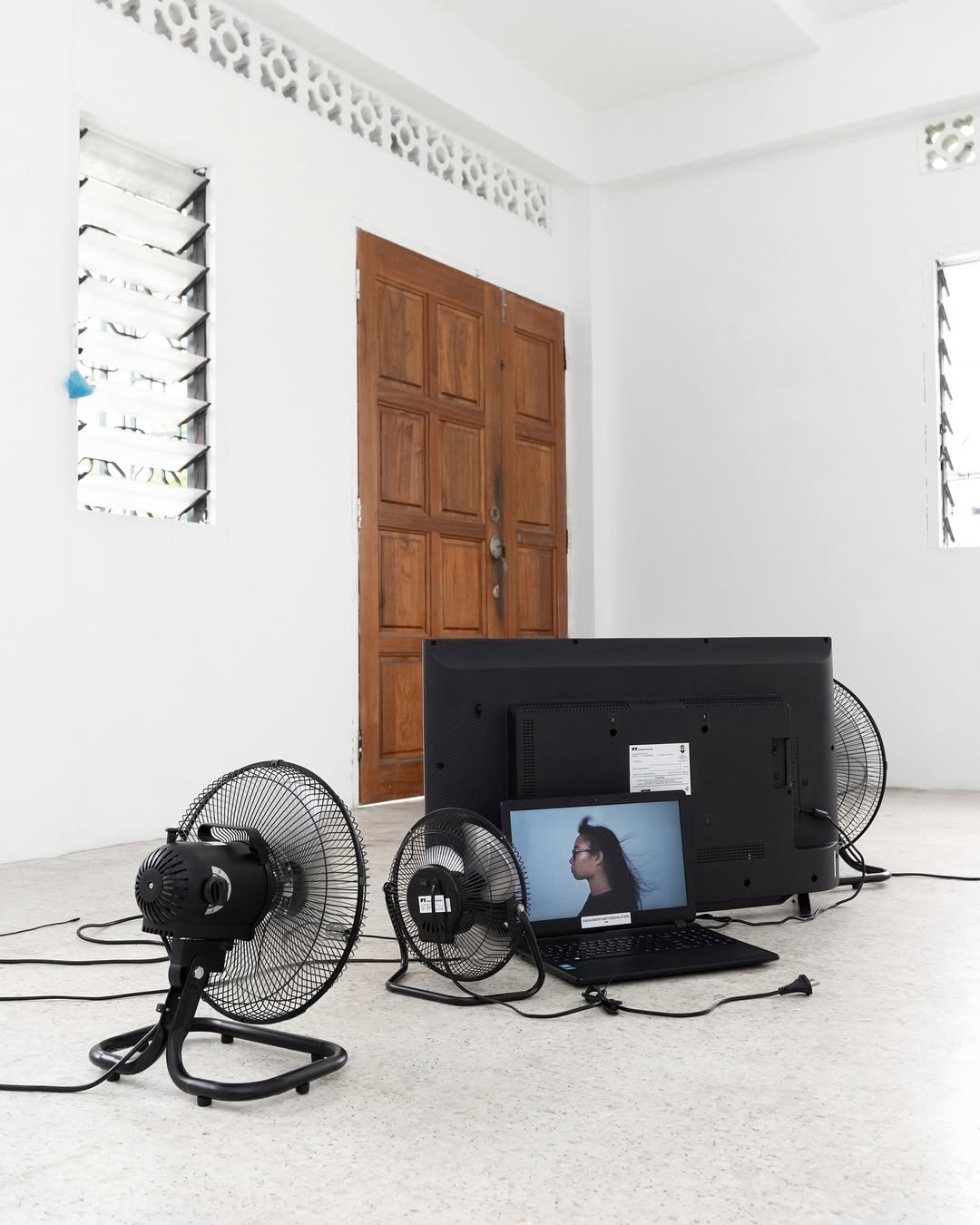
TY, Exit (A), 2025, fans, TV, laptop, video (looped), extension cords, phone charger/cable, automatic air freshener, house key, duster and air, dimensions variable. Image courtesy of the artist. Installation view at 293 artist-run space, Kuala Lumpur. Image courtesy of the artist.
Recently, TY’s practice turned towards installations that play with art gallery conventions. Nailed Hammer (after Lee Kian Seng) (2024) is a site-specific work that repurposes a small and evidently useless niche on The Zhongshan Building’s exterior, turning it into a vitrine. Its title embeds a citation to Lee Kian Seng’s Hammer and Nail series from the late 1970s, Lee was among the first Malaysian artists to experiment with installation art. Adding his own spin to it, TY inserted the hammer in a “found” public location, framed it with an acrylic sheet, and added an artwork label on the wall.
In his debut solo presentation, TY created Exit (A) (2025) which comprises common household items and electronics. The installation was first exhibited at 293 artist-run space in Kuala Lumpur, within the setting of a living room. Playing on the laptop and television screens are videos of a female, whose hair seems to be blown by the oscillating fans in the room. It is a subtle situation that elicits laughter upon one’s realisation. The components that make up the installation are given custom labels designed by the artist, which carry the essential artwork information. Precision and effort are given to rebrand what are otherwise mass-produced objects. Exit (A) makes one question what the artwork is, and where it can be found. TY’s practice cheekily pokes at the mechanisms behind an artwork and its social context.
Interview
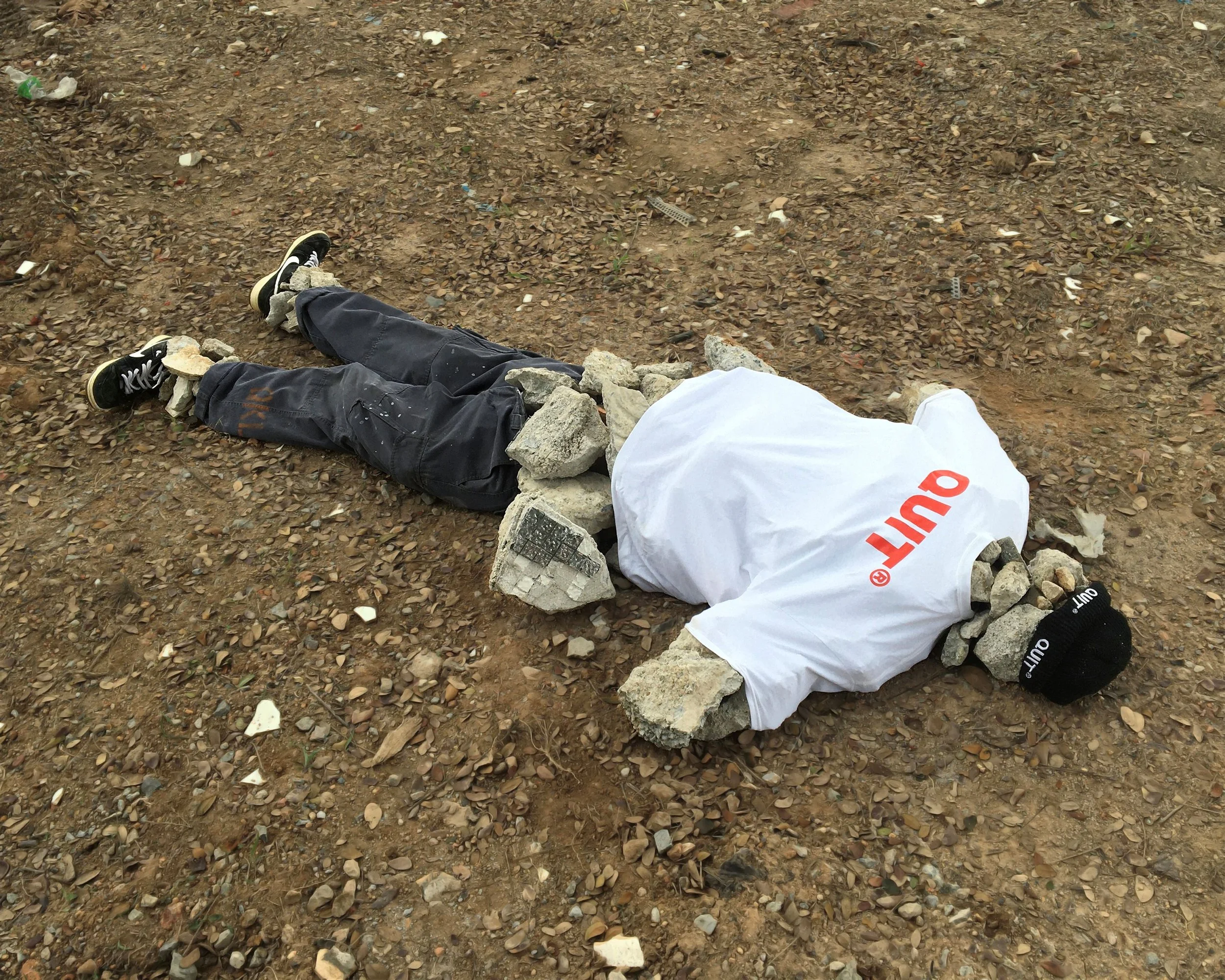
Q (RIP 2013-2023). Image courtesy of TY.
You made a name in the skateboard scene in Kuala Lumpur, before building an art practice in 2022. How would you describe your background experiences? And what drew you to becoming engaged in a visual art context?
I believe my background is a typical story of a Malay kid growing up in Gombak. I am raised by a single mom in a working-class household, surrounded by rempit (delinquents), hooligans, drugs, and mistakes. Those experiences shape not just my art practice, but also my view of life in general.
Skateboarding found its way into my life, and that was where everything started for me as a creative. From there, I started to explore more subcultural scenes such as DIY punk hardcore, street art, independent fashion design, etc. At the same time, I started to learn how to run a business making skate films, and began exploring marketing, graphic/product design, and everything in between. I started my own skate company, QUIT (2013–2023). Everything came naturally as I was just having fun exploring.
Art came subsequently. I started getting involved with the local art scene by visiting art exhibitions, spending time with established artists and paying close attention to their practices. Along the way, I realised I had been doing similar things, just in a different context. So I embraced it!
Who has been a mentor or an important artistic influence? And why?
Marcel Duchamp. His idea that “not everything is art but anything can be art” blew my mind when I was younger.
What was one important piece of advice you were given?
The best one that I could think of for now is: if you can be unafraid of being laughed at, you can do and be anything in life. I have also been told: that sometimes the best way to fight is to not fight at all.
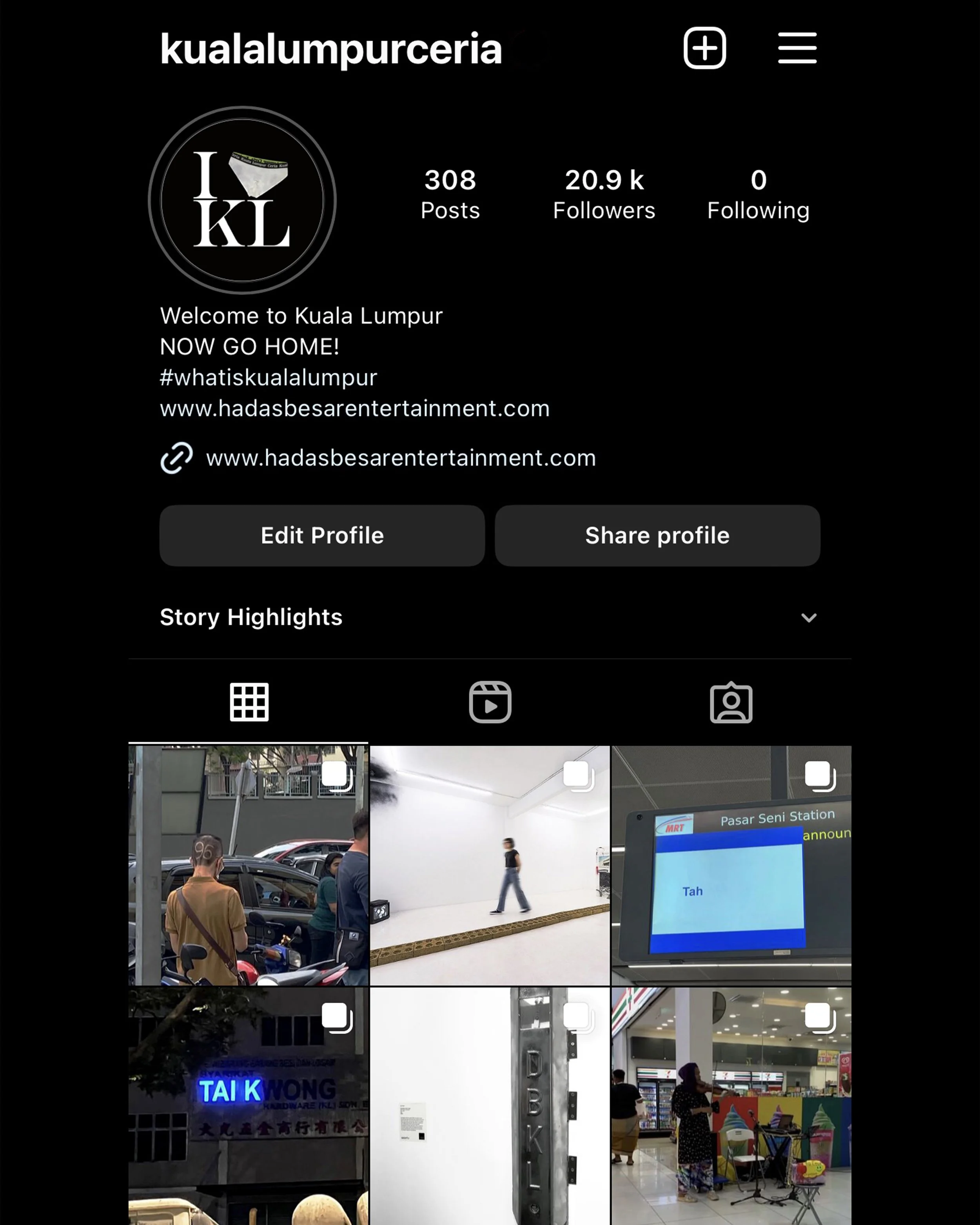
Screenshot of Kuala Lumpur Ceria Instagram account.
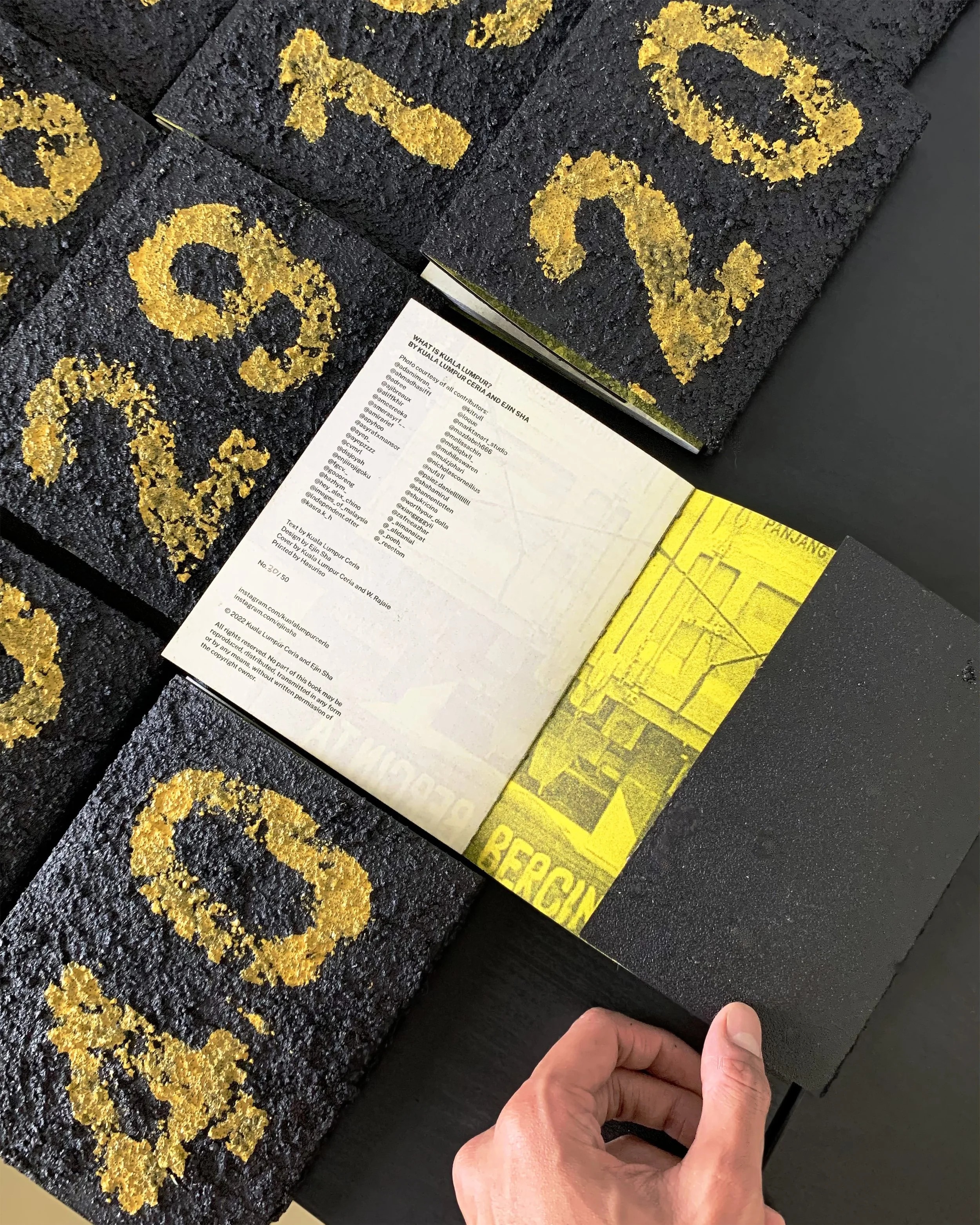
What Is Kuala Lumpur (2022), a book/object created in collaboration between Kuala Lumpur Ceria and Studio Ejin Sha.
Do you make a living completely off being an artist? If not, could you share what other types of work you take on to supplement your income? Do these activities also inform/ affect your practice?
I sell merchandise and objects online mostly. But there were times I also took jobs editing videos for Malay weddings. You know those types of weddings where there would be a traditional silat performance in the middle but the performers would be dressed up like Spiderman. Do you have those in Singapore? They are popular in Gombak.
I enjoy making, designing, and selling merchandise. It is a skill I learned from my skateboarding days, but I do dream of becoming a full-time artist and being able to sustain myself on my art alone. When we spoke in person last year, I said this would be the only option if I wanted to “make it” in something I am passionate about. There is no backup plan for me except going back to editing wedding videos.
I believe this is my one and only strategy to exit to a better, brighter, wealthier life. I know this may sound delusional or ambitious, but I want money and a lot of it.
Running a skate business over a decade taught me the importance of branding, marketing, and the importance of good product photography. They all help in the business side of being an artist. Creating art is expensive, so one should treat one’s work like an expensive product.
What were your intentions behind Kuala Lumpur Ceria (2020-2024)? What role(s) do the creation of objects, zines, and merch play in this project?
To expose the wild and weird underbelly of Kuala Lumpur (KL). We considered ourselves “ghetto journalists” by using Kuala Lumpur Ceria as a sort of “hood media” covering the ugly and absurd sights of KL.
Those souvenir objects, zines, and merch were extensions of the community we cultivated on that Instagram page. They were 100% inspired by the rawness of KL, the city we love and hate equally. We donated a portion of profits back to the streets of KL via non-profit organisations such as Food Not Bombs KL and Yayasan Chow Kit.
“Those souvenir objects, zines, and merch were extensions of the community we cultivated on that Instagram page.”
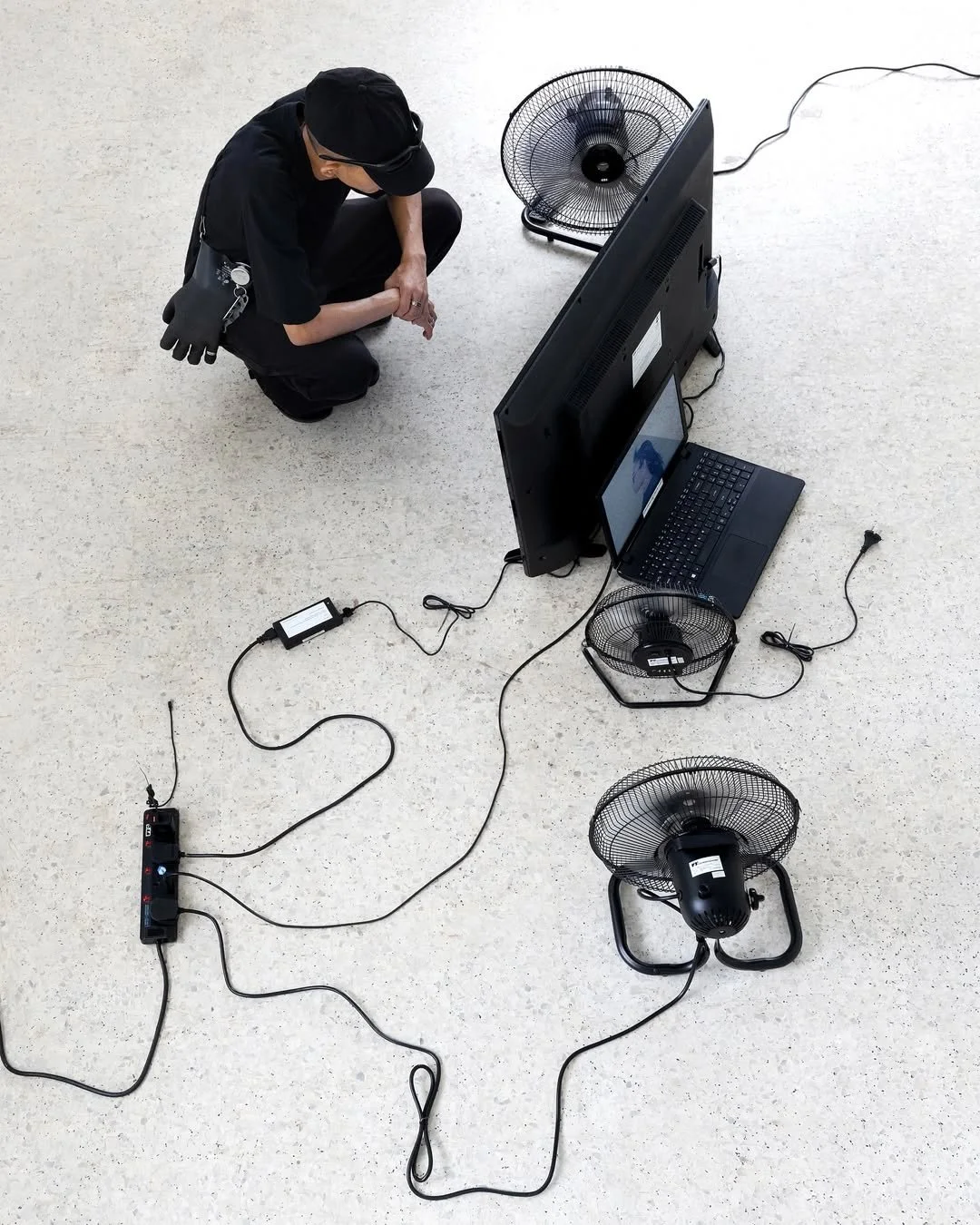
TY, Exit Strategy, 2025, exhibition view at 293 artist-run space, Kuala Lumpur. Image courtesy of the artist.
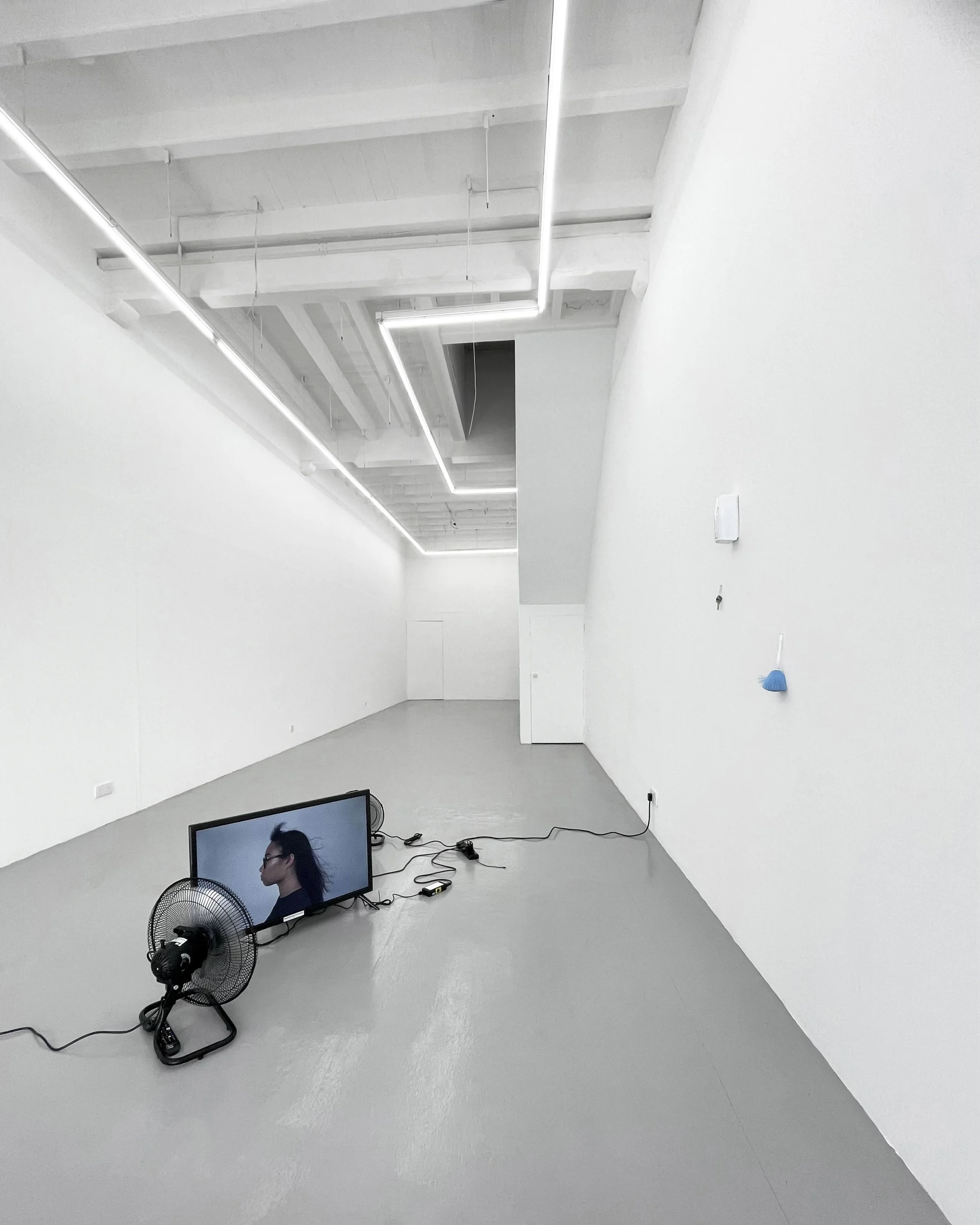
TY, Exit Strategy, 2025, exhibition view at Blank Canvas, Penang. Image courtesy of the artist.
Could you talk about your first solo presentation Exit Strategy (2025)at 293 artist-run space in Kuala Lumpur? How did the show come about and what was the central idea you wanted to explore?
Firstly, I would like to give a shoutout to Izat Arif for offering me the space to show in the living room of his studio. It was the first time I had my name as the sole one on an exhibition poster. But at the same time, it was not quite a solo exhibition either. It was an art event, yet it was not held in a gallery. I did the set-up and marketing myself.
The idea for the work came from the space, which functions as a living room, hence I used objects like television and household fans. I wanted to create a “complete” experience within the space constraints, and create a single work that utilised analogue and digital processes. It also had all the elements of an art exhibition such as the artwork labels and exhibition catalogue. I even re-painted the walls white to capture a white cube feel, while also not being too serious. I titled it Exit Strategy because making art is my “exit strategy” out of a boring life. It may have seemed like the work was just the TV, video, and fans on the floor, but the full work was actually the presentation as a whole. I guess the central idea for the show was to present myself as an artist and condense all the things I learned about the art world over the years of visiting shows and becoming familiar with the operations of artists, curators, and galleries.
“I titled it Exit Strategy because making art is my ‘exit strategy’ out of a boring life.”
Later in the same year, another iteration of Exit Strategy was shown at Blank Canvas, Penang. How was this presentation similar or different?
I guess my white-cube presentation at 293 worked because the work was acquired by Leong Kwong Yee, the founder of Blank Canvas in Penang. Quite spontaneously, he invited me to show the work in Penang on the last day of Blank Canvas’s operations at their old location on Love Lane before they relocated to their new location on Lorong Soo Hong. I found it to be a funny sequence of events that I finally had the white-cube presentation I wanted, only in an extreme way. The gallery was a white cube, with white walls and white lights, but all air-conditioning and gallery furniture had been deinstalled from the old location. So the only ventilation in the space all day came from the fans in my work. It all came together quite serendipitously in the end. In my work, there is a gap left in them that is filled by the context it is shown in, or by the viewer.
What are your hopes for your own local art scene, and regionally as well?
I hope that people in the local art scene take themselves more seriously, but in a different way. When I walk into a gallery, I notice the lighting of the space and whether works look good within it. I think people here take their ideas very seriously but they do not take their presentation seriously enough. I also wish art people would dress better… is that ok?
Are there any upcoming or ongoing exhibitions or projects that you would like to share?
Yes, Exit Strategy 02 will be coming soon. I am going to make it out.
This interview has been edited.