
Taipei Art Week 2025 Report
Public-private initiatives, collector-founded spaces, and artistic gatherings
This article is part of Art & Market’s coverage beyond Southeast Asia. If you would like to work with us to reach audiences from the region, please email us at info@from-the-margins.org.
Taipei Art Week (TAW), organised by Taiwan Art Gallery Association (TAGA), ran from 18 October to 2 November 2025. The second edition grew in its scale and ambition, and involved more than 100 cultural partners from museums to galleries to art foundations. It was anchored by two key events that opened a week apart, ART TAIPEI 2025 and the 14th Taipei Biennial: Whispers on the Horizon. This report captures some observations from the first week of TAW.
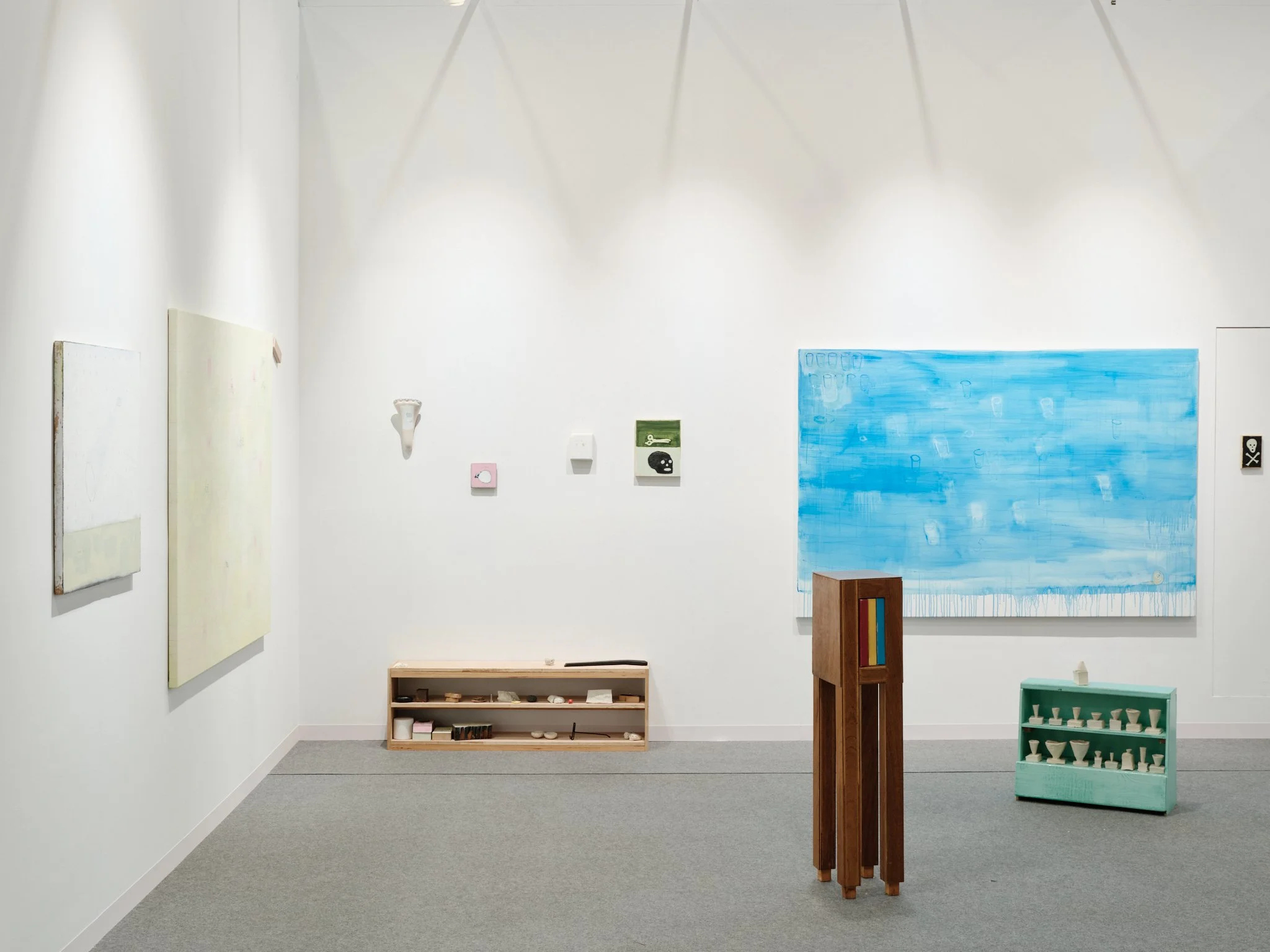
Solo booth by Ping-En Kuo, presented as part of the Made in Taiwan (MIT) Programme at ART TAIPEI 2025. Image courtesy of ART TAIPEI.
ART TAIPEI offered some food for thought with regards to models for promoting local artists through partnerships between a gallery association and government bodies. Since 2008, TAGA has been working with Taiwan’s Ministry of Culture to present the Made in Taiwan (MIT) programme at ART TAIPEI. This year, eight young artists were selected by a jury of industry professionals through an open call process: Yen-Ran Wang, En-Lin Liew, Ping-En Kuo, Hsing-Yu Liu, Sheng-Hsiung Hung, Riley Tu, Shao-Yen Chen, and Shang-Yang Wu. Each artist presented a solo booth at the MIT section of the fair, where they were also paired up with a gallery which assisted with the exhibition and marketing. MIT is a discovery platform for potential collectors as well as galleries who are introduced to new artists through their involvement in the programme.
MIT is a discovery platform for potential collectors as well as galleries who are introduced to new artists through their involvement in the programme.
This initiative creates a platform for the public sector and art market to meet. Beyond supporting emerging artists through a showcase opportunity, MIT gives them tangible experience of working with a gallery. While some art practices may not be suited for such a context, it is a valuable opportunity for young artists to learn from and decide how they wish to navigate the art ecosystem. Notable artists who participated in MIT include: Yen Jen-Kun (2014), Tseng Chien-Ying (2015), and Ting-Jung Chen (2020), among others.
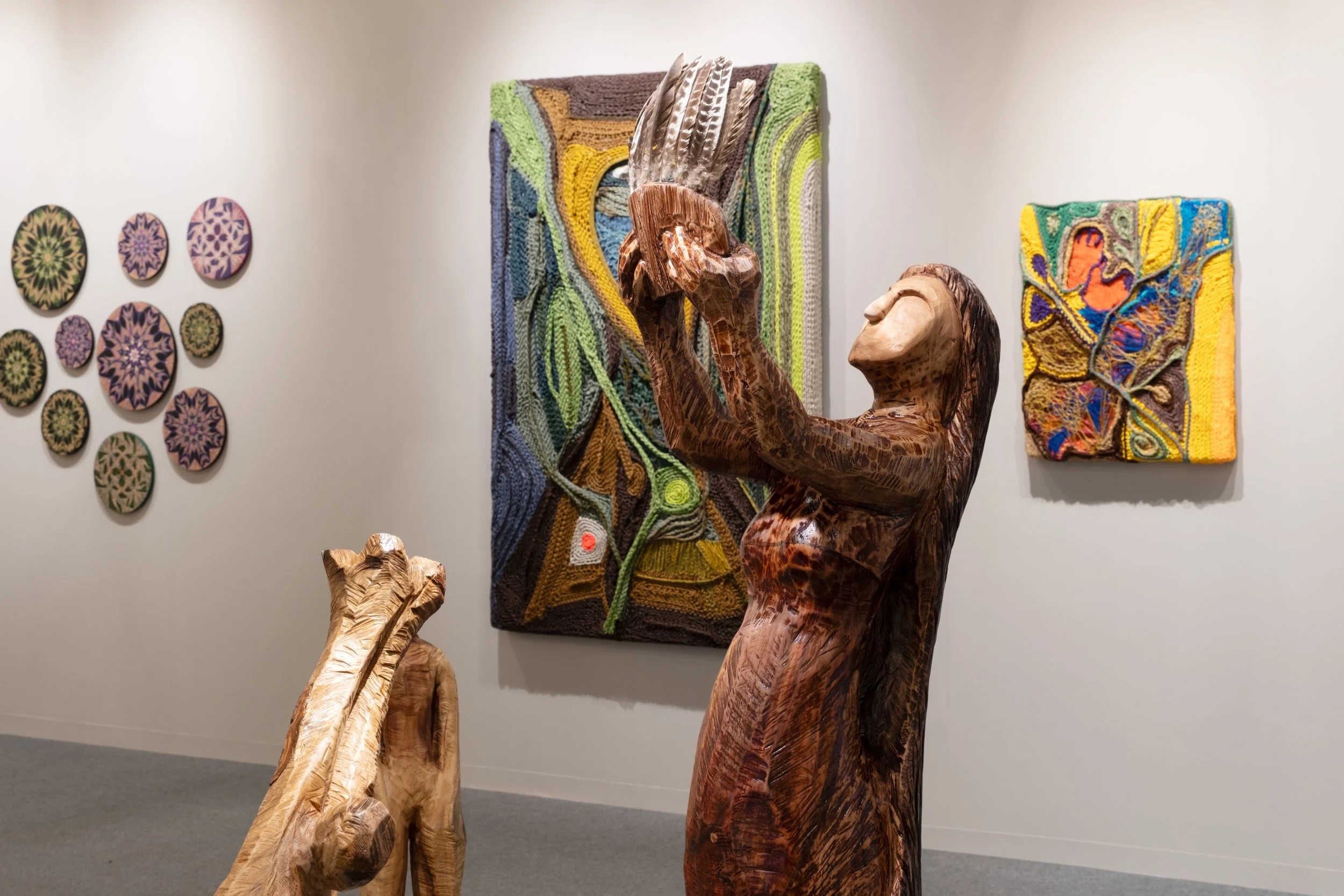
Survivance Art, curated by Manray Hsu, presented as part of the Indigenous Art Special Exhibition at ART TAIPEI 2025. Image courtesy of Asia Art Center.
Another similar programme at ART TAIPEI is the Indigenous Art Special Exhibition, co-organised by the Indigenous Peoples Cultural Development Center and TAGA. Now in its sixth edition, the programme format involves appointing a curator who oversees the curatorial direction, artwork selection, and presentation. A gallery is then matched to handle sales and marketing for the special exhibition area. Titled Survivance Art, the show was curated by seasoned curator Manray Hsu and featured five artists: Siki Sufi, Laluyu Pavelav, Eleng Luluan, Milay Mavaliw, and Idas Losin. Borrowing from Anishinaabe Indigenous cultural theorist Gerald Vizenor, the term survivance speaks of going beyond mere survival but a proactive attitude towards cultural revitalisation.
Asia Art Center (AAC) partnered with TAGA and the Indigenous Peoples Cultural Center for the second year on this programme, maintaining close coordination throughout the process. “The purpose of this special exhibition is to leverage gallery partnerships to increase visibility for Taiwanese Indigenous artists among collectors and institutions at the art fair,” said AAC Managing Director Steven Lee. “Beyond facilitating sales, it aims to foster collaborative relationships between Indigenous artists, galleries, and the market.” For him, this approach has proven its efficacy, citing at least six works sold during the fair, priced between USD1,000 and USD25,000. Lee also highlighted the academic exchanges that took place at the booth, such as the visit by Dr. Manuela Well-Off-Man, Curator of the IAIA Museum of Contemporary Native Arts in Santa Fe, New Mexico, USA.
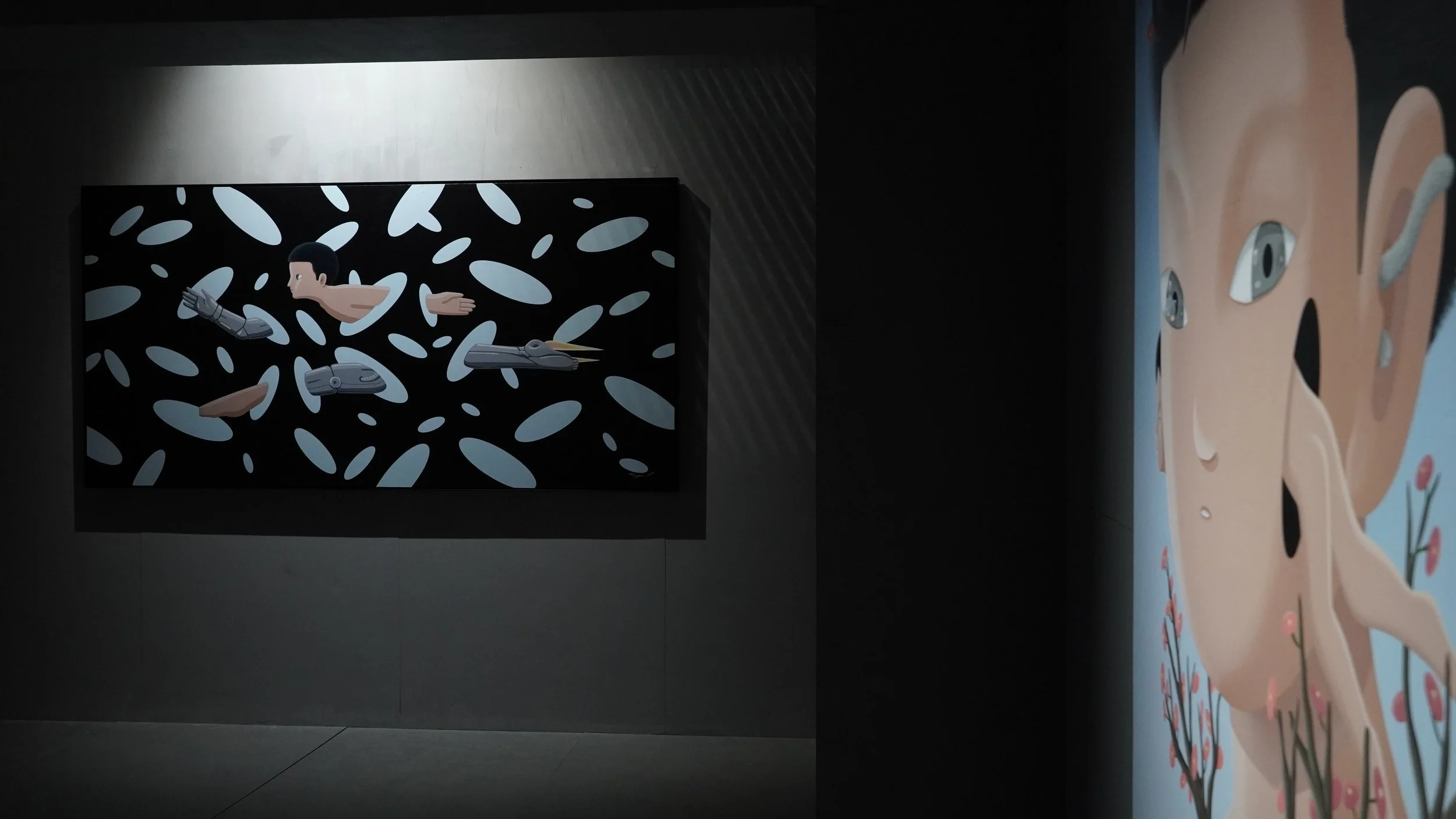
Gongkan, Transcendence, 2025, exhibition view at CANS Space, Taipei. Image courtesy of CANS Space.
Outside of the fairgrounds, collector-founded spaces also tapped into the buzz of TAW and put forward solo shows that reflected their respective founder’s sensibilities. Liu Tainai is a Taiwan-based collector and founder of CANS Art News magazine (CANS艺术新闻) and its affiliated CANS Space (罐 空間). Transcendence is an exhibition that unfolded through a dialogue between Liu and Thai artist Gongkan, featuring 10 artworks, six of which are from Liu’s collection. “It was my collection of Gongkan's works that inspired me to discuss with Tang Contemporary Art the idea of organising his first solo exhibition in Taiwan,” Liu explained. “I believe he represents a unique artistic direction tied to the diverse landscape of Eastern aesthetics, which CANS Space has consistently championed.” Responding to Liu’s passion for Eastern tea aesthetics, Gongkan specially painted The Siblings (2025) which depicts two figures nestled in blue-and-white porcelain cups. This exchange between artist and collector culminated in a tea ceremony held at the gallery.

Tatsuo Miyajima, Endless Life Cycles, 2025-2026, exhibition view at TAO ART, Taipei. Photo by ANPIS FOTO 王世邦. Image courtesy of TAO ART.
TAO ART, established by second-generation collector Vicky Chen and her father in 2020, collaborated with SCAI The Bathhouse to mount Tatsuo Miyajima’s solo exhibition Endless Life Cycles. This show runs in parallel with the artist’s first museum exhibition in Taiwan, Human Lives as Collective Experience at Asia University Museum of Modern Art in Taichung. The highlight of Endless Life Cycles is a new site-specific installation Counter Window at TAO ART (2025). It was the first presentation of Miyajima’s Counter Window series outside of its debut location in Naoshima, Japan, as part of the Benesse Art Site’s Art House project. This version is designed for TAO ART’s tea room, allowing visitors to look out at the Taipei cityscape through the artist’s signature flickering numbers.
For Chen, collecting and producing exhibitions are two distinct practices, just as TAO ART’s programme is a combination of collection-based shows as well as exhibitions organised in collaboration with galleries. “The process of selecting works for exhibition is driven by dialogue and resonance with the local context and audience,” she explained. “Collecting, on the other hand, remains a deeply personal act, based on emotional connection and inspiration.” After five years of running TAO ART, Chen described that it encouraged her to be more thoughtful about acquisitions, with the hope that their collection and exhibition programme will become more closely intertwined in the future.

Artist Couples: Mutual Reflections, 2025, exhibition view at Each Modern, Taipei. Featuring works by Richard Tuttle, Zao Wou-Ki, and Christopher Le Brun (left to right). Image courtesy of Each Modern.
Two other memorable exhibitions, at Each Modern and the National Palace Museum, are premised on the interactions among artists. Artist Couples: Mutual Reflections at Each Modern explores the quiet influence between four artist couples: Mei-mei Berssenbrugge and Richard Tuttle; Zao Wou-Ki and Lalan; Charlotte Verity and Christopher Le Brun; Liz Wendelbo and Egan Frantz. Through its thoughtful selection of works, the exhibition contrasts the inner languages of two artists in relationship, revealing how intimacy can become an aesthetic method. Mutual Reflections features a sentimental early work by Zao, dated 1945 when he and Lalan were still in China and supporting each other amidst the turbulence of war. Though the couple separated in 1957, an enduring lyrical quality remained in Lalan’s abstraction.
Mutual Reflections is also the first time works by Tuttle and Le Brun have been exhibited in Taiwan. “It is part of Each Modern’s vision to connect important international artists with local audiences, and to foster meaningful exchanges between Asian and global art histories,” says Founder Huang Yaji. She explained that after a period of presenting Taiwanese and Asian artists at fairs and institutions abroad, she wanted to bring another dimension of the gallery’s curatorial programme back to the local audience, one that reflects an interest in how art history, personal relationships, and artistic creation intertwine. “Each Modern aims to assert an Asian agency within global art history, a position grounded in local context yet open to international exchange.”

Huang Tingjian (1045-1105), Poem on the Hall of Wind and Pines (detail), c. Song dynasty, handscroll, ink on paper, 32.8 x 219.2cm. National Treasure. ©️ National Palace Museum
The Taipei National Palace Museum’s special exhibition An Assembly for the Ages (千年神遇—北宋西園雅集傳奇) is a must-see for calligraphy lovers. Its title references the famous legend of the “Elegant Gathering in the Western Garden”, a grand get-together held in the Northern Song capital of Bianjing that was attended by masters such as Su Shi (1037-1101), Huang Tingjian (1045-1105), Li Gonglin (1049-1106), Mi Fu (1052-1108), and Wang Shen (ca. 1048-1104). The show gathers rare paintings and calligraphic works by the five luminaries, as well as pieces by subsequent artists that drew inspiration from this event. Highlights include Su Shi’s Former Ode on the Red Cliff, Huang Tingjian’s Poem on the Hall of Wind and Pines, and Li Gonglin’s Five Horses, on loan from Tokyo National Museum, which are significant surviving works by the respective artists.
Though modern scholars posited that this legendary meeting likely never took place, the exhibition offered a reflexive moment to think about our contemporary artistic gatherings. With the ease of international travel and the proliferation of major art events globally, how would these moments be remembered? What qualities are needed for an art week or biennale to leave a lasting impact on a society’s cultural consciousness? Perhaps cues can be taken from history, both real and romanticised.
Read our preview coverage on what galleries brought to ART TAIPEI 2025 here.
This article is presented in partnership with ART TAIPEI 2025 and Taipei Art Week.