Excerpt: On the cusp
Tromarama’s ‘Turn On’
Over the years, we have republished parts of long-form writing, from catalogue essays to book chapters. This practice is now formalised as part of our Excerpts series. If you would like to work with us to republish a text, please email us at info@from-the-margins.org.
Here is an excerpt from the exhibition essay written by curator Lu Xiaohui for On the cusp (2026), presented by NTU Museum, Singapore. This is the second in a three-part series, where Lu explores the linguistic systems employed by the exhibiting artists, and delves into the logics of Tromarama’s body of work.
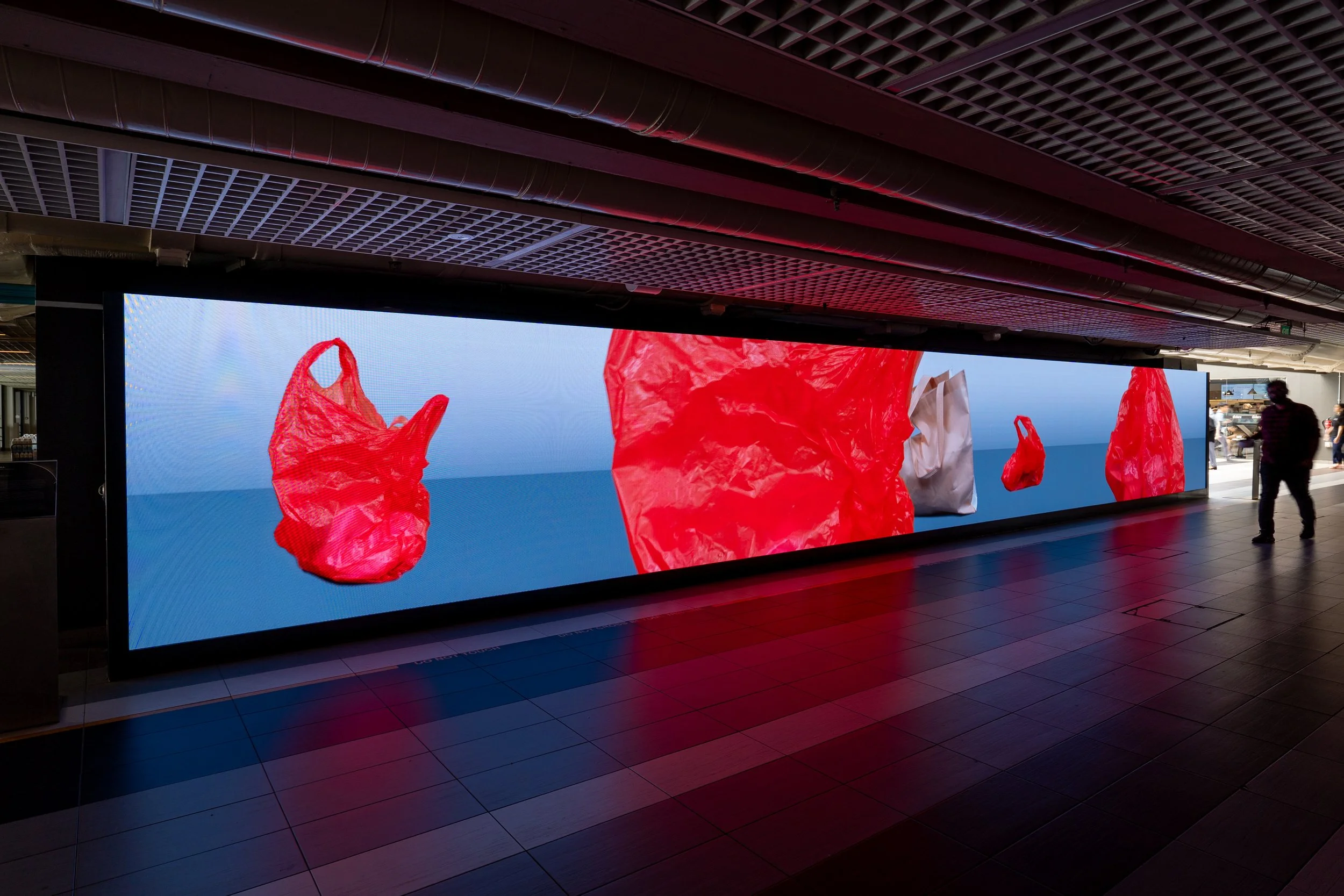
Tromarama, Turn On, 2026, single-channel video, 14min 42sec. Installed at North Spine Plaza as part of On the Cusp (2026). Photo by Third Street Studio. Image courtesy of NTU Museum.
Language, as both concept and medium, constitutes a central thematic thread of the exhibition. Beyond its role in transmitting knowledge and information, language serves as a site where histories, cultural memory, and intergenerational narratives are sedimented. It bears the imprints of individual, familial and collective identity. It is both connective and exclusionary: capable of forging unity and continuity, while simultaneously delineating boundaries and reinforcing divides. The artists engage a range of linguistic systems from oral and written language, computational code and algorithmic structures to genetic code, to examine how meaning is produced and mediated. What are the possibilities and limits of these modes of communication?
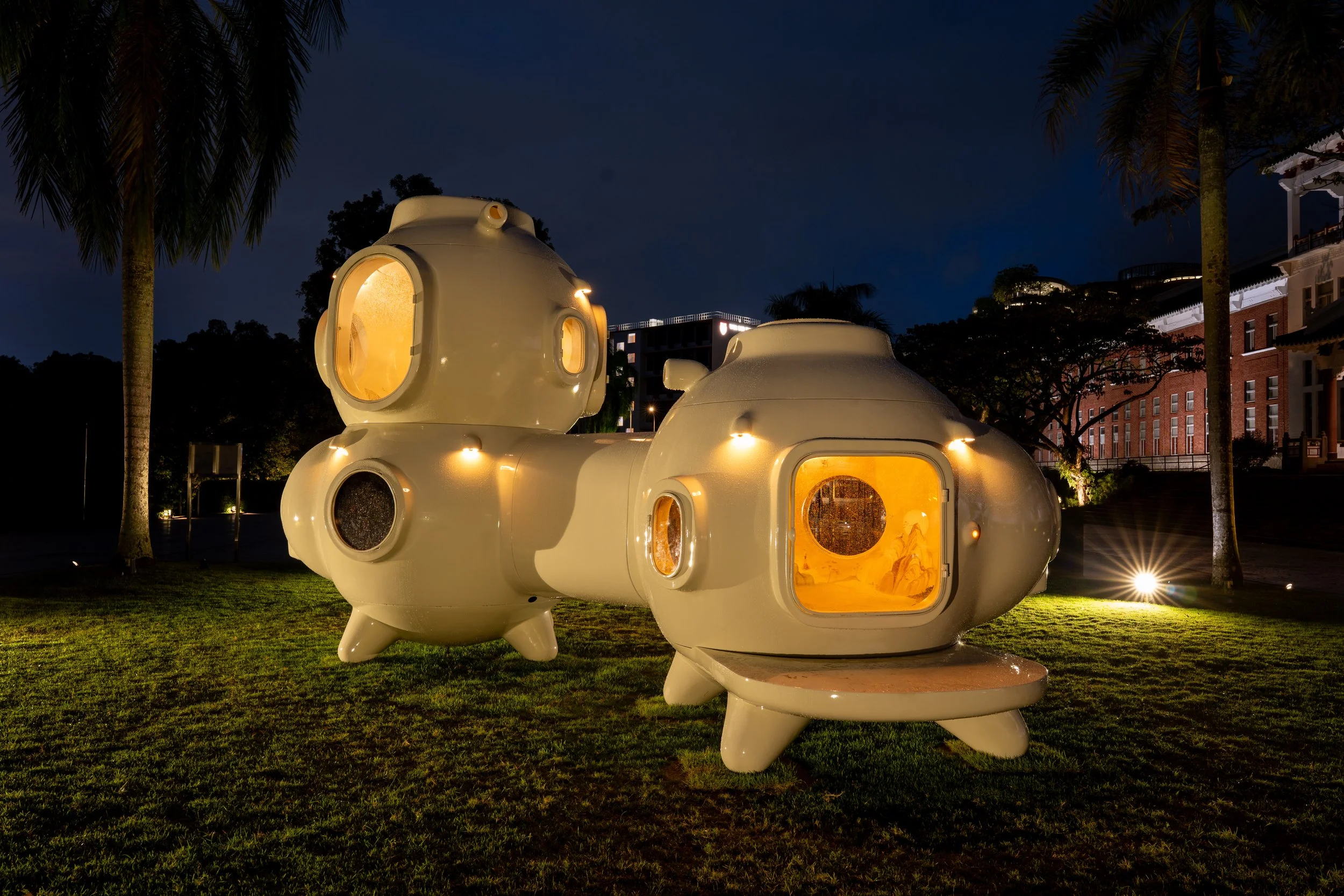
Torlarp Larpjaroensook, Cosmos of Nostalgia, 2025, fibreglass, acrylic hand paint and electrical light bulbs, 377 x 625 x 255cm. Installed at Chinese Heritage Centre Lawn, as part of On the cusp (2026). Photo by Third Street Studio. Image courtesy of NTU Museum.
Language becomes a vehicle that is constantly responding to those who use it, evolving through circumstance and intent. The works in On the cusp create spaces to listen and attend to the fissures, slippages and moments that emerge when seeking to communicate across different thresholds and contexts. Literature is a vital reservoir of inspiration for Torlarp Larpjaroensook’s Cosmos of Nostalgia (2025). The visual language he employs in the work draws from 20th-century Thai science fiction, early science encyclopaedias, mythology, to Chinese philosophy and classical poetry. These sources of knowledge and imagination from the past lend a philosophical dimension and emotional heft to the fictional world he created.
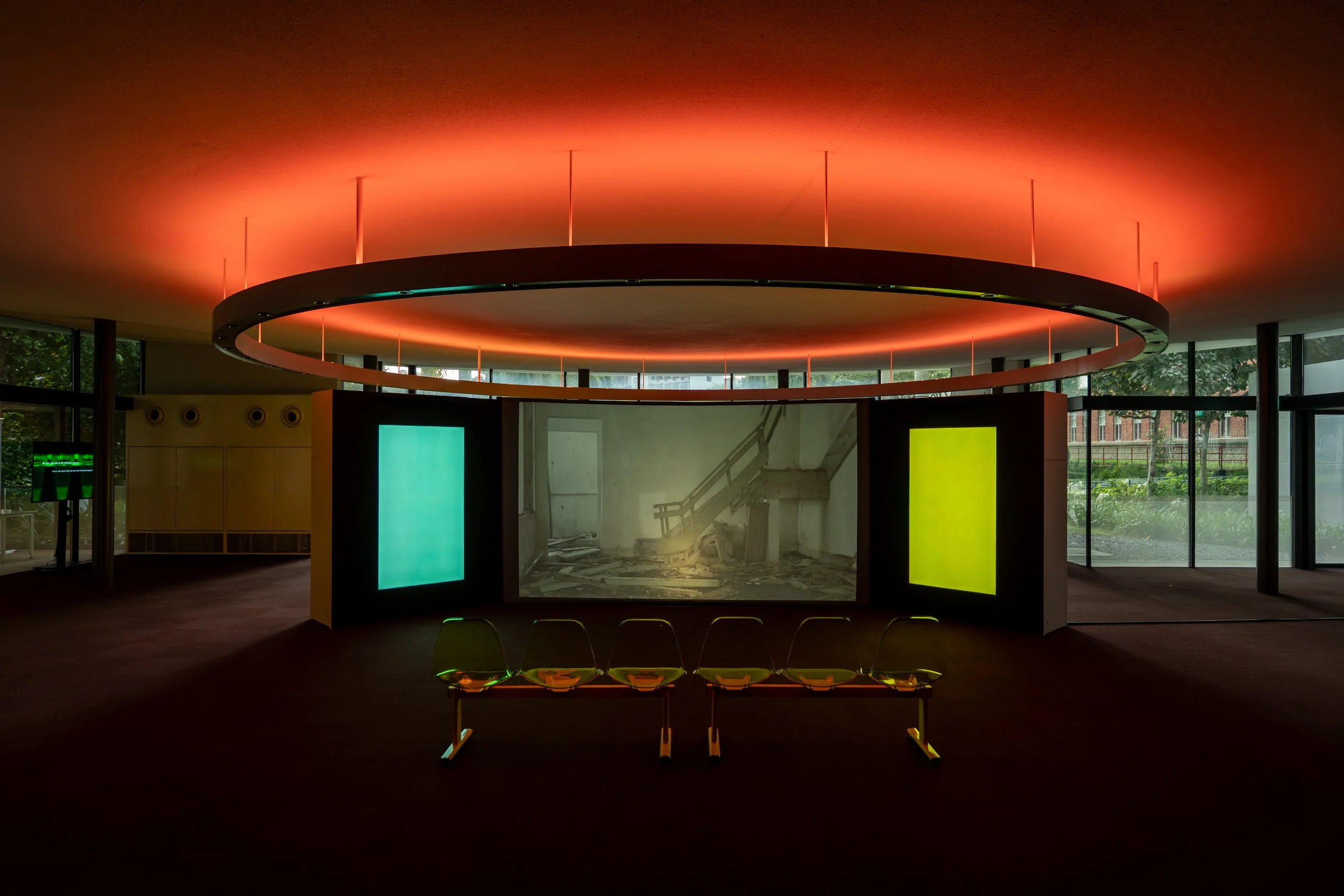
Boedi Widjaja, 东邪西毒 I Want to Infect You with History, 2025, exhibition view, installed at the Nanyang Lake Pavilion as part of On the cusp (2026). Photo by Third Street Studio. Image courtesy of NTU Museum.
To Boedi Widjaja, language and genetic code carry history and memory, keys to understanding personal and collective pasts and identity. 东邪西毒 I Want to Infect You with History centres on the idea that history occupies space within the body, propagating across generations and surviving through language, DNA, gesture and lived experience. Starting with a poem he composed in English and Bahasa Indonesia, he traces diasporic memory and the volatile nature of histories shaped by force and displacement.
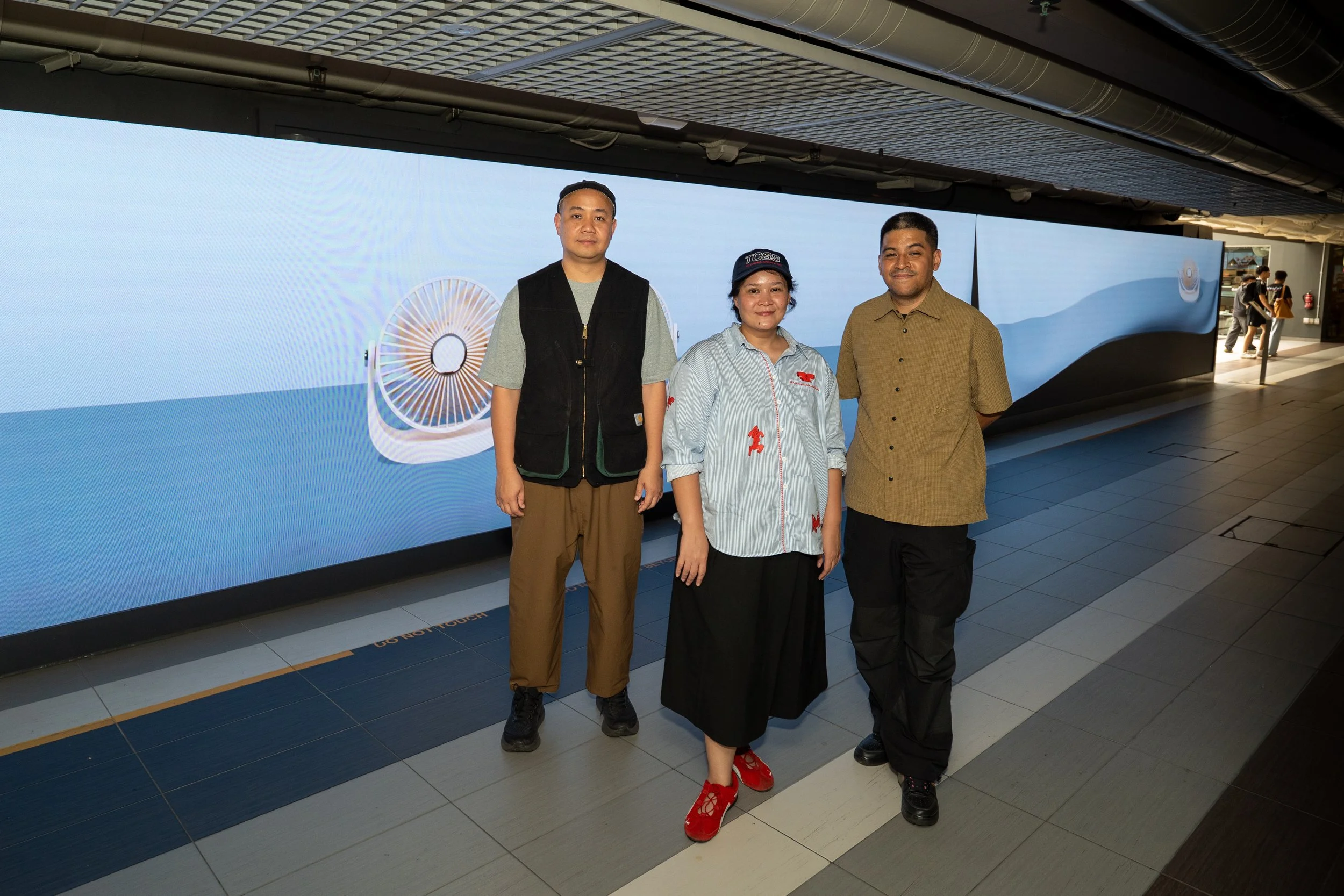
Tromarama with their work Turn On (2026). Photo by Third Street Studio. Image courtesy of NTU Museum.
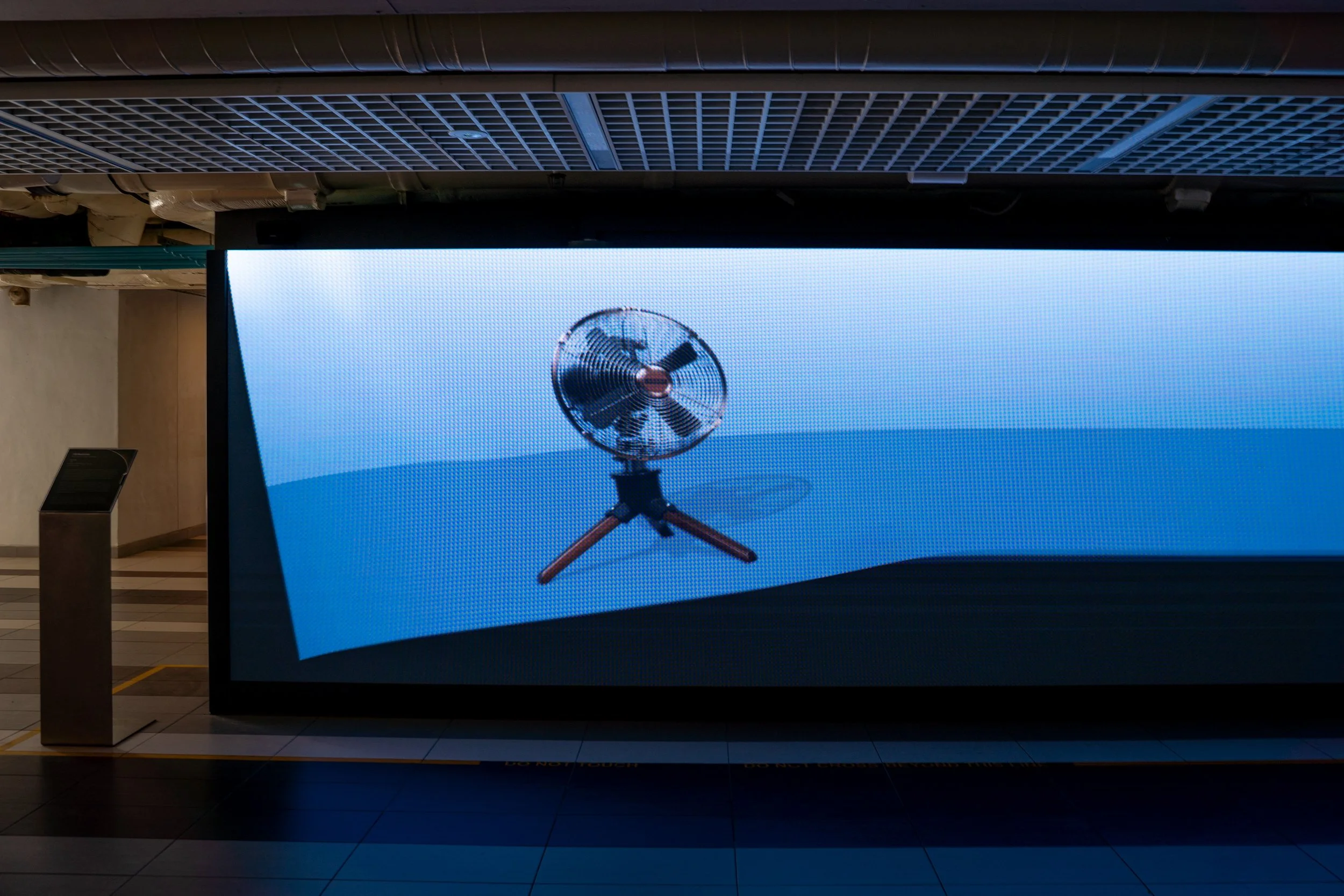
Tromarama, Turn On, 2026, single-channel video, 14min 42sec. Photo by Third Street Studio. Image courtesy of NTU Museum.
In their practice, Tromarama examines the power wielded by technological systems, algorithms and programming codes in shaping social relations and daily life. Often operating invisibly, these systems offer the promise of progress and efficiency while exerting growing influence over how knowledge is produced, circulated and valued. Technology has permeated nearly every facet of present-day living, shaping the systems that keep cities moving and mediating how we relate with each other and the world around us. As digital infrastructures and the reach of social media expand, the distinctions between physical and virtual realities become increasingly unstable and blurred. There is an algorithm-led colonisation of thought and knowledge and social media and technology seep into our lives. This phenomenon unfolds on a global, macro level while impacting individuals in a deeply personal way.
Tromarama parses the conditions of living in an information age in the moving image work Turn On. Foregrounding familiar objects and scenes in daily life, the artists probe the porous threshold between our physical world and the digital realm. The electric fan is the anchor in this work that traces the entanglements between the self and technology. Commonly used in Southeast Asia to combat heat and humidity, this humble appliance has become a symbol of survival, comfort and efficiency. Presented in a choreographed loop, a motley crew of fans whirs to life, simulating airflow that seems to trigger a series of events. Images on the screen start to morph into billowing curtains, while familiar objects and everyday scenes are caught in motion, as if activated by the fans’ invisible force.
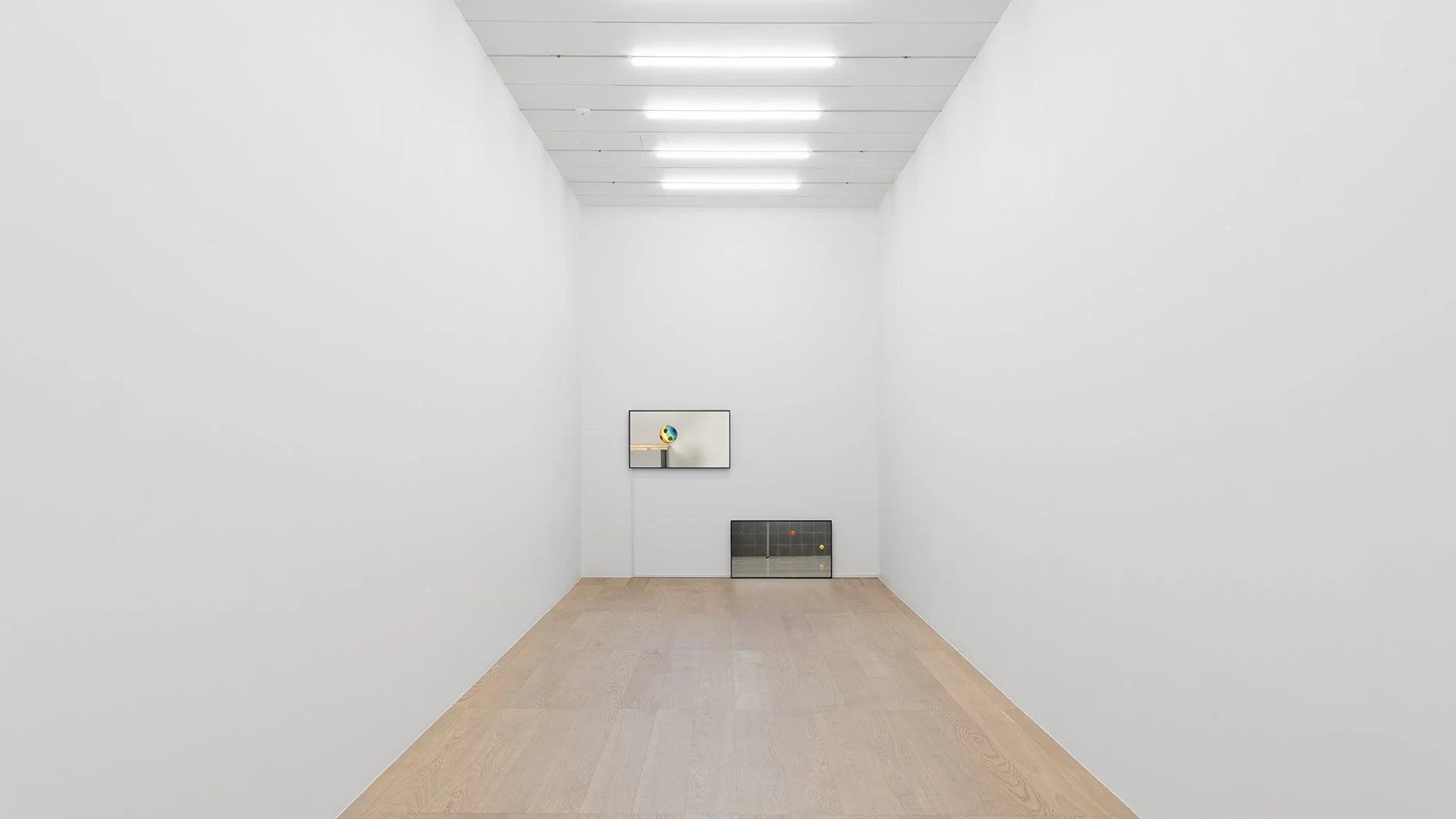
Tromarama, Quandary, 2016, 2 channel video, 3min 47sec. Photo by Studio JAYBEE. Image courtesy of the artist and ROH. Installation view of Ping Inside Noisy Giraffe, SONGEUN, Seoul, 2025.
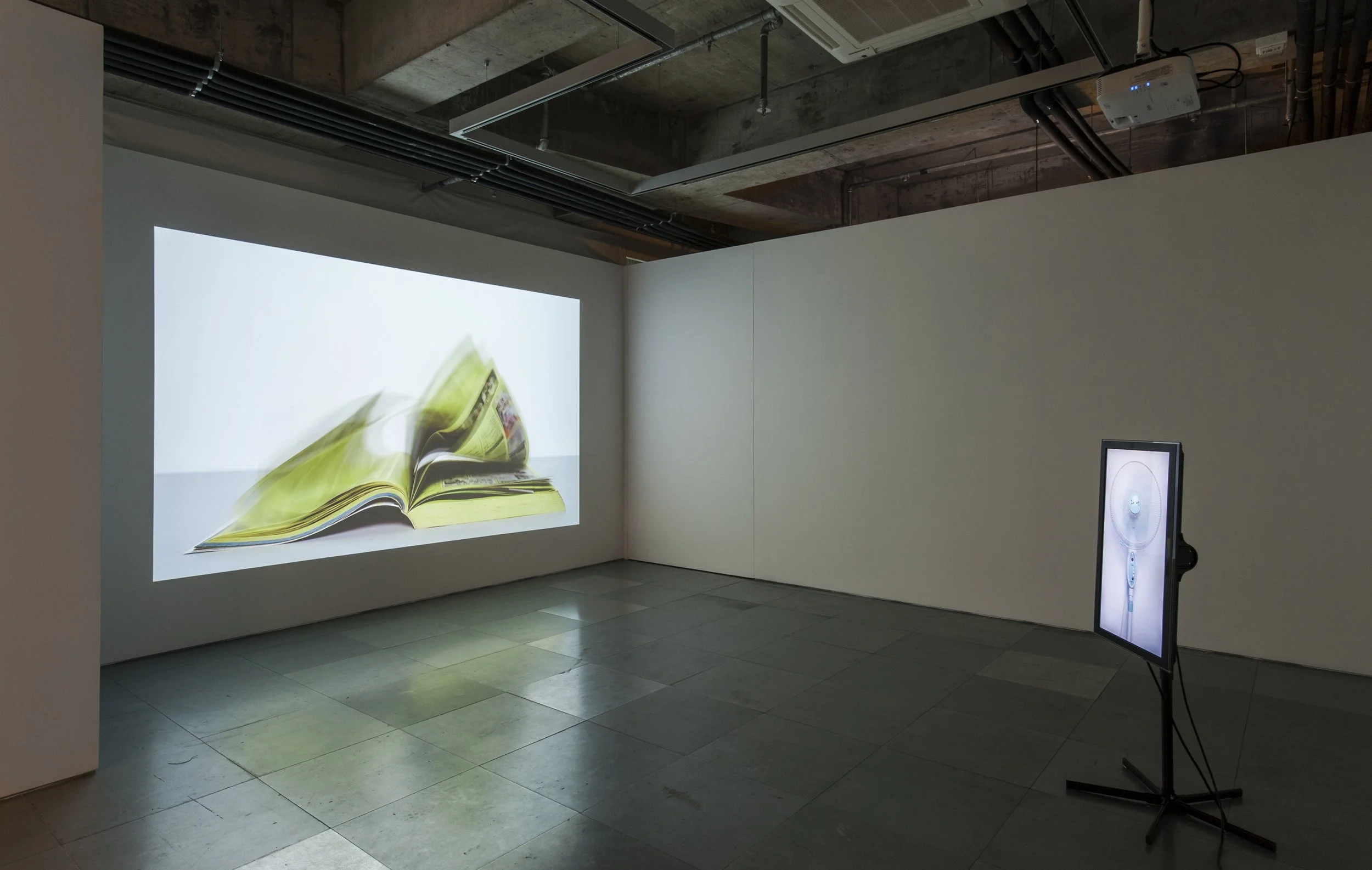
Tromarama, Intercourse, 2015, two channel video, 4min 10sec. Photo by Ruddy Hatumena. Image courtesy of the artist and Kiang Malingue. Installation view of Panoramix, Kiang Malingue, Hong Kong, 2015.
Upon closer inspection, the apparent logic of cause and effect starts to unravel. The objects seem to take on a life of their own as expectations of behaviour informed by what is observed in physical reality are disrupted. As the fans hum and stir their surroundings into motion, the work unsettles habits of recognition while inviting reflection on technology’s capacity to blur the lines between fact and fiction, the real and the virtual. By destabilising habits of recognition, Turn On explores the limits of memory and association. Is one reality more authentic than the other? In a hyper-connected world, experiences are increasingly mediated through representations instead of direct physical encounters. Within this context, the artists position the screen as an active site where meaning and identity are continuously produced and negotiated.
Tromarama’s body of work considers the politics behind this phenomenon. Earlier works such as Intercourse (2015), Quandary (2016) and Transitivity (2016) explore the encroachment of the virtual world into physical reality. In these works, a sequence of events takes place, each guided by a specific logic that appears to defy normalised expectations. The concerns undergirding these works have since gained greater intensity and momentum. No longer just a neutral platform, the mediated screen has become a primary site through which information is circulated and through which memories and identities are formed.
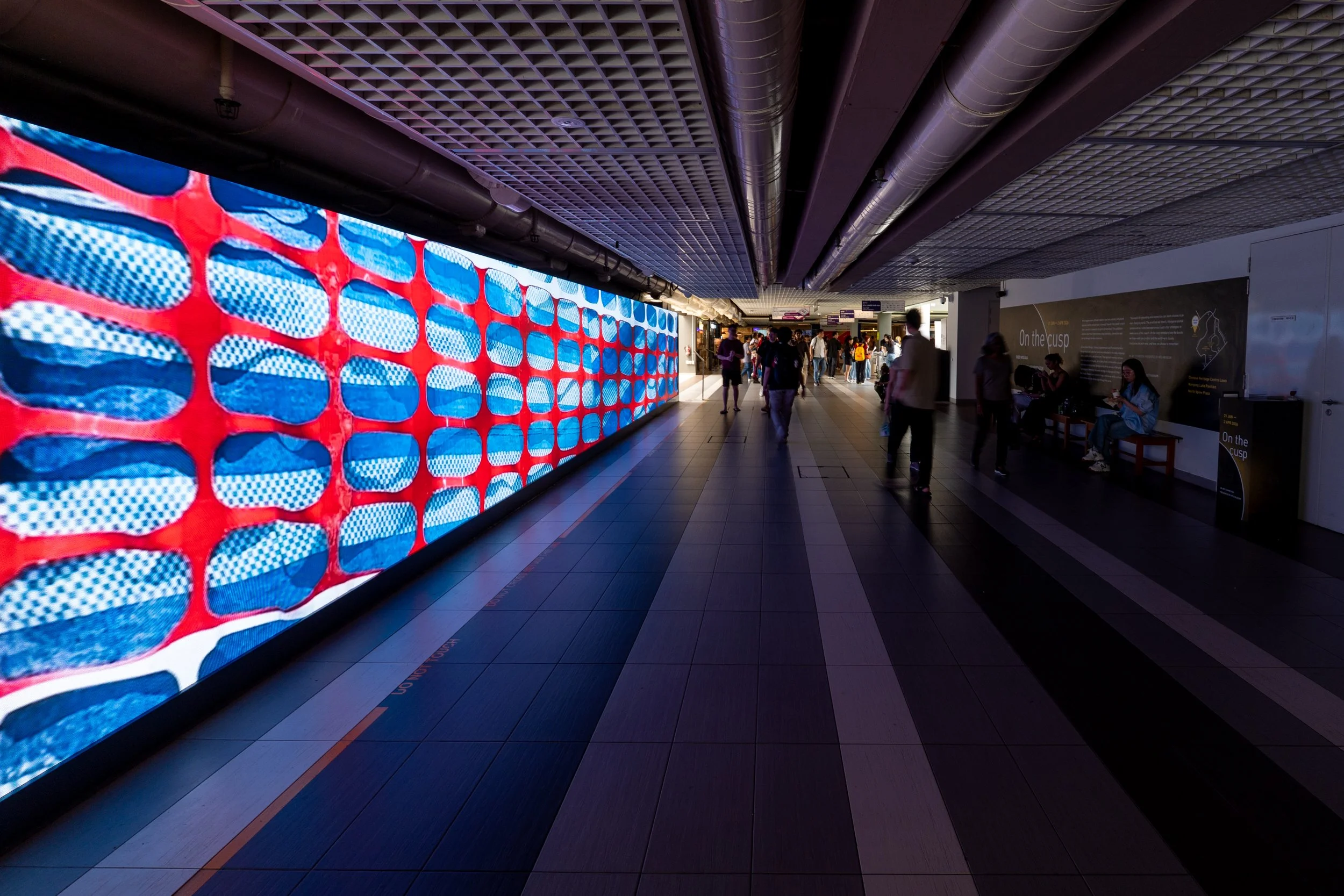
Tromarama, Turn On, 2026, single-channel video, 14min 42sec. Photo by Third Street Studio. Image courtesy of NTU Museum.
Turn On is presented on the INDEX media screen in a central thoroughfare of the university campus, in proximity to spaces for learning, gathering and exchange. There is a subtle irony to the situation as the fans simulate airflow on screen in a space without air conditioning or fans to provide ventilation and reprieve. The work implicates viewers in the very conditions it examines. Rather than examining how faithfully the screen reflects reality, it questions the values assigned to what the screen delivers to us. Our relationship with technology is complex: we depend on it while also fearing being overly defined by or reliant on it. With incisive wit and humour, Tromarama’s meta commentary explores these contradictions, creating multiple points of entry for reflection. In blurring the boundaries between the virtual and the physical, Turn On articulates strategies of affinity in shared experience, inviting us to contemplate the realities of living in a world increasingly experienced through screens and the systems that keep them in motion.
This article is presented in partnership with NTU Museum. Read the other parts of this Excerpt series here.
On the cusp, presented by NTU Museum, is on view at various locations around Nanyang Technological University, Singapore, from 21 January to 2 April 2026.
In conjunction with the show, NTU Museum is holding an art writing competition open to all currently enrolled NTU and NIE students. The submission deadline is 22 February 2026. For more information, click here.