
Reflections from Share-Meeting 3 in Penang
Yamanaka Suplex and Blank Canvas
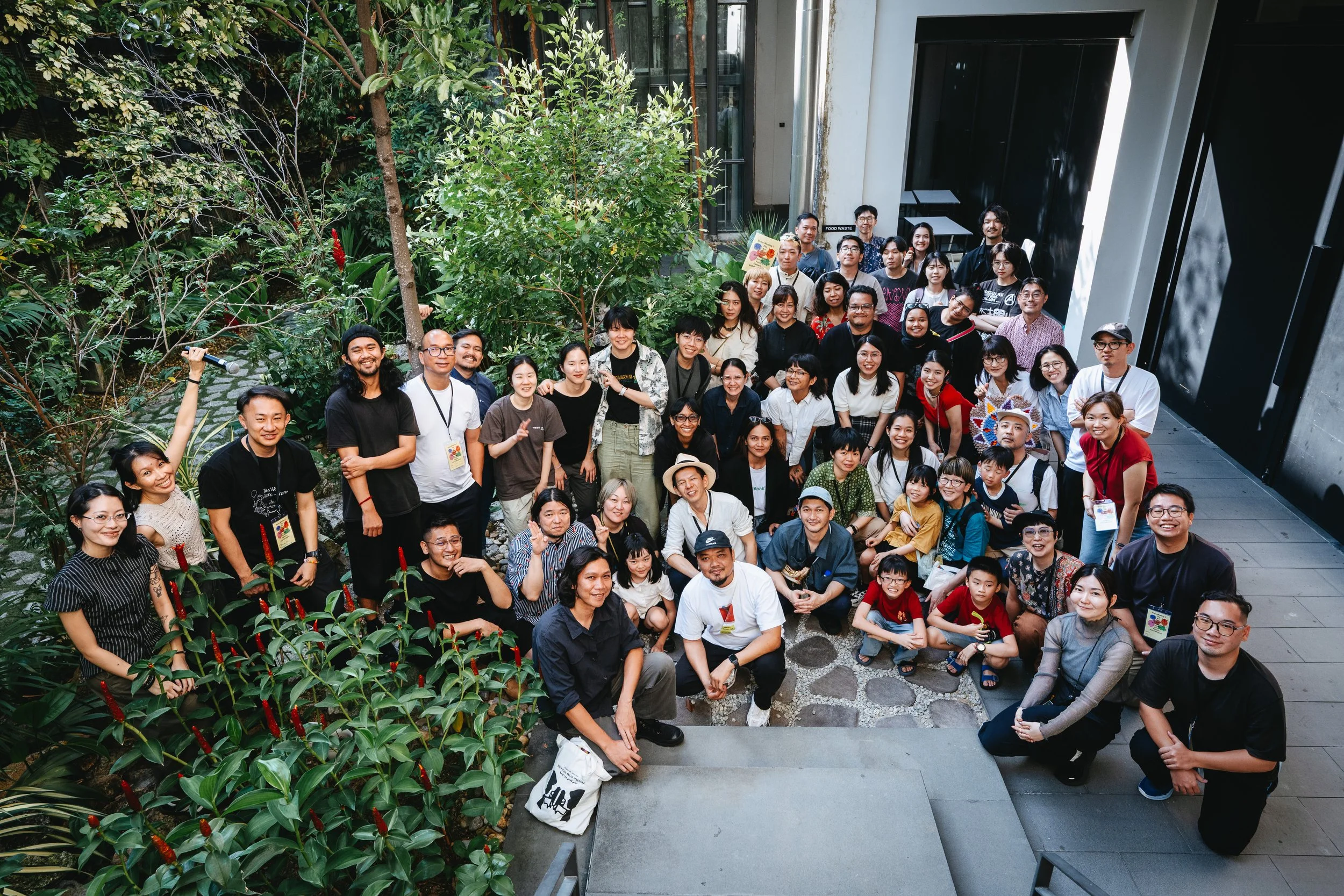
Share-Meeting 3, group photo of participants and organisers. Image courtesy of Share-Meeting 3.
On 7 and 8 March 2026, Japanese collective Yamanaka Suplex and Blank Canvas co-organised Share-Meeting 3 in Penang. The two-day event was an informal gathering that brought together 16 independent spaces, artist-run initiatives, and artistic collectives from across East, Southeast, and South Asia. Initiated by Yamanaka Suplex in 2024, the first two editions of Share-Meeting were held at their studio compound in Shiga Prefecture. This third iteration marked the programme’s move outside of Japan. Beyond sharing knowledge and discussing operational challenges, it also aims to create new networks and collaborative projects among participants.
I was invited as a writer to attend Share-Meeting 3 and this article captures my observations and personal reflections. For context, the event happened against the backdrop of Penang Long Art Weekend, where local art spaces coordinated to put up shows across Georgetown. In addition to invited participants, Share-Meeting 3 was also attended by members of the Malaysian art community, students from Institute of Contemporary Arts Kyoto, as well as overseas curators and industry professionals. It was held at U.A.B. Building, and entry was free for the public.
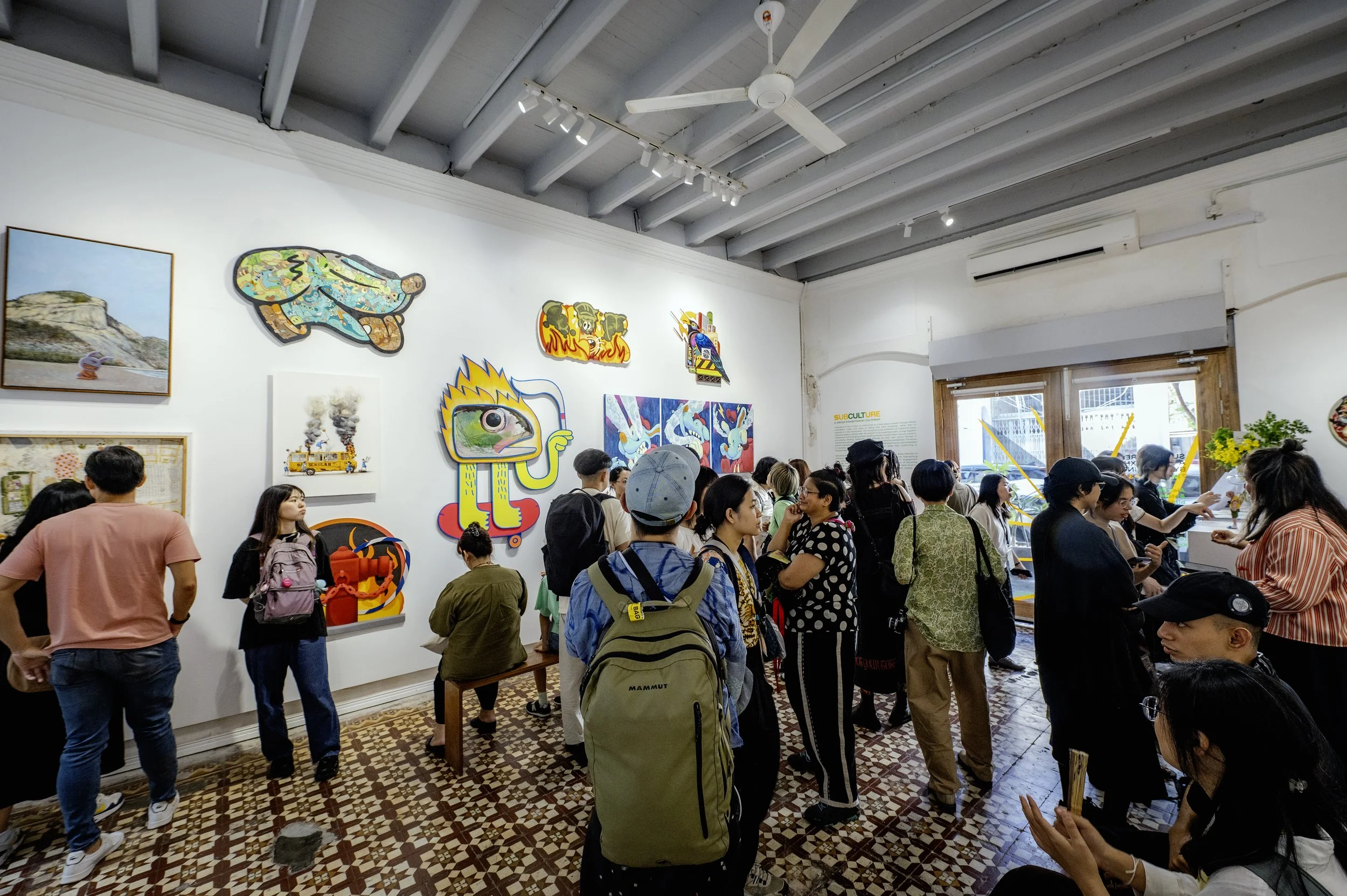
Local site visit to Cultprint, Penang. Image courtesy of Share-Meeting 3.
The programme structure had two main parts: Day 1 was dedicated to presentations from the respective organisations about their initiatives and contexts. For Day 2, participants were divided into four groups, each assigned a specific topic for discussion. They include: how to create the best outcome from residencies, ways to encourage collective learning, overcoming structural limitations, and the purpose of archives. This was followed by an open sharing and observer feedback from Artist-in-Residence Vietnam Network (AiRViNe). The schedule also incorporated opportunities for networking through shared meals as well as local site visits.
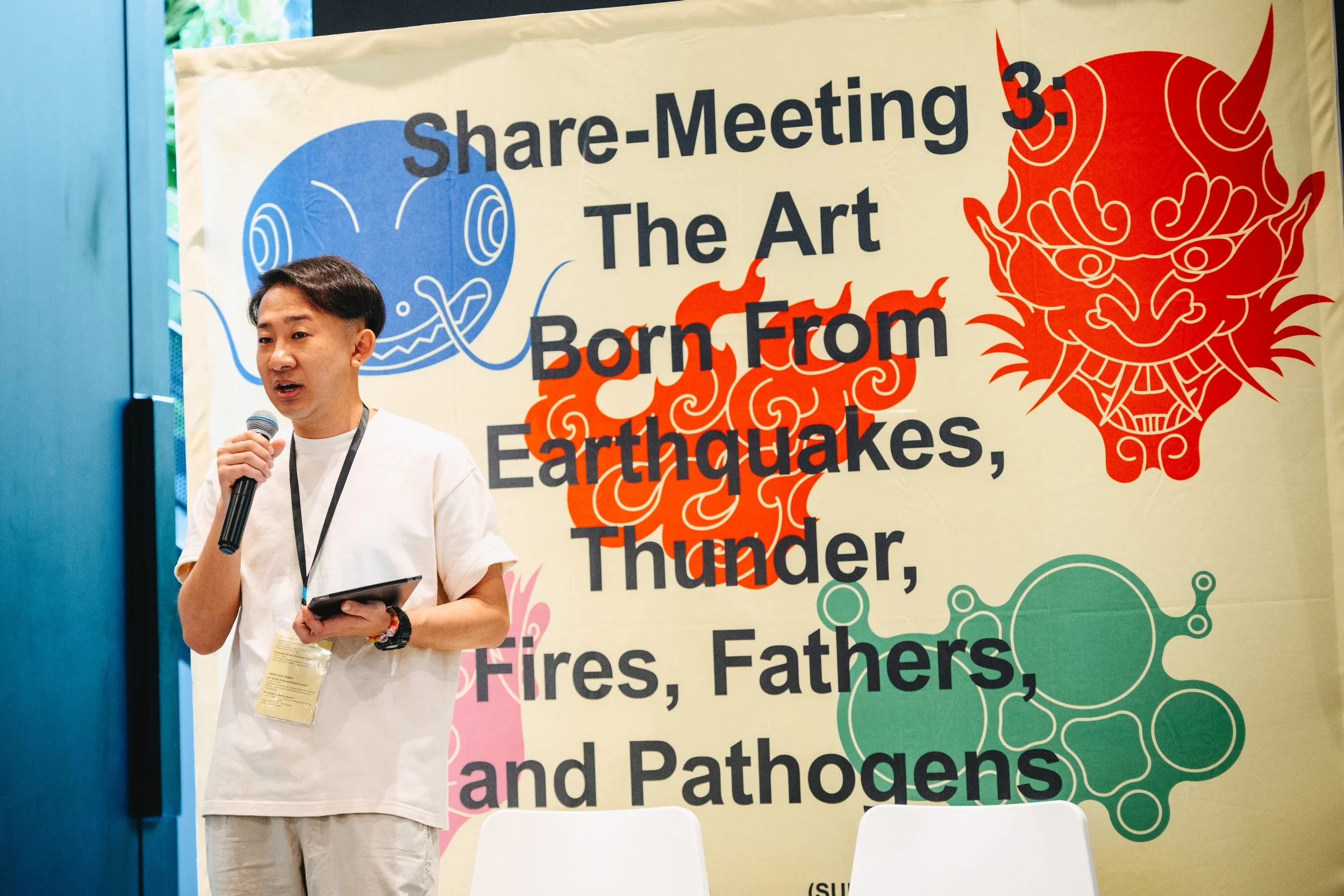
Takuya Tsutsumi, Co-Programme Director of Yamanaka Suplex. Image courtesy of Share-Meeting 3.
In his explanation of Share-Meeting 3’s subtitle The Art Born from Earthquakes, Thunder, Fires, Fathers, and Pathogens, Takuya Tsutsumi emphasised a curiosity about practices and aesthetics arising out of these conditions. This framing informed the selection of participants, whose various modes of working address vastly different interests and contexts. I attempt to capture these nuances through discussing key questions that stuck with me.

Presentation by Peng Yi-Hsuan and Sid Chen from Zit-Dim Art Space, Tainan. Image courtesy of Share-Meeting 3.
“Subsidies for spaces are like drugs.”
The question of funding is a perennial topic. Mary Pansanga notes the precarious state of public funding in Thailand which is contingent on the political party in power. In their presentation, Tainan-based Zit-Dim Art Space likened the overreliance on subsidies or grants to a type of “addiction” that becomes hard to wean off. This has a direct impact on the long-term sustainability of spaces as well as its autonomy.
In thinking about diversified income sources, multiple case studies can be found among the participants. Centre in Kanuma City and 6okken in Yamanashi rent accommodation spaces to visitors, and are involved in efforts to revitalise tourism in small towns. Sabah-based Pangrok Sulap generates revenue through selling merchandise and participating in local festivals and markets. Jiro Murakami, Co-founder of Amefurashi, incorporates Nagai food culture into his artistic practice through his craft beer brewery. These commercial activities become intertwined with how they engage with local communities and spread their ways of thinking. I am inspired by 60kken’s sensibility, that defines an artist not as a profession but an attitude.
I am inspired by 60kken’s sensibility, that defines an artist not as a profession but an attitude.

Group discussion facilitated by Kaho Ikeda, Co-Programme Director of Yamanaka Suplex. Image courtesy of Share-Meeting 3.
Could professional organisers act as intermediaries?
Extending this train of thought, a related point concerns the importance of intermediaries who can bridge art practitioners with their target audiences and potential stakeholders. There is much to learn from approaches that sought to find alignment with state entities, non-governmental organisations, and like-minded partners. Launched as a project for Sapporo Ekimae Street Area Management Co., Hokkaido-based Think School operates at the intersection of art education and community development. Their planning and art-making courses create learning spaces where diverse segments of society, such as a company CEO and a young artist are brought together to engage with public art. Sheelasha Rajbhandari shared how Kalā Kulo carefully navigates funder expectations for projects involving marginalised communities, ensuring their interests and safety are not compromised in the process.
Kazue Suzuki brings her decade-long experience at the Japan Foundation in Bangkok and Tokyo to her practice as an independent art administrator with SEASUN, which fosters cultural exchange between Southeast Asia and Japan. In 2023, SEASUN co-founded a space called Q SO-KO with an art installer company Miracle Factory in Nagoya. TRA-TRAVEL functions as a mobile project that operates between the artist and venue partner, with a network of collaborators across 18 spaces in Osaka.
The range of skillsets demonstrated in these examples highlight the complex roles at play. Often, this essential labour is also provided by individuals who also wear other hats, as artists and curators. In my conversations with AiRViNe, we ruminated about how art infrastructure in Southeast Asia can be retooled to nurture and facilitate professional organisers as a specific intermediary role. If we believe in art as a social good, how can we be better advocates and enablers for it?
If we believe in art as a social good, how can we be better advocates and enablers for it?
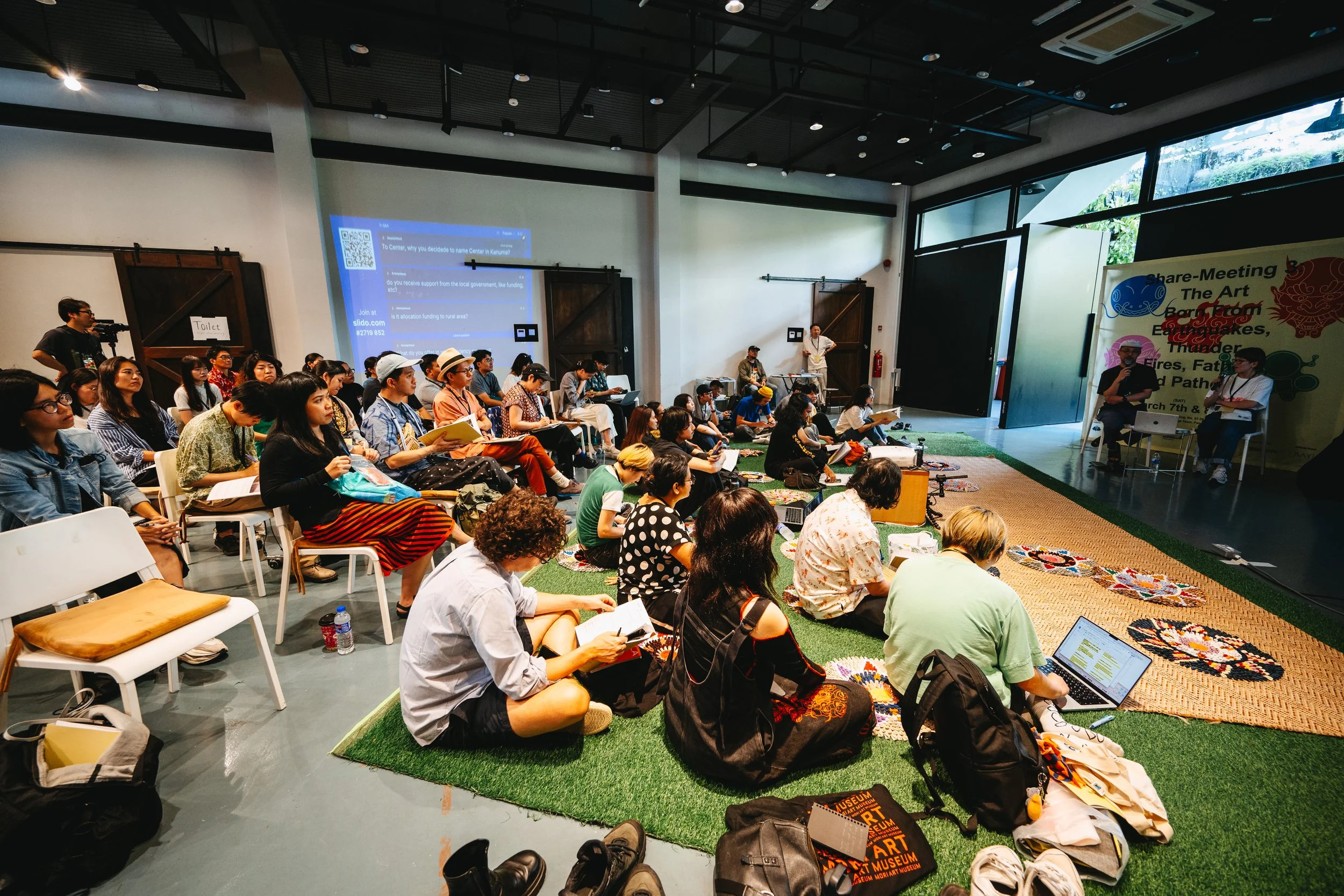
Presentation by Madoka Kuono and Shinkan Tamaki from Centre, Tochigi, Japan. Image courtesy of Share-Meeting 3.
What is the lifespan of a space or collective?
My final point of reflection zooms out to consider the motivations for starting independent initiatives and how they end. What does it mean for the legacy of a space or collective when its original members, context, or mission are no longer present? What are the expectations that fall upon people who “inherit” an organisation’s ideologies and structures?
It was insightful to understand the decisions that govern the lifespans and sizes of different projects. Alice Sarmiento started Spare Bedroom in Manila with a one-year timeline in mind and documents its activities through self-published zines. Seoul-based Yellow Pen Club (YPC) is shaped by the friendship of its three founders: Junghyun Kwon, Areum Lee, and Jiwon Yu. The informal membership structure behind KUNCI Study Forum & Collective allows it to remain relevant for more than two decades as members located in different parts of the world bring in their interests and networks.
At the same time, it is crucial to recognise changing circumstances and create pathways for graceful transition. DRC No. 12 restructured as a nomadic platform after moving out of the original location in Beijing, where it took its name from. Zit-Dim Art Space recently appointed new co-directors who have a fresh vision for its programme. Past members from Pangrok Sulap initiate spin-off groups in their hometowns by adapting the collective’s DIY methodology. My takeaway is that perhaps it may be prudent for new collectives and spaces to consider their afterlives at the point of inception.
What does it mean for the legacy of a space or collective when its original members, context, or mission are no longer present?
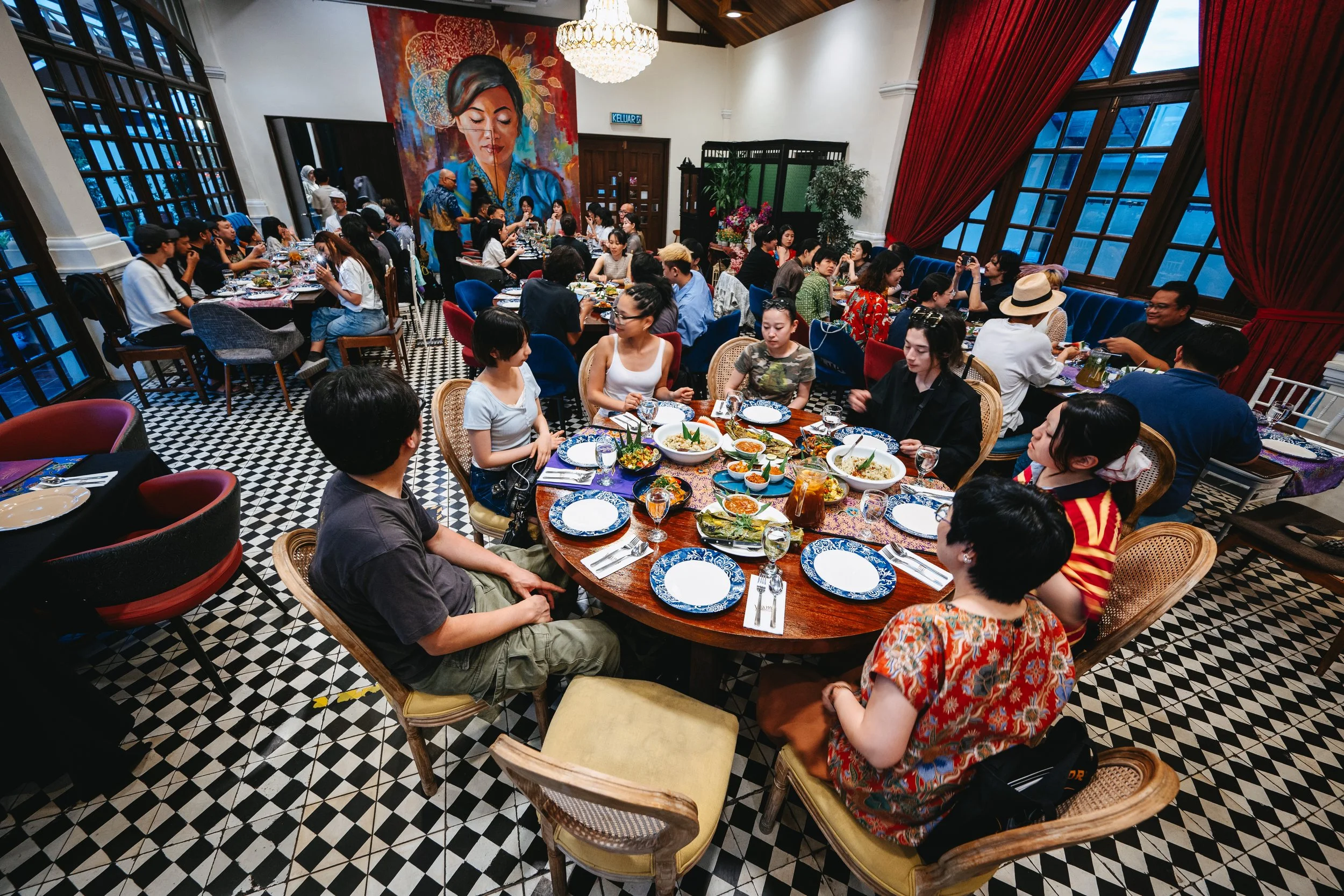
Dinner hosted by The Japan Foundation. Image courtesy of Share-Meeting 3.
As an attendee, I appreciate the generosity behind these two days of honest exchange. Even as we seek solutions to the challenges faced, it also offers space to reflect on motivations and purpose. The value of Share-Meeting 3 lies in the collegial atmosphere it fosters, and the planting of seeds for potential collaborations. Being exposed to such a breadth of practices gathered also allowed for a better understanding of the unique contexts across the region, even as there are shared struggles.
For more information about Share-Meeting 3, click here.