
Conversation with Sajad Safajooee, Twos Studio
Art and design stories on social media
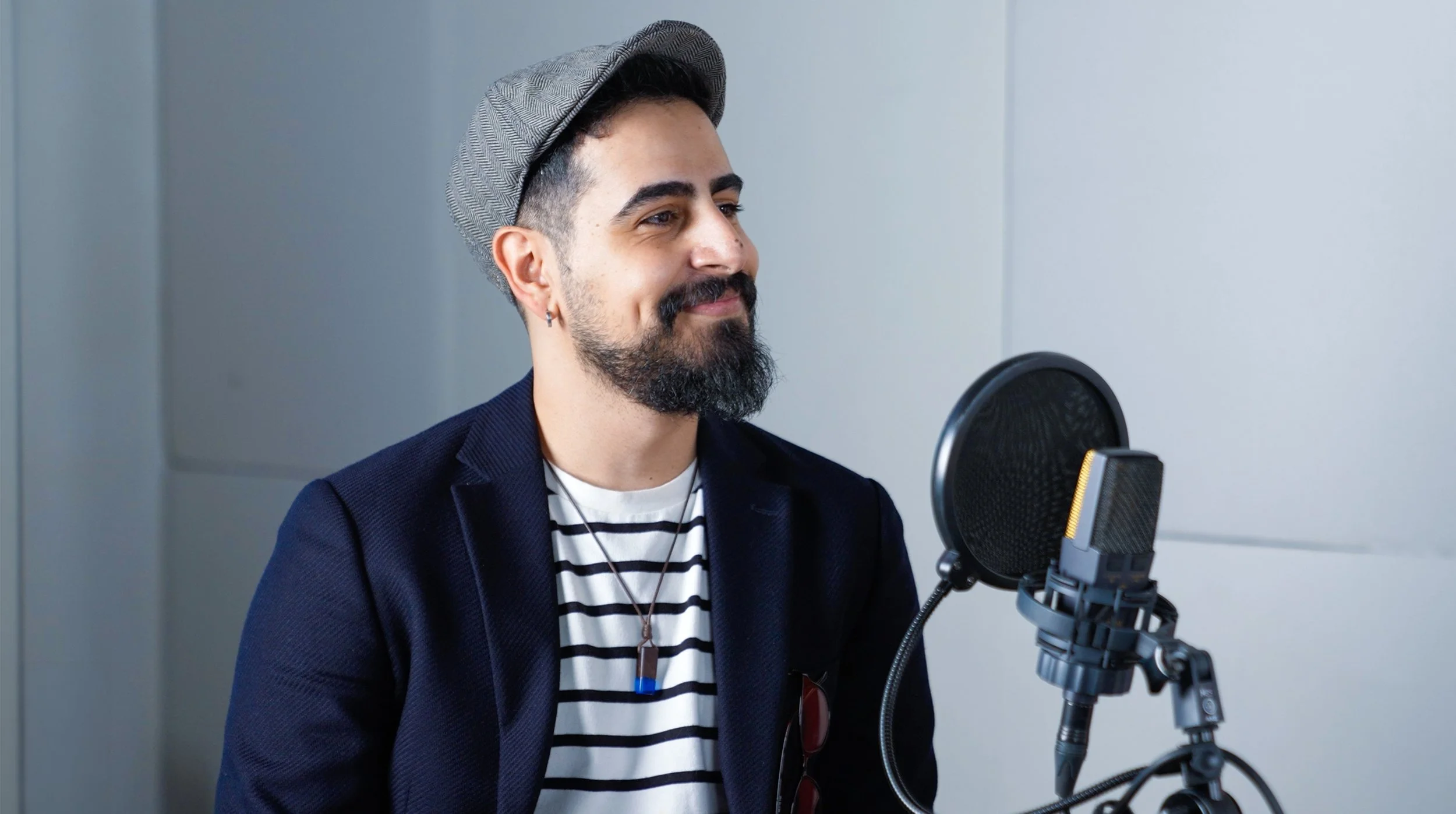
Sajad Safajooee.
Sajad Safajooee is an art director and founder of Twos Studio. He has worked across diverse industries, guiding design teams on branding and social engagement strategies, as well as creating blockbuster movie posters. In 2023, he established Twos Studio as a platform that brings together the worlds of graphic design, creativity and storytelling. Twos Studio is known for its snappy short-form content on the history of art and design, and hidden gems from visual culture. Sajad is also the host of Twos Talk, a podcast that covers in-depth conversations with leading designers and creatives, exploring their process, challenges and breakthroughs.
In this interview, I speak to Sajad about his career trajectory, beginning with his formative relationship with graphic design. We also talk shop about the editorial vision behind Twos Studio, as well as their approach towards social media. His motivation is rooted in accessibility and a love for art and design, which comes through in Twos Studio’s content style as well as Sajad’s focus on sharing processes in his podcast. This sensibility resonates strongly with our ethos at Art & Market, which is why we decided to collaborate on a two-part interview about our respective platforms. Read to the end and find a link to Sajad’s interview with me on Twos Studio.
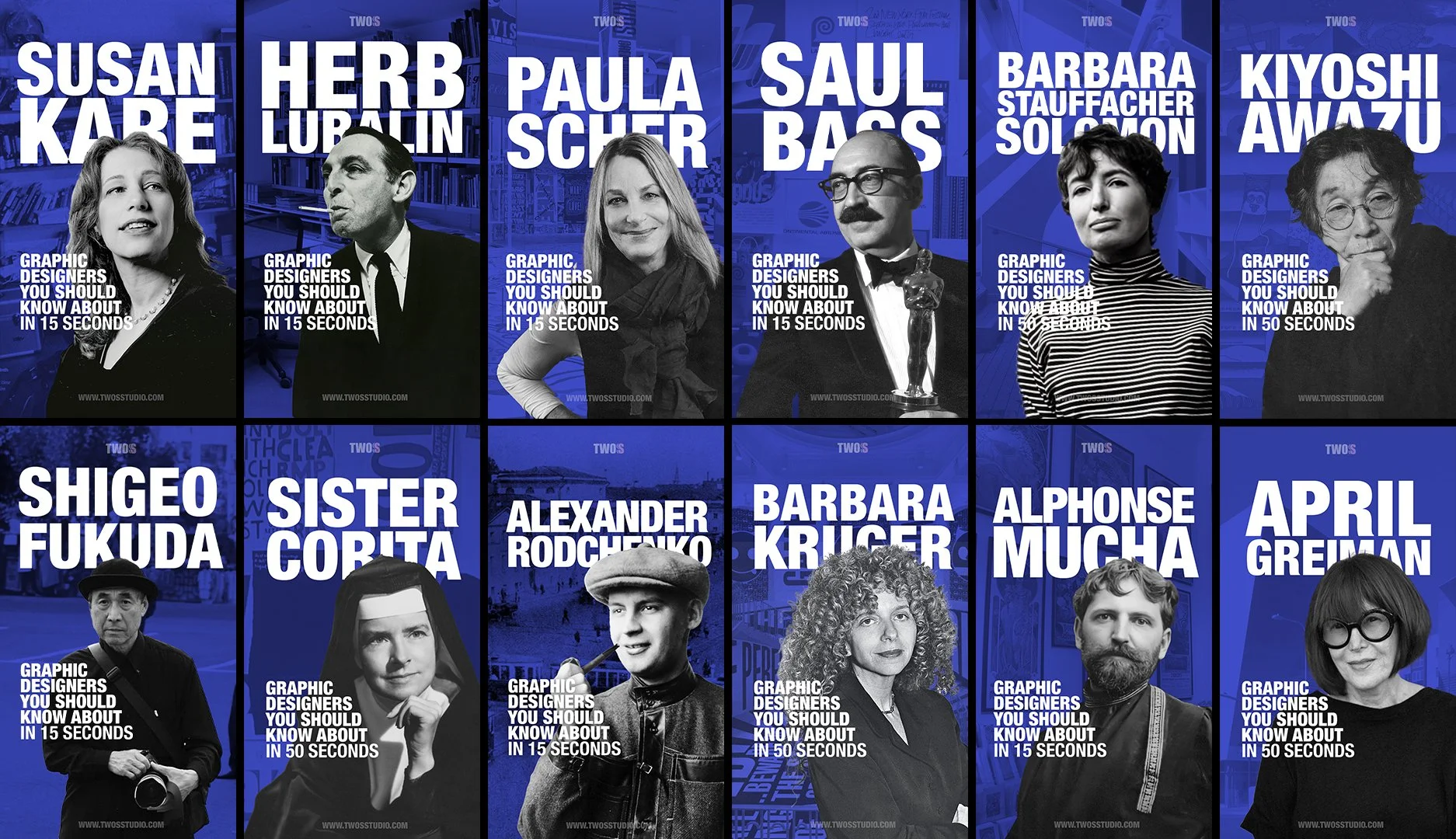
“Graphic Designers You Should Know About” series by Twos Studio.
Could you briefly share your background and the decision to establish Twos Studio?
I have had the usual career path of a graphic designer turned art director over the past 15 years. I started as a junior designer at a small advertising agency in Istanbul and worked my way up. For the last six to seven years, I have been working as an art director with different agencies around the world.
Like many designers, I dream of opening my own design studio. So I decided to start Twos Studio as a design agency and work on it in my spare time. But after a while, working with clients and on commercial projects did not interest me enough to want to do it in my free time as well.
I studied graphic design in high school which nurtured interest in the history of art and design. As social media grew, I felt there was not enough content about the beauty of graphic design history and its icons. And this was the reason I began creating social media content on the topic. Seeing like-minded people from around the world who wanted the same type of content motivated me to grow the studio and turn it into a hub for design and an independent media platform.
What is the size of your team at Twos Studio? And how did you approach building this team?
One of the key goals for Twos Studio since the beginning is to be accessible to people around the world, not just those based in the so-called centres of design, such as New York or London. With this same mentality, we work with a wide range of freelancers, including writers and creators, on a project basis from around the world. Our core team consists of five people. This team is key to Twos’ growth and our ambitions for the future, as we put in the same time, effort and passion to build Twos into what we want it to become.
When finding new people to work with, the main goal is to find those who share the same passion and love for creating fun and engaging media that contributes to art and culture around the world.
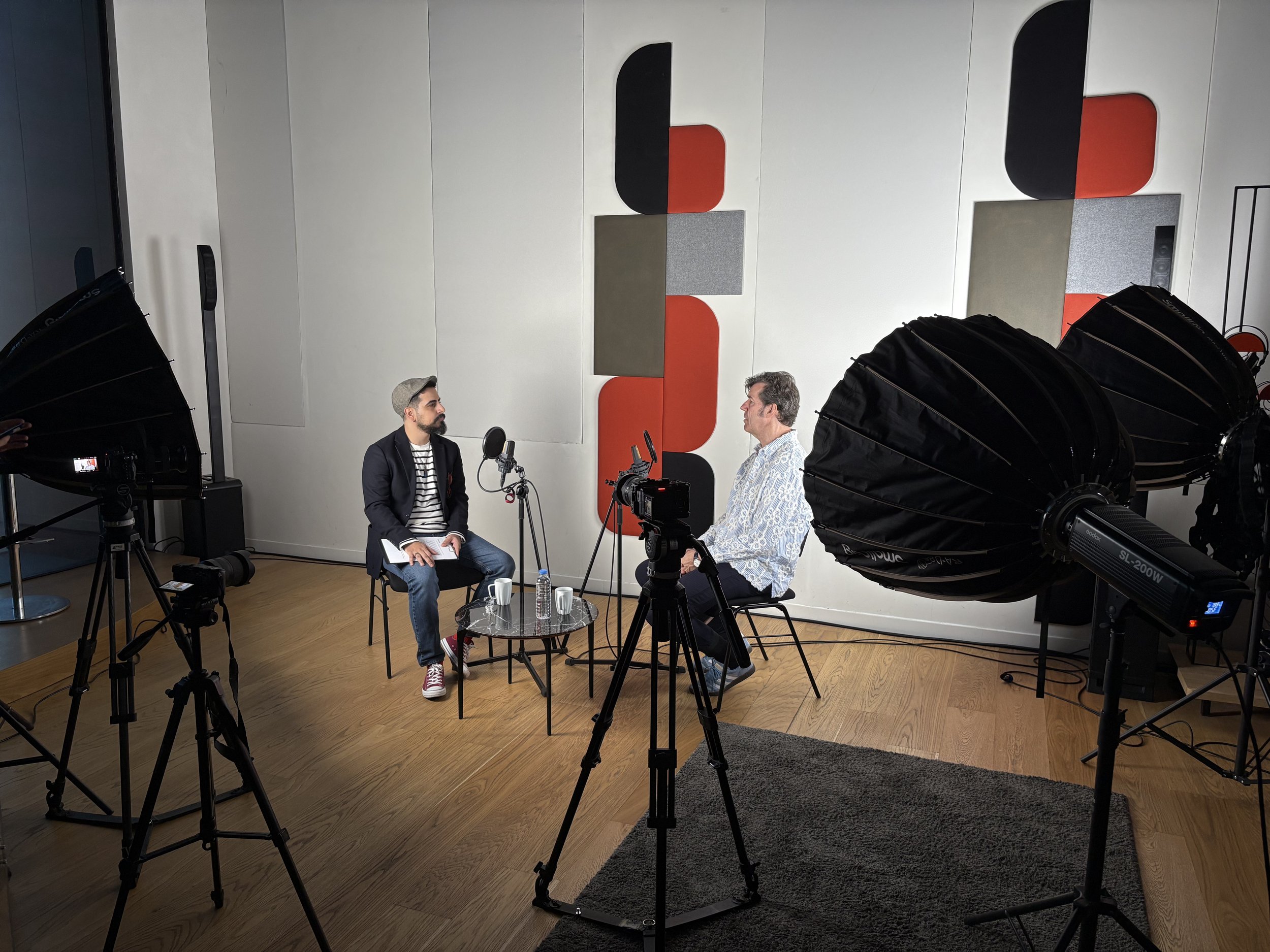
Twos Talks with Stefan Sagmeister. Image courtesy of Twos Studio.
What is one major way Twos Studio has evolved since its founding in 2023?
We started with a focus on graphic design, mainly because of my personal experience. But slowly, because of the amazing feedback received, we started to diversify our research and reach into other areas of art, such as contemporary art, architecture, photography, illustration and more. That opened the door to collaborations with museums and art institutions around the world that wanted to create engaging and fun social content around these topics.
After growing the community to more than 200,000 followers across Instagram and Tiktok, we decided to start talking directly with the designers and artists behind iconic works. This became our Twos Talks podcast, where we have spoken with some of the biggest names in design today, such as Stefan Sagmeister, Neville Brody, Gail Anderson, Natasha Jen and many more. The goal with Twos Talks is to show that we can have conversations, build connections with some of the biggest names in the industry across geography.
How would you describe Twos Studio’s approach towards the different digital platforms and formats? What was one strategy that worked well and one that was unsatisfactory?
Well, this is the part that we try to stay on top of, and it is also part of what makes us a valuable platform for collaborators.
Each platform has its own functionality and, in a way, its own audience. What one has to keep in mind is finding the perfect middle ground between fully educational and purely entertaining content. The content should not feel like it is trying to teach something. But it is more like putting a spotlight on a great story that the audience might not have heard about or have forgotten.
With platforms such as Instagram or TikTok, the content pace needs to be much faster compared to YouTube. One has to show one’s cards fairly early to compete with all the other videos a user sees on their feed. And it is especially difficult to compete with viral content out there with a design or art history video! But it is possible when one finds one’s own rhythm and tone of voice and combines that with an understanding of the dos and don’ts of social media.
“The content should not feel like it is trying to teach something. But it is more like putting a spotlight on a great story that the audience might not have heard about or have forgotten.”
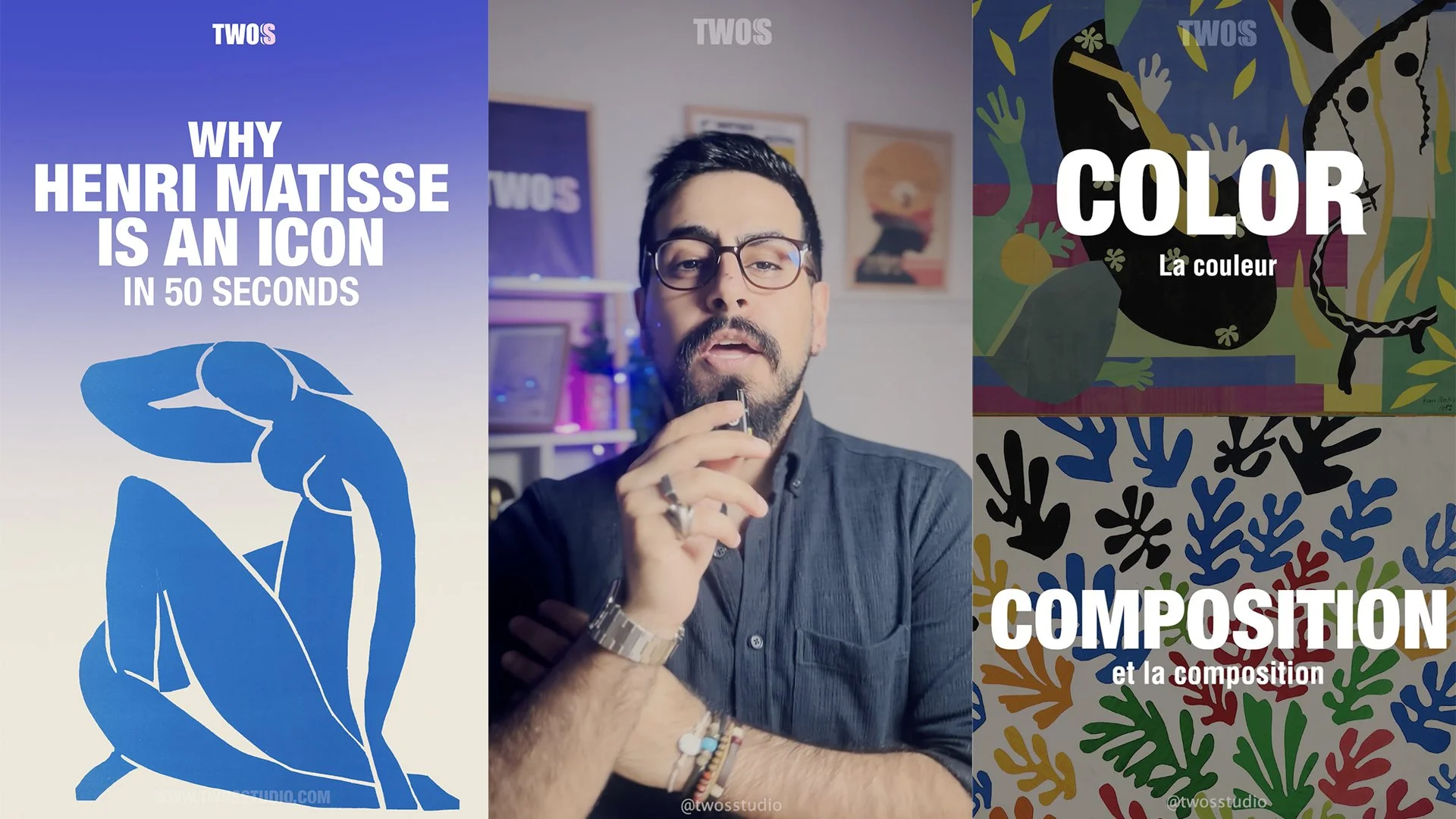
Twos x Centre Pompidou video on the exhibition Matisse, 1941–1954 (2026).
Twos Studio has had multiple collaborations with Centre Pompidou. Could you talk about how the opportunity came about? And how do you evaluate the success of such collaborations with museums?
An underrated source of inspiration for designers and artists is the digital collections of museums and libraries and what they make available on their websites. In these collections, one can find very high-quality artwork resources, which prompts new discoveries.
That was my personal experience with Centre Pompidou’s archive and collection of artists. It sparked the idea for our first collaboration together, a video that celebrated Jean Michel Basquiat’s life and career on his birthday. The success and positive feedback we received on that video made it a valuable starting point. When it came to Centre Pompidou’s exhibition Matisse, 1941–1954 (2026), we collaborated again on a video about the artist’s life and work, but this time with the goal of promoting the exhibition and getting the audience excited about visiting it.
But in general, when it comes to collaborations with art institutions, libraries and similar organisations, success should not be measured only by views, but also by engagement and direct interaction with the audience. With well-known artists like Basquiat or Matisse, or most recently our collaboration with Moco Museum on a piece about Banksy, one has to keep in mind that there are probably thousands of pieces of content out there about these famous artists.
What differentiates one’s content is bringing one’s own voice and perspective on their art and careers rather than simply stating facts about their lives. I ask questions such as: what is it about their work that personally moves me, rather than everyone else? If I had to put a spotlight on one work from their career, which one would it be? The content has to be different from what the collaborating partner could have created on their own.
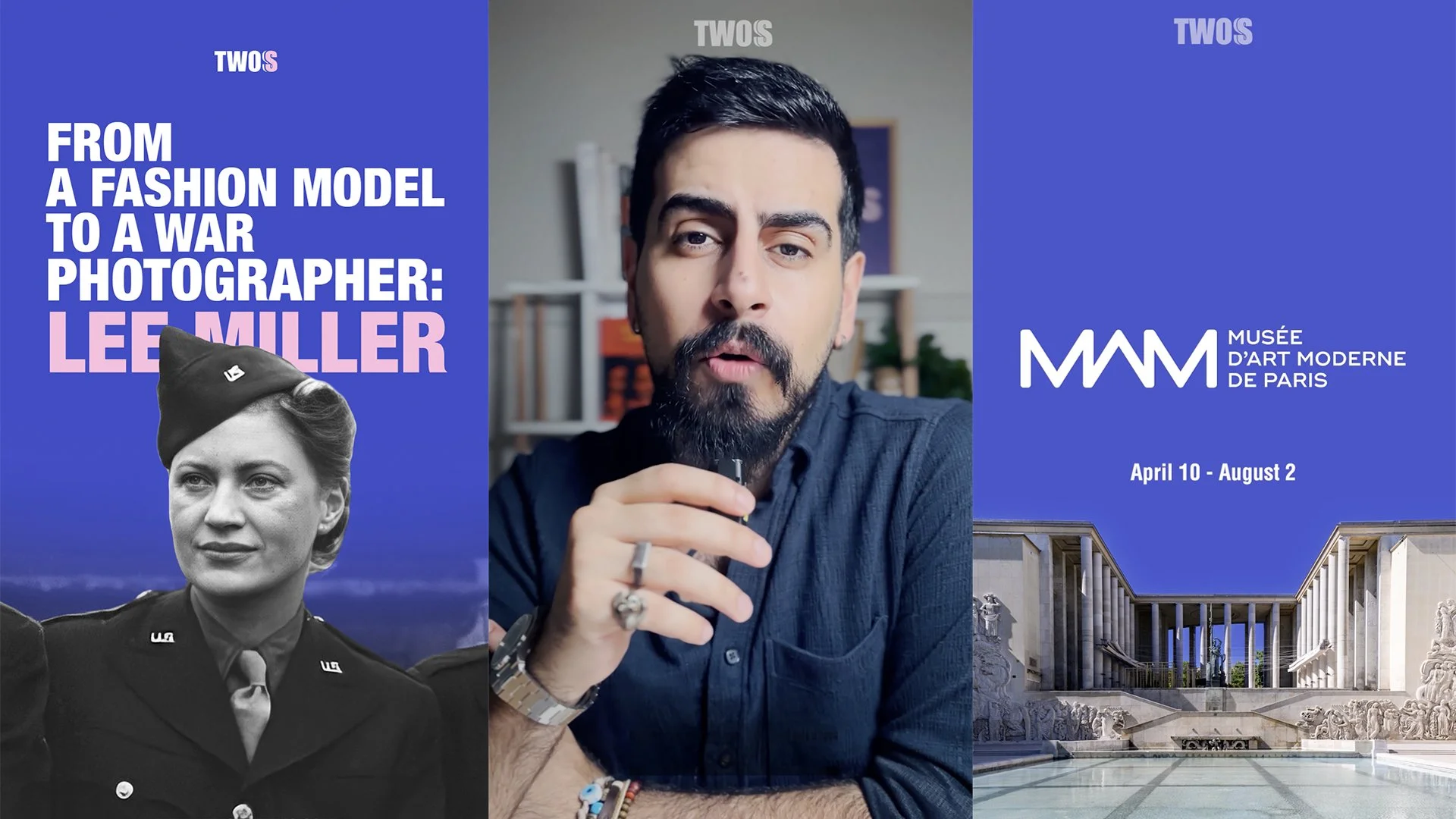
Twos x Musée d’Art Moderne de Paris video about Lee Miller.
In your observation, what are two major pain points or pitfalls in your branding work with clients and external design teams?
One major thing that brands and clients get wrong, and sometimes even design teams get wrong, is looking at branding through one or two mediums and ending there. Today, it is not just graphic design that one needs to care about, but the entire graphic system of a brand. Sometimes, clients see their branding as only the key parts of their storefront, such as the logo, website, or social templates. Regardless of the project’s scale, there needs to be a system behind each decision. That way, each element in the design is connected to one key feature of the client’s brand, which could be their services or their core beliefs. This starts a design system that can be further developed in the future, rather than needing to be rebuilt from scratch with every change in the project or the brand itself.
For example, one sees three lines on a piece of apparel, and one knows it is Adidas. That is because of the story and system behind how those three lines are used. After decades of maintaining that system, the three lines represent the brand, without the name or any text.

Twos x Frick Collection video on the exhibition Ruffles & Ribbons: Fashion Plates from the Time of Marie Antoinette (2026).
Looking ahead, what is one underappreciated skill or quality necessary to thrive in this industry?
Part of a designer’s work and routine nowadays is interacting with artificial intelligence (AI) tools. With a strong knowledge of design history, good design and its makers, one can be the conductor behind this tool and lead the process down a right path. Otherwise, one is giving control entirely to a machine whose job is to gather the quickest and most relevant answers to your questions, not necessarily based on quality, but based on the task of providing an answer.
Finally, what do you find most exciting about the future of design and media?
I love social media and its accessibility to everyone around the world. I love that people everywhere can see each other’s work online without the difficulties we had in the past.
I feel that there will be more connections and more creatives reaching and working on the biggest stages, because there is less fear around distance and not knowing each other. I am hopeful that we will see more artists and designers receiving recognition for their work and earning a better living, especially those from countries and places that were previously inaccessible. With these connections, I think companies and institutions will come to understand that the soul of art and design is based on being limitless and borderless.
This interview is part of a collaboration between Art & Market and Twos Studio.