
Art x Business: Tom Tandio, Fair Director of Art Jakarta
On the Indonesian art market, cultural collaborations and collector engagement
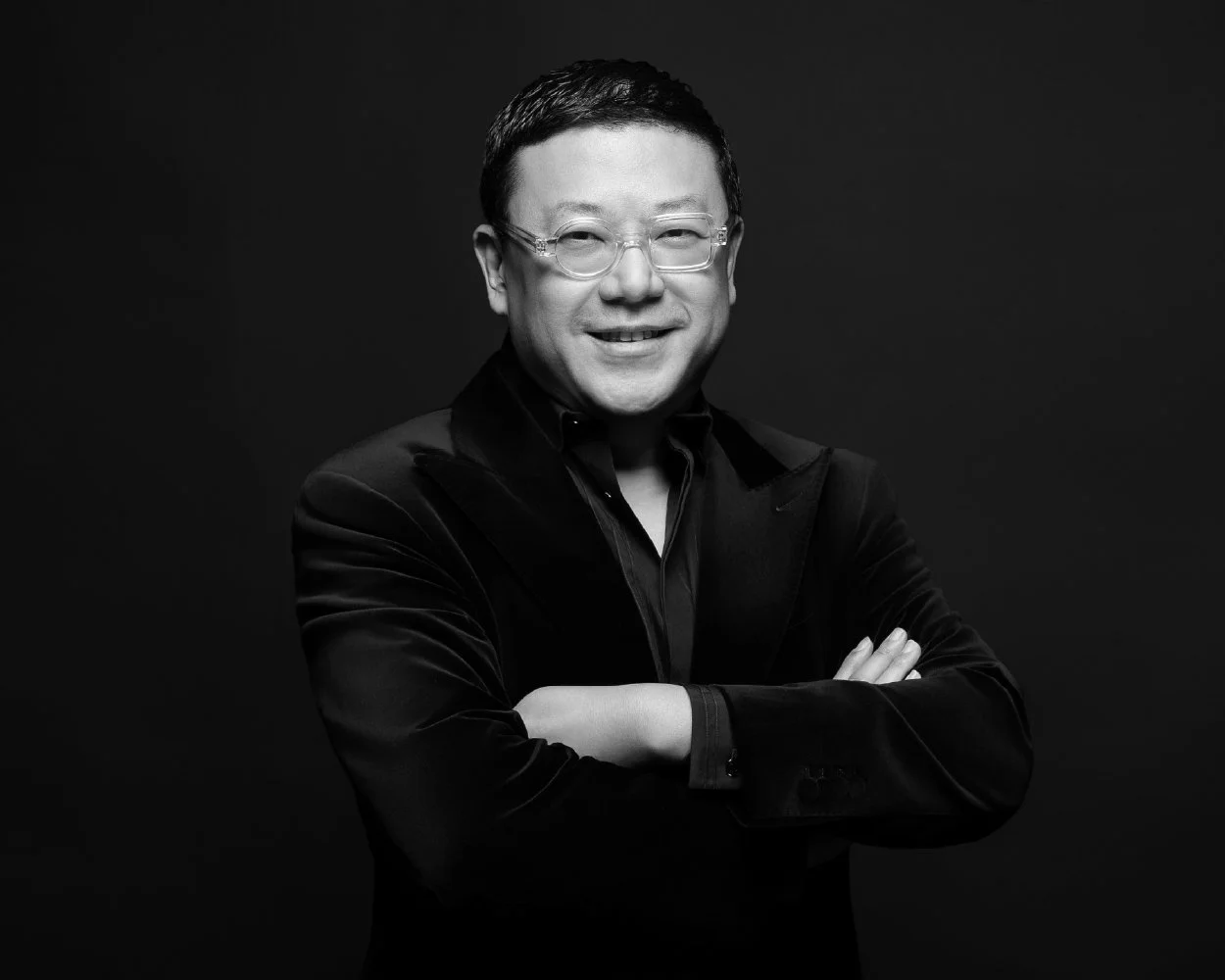
Tom Tandio. Photo by The Leonardi.
Tom Tandio is the Fair Director of Art Jakarta. Under his stewardship, the fair has expanded and evolved its offerings. It initiated a digital fair during the COVID-19 pandemic period, and later established smaller fairs dedicated to sculpture and paper in 2022 and 2026 respectively. We speak to him ahead of Art Jakarta 2026, which is slated to return to JIExpo Kemayoran from 2 to 4 October 2026.
In this conversation, Tandio talks about the trajectory Art Jakarta is on, with a new section called AJ Scope this year that introduces visitors to emerging art fairs from other cities in Indonesia. He also shares insights on collaborations with regional art fairs and cultural partners, as well as how new galleries and collectors can meaningfully engage with the Indonesian art scene.
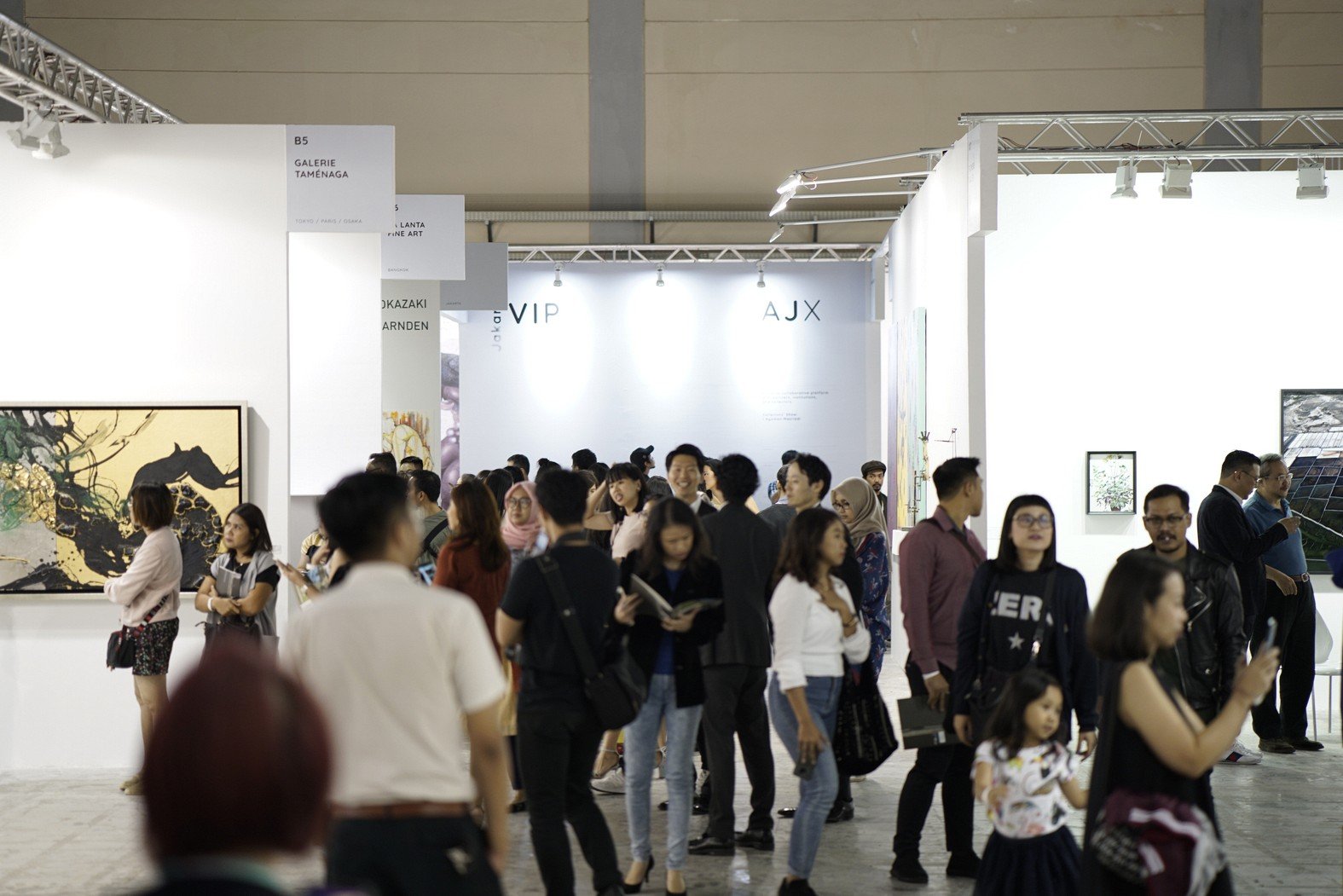
Art Jakarta 2019. Photo by The Leonardi.
Could you talk about how Art Jakarta Gardens, Art Jakarta Papers and the main fair come together as a broader strategy?
The main aim of Art Jakarta has been to provide an encompassing survey of the region. This gives us a strong identity and a clear sense of what we represent, which is particularly important with the proliferation of international fairs and fair brands around the world.
I do not see Art Jakarta Gardens, Art Jakarta Papers and the main fair as separate things. Rather, they are different parts of the same ecosystem. Gardens can introduce people to sculpture and collecting larger-scale works; Papers can inspire them to consider the medium in different ways; and the main Art Jakarta remains the platform where we can present the broader regional survey and set a benchmark for what an international art fair in the region can be.
For me, that is also an important part of what a Southeast Asian art fair should be. This is a region with a strong affinity towards art, supported by rich and diverse cultures, but it is also a region that is still growing. We want to be able to experiment in other fields, with different mediums, formats and target audiences. I think that is where the broader direction of Art Jakarta is going.
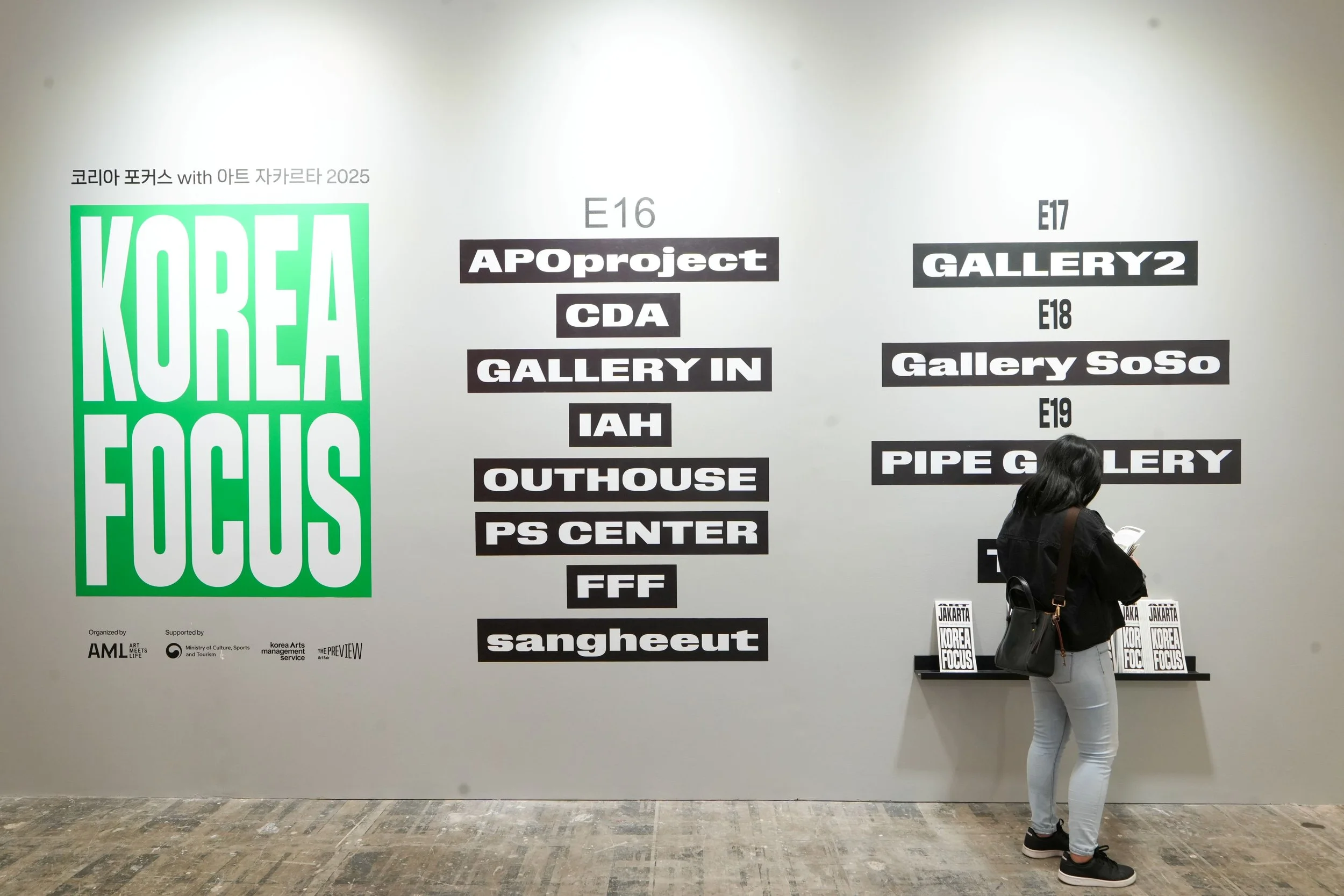
AJX Korea Focus, 2025. Image courtesy of Art Jakarta.
What is Art Jakarta’s approach when it comes to collaborations with regional fairs in Taiwan and South Korea? What has worked well and what are areas for improvement?
One of the key aspects in working with regional fairs is the exchange of audiences and collector bases. It is not simply about attaining an attendance number or checking a box; we want to create a genuine network between our collecting community and theirs.
For example, with Art Taipei, we invite their collectors to Jakarta and put together a programme around the fair, including hotel accommodation, VIP events and visits to museums, galleries and collectors’ residences. Then, when Art Taipei takes place, we bring Indonesian collectors to Taipei and they experience a similar programme there. We have also developed this kind of exchange with other fairs, including Art Collaboration Kyoto (ACK).
The peer-to-peer relationship among collectors is important. When collectors visit a peer’s residence in Indonesia, they can see how Indonesian works are lived with and contextualised. It gives them a different perspective and, perhaps, makes them even more confident about collecting the works of artists from Indonesia. The same thing happens when Indonesian collectors go overseas. It also demonstrates that there is an active collecting community and art market in the region.
I think collectors are interesting people to programme an exchange for because they have their own curatorial drive. They are not simply consumers. They develop their own criteria, they respond to their interests and knowledge, and over time, they build their own narratives through their collections. We achieve two goals: the cultural and intellectual value of exchanging perspectives, and the potential for market expansion across the different cities.
The approach with South Korea is somewhat different. We have the AJX Korea Focus programme, which is now in its second year. The programme provides a platform for Korean galleries whose participation in Art Jakarta is supported by the Korea Arts Management Service (KAMS). This is valuable because it gives Indonesian audiences the opportunity to discover galleries and artists that we might not otherwise encounter, while giving those galleries access to local artists, collectors and audiences. It also makes the exchange more inclusive, because participation is not limited only to galleries that already have the resources to travel internationally.
What has worked well so far is that these collaborations are not only about connecting two fairs. They create relationships among the people associated with them: galleries, artists and especially collectors. Going forward, there is opportunity to further deepen these relationships so that the exchanges become more continuous rather than happening only around the dates of the fairs.
“We achieve two goals: the cultural and intellectual value of exchanging perspectives, and the potential for market expansion across the different cities.”
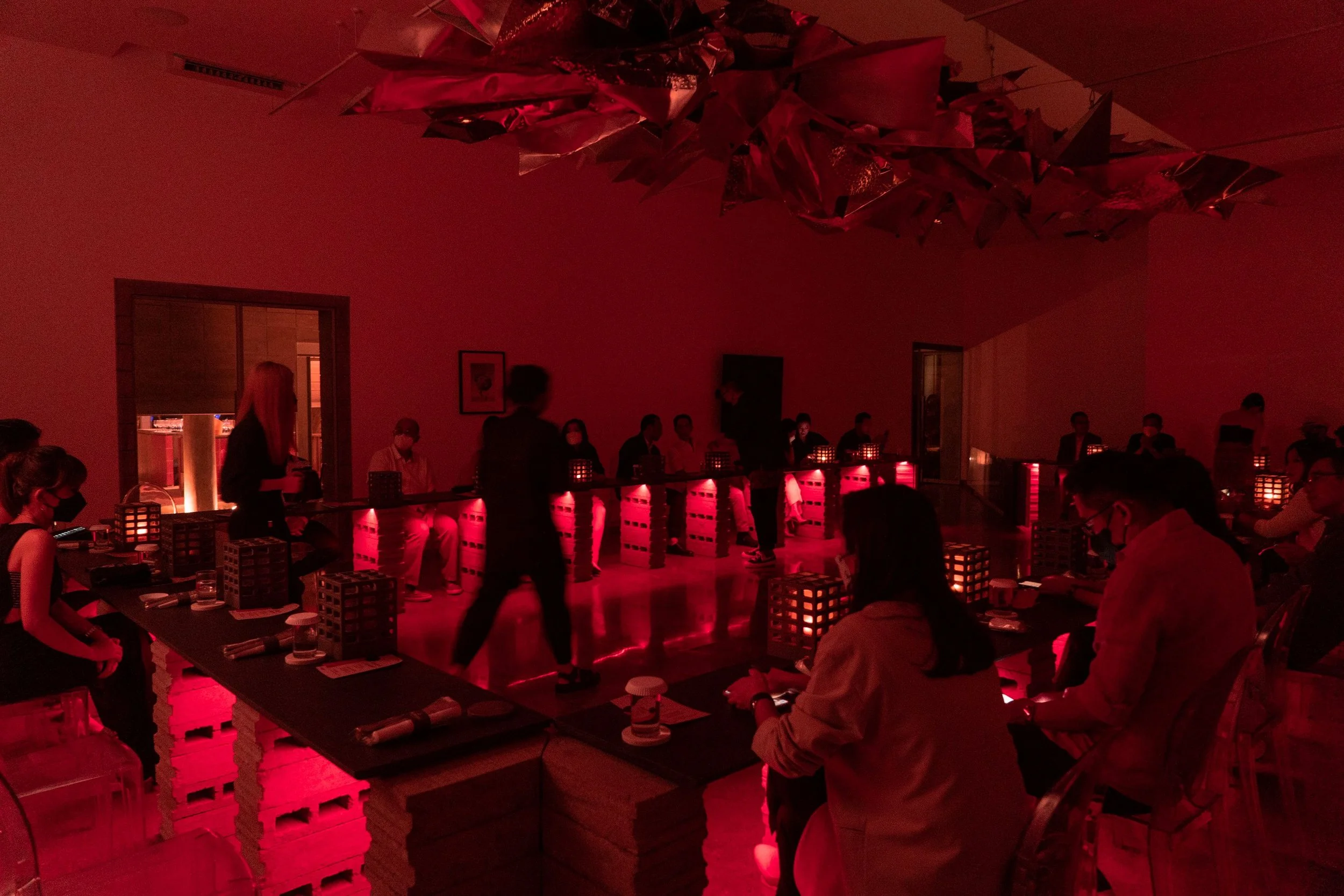
Art Jakarta 2022, VIP Programme.
In your observation, what factor(s) “convert” audiences to make their first acquisition at the fair or elsewhere?
I think, just like artists, collectors and audiences have to feel inspired too. They have to find a sense of commonality between what they are interested in and what they are thinking to acquire. There has to be something that connects the artwork to their personal interests, experiences or ways of seeing the world.
The surrounding environment and peer group are important as well. Having a group of friends who influence one another, or even an older collector or a public institution that one aspires towards, can give someone the confidence to take that first step. Friendship is important in collecting. People learn from each other, see what others are responding to, and develop their own perspective through such conversations.
This is why I think an art fair is a good environment for that first step into collecting. There are many different points of entry for someone who is curious but perhaps does not consider themselves a collector yet. For example, we have a party for invited guests after the first or second day of the fair. We organise guided tours for people who want to understand more about the works. The fair is also a chance to meet gallery directors who may not always be personally at the galleries. Curators are invited for panel discussions. Artists are often present at the fair too.
As much as possible, we try to facilitate that first step without talking about investment or hard selling. It should happen naturally. If someone finds a work that speaks to them, understands more about it, meets the people behind it and feels connected to it, then the possibility of becoming a collector follows quite naturally.
“I think, just like artists, collectors and audiences have to feel inspired too. They have to find a sense of commonality between what they are interested in and what they are thinking to acquire.”
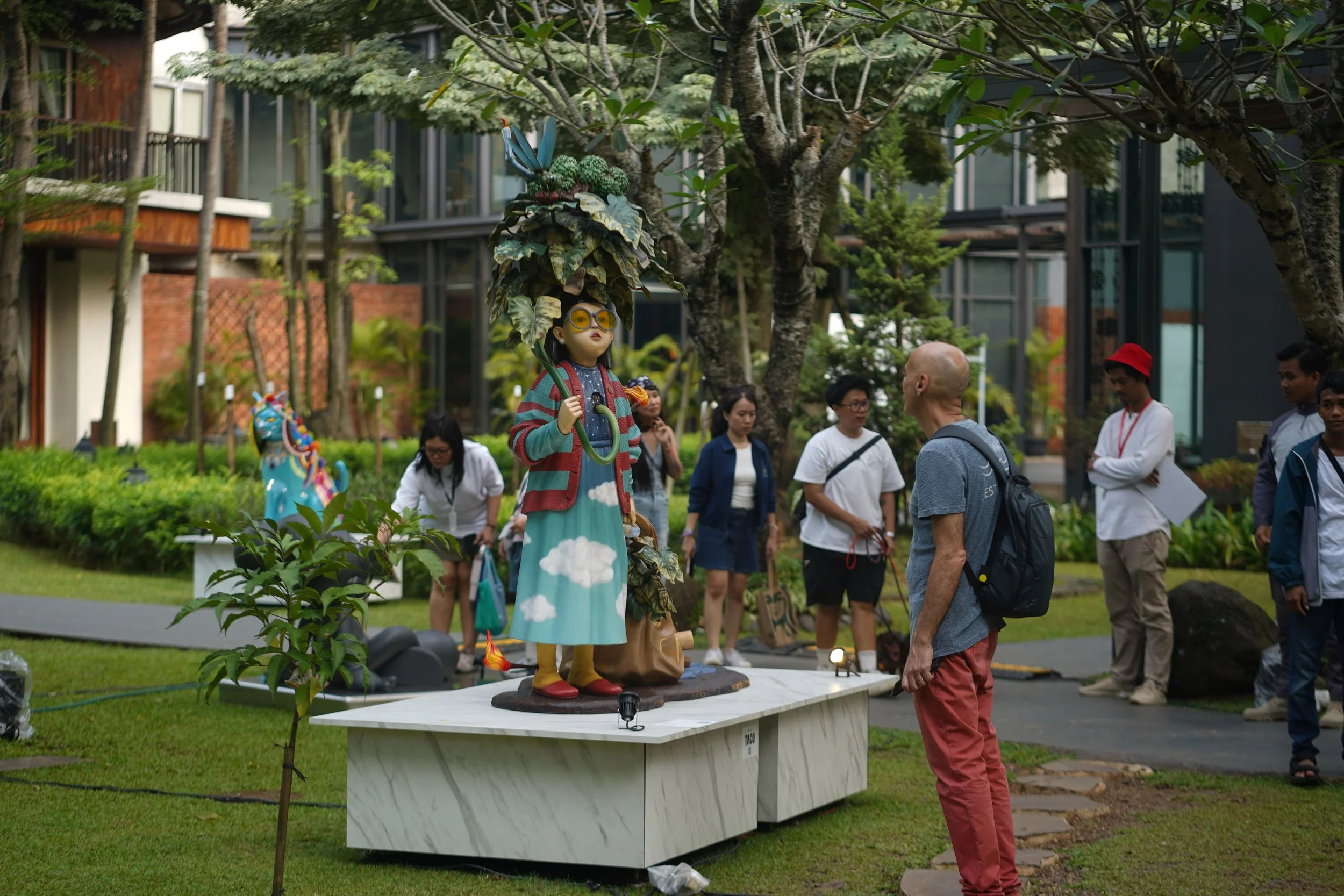
Art Jakarta Gardens 2026. Image courtesy of Art Jakarta.
For galleries who are seeking to engage with the Indonesian art market, what advice would you give?
I think the first thing is to spend time here and experience the scene. Come to Indonesia, get to know the key players, the artists, the issues and the different aesthetics. It is crucial to understand the context before considering where a gallery might fit.
But I would also say: do not change your gallery’s identity. Instead, find the parts of your programme that already have a natural connection to the Indonesian art scene. Exchange is a good basis for this. Find artists or curators in Indonesia whose interests have an affinity with the gallery’s trajectory, and introduce them to audiences at home through a show or project. If the work is interesting, Indonesian collectors will seek it out or at least research the gallery. That is how to start widening a gallery’s collector base in a meaningful way.
Additionally, bring some of the artists or a curator to Indonesia for a presentation, whether at Art Jakarta or elsewhere. A dialogue can also be created between the artists and Indonesian artists in a duo or group show, or have an Indonesian curator develop the presentation. Once some familiarity is established with the local market through those exchanges, the transition becomes much more natural. Of course, I hope that this also creates a wider opportunity for local markets to discover Indonesian artists and, in turn, to discover the fairs.
Do not come here simply looking for a market. Come looking for relationships and connections.
One particularly interesting aspect about the Indonesian art scene is that there is a strong collectivist structure, which I think can work in a gallery’s favour. The relationship with one artist can become an entry point into a much wider visual genealogy. Hence, a niche can become a catalyst for discovering a much wider part of the region.
“Do not come here simply looking for a market. Come looking for relationships and connections.”

Team photo, Art Jakarta Gardens 2026. Image courtesy of Art Jakarta.
Could you talk about how the fair works with corporate sponsors and institutional partners?
We have different types of partners and the nature of these partnerships varies. For our lead and main partners, which are corporate bodies and financial institutions, we try to encourage a more meaningful form of engagement with art by collaborating with artists to create a special presentation or commission. Our artistic director and team maintain the curatorial direction of these presentations, so the fair remains primarily a place for art rather than becoming filled with corporate placements.
Then we have our strategic and cultural partners, which include government agencies and cultural institutions. We work with the Ministry of Creative Economy and the Ministry of Culture in Indonesia, while for the AJX Korea Focus section, the South Korean Ministry of Culture, Sports and Tourism is one of our strategic partners. We also work with cultural agencies such as the Korean Arts Management Service (KAMS).
The support can take different forms. For example, Manajemen Talenta Nasional (MTN) is supporting us this year through the AJ Scope initiative. In the past, MTN supported some of the performance programmes at Art Jakarta Gardens. But the artistic direction remains with us. This is important because, regardless of who is supporting a particular programme, the artistic integrity and direction of Art Jakarta have to remain consistent.
For us, these partnerships are part of the larger ecosystem around the fair. Corporate partners allow us to create more opportunities for artists and develop more engaging presentations, while institutional and cultural partners help connect the fair to the wider cultural landscape. We want these relationships to contribute meaningfully to the experience of the fair.

Art Jakarta Papers 2026, featuring Ruang Mes 56 and kohesi Initiatives at the SPOT section. Image courtesy of Art Jakarta.
As a fair director and collector, what are two pitfalls in art fairs?
I think the two pitfalls are actually two extremes of the same line. One is when a fair starts to look like every other fair. This happens when a fair forgets its identity, its locale and the natural affinities that exist in that region. These elements should work in one’s favour and become a point of difference. Mimicking other fairs or current trends can also make it difficult to learn.
The other extreme is the opposite: becoming too recursive, looking too much inward and forgetting about relatability. A successful fair needs to know how to provide galleries with the right platform to showcase what they have, and then effectively communicate it outwards.
One cannot be Icarus, constantly flying towards what is happening elsewhere and forgetting where one came from. But one also cannot be a toad in a cave, looking only at oneself and assuming that is enough.
For me, this is a fair director’s role: to set a standard, continue streamlining and learning and keep the fair moving. If an art fair stays still, the market will eventually shrink together with it. The challenge is to keep regenerating without losing the identity that made people come to the fair in the first place.

Syaiful Aulia Garibaldi, 𝘈𝘯𝘵𝘢𝘳𝘢 𝘔𝘶𝘢𝘳𝘢 #𝟹, 2025, wood, mycelium composite, Biobo by MYCL, seashells, iron gate lock (found objects), approx. 360 x 250 x 250cm. Installation view at the AJX section of Art Jakarta 2025, in AJX section. Image courtesy of Art Jakarta.
Looking ahead to Art Jakarta 2026, could you share one highlight to look out for?
For Art Jakarta 2026, we are continuing to develop and improve the sections that have become part of the fair such as the main Galleries section, SPOT and AJ Scene.
The new section this year is AJ Scope, which I am particularly excited about. For some time, we have been quietly supporting emerging art fairs in different cities across Indonesia without necessarily attaching the Art Jakarta name or branding to that support. We bring groups of collectors to visit these fairs because we believe many of them already have the drive and the potential to develop their own local markets.
The challenge is that the Indonesian art market remains quite centralised around Jakarta and a few other major cities, so these regional fairs do not always have access to the collectors and networks that they need to grow. With AJ Scope, supported by Manajemen Talenta Nasional (MTN) under the title of MTN Market for this year’s edition, we are trying to take that exchange in the other direction. The participating fairs will be selected through an open call, and the selected fairs will each have their own presentation within a dedicated section of Art Jakarta, where they can introduce their fair, their programme and the artists and communities they represent. While we were previously trying to bring the market to them, now we are bringing them to the market in Jakarta.
For me, this is an important development for Art Jakarta. We do not want the fair to only reflect what is happening in the established centres. We also want to create a platform for the ecosystems that are developing elsewhere in Indonesia. There is a lot happening beyond Jakarta, and AJ Scope is one way for us to help connect those scenes with a wider national and regional audience.
“There is a lot happening beyond Jakarta, and AJ Scope is one way for us to help connect those scenes with a wider national and regional audience.”
In your opinion, what does long-term impact or success for Art Jakarta look like?
We want to create a fair that is an exciting project for artists, curators and galleries. If you look at the “About” page on our website, you do not only see our team. You also see our Board of Patrons, Board of Young Collectors, ambassadors and Board of Friends. It is about creating a sense of co-ownership. This is a fair that we have built together, and whose future is determined by all of us and by what we aspire towards.
In some ways, Art Jakarta has shown these signs of success. Our team has grown, but the personnel have changed very little since 2018. We have added more people, but those who have been with us since the beginning are still very much here. The team members who left usually do so to relocate to another country or city, but they are still part of the ecosystem.
For me, Art Jakarta is also successful if it can contribute to and become a hub for generating new generations and widening the market. I would like to see the audience become more varied, with new collectors, older collectors becoming excited to diversify their collections, younger audiences, new artists and new galleries coming into the ecosystem. As such, the fair has to continue to innovate. Not every new initiative has to become permanent. What is important is that the initiative is just right for the moment–that it responds appropriately to the questions and problems at that particular time.
Perhaps long-term success is not about becoming bigger every year, but about becoming more solid, more “us”. I would like to think we are already a step in the right direction.
Art Jakarta 2026 will take place from 2 to 4 October 2026 at JIExpo Kemayoran. For more information click here.
Art & Market is proud to be an official international media partner of Art Jakarta 2026.