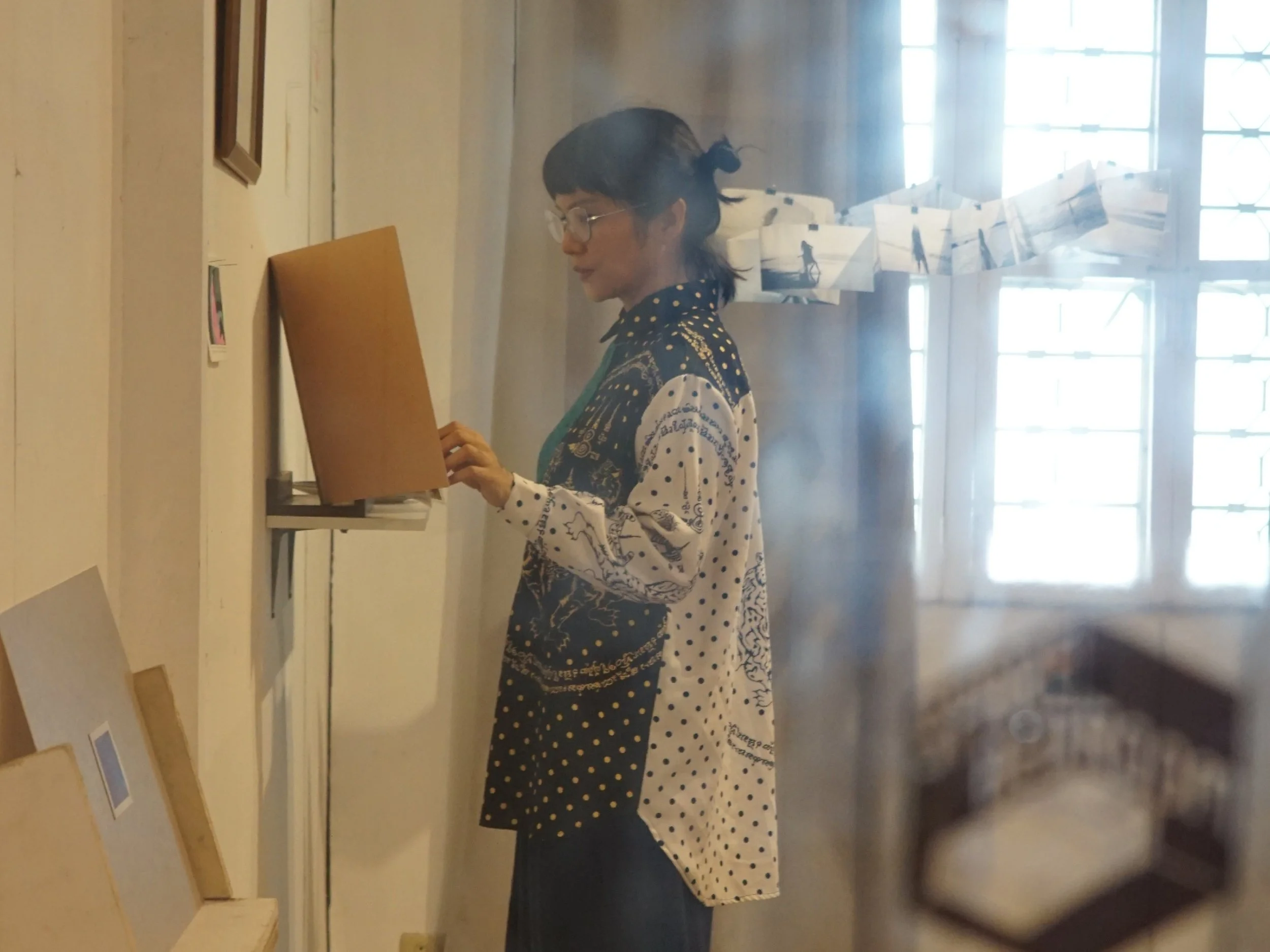
A Day in the Life: Alice Sarmiento
Independent Curator, Art Critic and Founder of Spare Bedroom
A Day in the Life is a series by A&M where we invite practitioners to share a day in their life.
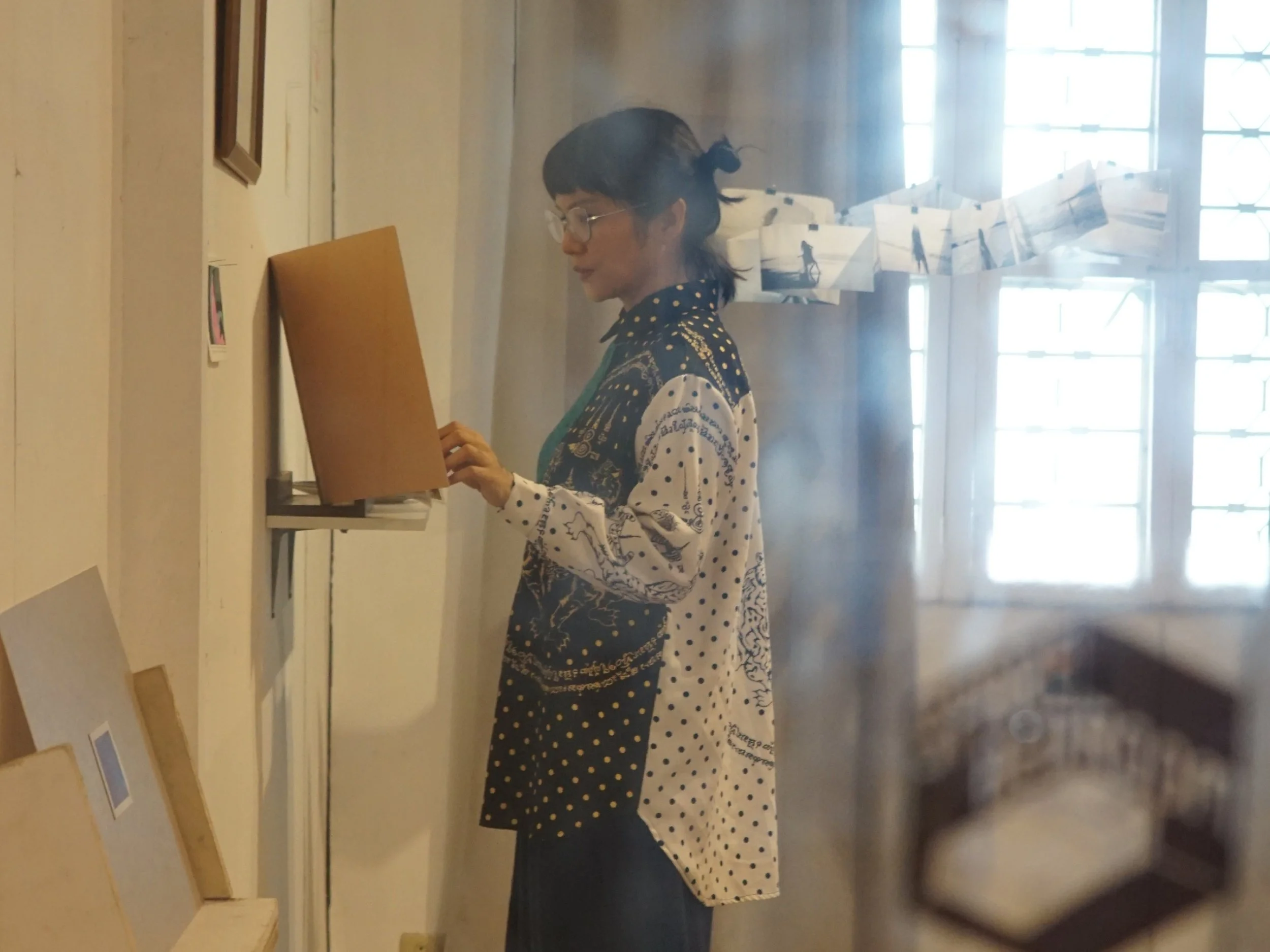
Alice Sarmiento. Photo by Cindy Aquino.
Alice Sarmiento is an independent curator, art critic and Assistant Professor in Art and Multimedia Studies at the University of the Philippines - Open University (UPOU), where she teaches Critical Perspectives in the Arts.
Alongside her academic work, Sarmiento runs Spare Bedroom, a research and exhibition platform and zine imprint based in Quezon City, Metro Manila, housed within the Chapterhouse Creative Hub. It began as a time-limited experiment and has grown into a well-respected independent curatorial project in the city. It has mounted seven exhibitions since July 2025, presenting works by local and international artists and hosting touring projects from across Southeast Asia and beyond. The platform’s programming centres on the conditions of artistic labour and the politics of exhibition-making.
In this edition of A Day in the Life, Alice shares how she moves between her roles as educator and cultural organiser, and reflects on what it has meant to hold space for artists and communities through Spare Bedroom.
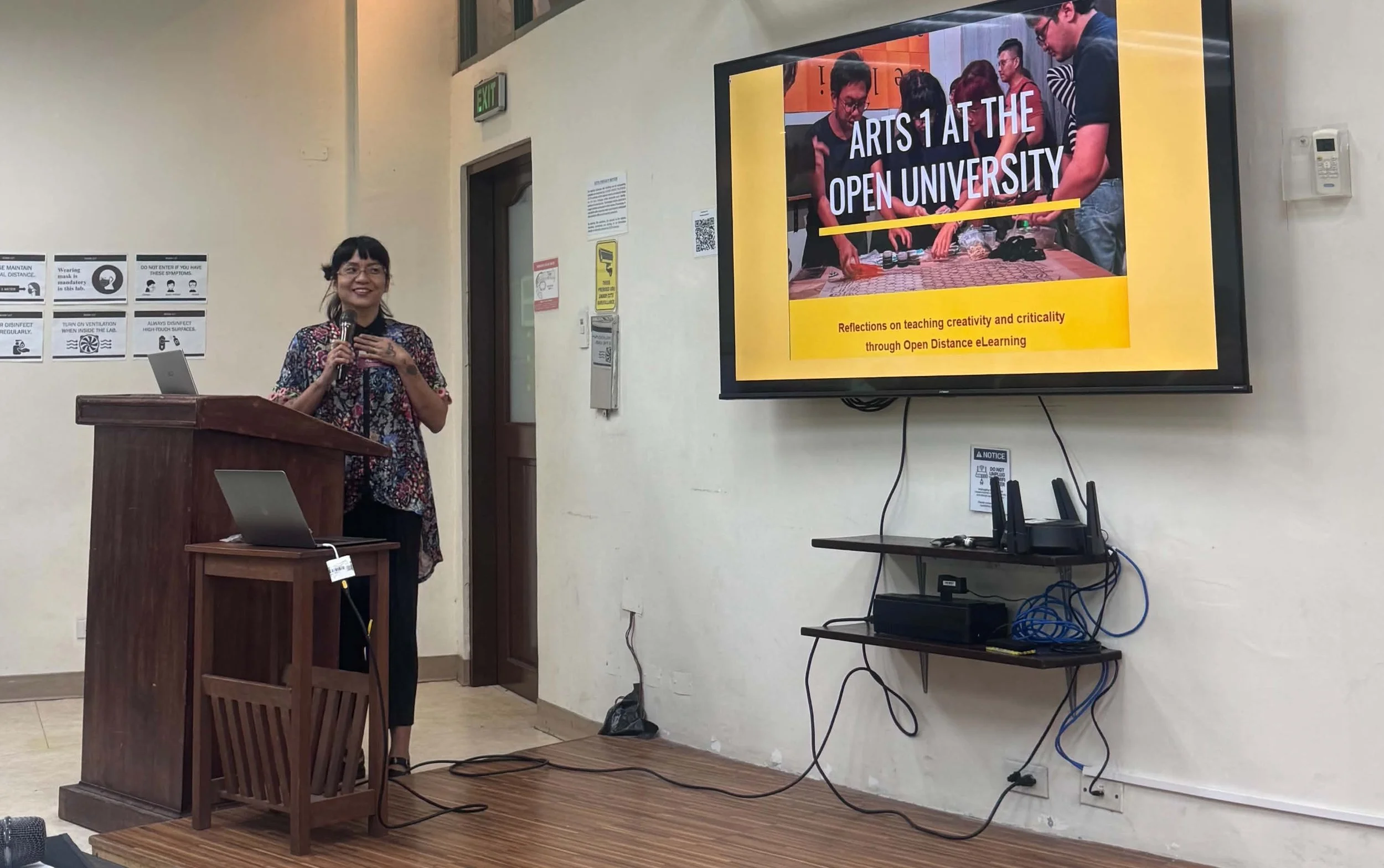
Alice teaching at the University of the Philippines - Open University (UPOU). Photo by Shari San Pablo.
I work full-time at the University of the Philippines - Open University (UPOU), where I am an Assistant Professor in Multimedia Studies. I handle the General Education (GE) course on Critical Perspectives in the Arts, so on the week I was asked to contribute this piece, I was also juggling a presentation at the UP General Education Conference, where I discussed how we are doing this in a fully remote context.

Alice at the de-installing of Shrineshare (2026) at Spare Bedroom. Photo by Franco Brobio.
After work, I run an art space in Quezon City called Spare Bedroom. Last week, we de-installed Shrineshare (2026), a print and stamp exhibition that showcased the illustration practices of artists from across Malaysia, Thailand, the United States, the United Kingdom and now the Philippines. It was curated by Sharon Chin, Zedeck Siew and David Blandy, and I saw the edition they staged at Petaling Jaya when I was a resident at Rimbun Dahan in Selangor last May.
By organising an edition of the show at my space, I was able to invite three artists from the Philippines to participate. They added stamps and prints to share before the exhibition portfolio returned to Sharon and Zedeck in Port Dickson.
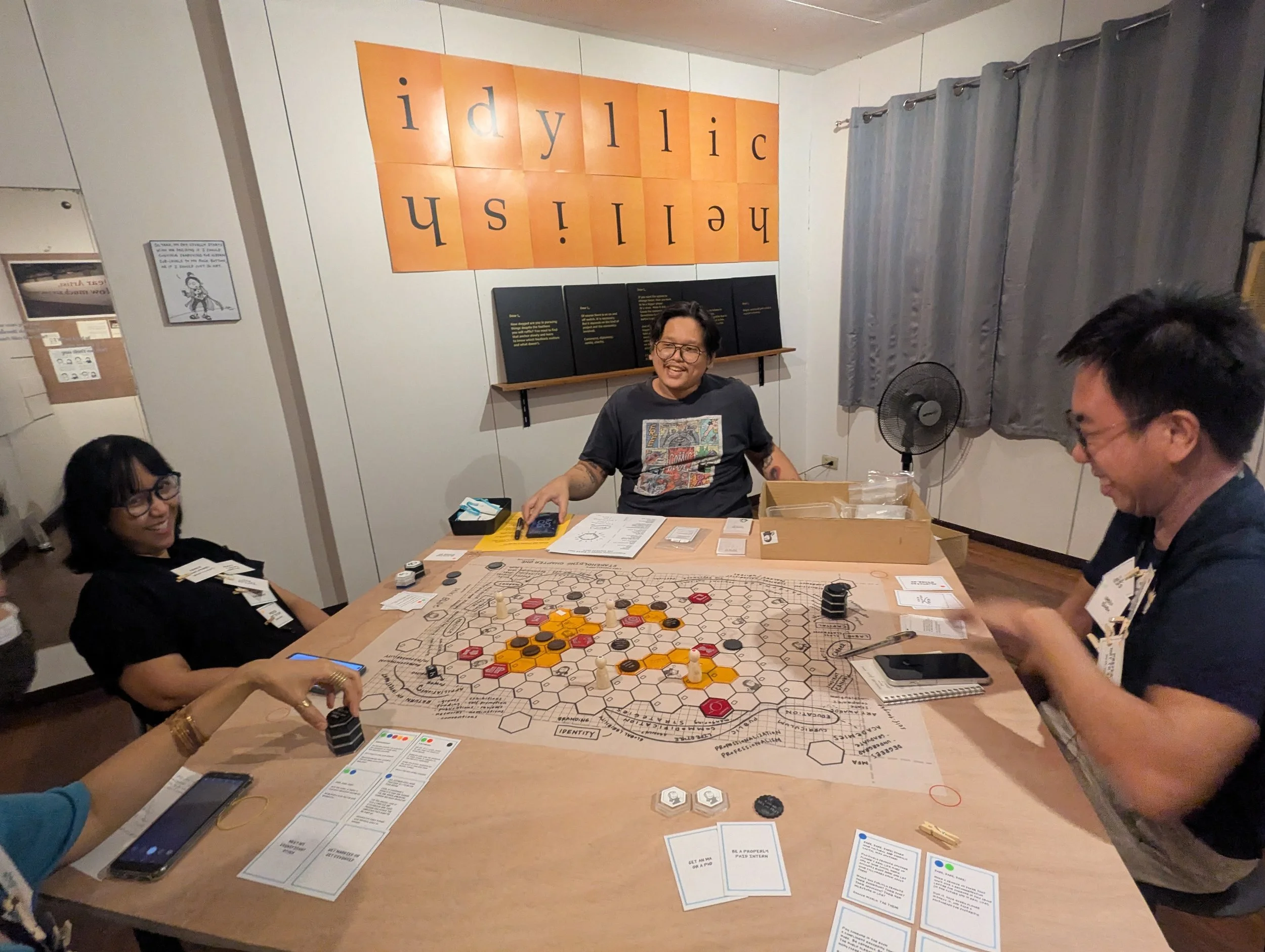
Artists Lyra Garcellano, Josel Nicolas, Paolo Arago, and karize uy (out of frame) playtesting Stakeholding: Chapter 1 at Spare Bedroom. Photo by Kristine Reynaldo.
Shrineshare (2026) was the sixth exhibition we mounted at Spare Bedroom. This detail matters because I rented the space at Chapterhouse with the intention of only running it for one year. For me, this was a reparative gesture towards my relationship with curatorial practice and contemporary art institutions, which until then, had not been the healthiest. I know a lot of independent practitioners share this sentiment, which was also evident in the response to the second show I curated at the space: Stakeholding (2025) by artist and critic Lyra Garcellano.
While I had initially proposed that we use the space to re-stage an installation, Lyra decided it would be best to show something more relational and interactive given the growing audience and customer base of Chapterhouse. We decided to engrave an image of the installation she had initially proposed to show on a tabletop, and on top of that, we hosted nightly play-throughs of a role-playing game she designed, called Stakeholding: Chapter One.

Tanya Villanueva, Island Time (and by island I mean you as earth, as heavy, as grounded) (2025) at Spare Bedroom. Photo by Ciarra Flores.
As a curator, or even just as someone with access to space for co-producing exhibitions, I feel significant responsibility towards the politics of each artist’s or collective’s practice. This also informs the decision to scale the programme down to a manageable seven exhibitions, all of which critically engage with the issues artists face in terms of their precarity, their dealings with institutions and how they fit into the broader landscape of contemporary art practice.
Tanya Villanueva’s Island Time (and by island I mean you as earth, as heavy, as grounded) (2025) was the first exhibition we ran. The prompt I gave Tanya, as well as the reason I opened the space, was to re-stage an existing piece that demanded greater public engagement, but had only been installed for short periods in the past.
Installing the canopy and futons that made up the installation took less than an hour, but the exhibition was open for close to two months, allowing it to become a space to foster the collaborations and kinships at the heart of Tanya’s practice. This photo shows a chaotic combination of a sewing circle and tarot card reading session, as slow and intimate work of being present with and for each other.
These are the kinds of practices that make it impossible to deny the political potential of making (space for) art.
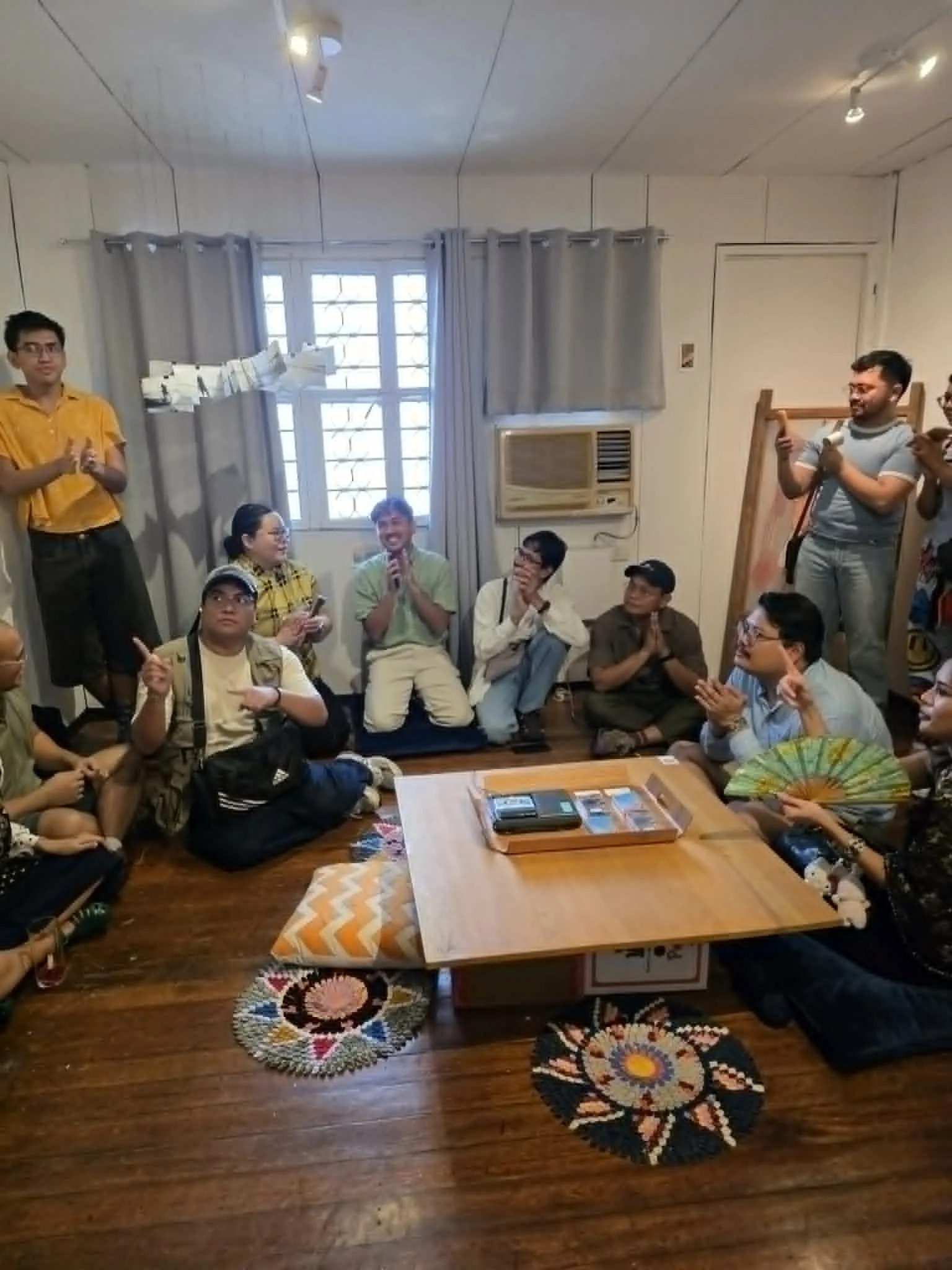
Slow Miracle (2026) opening at Spare Bedroom. Photo by Irene Sarmiento.
This photo was taken at the opening of our seventh—and final—show, Slow Miracle (2026), curated by Ginoe and Franco Brobio, and featuring artists from the collective Sachet Projects.
This is the first time we hosted an exhibition opening both at Spare Bedroom and at Chapterhouse at 10 in the morning, so I am still processing the extraordinary turnout for that day. It confirmed that I cannot presume audiences will support events and endeavours because that is how they have always been done or how things just are. There are entire communities waiting for alternatives to support, and it can be a radical gesture to make space for those alternatives.
Both the curators and the cafe put together this lovely breakfast spread, then we watched a few performances to inaugurate the show, and closed the morning with a DJ set to greet the first weekend of Pride Month.
Follow @spare.bedroom for more information.